
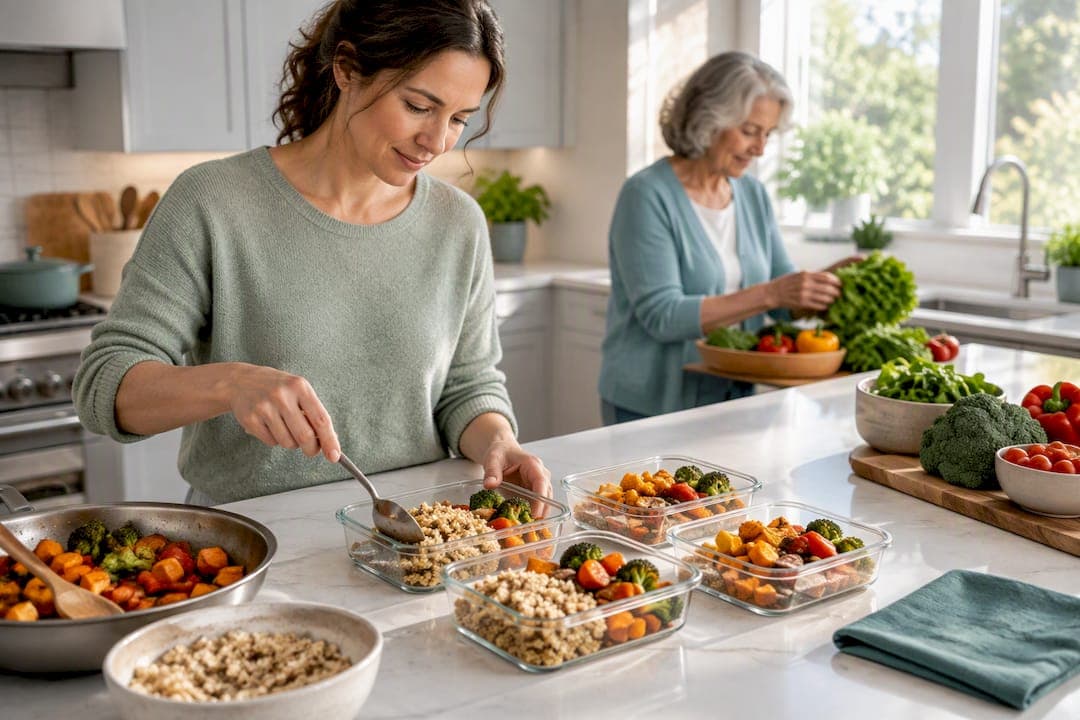
The most reliable way to protect your energy and your capacity to care for someone else is a simple weekly meal system built around protein, hydration, and food safety, not a perfect diet. The Administration for Community Living and the National Institute on Aging both frame caregiver nutrition this way: fewer decisions, repeatable habits, and food that's ready when you're too tired to cook. Helping Mom builds its guidance around the same idea, because caregivers rarely need more information. They need fewer things to think about.
TL;DR:
- Focus on building a weekly meal routine around simple habits like drinking water with meals and including protein at least once daily to ensure consistent nutrition.
- Batch-cook proteins, grains, and vegetables in advance, then freeze servings in labeled containers to save time and maintain food safety.
- Prioritize ready-to-eat staples and use tools like slow cookers or frozen pre-cut vegetables to reduce meal preparation effort significantly.
- Address dehydration, micronutrient needs, and food safety rules, especially refrigeration and reheating guidelines, to prevent illness in older adults.
- Seek professional support from dietitians or community resources when experiencing weight loss, choking, or persistent poor intake to ensure proper care.
Table of Contents
- Quick Starter Checklist: 8 Things to Do This Week
- Set Up a Weekly Meal System That Actually Works
- What to Eat: Key Foods and Nutrients for Caregivers and Older Adults
- Mealtime Strategies for People With Dementia or Low Appetite
- Food Safety and Leftovers: Rules That Actually Prevent Illness
- Sample Low-Effort Meal Ideas and a One-Week Shopping List
- When to Ask for Professional Help and Community Resources
- Helping Mom: Practical Support You Can Use Right Away
- A Calm, Realistic Closing Thought
- How Helping Mom Can Help You Build This System
- Sources
- FAQ
Quick Starter Checklist: 8 Things to Do This Week
You don't need a meal plan to feel better by Friday. You need a handful of small habits that stack on top of the week you already have.
Here's where to start:
- Drink at meals, and twice between them. A glass of water with breakfast, lunch, and dinner, plus two more between meals, covers most of what your body needs without you tracking a single ounce.
- Carry a water bottle everywhere. If it's in the car, on the counter, or clipped to your bag, you'll drink from it. If it's in a cabinet, you won't.
- Anchor one meal a day with real protein. Eggs, Greek yogurt, canned tuna, or a rotisserie chicken breast, whichever is easiest to grab, at whichever meal you actually eat sitting down.
- Stock ready-to-eat staples now. Canned fish, frozen vegetables, quick-cooking whole grains, and beans mean dinner never depends on your energy level at 6 p.m.
- Batch-cook two recipes into single portions and freeze them. Pick recipes that reheat evenly, soups and grain bowls work well, and freeze in amounts sized for one person.
- Build one grab-and-go snack pack. Fruit, a cheese stick, and a handful of nuts in a small container solves the 3 p.m. energy crash without a trip to the vending machine.
- Label and rotate everything in the fridge and freezer. Write the date on the lid. Move older containers to the front so they get eaten first instead of forgotten.
- Use a meal delivery program or local resource on the days you truly can't cook. And ask one family member to handle a grocery run or join you for a batch-cooking session this week.
Pro Tip: Pick one item from this list, not all eight. Caregivers who try to overhaul everything at once usually abandon the whole plan by Wednesday. Master one habit for two weeks before adding another.
Set Up a Weekly Meal System That Actually Works
Most caregiver nutrition advice assumes you have an hour to cook dinner every night. You don't. What works instead is a system you set up once a week and then simply follow, the same way you'd follow a recipe you've memorized.
The core idea is what the ACL calls a repeatable weekly approach: keep the same categories of food stocked, and let the specific dishes change based on what's on sale or what sounds good. The ACL's senior nutrition guidance points to one particularly efficient shortcut worth adopting directly: cook one protein, one vegetable, and one grain as a base, then adapt the portion size, texture, and seasoning for whoever's eating it. If your parent needs softer food and you need something you can eat standing at the counter, you're not cooking two meals. You're cooking one and adjusting it twice.
Here's how that plays out across a real week:
- Shopping day. Buy proteins, produce, and grains in bulk with the week's two batch-cook sessions already in mind. Wash and cut vegetables the day you bring them home, not the day you plan to cook them.
- Batch session one (proteins). Roast a tray of chicken thighs, hard-boil a dozen eggs, or brown a pound of ground turkey. This takes 30 to 45 minutes and covers protein for four or five meals.
- Batch session two (grains and vegetables). Cook a large pot of rice, quinoa, or pasta, and roast or steam a big batch of vegetables. Store both in the fridge for quick assembly all week.
- Midweek refresh. Around Wednesday, check what's left, toss a quick soup together with odds and ends, or restock the snack packs before the weekend.
Labeling matters more than most people expect. Write the date and contents on every container, and use shallow containers rather than deep ones, since shallow food cools faster and more evenly, which matters for both taste and safety. A University of Tennessee Extension guide on food storage puts it plainly: batch-cooking only pays off when you can actually see and reach what you froze. Put newer containers behind older ones so nothing gets lost for three months in the back of the freezer.
A few tools make this dramatically easier:
- A slow cooker or Instant Pot for hands-off proteins and soups.
- Frozen pre-cut vegetables, which cook just as well as fresh for most dishes and cut prep time to zero.
- Pre-cooked grain pouches or leftover batch-cooked grains for instant bowls.
- Grocery delivery or curbside pickup on the weeks when even shopping feels like too much.
None of this requires new skills. It requires deciding, once, that you'll cook twice a week instead of seven times, and letting the freezer do the rest. If you want a fuller framework for building out portions and variety, this meal-planning guide for seniors walks through templates that pair naturally with this system.
What to Eat: Key Foods and Nutrients for Caregivers and Older Adults
Caregiver nutrition and the nutritional needs of the person you're caring for overlap more than they diverge, which is good news, because it means one grocery list usually covers both of you.
Protein is the nutrient most caregivers under-eat, largely because it takes more effort than grabbing a granola bar. Adults, especially older adults, need more protein per meal than most people assume to maintain muscle and energy. Practical sources that require little to no cooking include:
- Eggs, boiled or scrambled in under five minutes
- Greek yogurt or cottage cheese
- Canned fish like tuna or salmon
- Beans, canned or dried and batch-cooked
- Tofu, cubed and pan-seared or added to soup
- Rotisserie chicken, shredded and frozen in portions
Aim for a palm-sized portion of one of these at whichever meal you actually sit down for. It doesn't need to be every meal to matter.
Hydration deserves more attention than it usually gets. Water, low-fat milk, and fortified soy beverages all count, and the signs of dehydration are easy to miss in both caregivers and older adults: fatigue, headache, dark urine, and confusion in older parents specifically. If your parent tends to forget to drink, keep a filled glass in view rather than asking if they're thirsty. They usually aren't, until they're already behind.
Key micronutrients worth knowing about, without turning this into a chemistry lesson:
- Vitamin B12, found in fortified cereals, dairy, and fish, and often lower in older adults due to reduced absorption.
- Vitamin D, harder to get from food alone; fortified milk and fatty fish help, but sunlight and supplementation are often part of the picture too.
- Calcium, from dairy, fortified plant milks, and leafy greens.
- Potassium, abundant in bananas, potatoes, and beans.
- Fiber, from whole grains, beans, and vegetables, which also helps with the constipation issues that quietly plague a lot of older adults.
A 2022 randomized trial on caregiver nutrition found that individually tailored nutrition guidance improved protein, vitamin D, calcium, and potassium intake among older family caregivers over six months, comparing 63 caregivers who received guidance against 50 who didn't. The intake improvements were real, even though the study didn't find a significant shift in overall nutritional-status scores. That's an honest, useful takeaway: targeted changes in what you eat can move the needle on specific nutrients even before your whole diet transforms.
On supplements, keep it simple: a multivitamin or a specific supplement can help fill gaps, but dosing needs vary by individual health history, medication list, and lab results. This is a conversation for your parent's doctor or a registered dietitian, not a guess based on a bottle at the pharmacy.
Mealtime Strategies for People With Dementia or Low Appetite
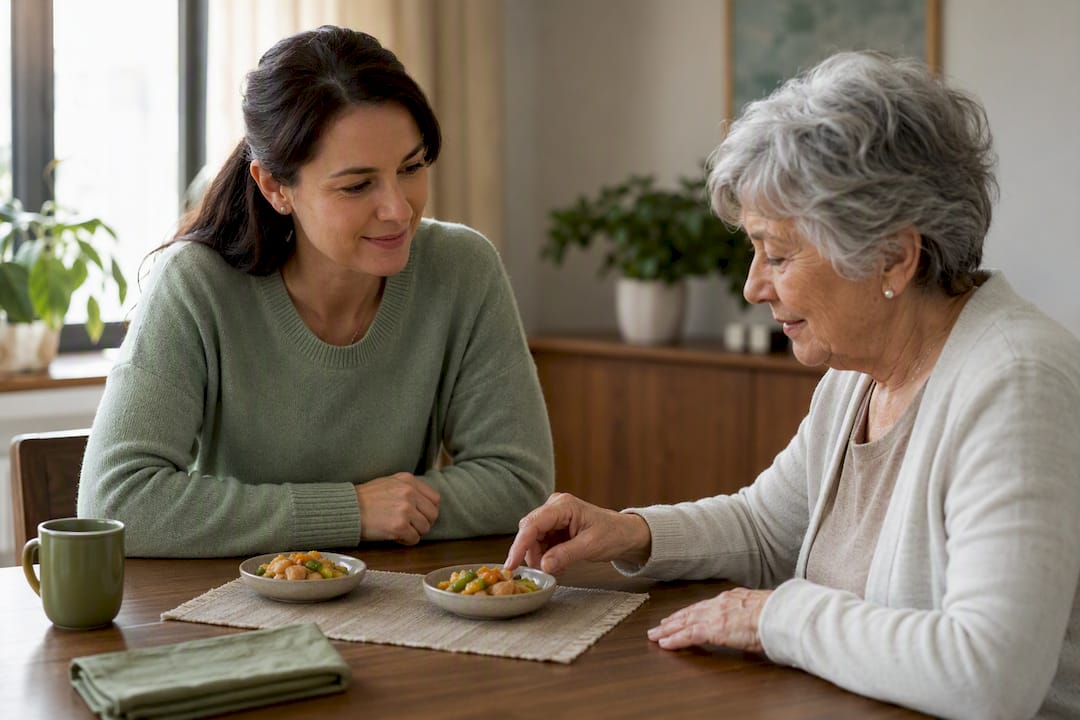
Eating can become genuinely hard for someone with memory loss or a shrinking appetite, and the goal shifts from "balanced diet" to "getting enough calories in, with dignity intact."
The National Institute on Aging's guidance on mealtimes offers a few strategies that consistently help:
- Offer smaller meals, more often. Five small meals can succeed where three large ones fail, especially if appetite fades as the day goes on.
- Add calorie-rich snacks between meals if weight loss is a concern: nut butter on toast, a smoothie, or full-fat yogurt.
- Simplify the plate. Two choices instead of six, familiar foods instead of new ones, and bite-size soft pieces that don't require much chewing or coordination.
- Create a calm, quiet space. Turn off the TV, reduce clutter on the table, and give the meal its own unhurried time slot.
- Encourage self-feeding whenever possible. Offer a spoon before you offer help, and let eating slower or messier be okay. Force-feeding, even gently, tends to backfire and can create anxiety around meals.
If your parent starts coughing repeatedly during meals, or you notice they're losing weight without explanation, that's the point to pause and call for a clinical swallowing evaluation from a speech-language pathologist rather than experimenting further with textures at home.
Pro Tip: Ask "What sounds good right now?" instead of presenting a full plate. A person with dementia is often more likely to eat something they chose than something placed in front of them, even if the choice is between two nearly identical options.
Food Safety and Leftovers: Rules That Actually Prevent Illness
Older adults are more vulnerable to foodborne illness, which makes the two-hour rule one of the few caregiver nutrition guidelines worth memorizing exactly as written.
USDA/FSIS guidance sets clear numbers: refrigerate leftovers within 2 hours of cooking, or within 1 hour if the room is above 90°F. Keep hot foods held at 140°F or above, and cold foods at 40°F or below. When you reheat leftovers, bring them to 165°F all the way through, not just warm at the edges.
A few habits make this easy to follow without a thermometer glued to your hand:
- Use shallow containers so food cools quickly instead of sitting warm in the fridge for hours.
- Label every container with the date it was cooked, not the date you're storing it.
- Eat refrigerated leftovers within a few days; freeze anything you won't finish within that time.
- Frozen leftovers remain safe for several months, though quality may decline over time.
- If you order takeout or delivery on a rough day, set a phone reminder for two hours later so it doesn't sit forgotten on the counter until dinner the next day.
None of this requires special equipment. It requires a habit of glancing at the clock when the pot comes off the stove, and a stack of containers you actually label instead of just intending to. For a broader look at keeping the kitchen itself safer during meal prep, this kitchen safety guide for caregivers covers the physical side of the same routine.
Sample Low-Effort Meal Ideas and a One-Week Shopping List
You don't need new recipes so much as reliable pairings you can repeat with small variations. Here's a starting rotation built around minimal prep and maximum protein.
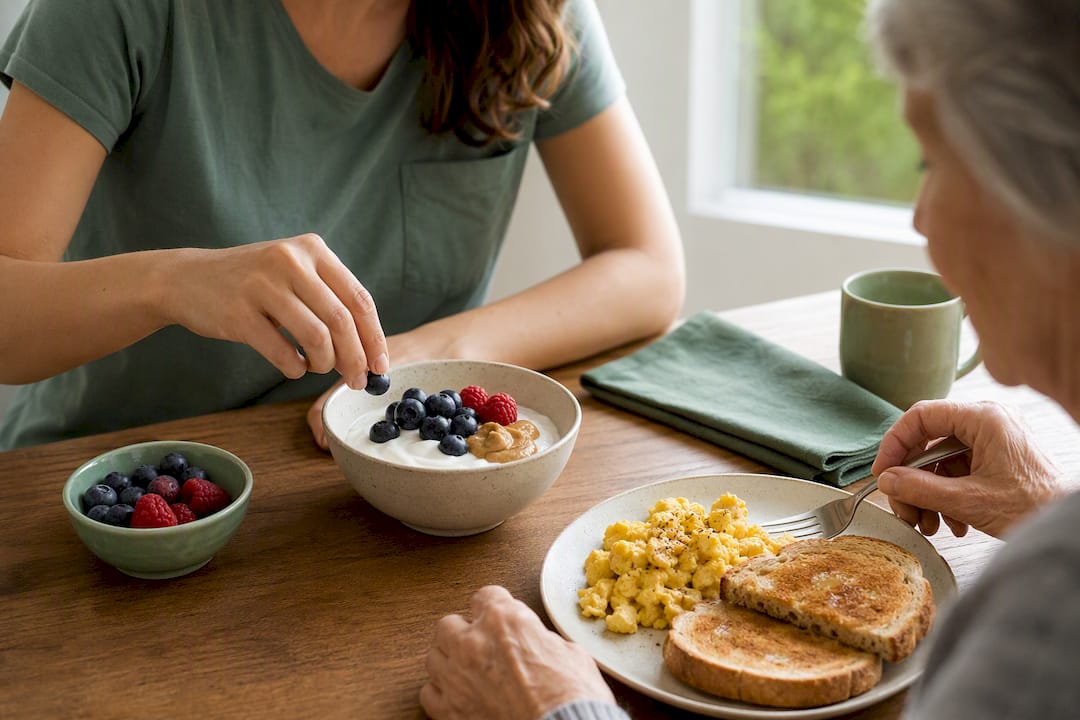
Breakfast: Greek yogurt with berries and a spoon of nut butter, or two scrambled eggs with toast.
Lunch: Canned tuna or leftover shredded chicken over a bed of the grains you batch-cooked, with whatever roasted vegetables are on hand.
Dinner: A single-serve frozen soup or grain bowl reheated from your batch-cooking session, paired with a quick side salad or steamed frozen vegetables.
Snacks: Cheese and crackers, a handful of nuts and dried fruit, or a smoothie made with frozen fruit and milk.
Three batch recipes worth keeping in permanent rotation because they freeze and reheat evenly: a lentil or vegetable soup, a baked frittata cut into single portions, and a grain bowl base of rice or quinoa topped fresh each time with whatever protein and vegetable you have.
A shopping list organized by where things live keeps the grocery run fast:
| Category | Staples to Buy |
|---|---|
| Fridge | Eggs, Greek yogurt, milk, cheese, pre-washed salad greens, rotisserie chicken |
| Pantry | Canned tuna and salmon, canned beans, quick-cooking rice or quinoa, oats, nut butter, canned soup |
| Freezer | Frozen mixed vegetables, frozen fruit, single-serve batch-cooked soups and grain bowls, frozen chicken thighs |
Print this list, tape it inside a cabinet, and cross off what you already have before each trip. It shrinks decision-making down to almost nothing, which is the entire point.
When to Ask for Professional Help and Community Resources
Some situations call for more than a meal system, and knowing the difference protects both of you.
Watch for these red flags:
- Frequent coughing, choking, or throat-clearing during meals
- Rapid weight loss or gain over a few weeks, not months
- Persistently poor intake despite trying smaller meals and familiar foods
- Visible confusion or fatigue that seems tied to eating or drinking too little
A registered dietitian can help build a plan around specific health conditions, medications, or lab results. A speech-language pathologist evaluates swallowing safety if coughing or choking becomes a pattern rather than a one-off. Both typically start with an assessment, then a short list of adjustments you can actually maintain at home.
Community resources exist specifically to lighten this load. Meals on Wheels America delivers ready meals to homebound seniors in most counties. Your local Area Agency on Aging can connect you to nutrition counseling and transportation for grocery trips. SNAP benefits are available to many older adults on fixed incomes and can stretch a grocery budget further than most families realize.
Helping Mom: Practical Support You Can Use Right Away
Building the weekly system described above is easier with a starting template instead of a blank page. Helping Mom's caregiving resources are built around exactly this kind of practical, non-clinical support: guides and worksheets designed for real weeks, not idealized ones.
A single Caregiving Clarity Session can turn this article's checklist into a plan specific to your parent's actual routine, appetite, and kitchen setup, often in under an hour. For caregivers managing everything remotely, a virtual home safety consultation covers related territory: how the kitchen itself supports or complicates safe meal prep for an aging parent living alone. These tools plug directly into the weekly system, one conversation, one worksheet, and suddenly Sunday's batch-cooking session has a plan behind it instead of a guess.
A Calm, Realistic Closing Thought
Small, consistent habits beat an ambitious plan you abandon in ten days. If you take nothing else from this, take two things: drink water at meals, and eat real protein at least once a day. Everything else can build slowly from there.
Consistency matters more than perfection here. A week where you managed protein at dinner and water at every meal is a genuinely good week, even if the freezer never got organized and the shopping list never got made. If it starts feeling like too much to carry alone, that's not a failure. It's a signal to bring in help, whether that's a family member for one grocery run or a professional for a bigger conversation. Reaching out is part of doing this well, not a sign you're falling behind. For more on protecting your own capacity while you care for someone else, this guide to caregiving without losing yourself picks up where this one leaves off.
— Mike C.
How Helping Mom Can Help You Build This System
You've now got the framework: a weekly meal system, protein-first choices, and food-safety rules that actually stick. Helping Mom exists to help you put that framework into your specific week, with your specific parent, without hiring a full-time nutritionist or overhauling your life. A Caregiving Clarity Session gives you a focused hour to map out a workable meal and care routine tailored to your parent's appetite, mobility, and kitchen setup. If distance is the bigger obstacle, a Virtual Home Safety Consultation looks at how the kitchen itself, and the broader home, supports or complicates safe daily routines. Ready to turn this week's checklist into an actual plan? Book a Caregiving Clarity Session and walk away with a system built around your family, not a generic template.
Sources
- Administration for Community Living — Senior nutrition: menus and recipes
- USDA/FSIS — Leftovers and food safety
- Randomized trial — individually tailored nutritional guidance improved dietary intake of older family caregivers
- Caregiver nutrition and nurturing care: a scoping review
This article is general information, not a substitute for advice from a qualified doctor. Consult a qualified healthcare professional about your own circumstances before acting on anything here.
FAQ
What are 5 qualities of a good caregiver?
Patience, consistency, observation, flexibility, and the willingness to ask for help are the qualities that tend to sustain caregivers over the long run. Nutrition habits reflect all five: noticing when a parent's appetite shifts, staying consistent with a weekly meal system, and adjusting plans without guilt when a week goes sideways.
What are 5 foods that seniors should eat every day?
A daily rotation of protein (eggs, dairy, or fish), a fiber source (whole grains or beans), a vegetable, a calcium source (milk, yogurt, or fortified alternatives), and adequate fluids covers most core needs highlighted by the NIA's meal-planning guidance. These don't need to appear in five separate dishes. Greek yogurt with fruit, for example, covers protein, calcium, and fiber in one bowl.
How do I meal prep as a caregiver?
Start with one base meal, one protein, one grain, one vegetable, cooked in bulk twice a week, then adapt portions and textures for each person. Freeze extras in single-serve containers labeled with the date, following the ACL's meal-planning approach, so a full week's worth of dinners exists before Monday even starts.
What is caregiver fatigue and how does nutrition play a role?
Caregiver fatigue describes the physical and mental exhaustion that builds from ongoing caregiving demands, and poor nutrition often makes it worse by draining the energy caregivers need to keep going. A 2025 scoping review links suboptimal caregiver nutrition to reduced caregiving responsiveness, which is part of why prioritizing your own meals isn't a luxury, it's part of sustaining the care you're providing.
How much does a Helping Mom consultation cost?
The Caregiving Clarity Session is a one-time $97 session available through Helping Mom. Pricing for the In-Home Age-Safe Home Safety Assessment and Virtual Home Safety Consultations is available directly on the site.