
TL;DR:
- Decluttering for older adults enhances safety and independence by removing hazards and improving home organization.
- Starting with floor-level hazards and simple systems supports gradual progress while respecting emotional attachments.
Decluttering for older adults is the process of removing unnecessary items and reorganizing a home to create a safer, more accessible living space that supports aging in place. This goes well beyond tidying up. Decluttering is a health intervention that directly reduces fall risk, lowers cognitive load, and helps older adults maintain independence longer. The good news is that you do not need to tackle everything at once. With the right approach, a calmer, safer home is completely within reach, whether you are doing this for yourself or helping a parent you love.
What are the first safety-focused steps for decluttering an older adult's home?
Falls are the leading cause of injury among older adults. One in four Americans aged 65 and older falls every year, resulting in more than 3 million emergency room visits. That number makes clutter removal one of the most direct safety actions you can take in a senior's home.
Start with the areas that carry the highest fall risk. Walk through each room and look at the floor first, not the shelves.
- Clear all pathways. Remove loose rugs, extension cords, and stacked items from hallways, doorways, and the spaces between furniture. These are the most common tripping hazards.
- Improve lighting. Add nightlights in hallways, bathrooms, and near the bed. Poor lighting turns a minor obstacle into a serious hazard after dark.
- Install grab bars. Bathrooms and stairways benefit most. A grab bar next to the toilet and inside the shower can prevent falls during the moments of highest risk.
- Raise frequently used items. Store everyday dishes, medications, and toiletries between waist and shoulder height. Bending low or reaching high puts older adults off balance.
- Organize medications clearly. Medication and important documents must be visible and easy to access. A simple labeled tray on the kitchen counter works better than a cabinet drawer.
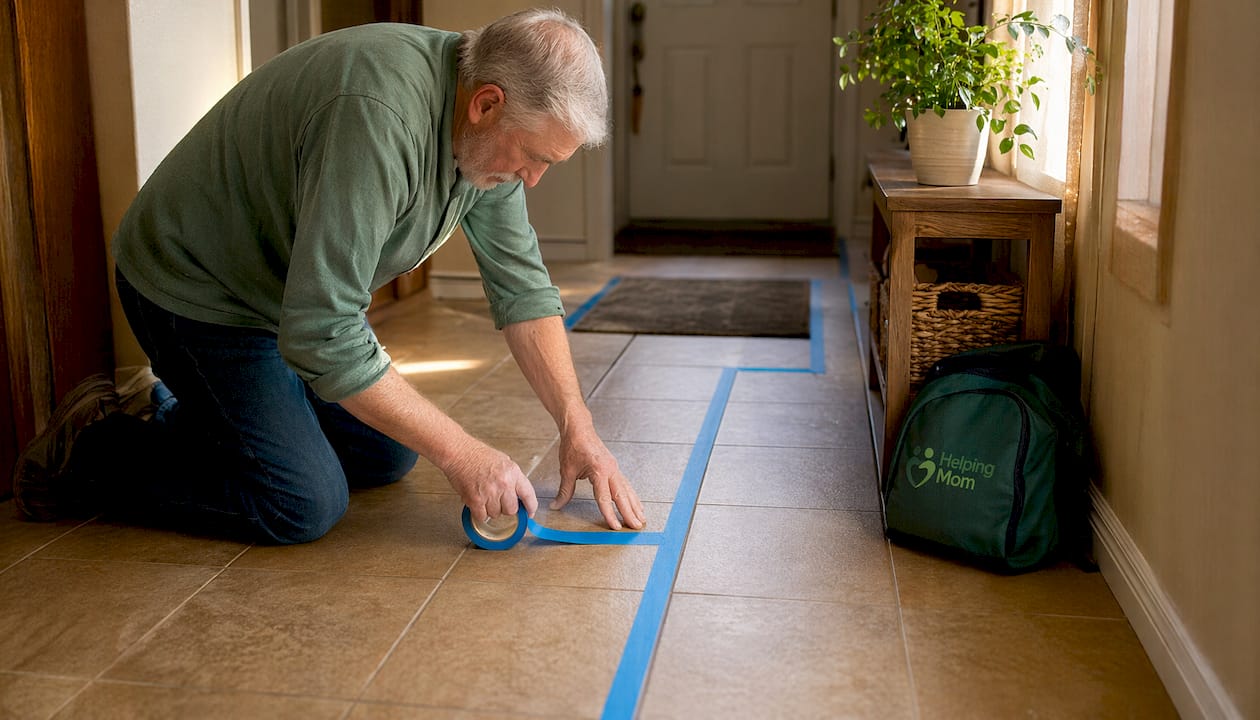
Pro Tip: Use a piece of painter's tape on the floor to mark the clear path through each room. If anything sits inside that line, it needs to move.
Once the floor is clear and lighting is improved, the home already feels different. That visible progress builds confidence to keep going.
How can older adults manage decision fatigue and emotional challenges when decluttering?
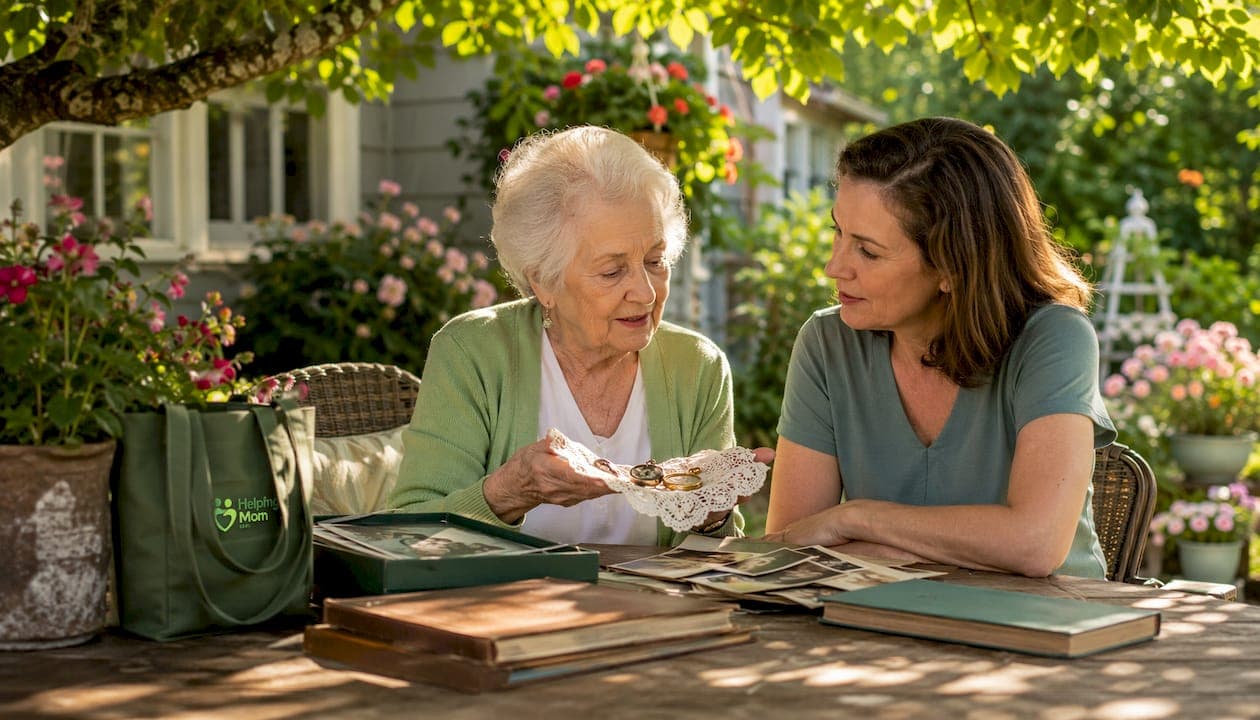
Letting go of possessions is rarely just about stuff. Sentimental items often connect to lost loved ones, and forcing disposal can cause real emotional harm. A compassionate approach treats each item with respect, not urgency.
The most effective strategy is to start with low-emotion categories. The pantry, the junk drawer, and the linen closet are good first targets. These areas rarely carry deep memories, so decisions come faster and feel lighter. Starting with easy-to-let-go items builds the decision-making muscle gradually, which makes the harder choices easier later.
"The goal is not to strip a home of its history. The goal is to create space where the person living there feels safe, capable, and at ease. Every item you keep should earn its place by serving that purpose."
The 80/20 rule applies well here. Keep the 20% of belongings that get used 80% of the time, and let the rest go gradually. For items with strong sentimental value, consider taking a photograph before donating. A memory book or digital photo album preserves the story without requiring the physical object.
Professional organizers recommend treating the older adult as the lead decision-maker throughout the process. Your role as a caregiver or family member is to provide physical support and gentle encouragement, not to make the calls. Autonomy matters deeply here. When older adults feel in control of what stays and what goes, resistance drops and progress accelerates.
What practical organizational systems help maintain a clutter-free, safe home?
A decluttered home stays that way only when a simple system supports it. Without structure, clutter creeps back within weeks. The good news is that the most effective systems are also the simplest.
- Create daily-use zones. Group items by how often they are used. Everything needed every day, such as keys, glasses, medications, and the TV remote, belongs in one accessible spot at waist height.
- Use large-print labels and color coding. Label cabinet doors, drawers, and bins with large, clear text. Color coding by category (blue for bathroom supplies, green for kitchen items) works especially well for older adults managing early memory changes.
- Add a rolling cart. A small rolling cart in the kitchen or bedroom lets older adults carry multiple items in one trip, reducing the number of back-and-forth walks and the risk of carrying things while distracted.
- Schedule a monthly reset. Set aside 20 minutes on the first Sunday of each month to return items to their zones and remove anything that has accumulated on counters or floors.
- Bring in support. Decluttering with family or professional help increases success rates and reduces frustration. A second set of hands makes the physical work easier and keeps the process from stalling.
Pro Tip: A small basket near the front door works as a "return station." Anything that belongs in another room goes in the basket, and one person carries it back during the monthly reset.
The table below shows which organizational tools work best for common challenges older adults face at home.
| Challenge | Recommended solution |
|---|---|
| Forgetting where items are | Large-print labels and color-coded bins |
| Carrying items between rooms | Rolling cart or tote bag kept in a central spot |
| Clutter returning to cleared surfaces | Monthly 20-minute reset routine |
| Reaching high or low shelves | Relocate daily items to waist-to-shoulder height |
| Medication confusion | Labeled tray in a fixed, visible location |
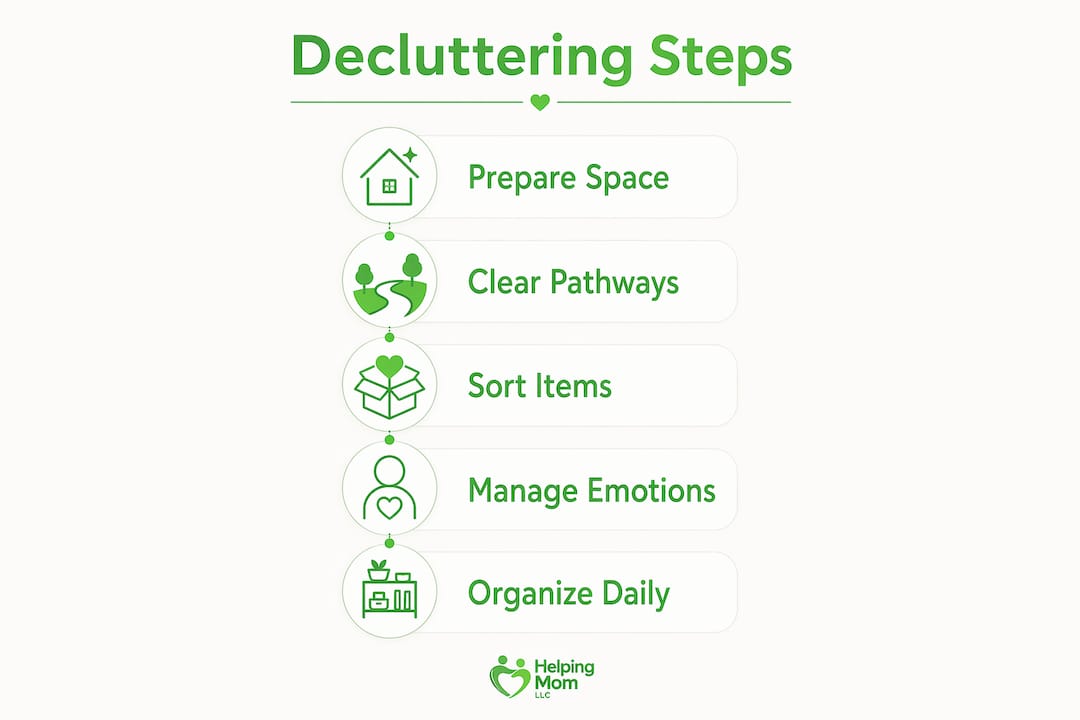
These systems do not require expensive products. Most can be set up with items already in the home or purchased inexpensively at any general merchandise store.
How should older adults plan and pace decluttering to avoid burnout?
Pacing is the part most people underestimate. Decluttering a home that has been lived in for decades takes real time, and rushing it creates stress, poor decisions, and physical exhaustion.
Experts recommend 30–60 minute focused sessions with rest breaks in between. That window is long enough to make real progress but short enough to protect physical and emotional energy. Pushing past that limit leads to fatigue-driven decisions, which often means either keeping too much or discarding things that will be missed.
For the overall timeline, plan at least three months to work through a full home at a comfortable pace. If a move is involved and a professional organizer is brought in, that timeline can compress to about two weeks. Neither pace is wrong. The right choice depends on the older adult's stamina, the size of the home, and how much emotional weight the process carries.
A few practical guidelines keep the process on track:
- Avoid sentimental items in the first two weeks. Build confidence and momentum with neutral categories first.
- Measure before you sort. Always measure doorways and hallways before deciding which furniture to keep. A beloved armchair that does not fit through the new apartment door creates unnecessary heartache on moving day.
- Work room by room, not category by category. Completing one room gives a clear sense of progress and prevents the whole home from feeling disrupted at once.
- Rest is not optional. Schedule rest days between sessions, especially after emotionally heavy ones like going through a spouse's belongings.
The aging in place checklist from Helping-mom pairs well with this pacing plan. It helps you track which safety improvements are complete and which rooms still need attention.
Pro Tip: Take a "before" photo of each room before you start. Seeing the difference after one session is genuinely motivating and helps older adults feel proud of their progress.
| Approach | Timeline | Best for |
|---|---|---|
| Self-paced with family support | 3+ months | Most older adults aging in place |
| Professional organizer assisted | 2 weeks | Seniors preparing for a move |
| Hybrid (family + occasional pro) | 4–8 weeks | Moderate-sized homes with complex needs |
Key takeaways
Decluttering for older adults works best when it prioritizes safety first, respects emotional attachments, and follows a paced plan that protects both physical and mental energy.
| Point | Details |
|---|---|
| Safety comes first | Clear pathways, improve lighting, and raise daily items to waist height before anything else. |
| Start with low-emotion areas | Begin with the pantry or junk drawer to build confidence before tackling sentimental items. |
| Use simple organizational systems | Daily-use zones, large-print labels, and monthly resets keep a home clutter-free long term. |
| Pace sessions at 30–60 minutes | Short, focused sessions with rest prevent burnout and support better decision-making. |
| Keep the older adult in charge | Letting seniors lead keep-or-toss decisions preserves autonomy and reduces resistance. |
What I have learned about decluttering with compassion
I have seen families approach a parent's home with the best intentions and still make it harder than it needs to be. The most common mistake is treating decluttering like a project to complete rather than a process to walk through together.
The homes that get decluttered well are the ones where the older adult feels respected at every step. That means slowing down when a photo album comes out. It means not sighing when your parent wants to keep a third set of dishes "just in case." It means understanding that the resistance you sometimes feel is not stubbornness. It is a person protecting their sense of self.
What I have also seen is how quickly small wins build real confidence. Clearing one countertop, finishing one drawer, walking through a hallway without stepping over anything. These moments matter. They show an older adult that their home can work for them again, not against them.
The connection between an organized home and genuine independence is real. When older adults can find what they need, move safely through their space, and feel calm in their environment, they stay independent longer. That is the actual goal. Not a perfectly tidy house, but a life that feels manageable and dignified.
For more on supporting your parent through this process without conflict, the caregiver role guide at Helping-mom is worth reading alongside this article.
— Mike C.
Helping-mom resources for safer senior living
Helping-mom offers practical, caregiver-focused guidance for adult children who want to support a parent's safety and independence at home. The senior home safety guide walks you through the specific changes that reduce fall risk and make daily life easier for older adults. You will also find a detailed elderly home safety checklist that covers decluttering, lighting, grab bars, and more in one organized format. For families thinking longer term, the aging in place resource hub covers everything from home modifications to caregiver wellness. These resources are free, clear, and built for real families doing real caregiving.
FAQ
What is the safest place to start decluttering a senior's home?
Start with floor-level hazards like loose rugs, cords, and items blocking pathways. These changes reduce fall risk immediately and create visible progress that motivates further effort.
How long does it take to declutter an older adult's home?
Most experts recommend at least three months for a self-paced process, with 30–60 minute sessions. Professional help can shorten that to about two weeks.
How do you help an elderly parent let go of sentimental items?
Start with non-sentimental categories first to build momentum. For meaningful items, take photographs before donating so the memory is preserved without keeping the physical object.
Should older adults declutter alone or with help?
Decluttering with family or professional support increases success and reduces frustration. The older adult should still lead all keep-or-toss decisions to maintain a sense of control.
What organizational tools work best for seniors at home?
Large-print labels, color-coded bins, rolling carts, and a fixed spot for daily essentials at waist height are the most practical tools for organizing a home for elderly adults aging in place.