

TL;DR:
- Discharge planning for seniors involves early, coordinated preparation for safe home transition after hospitalization. Family involvement, planning in advance, and consulting care managers can prevent avoidable errors and complications. Medicare coverage details and home safety adjustments are essential topics to address before discharge day.
What discharge planning for seniors actually means
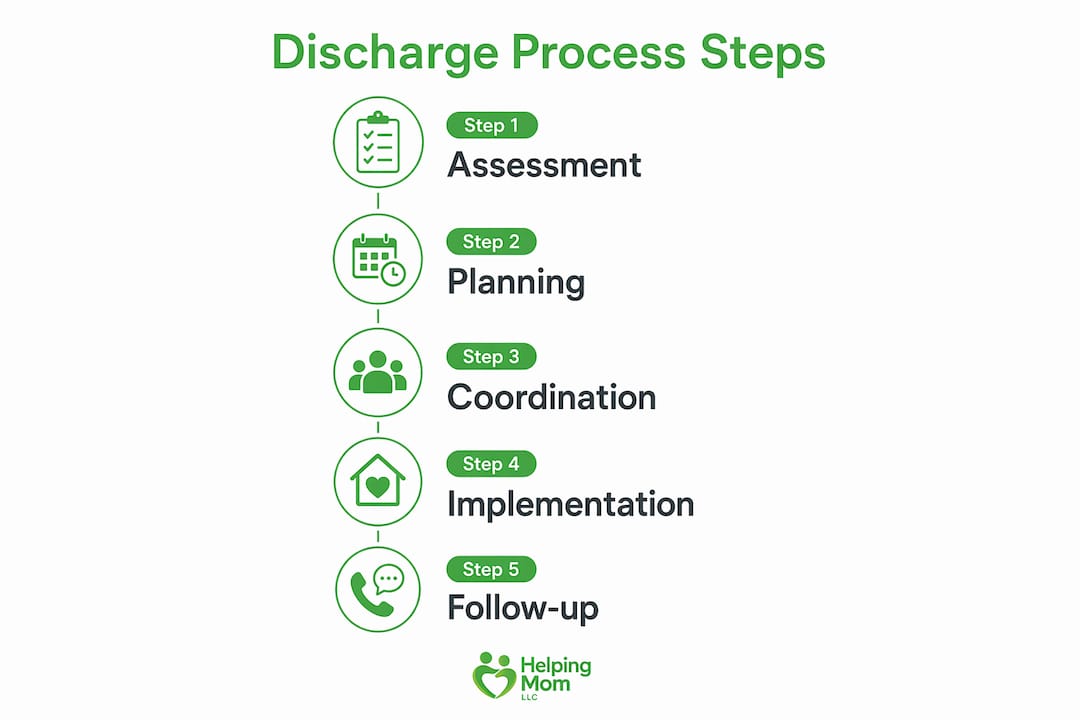
Discharge planning is the coordinated process of preparing your parent to leave the hospital safely, with the right care, equipment, and support already in place before they walk out the door. It is not a single conversation at the end of a stay. It is a structured collaboration between hospital staff, your parent, and you.
Under federal rules, Medicare-certified hospitals must actively screen patients likely to need follow-up care and build a discharge plan with the patient and family. Your parent should receive a notice called the Important Message from Medicare within two days of admission. That document outlines their rights, including the right to appeal a discharge they believe is unsafe.
The core components of a solid discharge plan include:
- A medical assessment of ongoing care needs
- Medication reconciliation, listing every old and new prescription clearly
- Arrangements for post-discharge services such as home health or therapy
- Identification of durable medical equipment needed at home
- A written summary of instructions your parent can actually read and understand
When this process is rushed or skipped, the risks are real. Medication errors in the first week after discharge are a leading cause of rehospitalization. Your involvement as a family caregiver is not a courtesy. It is a safeguard.
How to manage the elderly discharge process step by step
Getting organized early makes the difference between a chaotic discharge day and a calm one. Start asking questions on day one of the hospital stay, not the morning your parent is told they can leave.
Step-by-step checklist:
- Ask to speak with the hospital's discharge planner or case manager within the first 24 hours.
- Request the CMS Discharge Planning Checklist and work through it during the stay.
- Confirm what care your parent will need at home: wound care, injections, physical therapy, bathing help.
- Ask who provides each service, who arranges it, and who pays.
- Get a reconciled medication list that clearly separates new prescriptions from existing ones.
- Confirm that any needed equipment (walker, hospital bed, wheelchair) is ordered and will arrive before your parent does.
- Schedule at least one follow-up appointment before discharge day.
- Write down the name and direct phone number of every provider involved in post-discharge care.
- Arrange transportation for follow-up appointments in advance, not the day before.
- Ask for written discharge instructions and bring them to every follow-up visit.
Key questions to ask before leaving:
- What does a setback look like, and exactly who do I call?
- Is my parent admitted as an inpatient, or under observation? (This affects Medicare coverage for a skilled nursing facility stay.)
- What tasks will my parent need help with at home?
Pro Tip: Write your questions down the night before the discharge meeting. It is easy to forget half of them once you are in the room. Bring a notebook and take notes, or ask if you can record the conversation.
How geriatric care managers can support your family through this
Geriatric care managers, formally known as Aging Life Care Professionals, are specialists who coordinate care between medical providers, your family, and community resources. The Aging Life Care Association describes their work as a client-centered approach that provides answers at a time of uncertainty, drawing on expertise across eight professional knowledge areas including health, housing, and legal matters.
Their value during a senior care transition is practical, not just advisory:
- They assess your parent's full situation, medical and functional, and translate that into a concrete plan.
- They communicate with doctors, home health agencies, and insurers on your behalf.
- They advocate for your parent when the hospital's proposed plan does not fit the actual situation at home.
- They reduce the burden on family members who are managing jobs, their own households, and the emotional weight of a parent's illness at the same time.
Professional navigators improve outcomes by maintaining communication between family and providers during transitions, a role that is especially valuable when your parent has multiple chronic conditions or when family members live far apart. You can find an Aging Life Care Professional through the Aging Life Care Association's directory at aginglifecare.org.
Common pitfalls in senior care transitions and how to avoid them
Most discharge problems are predictable, which means most of them are preventable with a little preparation.
The biggest one is timing. Most senior care transitions happen during a crisis, which limits your ability to compare options and make thoughtful decisions. Families who have done even basic preparation before a hospitalization have more choices when a crisis hits.
A few other patterns come up repeatedly:
- Medication confusion: The discharge medication list often includes both new and existing prescriptions without clearly distinguishing them. Ask the pharmacist or nurse to walk through the list with you line by line before your parent leaves.
- Assumed help: Some discharge plans assume a family member will provide care at home without anyone actually confirming that. If the plan depends on you, make sure you understand exactly what is expected and whether you need training.
- Family disagreements: Decisions made under pressure with incomplete information often lead to conflict among siblings. Getting everyone on the same page before discharge day, even with a quick family meeting, prevents a lot of friction later.
- Rushed facility placement: You do not have to accept the first nursing home or rehab facility with an open bed. Ask for the full list of options and look up Medicare quality ratings before agreeing.
Pro Tip: If you believe the discharge is unsafe, you can appeal it. The Important Message from Medicare notice includes a phone number for the Quality Improvement Organization. Filing an appeal stops the discharge while an independent reviewer assesses whether it is medically appropriate. This process is free and fast.
Preparing your parent's home before they arrive
The home your parent left before the hospital stay may not be safe for the person coming home. Addressing that gap before discharge day, not after, is one of the most practical things you can do.
Home preparation checklist:
- Clear pathways of rugs, cords, and clutter that could cause a fall.
- Install grab bars in the bathroom and near the toilet if not already in place.
- Move frequently used items to waist height so your parent does not need to bend or reach.
- Confirm that any ordered medical equipment has been delivered and is set up correctly.
- Fill all new prescriptions before your parent arrives home.
- Post a simple medication schedule somewhere visible, like the refrigerator.
- Set up a comfortable recovery space on the main floor if stairs are a barrier.
Arrange home health services, such as a visiting nurse or physical therapist, before discharge day. The hospital's discharge planner can refer you to a home health agency, and Medicare covers skilled nursing and therapy visits when they are medically necessary after a qualifying hospital stay. For a broader look at home safety modifications, Helping-mom has a detailed guide that walks through the most common changes room by room.
The period right after discharge is the highest-risk window for both medical and emotional setbacks. Watch for signs that your parent is struggling: missed medications, changes in appetite, withdrawal, or confusion that was not present before. Scheduled check-ins during this period matter more than any single piece of equipment.
Assessing your parent's medical and functional needs before discharge
A good discharge plan starts with an honest picture of what your parent can and cannot do safely on their own. Hospital staff will conduct their own assessment, but you know your parent's baseline better than anyone in that building.

Think through activities of daily living: Can they bathe, dress, and use the bathroom independently? Can they manage stairs? Can they prepare a simple meal or manage their own medications? The CMS checklist prompts families to circle the specific tasks their parent needs help with and discuss them with staff before discharge.
Functional needs often reveal gaps the medical team has not accounted for. A parent who was managing fine before a hospitalization may return home with reduced strength, new medications that cause dizziness, or a wound that needs daily care. Raising these specifics with the discharge planner gives the team a chance to adjust the plan before your parent is home and struggling. You can also use Helping-mom's aging in place checklist as a starting point for this conversation.
Understanding the financial and insurance side of post-discharge care
Cost questions come up fast after a hospital stay, and the answers are not always straightforward. Medicare covers many post-discharge services, but the details matter.
Medicare Part A covers skilled nursing facility care after a qualifying inpatient hospital stay of at least three days. It does not cover custodial care, meaning help with bathing, meals, or supervision when no skilled medical need exists. Home health visits for nursing or therapy are covered when ordered by a doctor and provided by a Medicare-certified agency. For a full breakdown of what Medicare covers in a nursing facility, Helping-mom's guide on Medicare nursing home coverage explains the rules clearly.
If your parent has a Medicare Advantage plan, the coverage rules may differ from traditional Medicare. Call the plan directly and ask what is covered for the specific services in the discharge plan. Ask about prior authorization requirements, because some plans require approval before home health services begin.
For families facing costs that insurance does not cover, a hospital social worker can connect you with local programs, Medicaid eligibility screening, and community resources. Understanding care coordination and how it affects costs is worth exploring early, before bills arrive.
Key Takeaways
Effective discharge planning for seniors requires early action, clear communication with hospital staff, and a home that is ready before your parent arrives.
| Point | Details |
|---|---|
| Start planning on day one | Ask to meet the discharge planner within the first 24 hours of admission, not on discharge day. |
| Know your appeal rights | The Important Message from Medicare lets you appeal an unsafe discharge through the Quality Improvement Organization at no cost. |
| Reconcile medications carefully | Ask staff to distinguish new prescriptions from existing ones to reduce the risk of errors in the first week home. |
| Prepare the home in advance | Install grab bars, clear pathways, and confirm equipment delivery before your parent arrives. |
| Understand what Medicare covers | Medicare covers skilled nursing and home health visits after a qualifying inpatient stay, but not custodial care. |
FAQ
What is discharge planning and why does it matter for seniors?
Discharge planning is the hospital's process for arranging safe follow-up care after a patient leaves. For older adults, it matters because gaps in this process, especially around medications and home safety, are a leading cause of rehospitalization.
Can I appeal a hospital discharge I think is unsafe?
Yes. Every Medicare patient should receive the Important Message from Medicare notice, which includes a phone number for the Quality Improvement Organization. Calling before the discharge takes effect typically pauses the process while an independent reviewer assesses whether it is medically safe.
Does Medicare cover home health care after a hospital stay?
Medicare covers skilled nursing visits and therapy at home when a doctor orders them and a Medicare-certified agency provides them, following a qualifying inpatient hospital stay of at least three days.
What is the role of a geriatric care manager in discharge planning?
Aging Life Care Professionals coordinate care between your parent's medical team, home health providers, and your family. They advocate for your parent's needs and help translate a complex discharge plan into something manageable at home.
When should I start planning for my parent's discharge?
The day of admission, not the day before discharge. Early conversations with the hospital's case manager give you time to arrange services, prepare the home, and ask questions without the pressure of a same-day deadline.