

Respite care gives family caregivers a planned, temporary break while their loved one receives safe, attentive care from someone else. The most common examples of respite care options include in-home professional caregivers, sitter/companion arrangements, adult day services, overnight or short-term residential stays, crisis nurseries and specialized camps, volunteer or faith-based programs, self-directed voucher models, and VA or Area Agency on Aging (AAA) supported programs. According to the NCOA, these options fall into three broad operational categories: in-home care, adult day services, and residential short-term stays, each suited to different levels of need.
Here is a quick snapshot to help you identify which type fits your situation:
- In-home professional caregiver: Best when your parent has mobility limits or prefers staying home.
- Sitter or companion: Good for low-supervision needs and short windows of a few hours.
- Adult day services: Ideal for weekday coverage with social engagement and structured activities.
- Overnight or short-term residential stay: Fits planned travel, medical recovery, or multi-day breaks.
- Crisis nursery or specialized camp: Designed for children or adults with disabilities needing short emergency or recreational care.
- Volunteer or faith-based program: A low-cost or no-cost option for light companionship and errands.
- Self-directed or voucher model: Suits families who want to hire and train their own trusted helper.
- VA or AAA-funded programs: Entry points for veterans and general caregivers to access subsidized local services.
The ARCH National Respite Network and the Eldercare Locator are two of the most reliable starting points for finding local options in any of these categories.
Key Takeaways
Matching the respite model to your parent's functional needs, then trialing it before an emergency, is the single most effective approach to building a sustainable caregiving plan.
| Point | Details |
|---|---|
| Match model to need | Choose in-home, day services, or residential stays based on your parent's mobility, cognition, and social needs. |
| Trial before committing | A short daytime visit or single session lets your parent adjust and helps you evaluate the provider. |
| Medicare has limits | Medicare covers respite only within hospice, up to five consecutive inpatient days. |
| Call your AAA first | The Eldercare Locator connects you to local funding, vouchers, and programs in one call. |
| Helping-mom planning support | Helping-mom offers planning checklists, Zoom consultations, and home safety assessments to help you prepare. |
Table of Contents
- 1. Examples of respite care options and how each one works
- 2. How to find and arrange respite care in the U.S.
- 3. Typical costs and who can help pay for respite
- 4. Questions to ask and safety checks before you hire
- 5. How long does respite care typically last?
- 6. Why taking respite matters and how to handle the guilt
- A note from Mike C.
- Helping-mom can help you plan the next step
- Useful resources for finding respite
- Sources
- FAQ
1. Examples of respite care options and how each one works
The right respite model depends on your parent's daily needs, comfort level, and how long you need to step away. Below is a practical look at each type, including what to expect and when it makes the most sense.
In-home professional caregivers
A licensed home care agency or an independent caregiver comes to your parent's home and provides companionship, personal care (bathing, dressing, meals), and sometimes skilled nursing support. Sessions typically run 4–8 hours, though many agencies offer overnight or 24-hour shifts. This option works especially well when your parent has limited mobility, strong attachment to their home environment, or cognitive changes that make unfamiliar settings unsettling.

For a deeper look at vetting and hiring, the in-home care guide at Helping-mom walks through the key questions to ask before you sign anything.
Sitter or companion and informal swaps
A sitter or companion provides supervision and social interaction without hands-on personal care. This could be a neighbor, a trusted family friend, a college student, or a paid companion from an online caregiver marketplace. Informal family swaps, where a sibling or cousin takes over for a weekend, also fall here. These arrangements suit parents who are relatively independent but should not be left alone for safety reasons. Basic vetting still applies: check references, confirm the person knows your parent's routines, and leave an emergency contact list.
Adult day services
Adult day centers offer structured programs during daytime hours, typically 7 AM–6 PM on weekdays. Your parent attends the center, participates in social activities, shares meals, and may receive health monitoring or therapy services depending on the program. Many centers specialize in memory care. This model is one of the most practical for working caregivers who need consistent weekday coverage. Helping-mom has a full article on adult day care options if you want to explore this further.

Overnight and short-term residential stays
Assisted living communities and nursing homes often accept short-term guests for planned respite stays, ranging from a single overnight to several weeks. This is the right choice when you need multi-day coverage for travel, a medical procedure of your own, or simply a longer reset. As the Cleveland Clinic notes, practical preparation matters: bring a medication log, a daily routine sheet, and a comfort kit (a favorite blanket, photos, familiar snacks) to help your parent settle in.
Crisis nurseries and specialized camps
Crisis nurseries provide emergency short-term care for children, including children with disabilities, when a family faces an unexpected crisis. For adults with developmental or physical disabilities, specialized respite camps offer structured recreational programs, usually running 3–7 days. These programs are often run by nonprofits and may charge on a sliding scale. The ARCH National Respite Network maintains a locator that includes many of these programs.
Volunteer and faith-based programs
Many communities have volunteer caregiver networks, often organized through faith communities, nonprofits, or local aging services. Volunteers may sit with your parent for a few hours, run errands, or provide companionship. These programs are typically free or low-cost. They work best for lighter supervision needs and are a good starting point when budget is a concern.
Host-home or family-care models
In a host-home arrangement, your loved one stays temporarily with a trained host family rather than a facility. This model is more common for adults with developmental disabilities and offers a home-like setting for short stays. Availability varies widely by state, so checking with your local AAA is the fastest way to find out whether this option exists near you.
Self-directed or voucher models
Some states offer voucher programs or stipends that let families hire and train their own chosen caregiver, including a trusted neighbor or a family member who does not live in the household. Medicaid self-direction programs are the most common vehicle for this. Eligibility and program names vary by state, so your local AAA or state Medicaid office is the right first call.
VA respite programs
The U.S. Department of Veterans Affairs provides respite services for eligible veterans through several channels, including in-home aide hours, adult day health care, and short-term facility stays. Veteran caregivers should contact VA Caregiver Support directly to confirm eligibility and available hours in their area.
Area Agency on Aging and AAA-funded programs
Area Agencies on Aging coordinate local respite services and often know about under-used grants, vouchers, and Lifespan Respite programs that are not widely advertised. Calling your local AAA is one of the highest-yield first steps you can take, regardless of which respite model interests you.
Comparison of common respite models
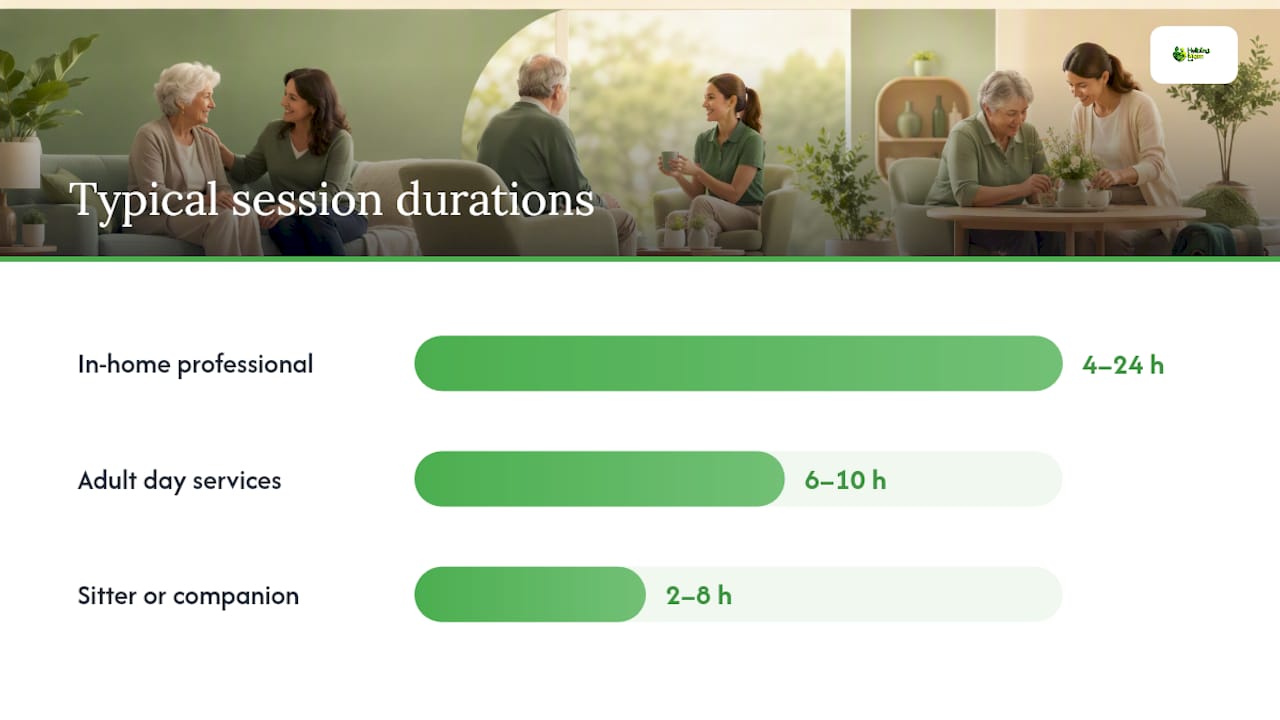
| Model | Typical duration | Best fit | Key advantage |
|---|---|---|---|
| In-home professional | 4–24 hours per session | Mobility limits, home preference | Familiar setting, flexible hours |
| Sitter or companion | 2–8 hours | Low-supervision needs | Low cost, informal flexibility |
| Adult day services | Full weekday (6–10 hours) | Working caregivers, social needs | Consistent schedule, structured activities |
| Short-term residential | 1 night to several weeks | Multi-day travel, recovery | Full overnight coverage |
| Volunteer or faith-based | A few hours, irregular | Light supervision, tight budget | Low or no cost |
| Host-home model | Days to weeks | Adults with disabilities | Home-like environment |
| Self-directed or voucher | Flexible | Families with a trusted helper | Caregiver of your choice |
| VA or AAA programs | Varies by program | Veterans, income-eligible families | Subsidized or free |
Pro Tip: Before committing to any model, ask the provider whether they have experience with your parent's specific condition, whether that is dementia, Parkinson's, or a mobility impairment. A provider who has worked with similar clients will handle unexpected moments far more calmly.
2. How to find and arrange respite care in the U.S.
Finding the right respite provider feels less daunting when you break it into clear steps. Here is a practical sequence that works for most families.
- Assess your parent's needs. Write down their daily routine, any medical conditions, mobility level, and behavioral patterns. This one-page summary will save you time on every provider call.
- Pick one or two models to explore first. Based on the comparison above, choose the option that fits your parent's functional needs and your schedule.
- Contact your local Area Agency on Aging. The Eldercare Locator (1-800-677-1116) connects you to your nearest AAA in minutes. They can point you to local providers, voucher programs, and funding options you may not find online.
- Use the ARCH National Respite Locator. The ARCH National Respite Network runs a searchable locator for respite programs across the country, including volunteer programs, crisis nurseries, and camps.
- Contact VA Caregiver Support if your parent is a veteran. The VA's caregiver support line can confirm eligibility and walk you through available respite hours.
- Call two or three providers and ask your core questions. Use the vetting checklist in the next section. Take notes.
- Schedule a trial session. A short daytime visit or a single afternoon shift lets your parent and the provider get comfortable before you commit to a longer arrangement.
- Build a recurring schedule. Once the trial goes well, set a regular cadence, whether weekly, biweekly, or monthly, so respite becomes a routine rather than a last-minute scramble.
Pro Tip: For a first overnight stay at a facility, consider visiting with your parent during the day a week before. Familiarity with the space and staff reduces anxiety for both of you.
For emergency or short-notice needs, call your local AAA first. Some communities have crisis respite lines or can connect you with a facility that keeps short-notice beds available. Crisis nurseries for children typically have 24-hour intake lines.
3. Typical costs and who can help pay for respite
Respite care costs vary widely depending on the model, location, and level of care involved. Here is a general sense of what families encounter:
- In-home professional care: Typically charged by the hour; rates vary by region and whether the care is companion-level or skilled nursing.
- Adult day services: Usually billed as a daily fee; many centers use sliding-scale pricing based on income.
- Short-term residential stays: Charged as a per-diem rate at the facility; rates differ between assisted living and nursing home settings.
- Volunteer and faith-based programs: Generally free or donation-based.
Who can help cover the cost:
- Medicaid waivers: Many states offer Home and Community-Based Services (HCBS) waivers that cover respite for eligible low-income individuals. Eligibility and covered services vary by state.
- VA respite benefits: Eligible veteran caregivers can access subsidized in-home hours, adult day health care, and short-term facility stays through the VA.
- National Family Caregiver Support Program: Administered through Area Agencies on Aging, this federal program can fund respite services or connect families with local vouchers. The ACL's program page has state-by-state details.
- State Lifespan Respite programs: Some states run dedicated respite funding initiatives. Your local AAA or state aging office can tell you whether one exists in your state.
- Local grants and vouchers: AAAs often know about small local grants that are not widely publicized. A single phone call can surface options you would not find through a web search.
A note on Medicare: Medicare covers respite care only in a specific hospice context, allowing up to five consecutive inpatient days when the primary caregiver needs a break and the patient is already enrolled in hospice. Outside of hospice, standard Medicare does not pay for respite care.
Funding note: Calling your local AAA is often the fastest way to find out which programs you qualify for. Many families discover funding they did not know existed simply by making that one call.
4. Questions to ask and safety checks before you hire
Leaving your parent with someone new takes trust. These are the questions and checks that help you build that trust before the first shift.
Questions to ask any provider or center:
- Are you licensed and insured? (For agencies, ask for proof.)
- Do you conduct background checks on all staff?
- What training do your caregivers have, and do any specialize in dementia care?
- How do you handle medications? Who is responsible for administration?
- What is your emergency plan if my parent falls or has a medical episode?
- What is the staff-to-client ratio at your center?
- How will you communicate with me during and after each visit?
Red flags to watch for:
- Vague or evasive answers about training or background checks.
- No written emergency protocol.
- Inconsistent scheduling or last-minute cancellations during the trial period.
- Reluctance to let you observe a session or tour the facility.
For overnight or residential stays, bring a printed medication list with dosages and timing, a one-page daily routine sheet (wake time, food preferences, bedtime rituals), and a comfort kit. The Cleveland Clinic recommends including familiar personal items, such as a favorite blanket or family photos, to reduce agitation, particularly for people with cognitive impairment.
Pro Tip: When your parent has dementia or another cognitive condition, ask specifically whether the provider or center has dementia-specific training, such as a certification in person-centered dementia care. A caregiver who understands redirection techniques and behavioral triggers will handle difficult moments far more effectively than one with only general training.
5. How long does respite care typically last?
Respite care can run anywhere from two hours to several weeks, depending on the model and your needs. Here is a realistic picture of typical durations:
- In-home or sitter visits: Usually 2–8 hours; some agencies offer overnight or 24-hour shifts.
- Adult day services: A full program day, typically 6–10 hours on weekdays.
- Short-term residential stays: One night to several weeks; most facilities can accommodate 1–14 day stays for planned respite.
- Specialized camps: Usually 3–7 days for adults with disabilities; varies by program.
- Crisis or emergency respite: Hours to a few days, depending on the program and the situation.
Common use-case scenarios:
- Workday coverage: Weekly adult day services on Monday, Wednesday, and Friday give you consistent time for work or appointments.
- Planned travel: A 5–7 day residential stay at a local assisted living community covers a vacation or out-of-town family event.
- Hospital discharge recovery: In-home professional care for 2–4 weeks while you recover from your own procedure.
- Regular weekly break: A sitter for 4 hours every Saturday afternoon to protect your personal time and reduce burnout.
Building a mixed plan, such as weekly adult day services plus an occasional overnight stay, tends to work better than relying on a single option. It gives your parent variety and gives you flexibility when your schedule changes.
Scheduling note: The NCOA recommends treating respite as a regular, scheduled part of caregiving rather than something you arrange only in a crisis. Starting with short, planned sessions also lets your parent adjust gradually and helps you evaluate providers before you need them urgently.
6. Why taking respite matters and how to handle the guilt
Many caregivers delay using respite because they feel guilty stepping away. That feeling is understandable, but it works against both you and your parent.
Caregiver burnout is a real health risk. When you are exhausted, your patience shortens, your judgment suffers, and the quality of care you provide declines. The NCOA frames respite as preventive health care for caregivers, not a luxury or an abandonment. Taking a break is part of being a good caregiver, not a departure from it.
The ARCH National Respite Network echoes this, noting that matching the respite model to the care recipient's functional needs, rather than choosing whatever is most convenient, leads to better outcomes for everyone involved.
Practical ways to reframe and reduce guilt:
- Tell yourself: "I am arranging care for my parent, not leaving them." The provider is there; your parent is not alone.
- Use a scripted line with relatives who question your decision: "I've arranged professional care so I can come back rested and present. That's better for both of us."
- Start with a short trial, a 3-hour afternoon visit, so the first experience feels low-stakes for you and your parent.
- Track how you feel after a break versus after a week without one. Most caregivers notice the difference quickly.
Caregiver well-being note: If guilt or burnout is already affecting your daily life, the caregiver well-being resources at Helping-mom offer practical emotional-support tools designed specifically for adult children in this role.
The NCOA also recommends trialing respite before an emergency forces your hand. A provider your parent already knows is far less disorienting than a stranger arriving during a crisis.
A note from Mike C.
If you are reading this while already stretched thin, I want you to know that what you are doing is genuinely hard. Caring for a parent while managing your own life takes more than most people realize from the outside.
Respite is not a sign that you cannot handle it. It is a sign that you are thinking ahead. The families I have seen navigate caregiving most steadily are the ones who build in regular breaks before burnout forces the issue. Even a few hours a week makes a measurable difference over months.
If you are not sure where to start, call your local Area Agency on Aging (find yours at the Eldercare Locator) or use the ARCH National Respite Locator. Both are free, and a single call can open doors to programs and funding you did not know existed.
Helping-mom can help you plan the next step
Planning respite involves more than finding a provider. It means preparing your parent's home, organizing medical information, and knowing what questions to ask. Helping-mom offers practical planning checklists, paid Zoom consultations for caregivers who want personalized guidance, and in-person home safety assessments for families in Central Florida.
If you are arranging your first respite stay or preparing your parent's home before a caregiver arrives, the home safety guide for aging parents is a good place to start. It walks through the practical safety steps that make a home ready for a new caregiver or a return from a short residential stay.
To talk through your specific situation with a real person, you can book a Zoom consultation directly at Helping-mom. It is a focused, practical conversation, not a sales call.
Useful resources for finding respite
These are the national directories and programs worth bookmarking. Each serves a slightly different purpose, so knowing which to call first saves time.
- ARCH National Respite Network: Searchable locator for respite programs across the U.S., including volunteer programs, crisis nurseries, and camps. Start here if you want a broad search by zip code.
- NCOA Respite Care Guide: Clear overview of respite types, benefits, and how to find local help. Good for caregivers who are new to the concept.
- Eldercare Locator / Area Agencies on Aging: Call 1-800-677-1116 to reach your local AAA. First call for most families, especially for funding leads and local vouchers.
- VA Caregiver Support: For veteran caregivers. Contact VA Caregiver Support to confirm eligibility and available respite hours.
- National Family Caregiver Support Program (ACL): Federal program administered through AAAs; can fund respite or connect families with local subsidies.
- National Institute on Aging (NIA): Authoritative overview of respite care, including the Medicare hospice limitation.
Which to call first: If your parent is a veteran, start with VA Caregiver Support. For everyone else, the Eldercare Locator is the fastest route to local programs and funding.
This article is general information, not a substitute for advice from a qualified doctor. Consult a qualified healthcare professional about your own circumstances before acting on anything here.
Sources
- What Is Respite Care? - National Institute on Aging (NIA)
- What Is Respite Care? A Guide for Caregivers - National Council on Aging (NCOA)
- Types of Respite | ARCH National Respite Network & Resource Center
- Respite Care - Cleveland Clinic
- Respite Care - U.S. Department of Veterans Affairs
- Eldercare Locator / ACL
FAQ
What are the main types of respite care?
The three primary categories are in-home care (professional or volunteer), adult day services (center-based programs), and residential short-term stays at assisted living or nursing facilities, as outlined by the NCOA. Within those categories, options range from informal sitter arrangements to VA-funded programs.
Will Medicare pay for respite care for adults?
Standard Medicare does not cover respite care. The exception is hospice: Medicare covers up to five consecutive inpatient days of respite for patients already enrolled in a hospice program when the primary caregiver needs a break.
How do you get respite care for a parent with dementia?
Contact your local Area Agency on Aging through the Eldercare Locator and ask specifically for memory-care-trained providers or adult day centers with dementia programs. When vetting any provider, confirm they have dementia-specific training before the first session.
What should you do when a parent can no longer care for themselves?
Start by calling your local AAA to understand what in-home and community-based services are available. Respite care is often a bridge that extends the time a parent can remain at home safely while you explore longer-term options. The types of caregiver support guide at Helping-mom covers the broader range of options in plain language.
Recommended
- Types of Caregiver Support: Practical Options for Your Family | Helping Mom LLC
- How to Support Aging Parents: Practical Steps for Families | Helping Mom LLC
- The Role of Caregivers: Practical Support for Adult Children Caring for Aging Parents | Helping Mom LLC
- Complete Caregiving Guides | Helping Mom LLC - Resources for Caring for Aging Parents