

TL;DR:
- Family caregiving meetings are the most effective way to prevent conflicts and create clear care plans for aging parents.
- Structured agendas, written care inventories, and domain ownership ensure focus, fairness, and adaptability in caregiving.
A family caregiving conference, the recognized term for a structured discussion among family members about an aging parent's care, is the single most effective tool for preventing conflict and making clear decisions together. The best family meeting tips for caregiving share one thing in common: they replace reactive, crisis-driven conversations with planned, focused discussions that keep your parent's safety and quality of life at the center. Without structure, these meetings drift into old grievances and uneven workloads. With the right approach, they become the foundation of a care plan everyone can actually follow.
1. Build a structured agenda before the meeting
A structured agenda is the single most important preparation step you can take. A productive caregiving family meeting typically runs 60–90 minutes, with planned segments covering medical facts, a care needs inventory, resource options, and role distribution. That time limit matters. Without one, meetings expand to fill whatever space is available, and the most important topics get rushed at the end.
Typical agenda items include recent medical updates, a list of current caregiving tasks, financial concerns, and future living arrangements. Encouraging family members to write down their concerns before the meeting keeps the discussion focused and prevents anyone from feeling blindsided.
Pro Tip: Send the agenda at least 48 hours in advance. This gives everyone time to gather information and arrive prepared rather than reactive.
2. Create a written care inventory
Most families underestimate how much caregiving work is actually happening. A written care inventory lists every task involved in supporting your parent, along with an estimate of how many hours per week each task requires. Without explicit documentation, families default to uneven caregiving without realizing it.
This inventory makes the invisible visible. When siblings can see that one person is spending 15 hours a week on medical appointments and grocery runs while another contributes nothing, the conversation about sharing responsibilities becomes grounded in facts rather than feelings. The inventory also becomes the foundation for assigning roles fairly.
3. Set clear ground rules at the start
Ground rules protect the meeting from derailing before it gets started. State them clearly at the beginning, and ask everyone to agree before moving forward. A few that work well in caregiver family discussions:
- Attendance equals voice. Siblings who are not present forfeit their veto rights on decisions made that day.
- Forward-looking comments only. Comments about past events from prior years are tabled, not debated.
- One person speaks at a time. No interrupting, no talking over each other.
- The parent's needs come first. Every disagreement gets filtered through one question: what is best for Mom or Dad right now?
These rules are not about controlling the conversation. They are about protecting it.
4. Use collaborative framing, not blame
The language you use at the start of a meeting shapes everything that follows. Saying "I need you to do more" puts siblings on the defensive immediately. Saying "I want us to build a shared system" opens a conversation about collective responsibility instead of individual failure.
Collaborative framing works because it positions everyone as part of the same team. It removes the implication that one person has been failing and replaces it with the idea that the family is building something together. This shift is small in words but significant in outcome.
Pro Tip: Before the meeting, practice your opening sentence out loud. If it sounds like an accusation, rewrite it as a shared goal.
5. Use a reset question when conversations get heated
Every caregiving family discussion has a moment where emotions spike. Someone brings up a past grievance, or a sibling feels criticized, and the meeting loses its focus. The most effective way to recover is a single reset question: "What would be best for Mom's safety and quality of life right now?"
This question works because it shifts attention away from the people in the room and back to the person the meeting is actually about. It is not dismissive of emotions. It simply redirects the group toward the shared purpose that brought everyone together.
6. Assign domain ownership, not just tasks
Task lists break down. When a sibling is assigned "take Mom to appointments," that task becomes unmanageable as care needs grow and schedules change. Domain ownership is a better model. Each family member takes responsibility for an entire area of care, such as finances, medical coordination, or home safety.
Domain ownership means the person responsible makes decisions within that area without needing constant approval from the group. It reduces micro-management and adapts naturally as care needs evolve. A sibling who owns "medical coordination" handles scheduling, communicates with providers, and tracks medications. They do not need to check in for every appointment.
Here is a simple framework for dividing caregiving domains:
| Domain | Responsibilities | Owner |
|---|---|---|
| Medical coordination | Appointments, provider communication, medications | Assign to one sibling |
| Finances | Bills, insurance, benefits, legal documents | Assign to one sibling |
| Home safety | Modifications, equipment, emergency planning | Assign to one sibling |
| Daily support | Meals, transportation, social connection | Assign to one sibling |
7. Involve your parent in the conversation
Your parent is not a passive subject of these meetings. Whenever possible, include them in the discussion, or at minimum, ask for their input beforehand. Talking with aging parents about their own care preferences leads to better decisions and preserves their dignity.
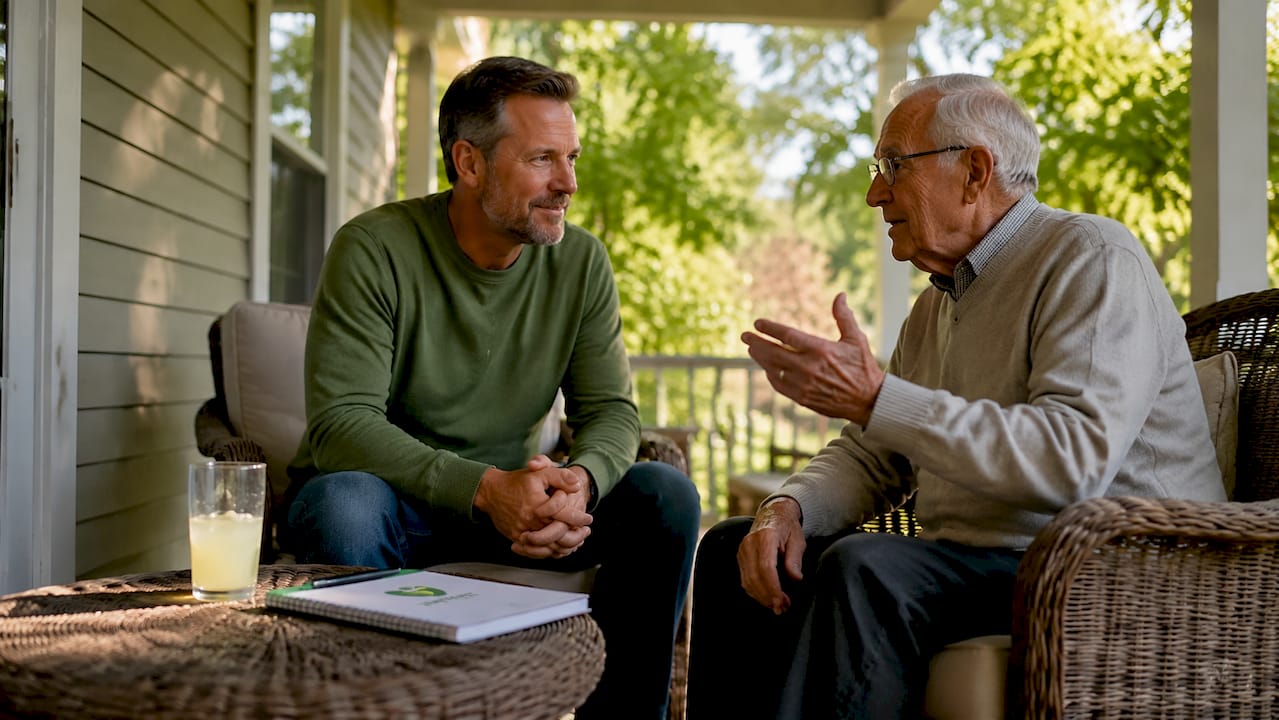
Adults who feel heard are more likely to accept help. When your parent knows their preferences shaped the plan, they are less likely to resist care arrangements later. Even a brief conversation before the meeting, asking what matters most to them right now, gives the family valuable direction.
8. Put every agreement in writing
Verbal agreements made in a meeting evaporate quickly. A short written summary, shared with everyone within 24 hours, is the difference between a productive meeting and one that has to be repeated. Written agreements with specific tasks and follow-up mechanisms prevent miscommunication and reduce the risk of burnout.
The summary does not need to be formal. A simple email covering who owns what, what decisions were made, and what the next steps are will do. The act of writing it down creates accountability without requiring anyone to police each other.
9. Schedule the next meeting before you leave
One of the most overlooked family caregiving strategies is ending every meeting with a scheduled follow-up. Care needs change. What works in january may not work in june. Building regular check-ins into the plan, whether monthly or quarterly, keeps the family coordinated without waiting for a crisis to prompt the next conversation.
Set the date, time, and format before everyone leaves the room. A 30-minute video call every six weeks is far more sustainable than a two-hour emergency meeting every few months. Regular contact also makes it easier to raise small concerns before they become large ones.
10. Follow up on commitments with specific next steps
A meeting without follow-through is just a conversation. After each meeting, every domain owner should have at least one concrete next step with a deadline. Examples include scheduling a home safety assessment, consulting an elder law attorney about legal and financial planning, or touring a local care option.
Specific next steps prevent the drift that happens when good intentions meet busy lives. They also give the next meeting a clear starting point: did we do what we said we would do? That accountability loop is what turns a single productive meeting into an ongoing care coordination system.
Key Takeaways
Effective family caregiving meetings require structured agendas, domain-based role ownership, and written follow-up to reduce conflict and keep care decisions focused on your parent's well-being.
| Point | Details |
|---|---|
| Structured agenda | Plan 60–90 minutes with set segments to prevent rushed or derailed discussions. |
| Written care inventory | Document all tasks and hours to make the caregiving load visible and fair. |
| Domain ownership | Assign full areas of responsibility, not just tasks, to reduce micro-management. |
| Collaborative language | Frame meetings as building a shared system to prevent sibling defensiveness. |
| Written follow-up | Share a short summary within 24 hours and schedule the next meeting before leaving. |
What I've learned from watching families get this right and wrong
I have seen families walk into caregiving meetings with the best intentions and walk out angrier than when they started. The pattern is almost always the same: no agenda, no ground rules, and someone who has been quietly carrying the full load finally says something that sounds like an accusation. The meeting becomes about the past instead of the future.
The families who handle these conversations well are not the ones without conflict. They are the ones who treat the meeting like a practical planning session rather than a referendum on who has been a good enough sibling. They come prepared. They keep the focus on their parent's actual needs. And they leave with something written down.
The "less is more" mindset that caregiving experts recommend resonates with me deeply. Families that focus on meaningful daily experiences for their parent, rather than reacting to every medical development with maximum intervention, make calmer and more intentional decisions. That calm starts in the meeting room.
One more thing: do not wait until there is a crisis to call the first meeting. The families who plan ahead, even when things feel stable, have a much easier time when things do change. A calm conversation now is worth ten stressful ones later.
— Mike
Helping-mom resources for your next caregiving meeting
Planning a family caregiving meeting is easier when you have the right tools in hand. Helping-mom offers a family meeting agenda template built specifically for adult children coordinating parent care, covering everything from medical updates to role assignments. The site also provides a practical guide to home safety for seniors, which gives families a concrete checklist to work through together during or after their meeting. If sibling dynamics are making coordination harder, the caregiver sibling conflict guide offers calm, direct strategies for working as a team. All resources are written for adult children in their 40s and 50s who want clear, practical guidance without the clinical language.
FAQ
How long should a family caregiving meeting last?
A productive family caregiving meeting runs 60–90 minutes. A structured agenda with timed segments keeps the discussion on track and prevents any single topic from consuming the entire meeting.
What should a family meeting agenda for caregiving include?
A caregiving family meeting agenda should cover recent medical updates, a care needs inventory, financial concerns, role assignments, and future living arrangements. Asking family members to submit concerns in advance helps keep the meeting focused.
How do you stop a family caregiving meeting from turning into an argument?
Set ground rules before the meeting starts, including a forward-looking comments only rule and the principle that attendance equals voice. When conversations get heated, use the reset question: "What would be best for Mom's safety and quality of life right now?"
Should the aging parent attend the family caregiving meeting?
Yes, whenever possible. Including your parent in the discussion, or gathering their input beforehand, leads to better decisions and respects their autonomy. Adults who feel heard are more likely to accept and cooperate with care arrangements.
What is domain ownership in caregiving, and why does it work better than task lists?
Domain ownership means assigning one family member full responsibility for an area of care, such as finances or medical coordination, rather than a list of individual tasks. It reduces the need for constant check-ins and adapts better as care needs change over time.
Recommended
- Family Meeting for Aging Parents: A Practical Guide | Helping Mom LLC
- How to Get Siblings to Help with an Aging Parent Without Creating Family Conflict | Helping Mom LLC
- How to Balance Caregiving Without Losing Yourself: Practical Strategies for Family Caregivers | Helping Mom LLC
- How to Support Aging Parents: Practical Steps for Families | Helping Mom LLC