
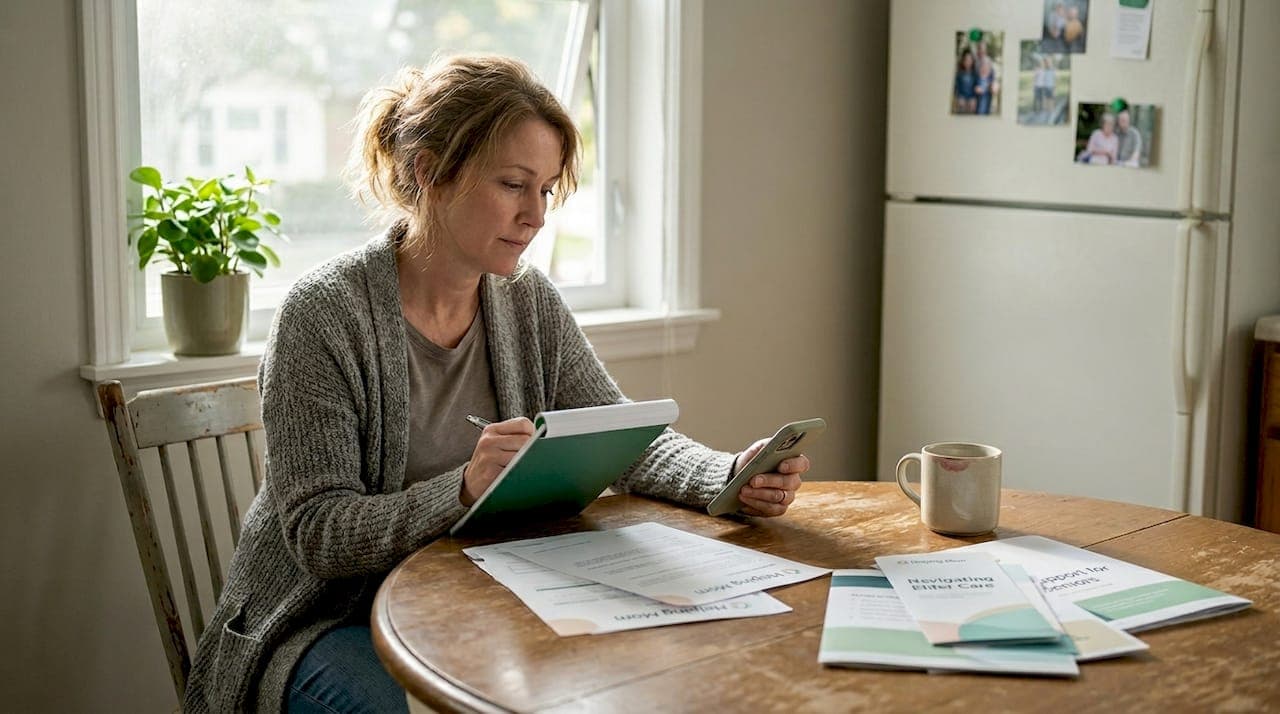
Caring for an aging parent is one of the most meaningful things you can do, and one of the most demanding. There are 63 million family caregivers in the United States today, a number that has grown dramatically over the past decade, and nearly half provide high-intensity care that affects their finances, health, and relationships. If you feel stretched thin, you are not alone, and you are not without options. This article walks you through finding support resources, navigating difficult family conversations, managing your own stress, and making your parent's home a safer place to live.
Table of Contents
- How to identify and access caregiver support resources
- Navigating family conversations about care
- Managing caregiver stress and preventing burnout
- Planning and verifying home safety for aging parents
- The real truth about finding caregiver support: lessons learned
- Get personalized support for your caregiving journey
- Frequently asked questions
Key Takeaways
| Point | Details |
|---|---|
| Local support matters | Starting with 211 or Eldercare Locator ensures tailored help is easily accessible for caregivers. |
| Good conversations build trust | Opening calm, listening, and offering choices leads to more productive family care discussions. |
| Stress boundaries prevent burnout | Prioritizing self-care, support groups, and clear boundaries aids caregiver resilience and well-being. |
| Home safety checklists reduce risks | A structured room-by-room safety checklist prevents falls and accidents in elderly parent homes. |
| Hybrid support works best | Combining online groups with professional counseling delivers the most effective support, especially in high-stress caregiving situations. |
How to identify and access caregiver support resources
The first step in sustainable caregiving is knowing where to look for help. Many adult children spend months managing everything alone before they discover there are real, practical resources waiting for them. Starting your search early makes everything else more manageable.
Start with a simple phone call or website
The easiest entry point is a free call to 211, a national helpline that connects you to local services including meal delivery, transportation, in-home care, and respite programs. The Eldercare Locator, also accessible through that same resource, helps you find services tailored specifically to your situation and your parent's location. You do not need to have everything figured out before you call. Just describe what is going on and let them guide you.
At the national level, the National Family Caregiver Support Program (NFCSP) offers counseling, support groups, caregiver training, and respite care for people supporting a family member aged 60 or older. It is administered through local Area Agencies on Aging, which means services are delivered close to home. Many caregivers do not realize this program exists until a crisis forces them to look. Getting connected early puts you ahead.
Comparison of major support options
| Type | Example | Best for | Cost |
|---|---|---|---|
| Local helpline | 211, Eldercare Locator | Finding services fast | Free |
| National program | NFCSP via Area Agencies on Aging | Counseling, respite care | Free or low cost |
| Online community | AARP Facebook groups, online forums | Peer support, shared experience | Free |
| Professional services | Geriatric care managers | Complex care coordination | Varies |
| Telehealth support | Virtual counseling platforms | Remote caregivers | Varies |
Online communities are often overlooked but genuinely valuable. AARP's Facebook groups and caregiver forums give you access to people who understand what you are going through. The conversations are honest, practical, and available at any hour. For integrative mental health support that combines emotional and practical strategies, virtual options are growing quickly and becoming more accessible.
Must-have support resources to bookmark today
- 211 (call or text) for local service referrals
- Eldercare Locator at eldercare.acl.gov
- Your local Area Agency on Aging
- NFCSP through the Administration for Community Living
- AARP online caregiver communities
- Your state's Department on Aging website
Explore the full range of caregiving resources to find options organized by topic and situation.
Pro Tip: Ask specifically about respite care when you call 211 or your local agency. Respite gives you a scheduled break while a trained professional steps in. Even a few hours per week can meaningfully reduce burnout.
Navigating family conversations about care
Once you know what support exists, the next challenge is often closer to home: talking with your aging parent and your siblings about what needs to change. These conversations can feel loaded. Everyone has history, opinions, and fears. But handled with care, they can also bring families closer.
A step-by-step approach to productive care conversations
- Choose the right moment. Pick a calm, low-stress time when no one is rushing or already upset. Avoid bringing up care concerns during holidays or in the middle of a crisis.
- Start by listening. Open with a question, not a statement. "How are you feeling about things at home lately?" invites your parent to share rather than defend.
- Offer options, not directives. Saying "I thought we could look at a few options together" feels very different from "You need to stop driving." Autonomy matters deeply to aging parents.
- Acknowledge emotions before moving to solutions. If your parent becomes upset, pause. Let them feel heard before continuing. Rushing past emotion usually makes the conversation longer, not shorter.
- Allow processing time. Big decisions rarely get resolved in one conversation. It is okay to say, "Let's think on this and talk again next week."
- Follow up in writing. After any meaningful conversation, send a short, warm message summarizing what was discussed. This reduces misunderstandings and shows you were paying attention.
Sibling dynamics add another layer. One sibling may be close by and bearing most of the physical burden. Another may live far away but feel guilty about it, which can come out as criticism. Start by acknowledging everyone's constraints before assigning responsibilities. The goal is not fairness in a strict mathematical sense. It is sustainability.
"The most important thing you can do at the start of a family care conversation is slow down. Caregiving decisions made in haste often lead to resentment. Listening first, even when it takes longer, builds the kind of trust that holds families together over months and years." — CaregiverROC guidance on productive care conversations
For more practical guidance on how to discuss care with a resistant parent, or to get help addressing adult sibling conflict around caregiving, those resources offer calm, step-by-step support. You can also find scripts and conversation guides for talking with aging parents in a way that respects their dignity.
Pro Tip: Before any family meeting, write a short agenda and share it in advance. When people know what to expect, they come in less defensive and more prepared to listen.
Managing caregiver stress and preventing burnout
Conversations and resources only help if you are well enough to use them. Caregiver stress is real, it builds gradually, and it can sneak up on you before you realize how depleted you have become. Managing your own well-being is not a luxury. It is the foundation of everything else.
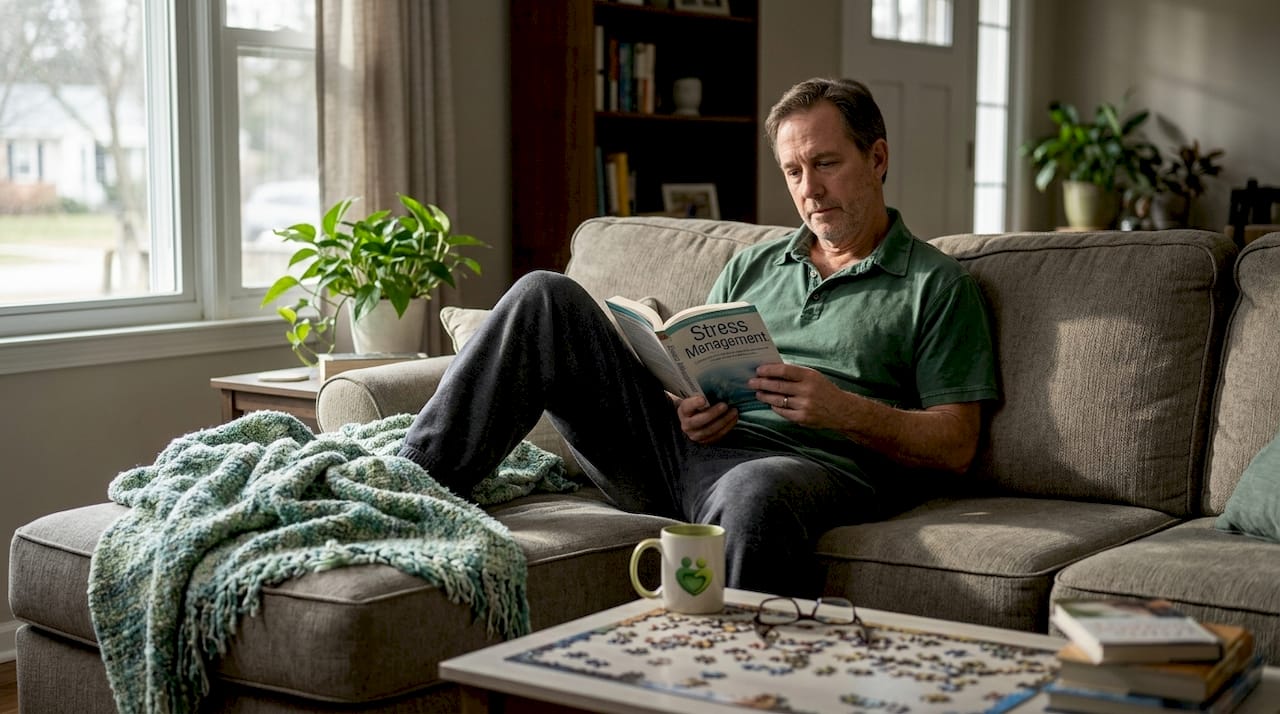
The evidence is clear on what works
Research from Mayo Clinic consistently points to a handful of strategies that genuinely reduce caregiver stress: regular physical exercise, adequate sleep, participation in support groups, mindfulness practices, and the willingness to ask for help. None of these are complicated. But when you are in the middle of caregiving, even simple things can feel out of reach. That is why building these habits before you hit a breaking point matters.
Setting boundaries is one of the hardest and most necessary skills a caregiver can develop. A boundary is not abandonment. It is a practical decision about what you can sustain. Saying "I can visit three times a week, but not every day" is an act of care for both you and your parent.
Practical self-care actions you can start this week
- Schedule 20 to 30 minutes of movement each day, even a walk around the block
- Protect your sleep by setting a consistent bedtime and limiting late-night phone checking
- Join one online or in-person caregiver support group and attend at least twice before deciding if it fits
- Delegate one task this week, whether to a sibling, neighbor, or paid helper
- Practice saying "I need a break" out loud, because it gets easier with repetition
- Use respite care even when you feel like you "should" be able to handle it alone
Statistic worth knowing: Among caregivers providing high-intensity care, 33% have stopped saving for retirement due to caregiving costs. Financial stress compounds emotional stress quickly. Connecting with support programs early can reduce both.
For a deeper look at caregiver well-being and tools to protect your own health while caring for a parent, those resources offer practical, non-clinical guidance. If you are already feeling exhausted and close to empty, reading about recognizing caregiver burnout can help you identify where you are and what to do next.
For caregivers dealing with significant stress, holistic stress relief approaches can complement traditional counseling and provide meaningful relief.
Pro Tip: Online peer support and professional counseling work best together. If you are in a high-stress situation, do not choose one over the other. Use both. The peer support normalizes your experience. The counseling helps you work through it.
Planning and verifying home safety for aging parents
Once you have your support system in place and your own health protected, it is time to turn your attention to the environment your parent lives in every day. Falls are among the most serious risks for older adults, and most fall hazards are preventable with modest changes to the home.
A room-by-room safety checklist
Start with a home safety assessment that covers every room systematically. Grab bars should be installed in the bathroom near the toilet and shower, rated for at least 250 pounds of force. Non-slip surfaces should have a dynamic coefficient of friction (DCOF) of 0.42 or higher. Lighting throughout the home should reach at least 300 lux in high-traffic areas. Bed and toilet heights should fall between 17 and 23 inches from the floor to allow safe transitions.
Key home modifications at a glance
| Area | Modification | Why it matters |
|---|---|---|
| Bathroom | Grab bars (250 lb+ rated) | Prevents falls during transfers |
| Floors | Non-slip surfaces (DCOF 0.42+) | Reduces slip-and-fall risk |
| All rooms | Lighting at 300 lux or more | Improves visibility, especially at night |
| Bedroom and bathroom | Bed/toilet height 17 to 23 inches | Supports safe sitting and standing |
| Hallways and stairs | Clear pathways, handrails both sides | Prevents tripping and supports balance |
Stepwise safety assessment process
- Walk through the home with a notepad and identify every tripping hazard, including loose rugs, cords, and clutter.
- Test all lighting and replace bulbs as needed, adding night lights in hallways and bathrooms.
- Evaluate bathroom safety first, since it is the highest-risk room for falls.
- Assess kitchen access and storage to reduce the need for reaching or bending.
- Review bedroom access, including the path from bed to bathroom at night.
- Revisit the assessment every six months or after any health change.
"Small hazards that seem minor become serious risks as balance and vision change with age. A loose rug or a dim hallway can cause a fall that changes everything. Catching these things early costs very little. Addressing them after an injury costs much more."
For DIY changes like removing rugs and improving lighting, you can usually act immediately. For structural modifications like installing grab bars or ramps, hire a licensed contractor or an Aging in Place Specialist (a Certified Aging in Place Specialist, or CAPS) to ensure the work is done safely. Use the elderly home safety checklist to guide your walkthrough and download a free home safety checklist to print and bring with you.
For families who are not yet sure how to raise safety concerns with a parent, guidance on talking about safety in a calm, non-confrontational way can make those conversations much easier.
The real truth about finding caregiver support: lessons learned
Here is something most caregiver guides do not say plainly: the plan you start with will not be the plan you end up with. Families are complicated. Circumstances shift. And the idea that everyone will rally around a shared goal is, unfortunately, not always how it goes.
Some family members genuinely cannot help, whether due to distance, health, or finances. Others could help but choose not to, sometimes because of unresolved history, sometimes because the weight of acknowledging a parent's decline feels unbearable. When you encounter reluctance, empathizing with past family dynamics and assessing what someone is actually willing and able to do is far more productive than assuming they will step up if you just ask the right way. Family therapy can be a useful option when resentment is blocking cooperation.
The caregivers who manage best over the long run are the ones who build flexible, layered support. They do not rely on one person or one approach. They combine online peer communities with occasional professional counseling. According to guidance from Connecticut Public Radio's caregiver resources, online support groups often yield outcomes equal to or better than in-person groups for many caregivers, particularly those with demanding schedules or limited local options.
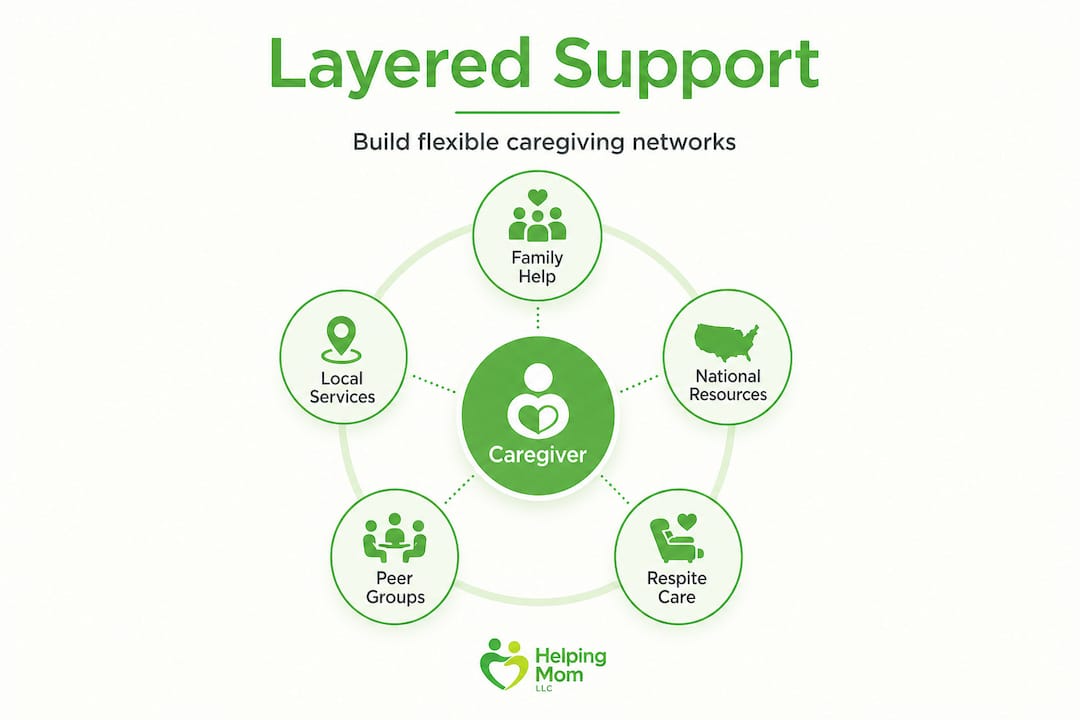
Rigid schedules and inflexible plans tend to break down under the pressure of real caregiving. What works is a framework that can adapt: a set of trusted contacts, a few reliable resources, and the habit of checking in with yourself regularly. If you are wondering how to step in and offer support without creating conflict, guidance on how to help aging parents without upsetting them can help you find that balance.
The most important mindset shift is this: getting support is not a sign that you are failing. It is proof that you are taking this seriously and playing a long game.
Get personalized support for your caregiving journey
You do not have to figure all of this out on your own. Helping Mom is built specifically for adult children navigating the real, everyday challenges of caring for an aging parent, from managing stress and family dynamics to making sure your parent's home is as safe as it can be.
Explore our caregiver well-being section for practical tools to protect your own health throughout this journey. Download the elderly home safety checklist to get started on a room-by-room review today. Whether you are just beginning to notice that things are changing or you are already deep in caregiving, we are here with calm, practical guidance for whatever comes next.
Frequently asked questions
What is the most effective way to find local caregiver support?
Calling 211 or using the Eldercare Locator quickly connects you with local services tailored to your caregiving needs, including respite care, counseling, and transportation assistance.
How do I handle family members unwilling to help with caregiving?
Start by honestly assessing their availability and empathy for past issues before expecting participation. If resentment is blocking cooperation, consider suggesting family therapy as a neutral next step.
What stress management techniques are best for overwhelmed caregivers?
Regular exercise, quality sleep, support groups, and respite care are the most consistently effective strategies for reducing caregiver stress and preventing burnout over time.
Which home safety modifications are most urgent for aging parents?
Grab bars, non-slip surfaces, clear pathways, and appropriate bed and toilet heights are the highest-priority changes for reducing fall risk in most homes.
Do online caregiver support groups work as well as in-person ones?
Online support groups often yield equal or better outcomes for many caregivers, and they work especially well when combined with professional counseling for those under significant stress.