

The most common hearing change in older adults is presbycusis, the gradual, age-related decline in hearing that typically begins around age 60 and slowly worsens over time. If you've noticed your parent asking you to repeat yourself more often, turning up the TV, or seeming quieter in group settings, that pattern is worth taking seriously. The single most useful first step: schedule a hearing screening with their primary care doctor and ask for an otoscopic exam to rule out impacted earwax, which is a surprisingly common and quickly treatable cause of hearing difficulty.
About one in three older adults have measurable hearing loss, and that number climbs steeply with age. Here's what caregivers most often notice first:
- Frequently asking people to repeat themselves
- Turning the TV volume up higher than usual
- Missing consonant sounds, so words like "fish" sound like "ish"
- Withdrawing from conversations or group settings
- Mentioning a ringing or buzzing sound in the ears (tinnitus)
- Seeming confused or inattentive, especially in noisy rooms
Pro Tip: Turn off background noise, face your parent directly, and speak at a normal volume. If their engagement and comprehension improve noticeably, that's a strong signal that hearing, not cognition, is the main issue.
Table of Contents
- What signs of hearing change should caregivers watch for?
- What causes hearing changes and what types of hearing loss exist?
- How is hearing evaluated, and what happens at appointments?
- What treatment options are available, and what do they cost?
- Simple home changes that make communication easier every day
- Why untreated hearing loss matters more than most people realize
- How can you reduce further hearing damage going forward?
- When should you seek professional help, and what should you bring?
- Key Takeaways
- A note from one caregiver to another
- Useful sources and where to learn more
- FAQ
What signs of hearing change should caregivers watch for?
The behaviors that signal hearing changes often show up at home long before a doctor's visit. You might notice your parent turning one ear toward you during conversation, or misunderstanding short, common words. They may laugh at the wrong moment in a story, or nod along without actually following what's being said.

Speech-specific clues are especially telling. High-frequency consonants like s, t, f, ch, and k are the first sounds to fade with age-related hearing loss. So your parent may hear the vowels in a sentence but miss the consonants that give words their meaning. "Pass the salt" becomes "pass the alt." That's not confusion; it's a hearing gap.
Social and emotional signs can be subtler. Watch for:
- Pulling back from phone calls or video chats
- Avoiding restaurants, church, or family gatherings they used to enjoy
- Seeming irritable or frustrated after conversations
- Accusing others of mumbling
- Difficulty following along when more than one person is speaking
A simple caregiver checklist: If you check three or more of the following, a hearing screening is a reasonable next step.
- Asks for repeats multiple times per conversation
- Raises TV volume above what others find comfortable
- Misunderstands words in quiet settings
- Misses doorbells, phone rings, or alarms
- Has withdrawn from social activities in the past six months
- Mentions ringing or buzzing in the ears
What causes hearing changes and what types of hearing loss exist?
Not all hearing loss works the same way, and understanding the difference helps you advocate more clearly at appointments.
Presbycusis (age-related sensorineural loss) is the most common type. It's gradual, affects both ears equally, and specifically targets high-frequency sounds and speech in noisy environments. There's no single cause; it reflects cumulative changes in the tiny hair cells of the inner ear, the auditory nerve, and related structures. These changes are permanent, but they're manageable.
Conductive hearing loss happens when sound can't travel efficiently through the outer or middle ear. The good news: many conductive causes are treatable. Common ones include:
- Impacted earwax (cerumen), which is very common in older adults
- Middle ear fluid or infection
- Otosclerosis, a stiffening of the small bones in the middle ear
Mixed hearing loss combines both sensorineural and conductive components. An older adult might have underlying presbycusis plus a wax blockage on top of it, and clearing the wax alone can produce a noticeable improvement.
Other contributors worth knowing about: a long history of noise exposure (occupational or recreational), certain medications that can affect hearing (called ototoxic drugs, including some diuretics and chemotherapy agents), cardiovascular conditions like hypertension and diabetes, and genetics.
Tinnitus, that persistent ringing or buzzing, often accompanies age-related hearing loss and is usually not dangerous on its own. It does warrant a prompt medical evaluation, though, if it starts suddenly, affects only one ear, or comes with dizziness or neurologic symptoms.
How is hearing evaluated, and what happens at appointments?
Knowing what to expect makes it much easier to prepare your parent and to gather useful observations beforehand.
What primary care can do
A primary care visit is usually the right first stop. The doctor may:
- Ask a single direct screening question ("Do you have a hearing problem?"), which research supports as an effective first filter
- Perform an otoscopic exam to look for earwax or canal issues
- Do a basic finger-rub or tuning fork test
- Refer to an audiologist if any concern is identified
An otoscopic exam commonly reveals impacted earwax, which can be cleared quickly and may produce immediate hearing improvement.
What an audiologist does
A full audiology evaluation typically includes:
- Pure-tone audiometry: The patient wears headphones and signals when they hear tones at different pitches and volumes. This maps which frequencies are affected.
- Speech-in-noise testing: Measures how well the person understands speech when background noise is present, which is often the first real-world problem caregivers notice.
- Tympanometry: A gentle pressure test that checks how the eardrum and middle ear are functioning, useful for detecting fluid or conductive issues.
- Case history: The audiologist will ask about noise exposure, medications, family history, and daily communication challenges.
An ENT (ear, nose, and throat specialist) referral is appropriate when hearing loss is sudden, affects only one ear, or comes with dizziness, facial weakness, or other neurologic signs.
What to bring to the appointment
- A written timeline of when you first noticed changes and what situations are hardest
- A list of current medications (including over-the-counter drugs and supplements)
- Specific examples of missed words or misunderstandings
- Notes on environments where problems are worst (phone calls, restaurants, TV)
- Your insurance card and any questions written down in advance
What treatment options are available, and what do they cost?
Treatment depends on the type and cause of hearing loss, but there's a clear path forward for most older adults.

Cerumen removal and medical treatment come first. If earwax or a middle ear condition is contributing, addressing that alone can make a meaningful difference. This is handled in primary care or by an ENT.
Hearing aids are the most common intervention for presbycusis. They don't restore hearing to what it was, but they support the brain's ability to process sound and make daily communication significantly easier. Consistent daily use plus auditory rehabilitation yields the best outcomes. Prescription hearing aids, fitted and programmed by an audiologist, remain the gold standard. Over-the-counter (OTC) hearing aids became available in the U.S. in 2022 for adults with mild to moderate hearing loss and are a lower-cost entry point worth discussing with an audiologist.
Assistive listening devices are practical, lower-cost tools families can use right away:
- TV streamers that send audio directly to hearing aids or headphones
- Amplified telephones
- Personal sound amplifiers for one-on-one conversation
- FM or loop systems for larger spaces like places of worship
- Captioning apps and services for phones and video calls
- Visual and vibrating alerts for doorbells, smoke alarms, and phones
Cochlear implants are a surgical option for adults with severe to profound hearing loss who don't benefit sufficiently from hearing aids. An ENT or audiologist can evaluate whether this is appropriate.
Cost and insurance snapshot: Prescription hearing aids typically range from roughly $1,000 to $7,000 per pair, depending on technology level. OTC options start considerably lower. Medicare Part A and Part B generally do not cover hearing aids, though some Medicare Advantage plans do. Medicaid coverage varies by state. The NIDCD and the National Council on Aging maintain resources on financial assistance programs, and some audiologists offer payment plans or loaner devices.
Pro Tip: Treat hearing aids like eyeglasses: daily wear from the moment your parent wakes up, not just for special occasions. The brain needs consistent sound input to adapt. Most people need several weeks to a few months of regular use, plus follow-up adjustments, before they feel comfortable. That adjustment period is normal, not a sign the aids aren't working.
Simple home changes that make communication easier every day
You don't need to wait for a formal diagnosis to start making things better at home. Several small changes can reduce frustration for both of you right now.
Communication habits that actually help:
- Face your parent directly when speaking; don't talk from another room
- Speak clearly and at a moderate pace, not louder
- Use shorter sentences and pause between ideas
- Confirm understanding by asking them to repeat back the key point, gently
- Reduce background noise before starting an important conversation (mute the TV, step away from the kitchen)
Speaking louder is rarely the right fix for sensorineural hearing loss. What helps is reducing background noise and using visual cues, like facing the person and using natural gestures.
Environmental changes worth making:
- Improve lighting so your parent can see your face and lips clearly
- Arrange seating so conversations happen face-to-face, not side by side
- Use captioning on the TV (most modern TVs have this built in)
- Add visual or vibrating alerts for the doorbell, phone, and smoke alarms
Safety-focused adjustments matter especially when hearing loss is significant. Visual and vibrating smoke detectors and carbon monoxide alarms are available specifically for people with hearing loss. Wearable fall-alert devices are worth considering too, since untreated hearing loss is associated with increased fall risk. For a broader look at home modifications that support safety, the home safety checklist at Helping-mom is a practical starting point.
Helping your parent accept devices takes patience. Start with one small change, like captioning on the TV, and let them experience the benefit before introducing anything bigger. Involve the audiologist in conversations about hearing aids early; hearing it from a clinician often lands differently than hearing it from family.
Why untreated hearing loss matters more than most people realize
The stakes here go beyond missing words in conversation. Research consistently links untreated hearing loss in older adults to higher rates of social isolation, depression, increased fall risk, and faster cognitive decline. Studies show that using hearing-restorative devices is associated with a lower risk of long-term cognitive decline.
One finding that surprises many families: hearing loss can look like cognitive decline. An older adult who seems confused, inattentive, or forgetful may simply be missing too much of what's being said. Testing hearing before adjusting dementia-related treatment helps avoid misdiagnosis. If your parent has had a cognitive assessment without a hearing check, it's worth raising that with their doctor.
Here's a quick look at how common hearing loss becomes with age:
| Age group | Approximate prevalence of hearing loss |
|---|---|
| 60 | Roughly 1 in 3 adults affected |
| 70 and older | Approximately two-thirds of Americans |
| 75 and older | Approximately two-thirds of Americans |
| 80+ | Over 80% experience some degree of loss |
Despite how common this is, an estimated roughly 75% of older adults with hearing loss go without treatment. That's a gap families are in a real position to help close.
"Age-related hearing changes are a natural consequence of getting older, but ignored or untreated hearing loss can have serious consequences on mental, cognitive, and even physical health. Early identification and treatment may help slow progression and improve quality of life." — StatPearls / NCBI Bookshelf
The relationship between hearing loss and cognitive decline isn't fully understood yet, and correlation isn't the same as causation. What the evidence does support clearly is this: early identification, consistent device use, and auditory rehabilitation are the practical steps most likely to make a difference.
How can you reduce further hearing damage going forward?
Some degree of age-related hearing change is inevitable. But there's a real difference between accepting that and doing nothing to slow additional damage.
Practical steps worth taking now:
- Keep headphone and TV volume at a level where you can still hold a conversation
- Use ear protection (foam earplugs or earmuffs) for lawn mowers, snow blowers, power tools, and loud events; noise from common yard equipment is a preventable cause of permanent damage
- Manage cardiovascular risk factors like high blood pressure and diabetes, both of which are associated with faster hearing decline
- Review medications with a clinician if ototoxic drugs are part of the regimen and alternatives exist
- Avoid smoking, which is independently linked to higher rates of hearing loss
Lifestyle changes won't reverse presbycusis, and it's worth being honest about that with your parent. The goal isn't a cure; it's protecting what hearing remains and reducing the pace of further loss.
Pro Tip: If your parent had a long career in a noisy environment (construction, manufacturing, military service, farming), keep a brief note of that history and share it at audiology appointments. Noise exposure history shapes how an audiologist interprets the audiogram and what they recommend.
When should you seek professional help, and what should you bring?
Red flags that need prompt attention
Contact a doctor right away if your parent experiences:
- Sudden unexplained hearing loss in one or both ears
- Hearing loss accompanied by dizziness, severe headache, or vision changes
- Bleeding or discharge from the ear canal
- New facial numbness or weakness alongside hearing changes
These symptoms can signal conditions that need urgent evaluation, not a routine audiology referral.
For non-urgent cases
If the changes are gradual and fit the typical pattern of age-related hearing loss, aim to schedule a primary care visit within a few weeks. From there, an audiology referral for a full evaluation is the natural next step. Don't wait for the problem to become severe; earlier intervention gives the brain more time to adapt to amplification.
Your caregiver checklist for appointments
Bring this to primary care, audiology, or ENT visits:
- Timeline: when you first noticed changes and how they've progressed
- Specific examples: words or phrases your parent commonly mishears
- Environments: where problems are worst (phone, TV, restaurants, family gatherings)
- Medication list: all prescriptions, over-the-counter drugs, and supplements
- Questions for the clinician: What type of hearing loss is this? What are the treatment options? What does insurance cover?
- Insurance information: Medicare card, supplemental plan details, and any prior authorization requirements
On the emotional side, how you open the conversation matters. Framing it around your own observations ("I've noticed it's harder for us to talk on the phone lately") tends to land better than leading with a diagnosis. For guidance on talking with aging parents about sensitive topics, Helping-mom has practical scripts that can help. Staying involved during device trials, attending follow-up appointments when possible, and celebrating small wins (clearer phone calls, less TV volume) all make a real difference in whether your parent sticks with treatment.
Key Takeaways
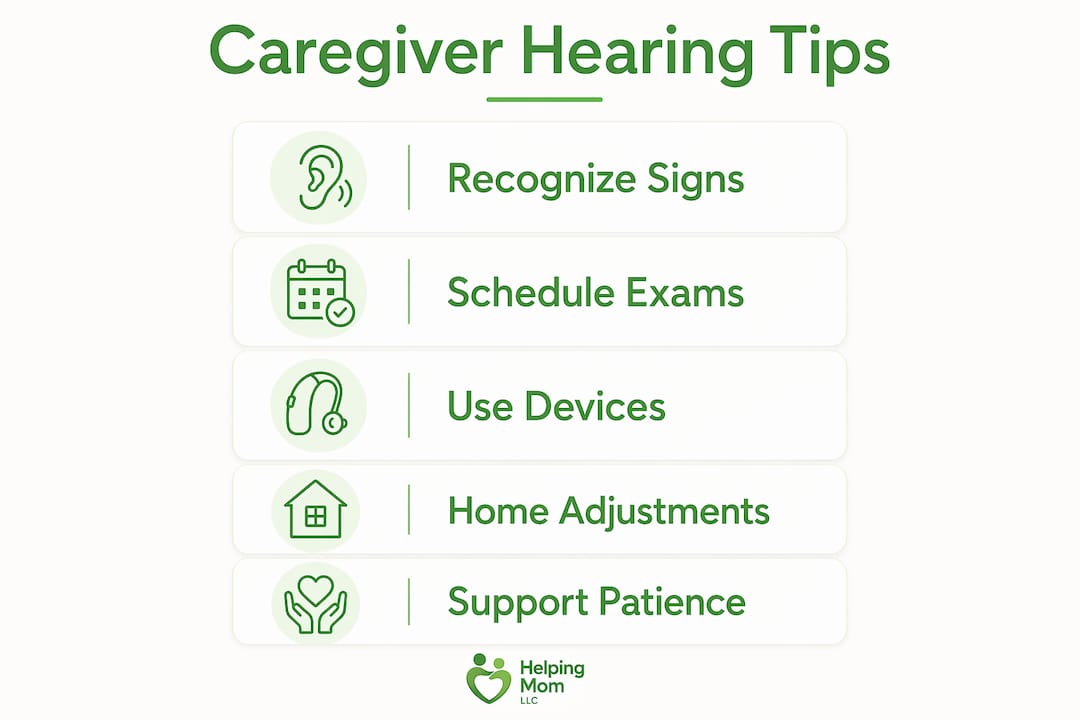
Age-related hearing loss (presbycusis) is common, manageable, and worth addressing early because untreated hearing loss is linked to social isolation, depression, falls, and faster cognitive decline.
| Point | Details |
|---|---|
| Recognize the signs early | Watch for repeated requests, raised TV volume, missed consonants, and social withdrawal. |
| Rule out treatable causes first | Request an otoscopic exam; impacted earwax is common and clears quickly. |
| Get a formal hearing test | A full audiology evaluation maps the type and degree of loss and guides treatment. |
| Use devices consistently | Hearing aids work best with daily wear and auditory rehabilitation, not occasional use. |
| Act on safety at home | Add visual alarms, reduce background noise, and use the home safety checklist to reduce fall and accident risk. |
A note from one caregiver to another
Noticing that your parent's hearing has changed can feel like a tender moment. You want to help, but you also don't want to make them feel diminished. That tension is completely normal, and you're not alone in it.
The most helpful thing you can do is start small. Suggest a primary care visit framed around a routine checkup, not a hearing "problem." If earwax turns out to be part of the issue, that's an easy win that builds trust for the next conversation. If hearing aids enter the picture, treat the adjustment period with the same patience you'd want for yourself. Some days will be better than others, and that's okay.
Involve your parent in every decision. Ask what situations bother them most. Let them choose the style of hearing aid if they're open to it. The goal isn't to fix them; it's to walk alongside them. For support on how to help without overstepping, Helping-mom has guidance written specifically for moments like this one. You're doing something meaningful just by paying attention.
Useful sources and where to learn more
These are the most reliable places to go deeper on senior hearing health, whether you're preparing for an appointment or looking for financial assistance options.
- National Institute on Aging (NIA): Plain-language overview of hearing loss in older adults, prevalence, causes, and what to do next. A good starting point to share with your parent.
- NIDCD (National Institute on Deafness and Other Communication Disorders): Detailed clinical information on age-related hearing loss, hearing aids, and research updates. Also lists financial assistance resources.
- Cleveland Clinic: Clear explanations of presbycusis, symptoms, and treatment options written for patients and families.
- StatPearls / NCBI Bookshelf: Evidence-based clinical reference on presbycusis; useful if you want to understand the diagnostic and treatment framework your parent's care team is working from.
- MedlinePlus (NIH): Accessible medical encyclopedia entry on age-related hearing loss, including when to call a doctor and what to expect from treatment.
- American Academy of Audiology (audiology.org): Professional society for audiologists; their consumer section helps you find a licensed audiologist and understand what credentials to look for.
Printing a summary from one or two of these to bring to appointments can help anchor the conversation and make sure nothing important gets missed.
FAQ
How common is hearing loss in adults over 65?
About one in three older adults have measurable hearing loss, and prevalence rises sharply with age, reaching approximately two-thirds of Americans aged 70 and older.
At what age does age-related hearing loss typically begin?
Presbycusis usually becomes noticeable around age 60 and progresses slowly from there, though the rate varies by individual based on genetics, noise exposure history, and overall health.
Can hearing loss in older adults be reversed?
Most age-related hearing loss is permanent because the inner ear hair cells that are damaged do not regenerate. However, conductive causes like impacted earwax are often fully reversible with treatment.
Can hearing loss be temporary?
Yes, in some cases. Earwax buildup, ear infections, and middle ear fluid can all cause temporary hearing difficulty that resolves once the underlying cause is treated. Sudden hearing loss, however, always warrants prompt medical evaluation.
How do hearing aids affect cognitive health?
Research shows that using hearing-restorative devices is associated with a lower risk of long-term cognitive decline, though the relationship between hearing loss and cognition is still being studied. Consistent daily use and auditory rehabilitation appear to produce the best outcomes.