
Most families trying to keep aging parents safe at home run into confusing care options, unclear pricing, and inconsistent guidance on fall risks and daily routines. Many in-home senior care providers require calls to get a quote, restrict hands-on services to certain regions, or lack transparent information about caregiver training and management. After reading you will be able to compare five leading in-home senior safety and care services to find the most practical fit for your family’s location, needs, and budget.
Table of Contents
- Helping Mom
- Senior Helpers
- Visiting Angels
- The Helper Bees
- Elder
- Comparative Analysis of In-Home Elder Care Providers
Helping Mom
At a Glance
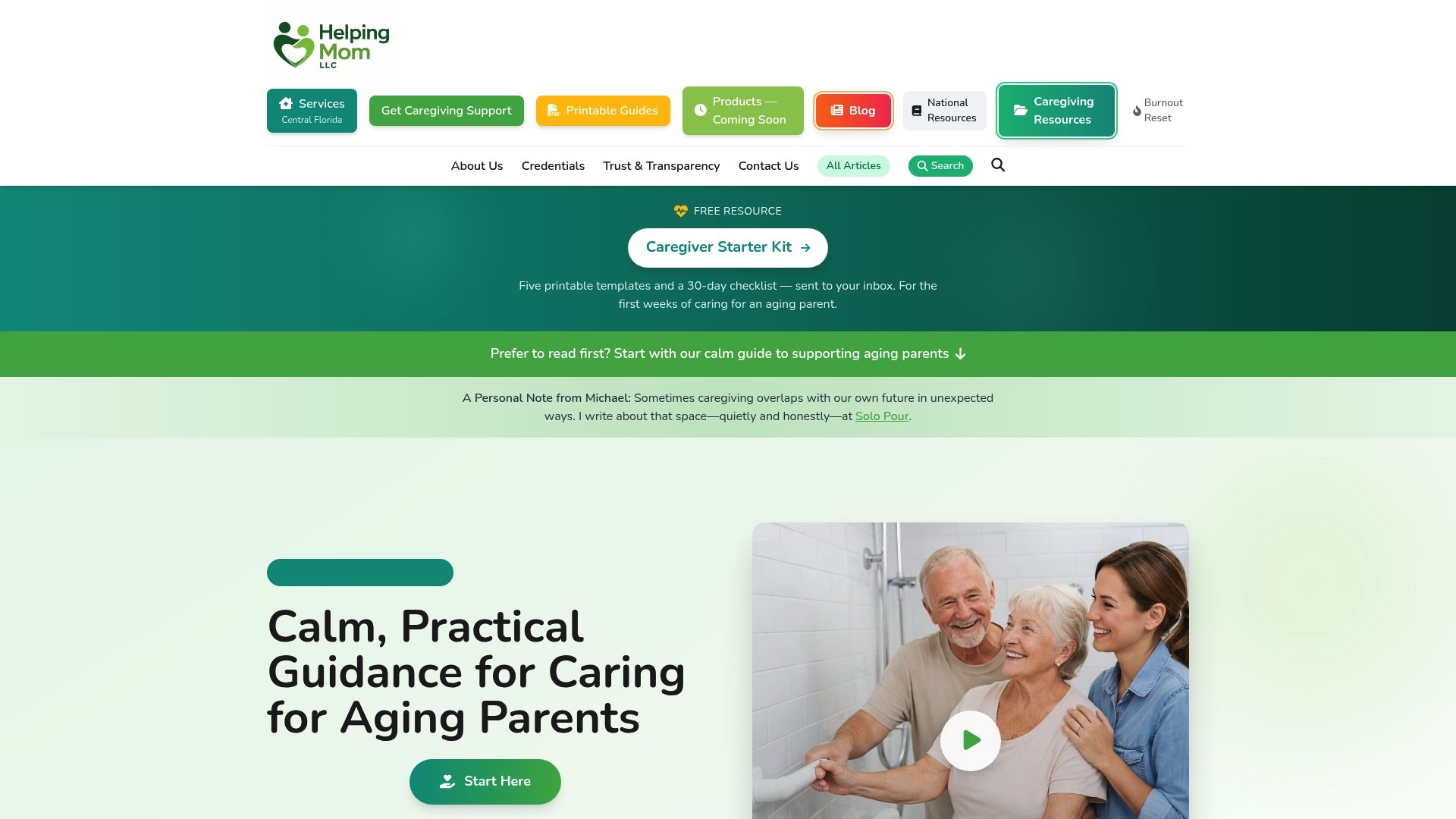
Helping Mom reports it offers in-home safety assessments in Central Florida and virtual safety consultations nationwide, with staff trained in Age Safe® practices focused on fall prevention and respectful aging-in-place adjustments.
Core Features
- In-home age-safe safety assessments to spot tripping hazards, lighting gaps, and layout issues.
- Personalized safety planning and guidance with checklists and step-by-step recommendations you can act on.
- Educational guides, checklists, and printable resources for family members to share and follow.
- Virtual safety consultations for caregivers outside Central Florida who need remote, practical advice.
Key Differentiator
Helping Mom states it is certified by Age Safe® America and emphasizes non-medical, dignity-preserving assessments that focus on fall prevention and small environmental changes that let older adults keep routines and independence.
Pros
- Calm, practical guidance tailored to adult children juggling work and caregiving. Advice is written for busy people who need clear next steps not jargon.
- Focus on non-medical safety improvements that preserve independence rather than pushing clinical interventions. That keeps conversations with parents less confrontational.
- Age Safe® training among staff gives a consistent framework for identifying common fall risks and prioritizing fixes.
- Educational resources and printable checklists make it easy to delegate tasks to siblings or a hired handyman.
- Support available both in person in Central Florida and virtually nationwide so families outside the area can still get an expert second opinion.
Cons
- In-person assessments are limited to Central Florida, which means hands-on visits require either travel arrangements or the virtual option for out-of-area families.
Who It's For
If you are an adult child in your 40s to 60s managing a parent who lives at home and you want calm, practical, non-medical safety advice, Helping Mom fits that need. It matches well when you want clear, doable fixes instead of medical recommendations.
Unique Value Proposition
Helping Mom reports Age Safe® America certification paired with in-home assessments and virtual consultations as the core differentiator. That combination is aimed at families who want an expert eye on fall risks and a respectful plan that keeps a parent independent.
Real World Use Case
A busy professional in Florida books an in-home assessment. The assessor identifies three high-risk spots, recommends low-cost fixes, and provides checklists the family uses to schedule a weekend of updates. The parent keeps living at home with fewer hazards.
Pricing
Pricing is not listed on the website. Helping Mom appears to provide personalized estimates after an initial consultation so you get a scoped plan and cost projection before committing.
Website: https://helping-mom.com
Senior Helpers
At a Glance
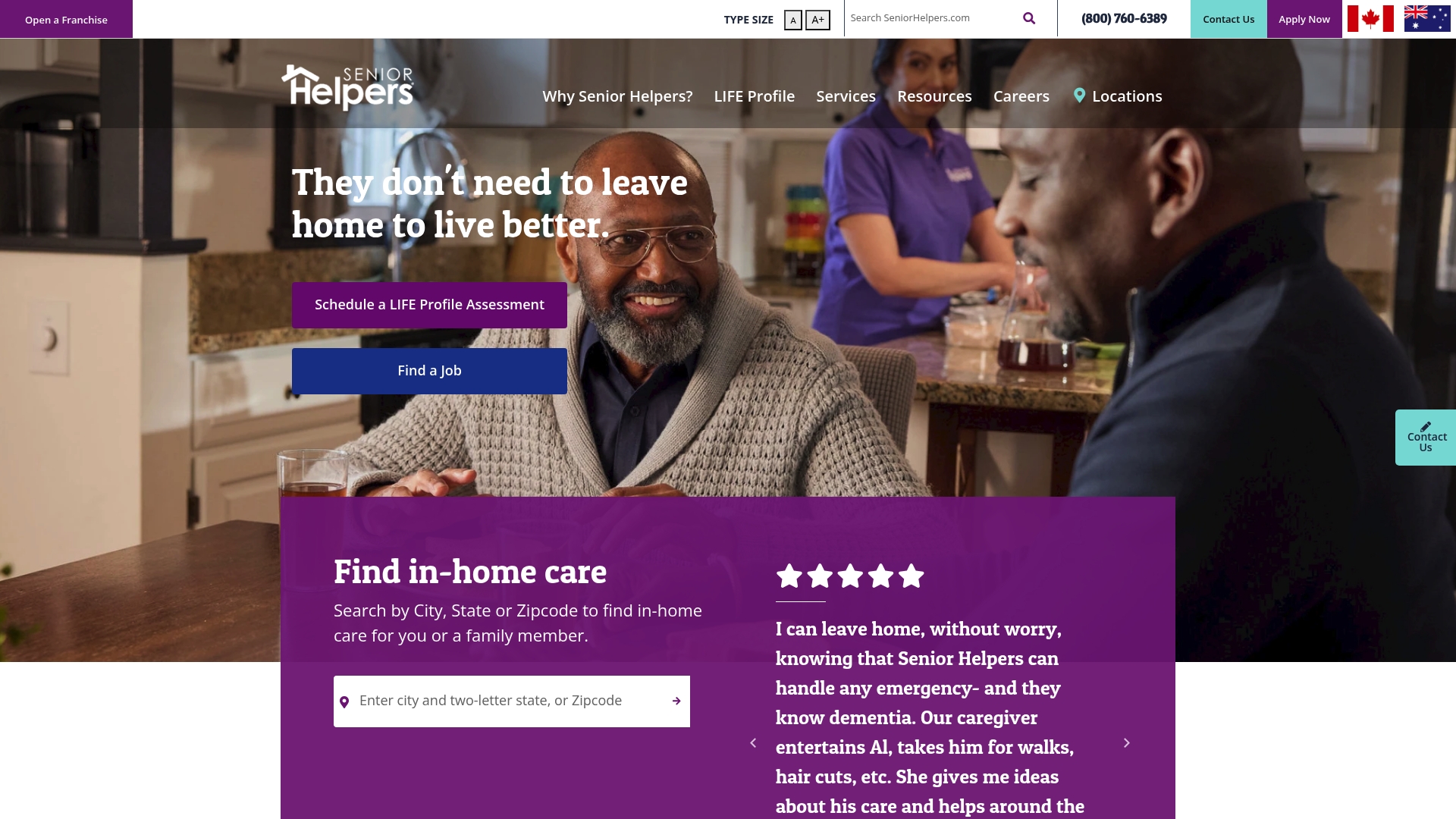
Senior Helpers uses the LIFE Profile assessment to build individualized in-home care plans that involve family members and local healthcare teams. According to the company, that assessment guides placement of caregivers and daily routines to match medical and lifestyle needs.
Core Features
- LIFE Profile assessment that captures functional needs, routines, and family input to shape the care plan.
- Specialized services for Alzheimer's, Parkinson's, chronic disease management, transitional care, respite, and end-of-life support.
- Dedicated family resources and coordination with local healthcare providers and pharmacies to support medication and care continuity.
Key Differentiator
According to the company, the LIFE Profile brings family, caregivers, and clinical partners into the same planning process so care plans reflect health goals and daily rhythms. That emphasis on a documented, collaborative assessment separates Senior Helpers from agencies that assign care by checklist alone.
Pros
- Personalized plans that start from a structured assessment. The LIFE Profile gives a clear baseline you can review with caregivers and clinicians.
- Broad clinical scope. Services range from companionship to chronic disease support, which makes handoffs easier when needs change.
- Family-focused resources. The vendor advertises guidance for families who are new to home care, which reduces guesswork and helps you set expectations.
- Compassionate caregiver emphasis. Customer testimonials cited by the company highlight reliable, respectful caregivers who adapt to the household routine.
Cons
- No third-party user reviews were found in the product data, limiting independently verified feedback on consistency and satisfaction.
- Care quality can vary by location and caregiver availability, a common issue with national provider networks.
- Pricing details are not publicly disclosed; you must contact a local branch to get a quote and compare costs directly.
When It May Not Fit
Senior Helpers may not be appropriate if your loved one needs hospital-level nursing, 24/7 skilled nursing care, or specialized equipment that only a facility can provide. The product data lists this limitation and recommends clinical settings for intensive medical supervision.
Notable Integrations
- Works with local healthcare professional teams to coordinate care plans and medication management.
- Engages pharmacies and other community providers to support transitions from hospital to home and to streamline prescriptions.
Who It's For
Adult children arranging professional in-home support for aging parents with complex or chronic needs will find the model practical. Families who want a documented assessment and coordinated care with clinicians are the primary audience.
Unique Value Proposition
The company's use of the LIFE Profile assessment to co-create care plans with families and local clinicians is the concrete differentiator. Senior Helpers reports that this process uncovers daily routines and risks that standard intake forms often miss, producing more tailored caregiver assignments.
Real World Use Case
A family hired Senior Helpers for Alzheimer's support. The LIFE Profile identified evening agitation triggers and set a schedule that blended meaningful activities with medication reminders, allowing the caregiver to reduce sundowning episodes and the family to keep routines stable.
Pricing
Pricing is not publicly disclosed in the product data. Interested families are encouraged to contact their local Senior Helpers office for an assessment-based quote and a detailed service estimate.
Website: https://seniorhelpers.com
Visiting Angels

At a Glance
Local, independently owned franchises operate across the U.S., Canada, UK, Korea, and Mexico. According to the company, that network supports personalized caregiver matching and over 25 years of home care experience focused on helping seniors remain at home.
Core Features
Core services center on flexible, person-centered care built from a free in-home assessment.
- Range of care options: 24-hour, live-in, Alzheimer’s, dementia, palliative, and short-term support.
- Free home care consultation and assessment to create a customized care plan based on daily needs.
- Caregiver matching: matches consider personality, health condition, and family preferences.
- Flexible scheduling: hourly visits up to 24/7 live-in support.
Key Differentiator
A nationwide network of independently owned franchises provides local caregivers who are matched to seniors by personality and condition, according to the company. That local ownership model is meant to support community ties and faster, more tailored matching than a centralized call center.
Pros
- Many families praise the hands-on caregivers for dependable companionship and practical help with daily tasks, helping seniors keep routines and social contact.
- Personalized care plans let you focus visits on what matters most, whether medication reminders, mobility help, or evening meal prep.
- The franchise model often delivers community-rooted hiring and quicker local response than national call centers alone.
- Flexible scheduling covers short recoveries after hospital discharge through long-term 24-hour arrangements, so families can ramp care up or down.
- Company materials highlight experience in Alzheimer’s and dementia support, which is helpful when a parent needs condition-specific routines.
Cons
- Some users report inconsistent service quality between franchises, so your experience can vary by location.
- There are reports of administrative problems including billing errors, alleged overcharging, and rigid refund practices in certain offices.
- A few families describe slow management responsiveness and lapses in hiring follow-through at specific franchises.
When It May Not Fit
If you need identical service levels nationwide or a single corporate SLA, this model may frustrate you because quality and responsiveness can differ by franchise. Also, if transparent, published pricing is a priority, Visiting Angels does not list fixed rates; you must request an in-home estimate.
Who It's For
Families seeking compassionate, locally operated in-home care options for a parent who wants to age in place. Particularly useful when you want personality-based caregiver matching and the option to move between hourly and live-in support.
Unique Value Proposition
A free in-home consultation combined with locally run franchises that handle caregiver matching is Visiting Angels’ concrete selling point, according to the company. That combination aims to deliver tailored plans with caregivers who already have community ties.
Real World Use Case
A daughter arranges daily personal care and companionship after her father’s hip surgery. Visiting Angels conducts a home assessment, matches a caregiver who understands his routines, and shifts to overnight support during the first two weeks of recovery.
Pricing
Costs vary by level of care, duration, and location and are not published online. Visiting Angels offers a free in-home consultation and assessment to generate a personalized estimate.
Website: https://visitingangels.com
The Helper Bees
At a Glance
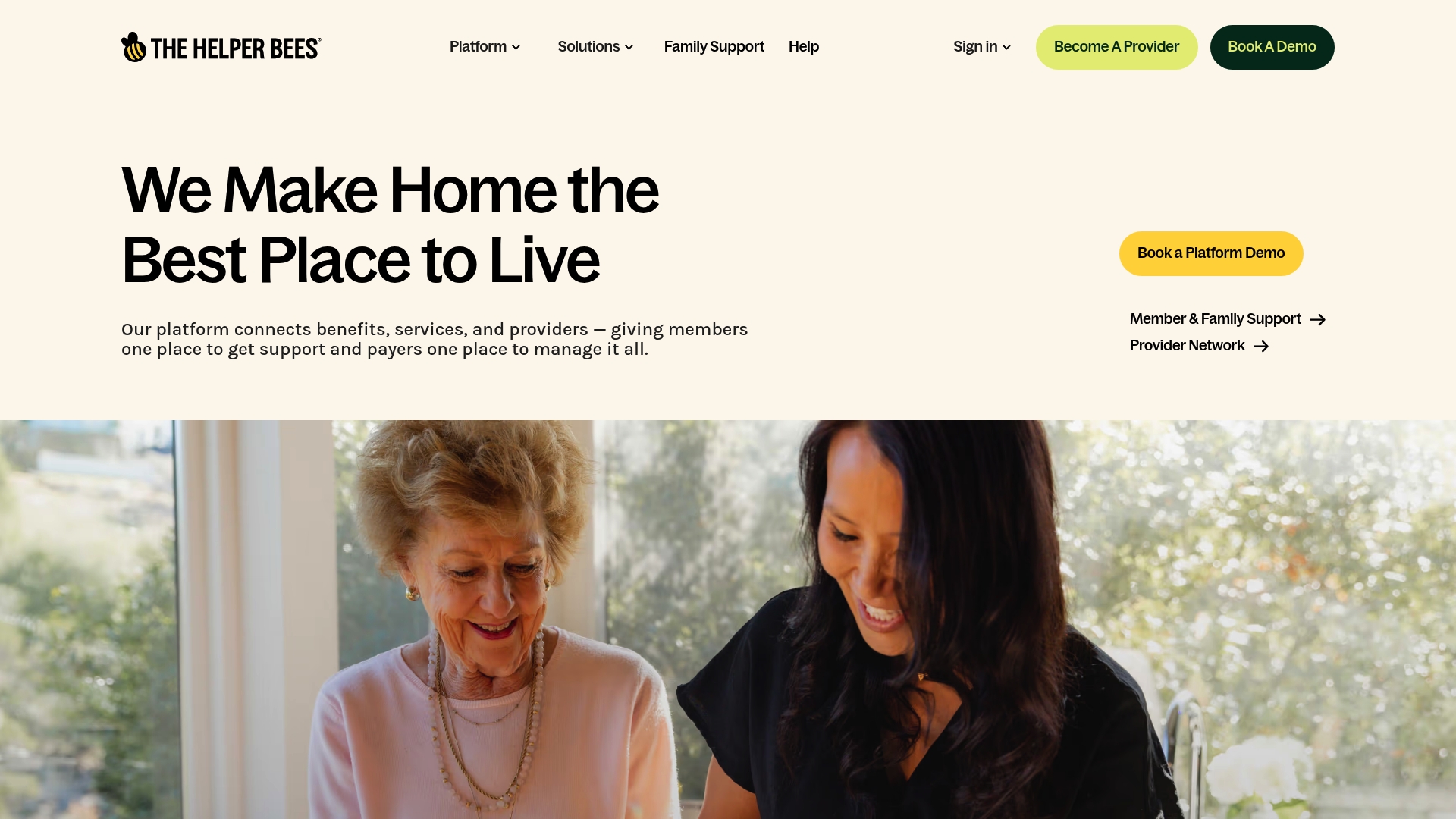
The Helper Bees reports a vetted nationwide provider network of 25,000+ providers, a scale that lets plans source home-based services without rebuilding local rosters. The company advertises modular tools for assessments, care management, and digital invoicing that aim to shorten reimbursement cycles.
Core Features
The platform groups capabilities into configurable modules so plans can deploy only what they need.
- Vetted provider network reported to include 25,000+ providers across the U.S., presented for sourcing and credential checks.
- Modular care management and nurse assessment workflows that can be turned on or off per program.
- Digital invoicing designed to reduce fraud and speed reimbursement to in-home providers.
- Self-service aging-in-place marketplace for goods and services patients use at home.
Key Differentiator
A unified, modular ecosystem connects members, providers, and payers with built-in compliance and quality controls. That architecture is aimed specifically at health plans and government programs that want a single platform to coordinate benefits, not a patchwork of point solutions.
Pros
-
The modular design lets a plan activate only needed functions, which reduces rollout complexity and keeps vendor scope tight during pilots.
-
Standardized workflows across markets reduce variation in service delivery, which may matter to plans operating in multiple states.
-
A large credentialed provider pool speeds onboarding compared with plans that must recruit and vet providers from scratch.
-
Digital invoicing pathways are focused on faster reimbursements and fraud reduction, outcomes plans track closely.
-
The platform bundles marketplace, assessments, and care management so plans have one vendor contract rather than multiple point vendors.
Cons
-
Public third-party reviews are limited; some online reports raise concerns about company culture rather than product quality.
-
There is little independent customer service feedback available, so support responsiveness is an open question for procurement teams.
-
Reported internal issues could affect reliability or long-term support, although those claims are not verified by independent audits.
When It May Not Fit
If your organization needs consumer-facing brand recognition or a highly customized frontend immediately, The Helper Bees' enterprise workflows may feel prescriptive. Plans that require guaranteed SLAs published publicly or a long history of third-party case studies may find the evidence base thinner than preferred.
Notable Integrations
- Provider roster systems for credential and affiliation syncing.
- Insurance claims processing systems to route invoices into payer workflows.
- Other third-party healthcare and benefits systems for data exchange and interoperability.
Who It's For
Health plans, Medicaid managed care organizations, and government programs that want an integrated platform to manage community-based supports and in-home services. Best for teams seeking centralized vendor coordination rather than assembling multiple point solutions.
Unique Value Proposition
A unified, modular ecosystem that links members, providers, and payers with compliance and quality controls built into the workflows. Modules can be enabled by program so operations teams scale services without reengineering core processes.
Real World Use Case
A Medicaid managed care organization uses The Helper Bees to centralize provider onboarding, run nurse assessments, and process digital invoices. According to the vendor, the result is faster reimbursements and improved member satisfaction.
Pricing
Pricing is not listed publicly and is likely variable by program size and selected modules. Expect contract pricing and implementation fees tailored to scale and compliance needs.
Website: https://thehelperbees.com
Elder
At a Glance
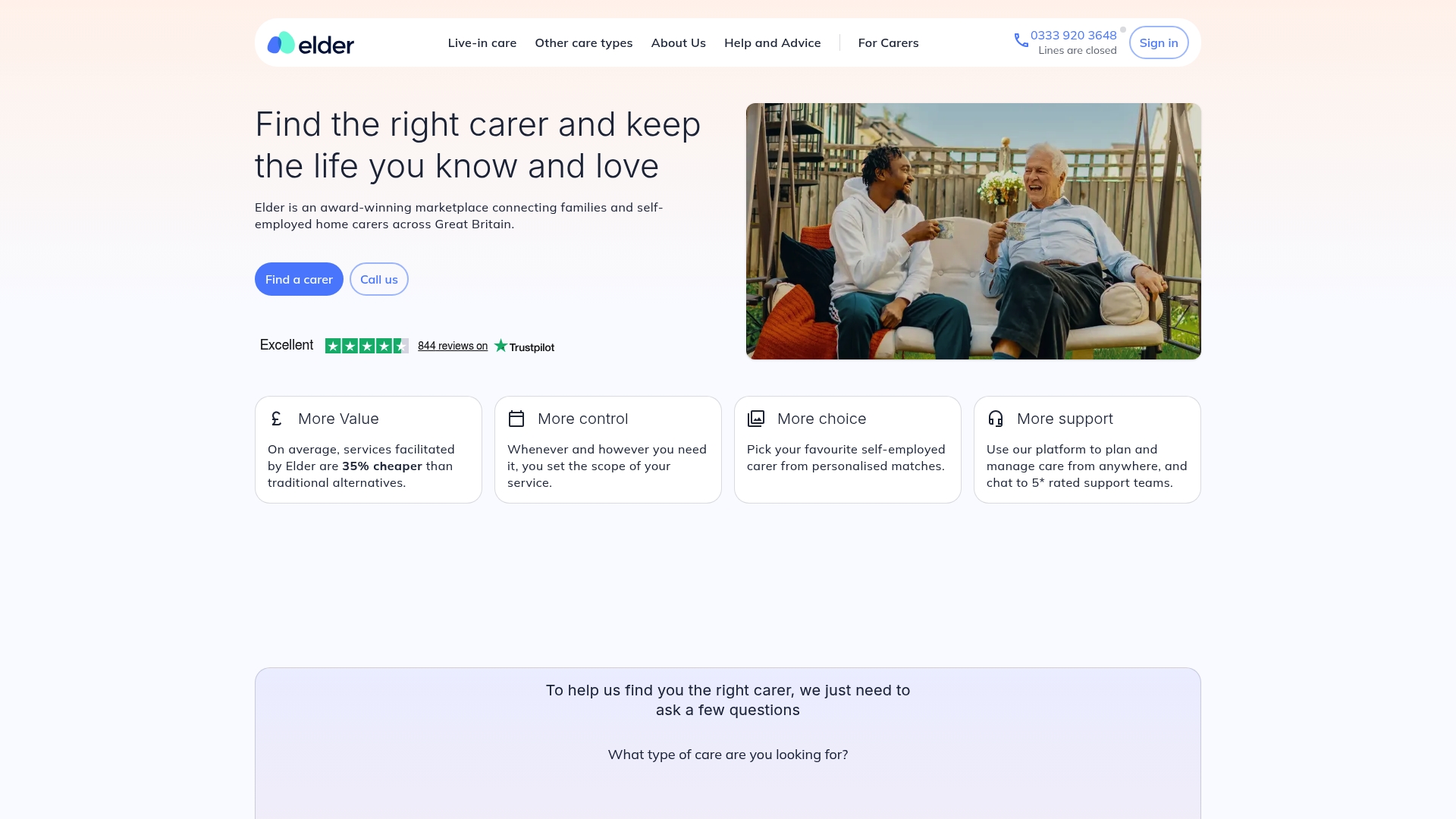
From £1,150 per week for full-time live-in care and short-term packages starting at £684, Elder publishes transparent starting prices that help families budget quickly.
According to the company, it connects families with self-employed home carers across Great Britain and provides online care management without long contracts.
Core Features
- Personalized matching of self-employed carers based on preferences and care needs, including live-in, respite, and visiting care.
- Complete care management via an app or online platform for scheduling, messaging, and payments.
- Clear pricing with no hidden fees and the option to cancel without lengthy commitments.
- Care plans that can include up to 2 nightly wake-ups for added safety and flexibility.
Key Differentiator
A fully online marketplace aimed at putting families in control of care placement and management. Elder combines matching, scheduling, and payment tools so you can manage a carer without juggling multiple agencies or paper records.
The model centers on self-employed carers screened by the platform, which the company argues lowers ongoing fees compared with agency rates.
Pros
- Cost savings. Elder reports costs typically 35% lower than traditional providers, which can free up family budgets for additional services or respite.
- Flexible options. You can switch between visiting, respite, and live-in care as needs change without a long-term commitment.
- Simple management. The app centralizes scheduling, messages, and invoices, reducing the email and whiteboard chaos many families experience.
- Screening and support. The platform advertises rigorous background checks and offers expert guidance on funding including local authority and NHS options.
Cons
- Limited public reviews. There are few substantive third-party reviews on major review sites, so broader user feedback is scarce.
- Training transparency. The platform provides limited detail about carers' formal qualifications or specific training levels.
- UK focus. Elder primarily serves Great Britain and is not suitable for families outside the UK.
When It May Not Fit
If you need a provider with detailed, verifiable training credentials for carers or an extensive public review history, this platform may feel light on evidence. It also does not serve families outside Great Britain.
Who It's For
UK families who want managed, in-home care without agency markups and who prefer handling scheduling and payments through an app. Especially useful for adult children balancing work and caregiving who need flexible short-term or longer live-in options.
Unique Value Proposition
Completely online care management with transparent starting prices and no long-term contracts. That combination makes Elder a practical choice for families who value clarity in cost and control over daily arrangements.
Real World Use Case
A family caring for a parent with early-stage dementia uses Elder to find a screened, self-employed carer for three visiting shifts per week. They manage schedules, track payments, and arrange respite weeks through the platform, reducing coordination time among siblings.
Pricing
Starts from £1,150 per week for full-time live-in care. Short-term care begins at £684 for three days, with add-on options available depending on shift patterns and nightly wake requirements.
Website: https://elder.org
Comparative Analysis of In-Home Elder Care Providers
In the realm of elder care services, Helping Mom distinguishes itself through its focused delivery of personalized safety plans that prioritize dignity and promote independence, especially via its unique Age Safe® America certification. This certification emphasizes non-medical improvements targeted at preserving quality of life, differentiating Helping Mom from providers focusing on clinical care or broader caregiving services.
Local Versus National Coverage Options
Helping Mom excels in providing tailored in-home safety assessments in Central Florida, complemented by virtual consultations available nationwide, ensuring access for a wide audience including those outside its immediate geographic range. Comparatively, Visiting Angels offers extensive geographic availability through its franchise model paired with local caregiver matching, focusing on community-rooted service delivery. However, the quality of Visiting Angels services may vary due to franchise-specific practices, highlighting Helping Mom's consistency provided by its certified approach. For families prioritizing comprehensive caregiving needs across multiple care dimensions, platforms like Senior Helpers that emphasize interdisciplinary care coordination might present stronger alignment.
Pricing Transparency and Management Flexibility
Distinct from its competitors, Elder advertises clear pricing structures and contract-free service commitments, appealing to families desiring cost accountability and management control. However, Helping Mom's personalized pricing based on initial consultations could avoid the rigidity of predefined rates, adapting recommendations based on unique environmental assessments rather than generalized care packages. This customizable pricing format may resonate particularly with families focused on actionable, cost-efficient safety updates rather than bundled care services.
Best Fit Recommendations
- Helping Mom: Adult children wishing to retain independence-focused living conditions for their aging parents will find Helping Mom's tailored safety plans fitting, especially when needing resolute guidance for fall prevention.
- Visiting Angels: Families desiring routine-focused companionship with flexible caregiving schedules will appreciate Visiting Angels' local approach; however, diligence in reviewing franchise quality beforehand is advised.
- Elder: UK-based families requiring managed care oversight without agency markups will benefit from Elder’s straightforward pricing and flexible, digital caregiver management.
- Senior Helpers: Families managing chronic medical conditions requiring clinical caregiver coordination will value Senior Helpers’ interdisciplinary assessment model.
Our Pick
Helping Mom offers a distinctive capability through its Age Safe® America-certified safety plans, which combine practical environmental adjustments with dignified aging-in-place strategies tailored to each family’s needs. This sets it apart from competitors as a resource for families seeking non-medical, fall-risk-focused consultations. While not suitable for families necessitating clinical-level caregiving services or coverage outside aging-in-place safety, Helping Mom remains especially advantageous for those concentrating on dignified independence for their loved ones. For adult children balancing caregiving responsibilities with professional commitments, its accessible in-home and virtual consultations effectively address safety needs without imposing confrontational health interventions.
Home Care Service Providers Comparison
Explore the features and services offered by leading home care providers to support informed decision-making for your family's needs.
| Provider | Primary Service | Key Differentiator | Ideal For | Pricing | Limitation |
|---|---|---|---|---|---|
| Helping Mom | In-home and virtual safety assessments for aging-in-place | Age Safe® certification focusing on fall prevention guidance | Families wanting non-medical safety advice for independent living | Not disclosed | Hands-on services limited to the Central Florida area |
| Senior Helpers | LIFE Profile assessment and individualized care planning | Collaborative care plans integrating families and clinicians | Families requiring documented plans for complex care needs | Not disclosed | Service quality may vary by location |
| Visiting Angels | Personalized hourly to full-time live-in care services | Locally owned franchises for community-centered caregiver matching | Those wanting local caregiver matching with a community focus | Not disclosed | Service consistency varies across franchise locations |
| The Helper Bees | Modular in-home care management tools for health organizations | Unified platform integrating members, providers, and payers | Health plans needing an integrated ecosystem for in-home service delivery | Not disclosed | Limited independent user reviews on service feedback |
| Elder | Transparent, online-managed in-home care in Great Britain | Managed by an app with tools for scheduling and payments | UK families needing flexibility in care arrangements | From £1,150 per week | Focuses solely on the UK |
Practical Support for Adult Children Caring for Aging Parents
Caring for an aging parent can be full of tough questions and safety concerns, especially when you want to honor their independence without medical jargon or fear-based warnings. This article highlights several care options and tools, but if you seek calm, clear guidance focused on home safety, aging in place, and family communication, Helping Mom offers exactly that. Our focus is on realistic steps you can take today to reduce fall risks, ease family conversations, and support your own well-being.
Explore how Helping Mom provides practical advice and real-world checklists that fit into your busy life. Visit Helping Mom now to access tailored resources created for adult children like you balancing caregiving and other responsibilities. Get straightforward strategies to make your parent’s home safer and support your caregiving role with confidence.
Frequently Asked Questions
How does Helping Mom's in-home safety assessment work?
Helping Mom provides in-home safety assessments specifically aimed at identifying fall hazards and respectful aging-in-place adjustments. Trained staff perform thorough evaluations to identify tripping hazards, lighting gaps, and layout issues, helping families implement practical changes. To start, schedule an assessment directly through the Helping Mom website.
What differentiates Helping Mom from Senior Helpers for families seeking care?
While Senior Helpers employs the LIFE Profile assessment to develop comprehensive care plans in collaboration with healthcare teams, Helping Mom focuses on non-medical safety improvements equipped for adult children managing parental care at home. The calm, practical guidance provided by Helping Mom allows families to address safety concerns while preserving independence without a clinical approach.
Can I access Helping Mom's virtual safety consultations if I live outside Central Florida?
Yes, Helping Mom offers virtual safety consultations nationwide for caregivers who need practical guidance without being constrained by geographic location. This option allows families to receive tailored advice and resources even if they cannot access in-person assessments. To engage, simply reach out through the Helping Mom website for more details.
What types of resources does Helping Mom provide to support ongoing safety improvements?
Helping Mom supplies educational guides, checklists, and printable resources that families can share and follow, making it easy to implement safety changes. These materials assist adult children in delegating tasks to siblings or even contractors, ensuring safety updates are managed effectively. For access, visit the Helping Mom website to explore available resources.
What is a key benefit of using Helping Mom when compared to Visiting Angels for home care?
Helping Mom primarily focuses on safety assessments and practical changes for aging relatives, whereas Visiting Angels provides a broader range of caregiving services, including companionship and specialized support. For families primarily concerned with immediate home safety and fall prevention, Helping Mom's targeted approach is often more appropriate and effective.