

TL;DR:
- Choosing home care help involves assessing your parent's current needs and selecting either an agency or private caregiver based on your circumstances. Regular evaluations, interviewing candidates, and involving your parent in the process improve the quality of care and relationships. Ongoing communication, clear role definitions, and periodic reviews ensure the support adapts to your parent's changing needs.
Choosing home care help is defined as the process of identifying, vetting, and hiring the right person or agency to support your aging parent's daily needs at home. This is one of the most practical decisions you will make as a caregiver, and it deserves a clear, step-by-step approach. The right fit depends on your parent's physical abilities, personality, and how much support your family can provide directly. Resources like the Family Caregiver Alliance and Harvard Health both confirm that assessing needs regularly is the foundation of any good care plan. Getting this right takes time, but the peace of mind it brings is worth every step.
How to assess your aging parent's care needs
The first step in selecting in-home care is understanding exactly what your parent needs right now, not six months from now. Needs change gradually, and a clear picture of today's abilities helps you avoid over-hiring or under-supporting.
Periodic assessments of physical and functional abilities are the standard starting point. These assessments look at daily tasks like bathing, cooking, managing medications, and getting around the home safely.
Watch for two types of change. Gradual decline shows up as small things: a messy kitchen that used to be spotless, missed medications, or less interest in activities your parent once loved. Sudden events, like a fall or a hospital stay, signal a more urgent need for support. Both patterns tell you something important.
Start small when you can. Harvard Health recommends beginning with low-level assistance such as biweekly help with housecleaning or meal preparation, then increasing support as needs grow. This approach eases the transition for your parent and gives you time to find the right fit without pressure.
- Physical needs: Mobility, bathing, dressing, medication management
- Household needs: Cooking, cleaning, grocery shopping, laundry
- Social and emotional needs: Companionship, transportation to appointments, mental engagement
- Medical needs: Wound care, physical therapy support, or monitoring chronic conditions
Use the Eldercare Locator and your local Area Agencies on Aging to identify reputable local resources. These free tools connect families with vetted services and can help you understand what level of care your parent qualifies for.
Pro Tip: Write down your observations over two to three weeks before making any hiring decisions. A simple notebook log of what your parent struggles with gives you concrete information to share with potential caregivers and agencies.
What are the options for hiring home care help?
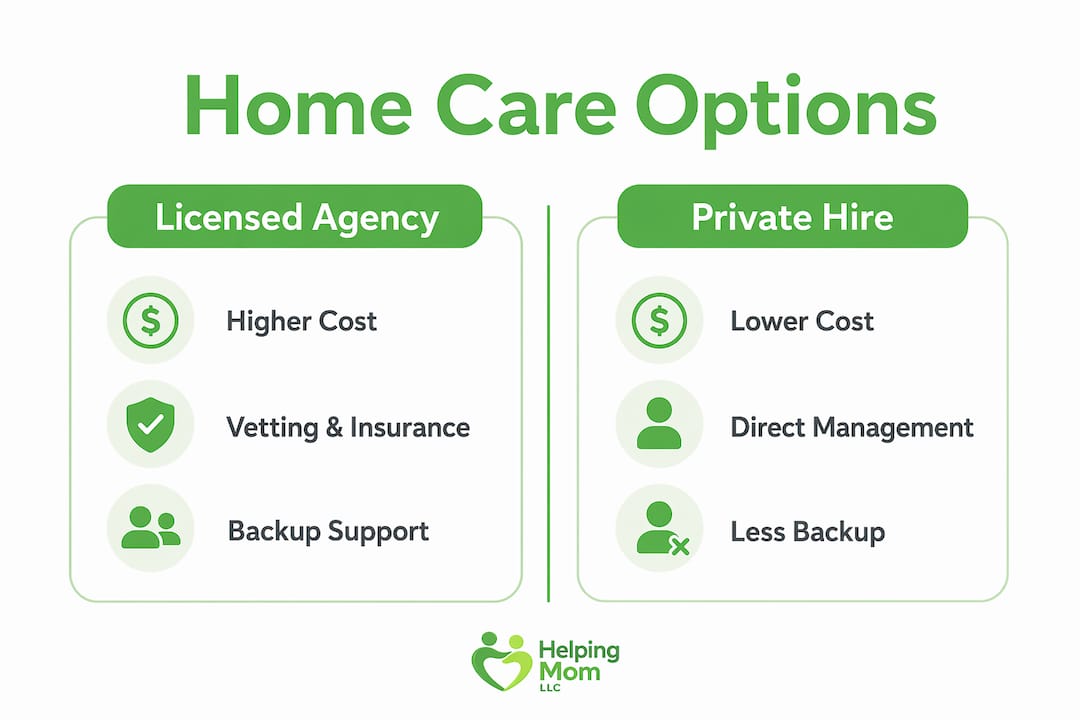
Families choosing senior care face one central decision: hire through a licensed agency or hire a caregiver privately. Both paths work. The right choice depends on your budget, your parent's needs, and how much time you have to manage the arrangement.
Licensed home care agencies
Agencies handle vetting, training, insurance, and backup coverage. If your regular caregiver calls in sick, the agency sends a replacement. You pay a higher hourly rate, but you avoid the administrative burden of being an employer. Agencies also carry liability insurance, which protects your family if something goes wrong in the home.
Agencies typically offer three levels of care:
- Companion care: Conversation, light housekeeping, transportation, and meal preparation
- Personal care: Bathing, dressing, grooming, and mobility assistance
- Skilled home health care: Nursing services, physical therapy, or wound care, usually ordered by a physician
Private hire caregivers
Hiring independently costs less per hour. The trade-off is real, though. When hiring privately, your family takes on payroll, taxes, insurance, and the responsibility of finding backup care when your caregiver is unavailable. Many families underestimate these requirements, which can create compliance issues and coverage gaps.
| Factor | Licensed agency | Private hire |
|---|---|---|
| Hourly cost | Higher | Lower |
| Vetting and background checks | Agency handles | Family handles |
| Backup care if caregiver is absent | Agency provides | Family arranges |
| Payroll and tax management | Agency handles | Family handles |
| Flexibility in caregiver selection | Limited | Full control |
The best home care option for most families is an agency when needs are complex or when no family member has time to manage employment logistics. Private hire works well when needs are straightforward and a trusted family member can handle the coordination.
What questions should you ask when vetting a home caregiver?
Finding the right caregiver requires more than checking a box on credentials. It requires a structured process that covers both qualifications and personal fit.
Step 1: Define the care scope clearly
Write out exactly what you need before you contact anyone. Include the hours, specific tasks, any physical requirements like lifting, and your parent's personality and preferences. A caregiver who is warm and patient with a quiet, private person will not necessarily suit a social, talkative senior.

Step 2: Verify credentials and licenses
For agency hires, ask the agency for proof of licensing in your state, liability insurance, and their process for background checks. For private hires, run your own background check and verify any certifications directly. The Eldercare Locator is a reliable starting point for identifying licensed providers in your area.
Step 3: Conduct a formal interview
Ask direct questions. Vague answers are a warning sign.
- What experience do you have with seniors who have similar needs to my parent?
- How have you handled a situation where a client refused care or became upset?
- What would you do if my parent fell while you were present?
- Are you available for the specific hours and days we need?
- Can you provide three references from previous caregiving roles?
Step 4: Check references with real questions
Screening references effectively means asking substantive questions, not just confirming employment dates. Ask each reference whether the caregiver would be rehired without reservation, and ask for a specific example of how they handled a difficult situation. A hesitant or vague reference is worth noting.
Step 5: Arrange a trial visit
A trial visit lets your parent and the caregiver meet in a low-stakes setting. Watch how the caregiver speaks to your parent. Do they make eye contact? Do they speak directly to your parent rather than to you? Personality fit between caregiver and senior is critical. A highly skilled caregiver who lacks warmth or patience can increase resistance rather than reduce it.
Pro Tip: Let your parent lead the conversation during the trial visit. Their comfort level after the meeting tells you more than any credential check.
How do you manage care once a caregiver is hired?
Hiring the right person is only the beginning. The quality of care over time depends on clear communication, defined roles, and a willingness to adjust as your parent's needs change.
Clear communication and defined roles among family members and caregivers improve home care outcomes significantly. The Family Caregiver Alliance recommends regular check-ins, documented notes, and open dialogue to maintain quality and catch problems early.
Set up a simple care log in the home. The caregiver records what happened during each visit: meals eaten, medications taken, mood, any concerns. This log becomes a communication tool for your whole family and a record you can share with a doctor if needed.
Assign clear responsibilities among family members from the start. Who reviews the care log each week? Who handles the caregiver's schedule? Who is the primary contact if something goes wrong? Ambiguity creates conflict, especially among siblings. A family meeting early in the process helps everyone agree on roles before tension builds.
Your parent may resist help at first. This is normal and does not mean the arrangement is failing. Framing care as a temporary trial rather than a permanent change reduces resistance and helps seniors feel they still have a say. Harvard Health confirms that this approach increases willingness to accept assistance over time.
Revisit the care plan every three to six months, or sooner if your parent's condition changes. What worked six months ago may not be enough today. Staying ahead of those changes is the most practical thing you can do to keep your parent safe and comfortable at home. For broader guidance on supporting aging parents through these transitions, Helping-mom offers practical, family-focused resources.
Key Takeaways
The most effective way to choose home care help is to assess your parent's current needs clearly, compare agency and private hire options honestly, and vet caregivers through structured interviews, reference checks, and a trial visit before committing.
| Point | Details |
|---|---|
| Start with a needs assessment | Observe daily abilities over two to three weeks before contacting any agency or caregiver. |
| Agency vs. private hire | Agencies cost more but handle vetting, insurance, and backup care; private hires require family to manage employment tasks. |
| Vet with specific questions | Ask references whether they would rehire without reservation and request a concrete example of handling a difficult situation. |
| Prioritize personality fit | A warm, patient caregiver who connects with your parent outperforms a highly credentialed one who lacks rapport. |
| Build in regular reviews | Revisit the care plan every three to six months to match support to your parent's changing needs. |
What I have learned about choosing home care help
The part nobody tells you upfront is how much your parent's feelings about independence shape the entire process. I have seen families hire excellent caregivers who were quietly resented because the senior felt they had no say in the decision. The care arrangement technically worked, but the relationship never did.
What actually works is involving your parent from the beginning. Let them meet candidates. Let them say no to someone who does not feel right. That sense of control matters more than most adult children expect. It is not about giving up authority over safety. It is about walking alongside your parent rather than making decisions for them.
The other thing I would tell any adult child starting this process: do not wait for a crisis. The families who start with a few hours of help per week, before anything urgent happens, have a much easier time. Their parent gets used to having someone around. The caregiver learns the household routine. By the time more support is needed, the relationship is already there.
Cost is a real concern, and I understand the instinct to go with the cheapest option. But a caregiver who is unreliable, or a private hire arrangement that falls apart because backup care was never planned, costs more in stress and disruption than the hourly savings are worth. Think about the full picture of home safety alongside the care arrangement. The two go together.
Finally, talk to your siblings before you hire anyone. Disagreements about care decisions are one of the most common sources of family conflict. Getting everyone on the same page early, even with a simple phone call, prevents a lot of pain later.
— Mike
Practical support from Helping-mom
Helping-mom is built for exactly this stage of caregiving. Once you have a caregiver in place, the next step is making sure the home itself supports your parent's safety and independence. The home safety guide for seniors at Helping-mom walks you through practical changes room by room, from bathroom grab bars to lighting and fall prevention. For families managing sibling disagreements about care decisions, the guide on working as a caregiving team offers calm, realistic advice. Helping-mom covers the full range of what adult children face, without the clinical language or the pressure.
FAQ
What is the difference between home care and home health care?
Home care covers non-medical support like companionship, personal care, and household tasks. Home health care involves medical services such as nursing or physical therapy, typically ordered by a physician.
How do I know when my parent needs home care help?
Signs include difficulty with daily tasks like cooking or bathing, missed medications, increased isolation, or a recent fall or hospitalization. Starting with a periodic needs assessment helps you identify the right time.
Is it better to hire through an agency or privately?
Agencies cost more but handle vetting, insurance, and backup care. Private hires cost less but require families to manage payroll, taxes, and coverage gaps. The best choice depends on your parent's needs and your family's capacity to manage logistics.
What questions should I ask a home caregiver during an interview?
Ask about their experience with similar care needs, how they handle a client who refuses care, what they would do in an emergency, and whether previous employers would rehire them without reservation.
How can I help my parent accept home care help?
Frame the arrangement as a temporary trial rather than a permanent change. Involve your parent in choosing the caregiver and let them have a say in the schedule. Harvard Health confirms this approach reduces resistance and builds acceptance over time.