
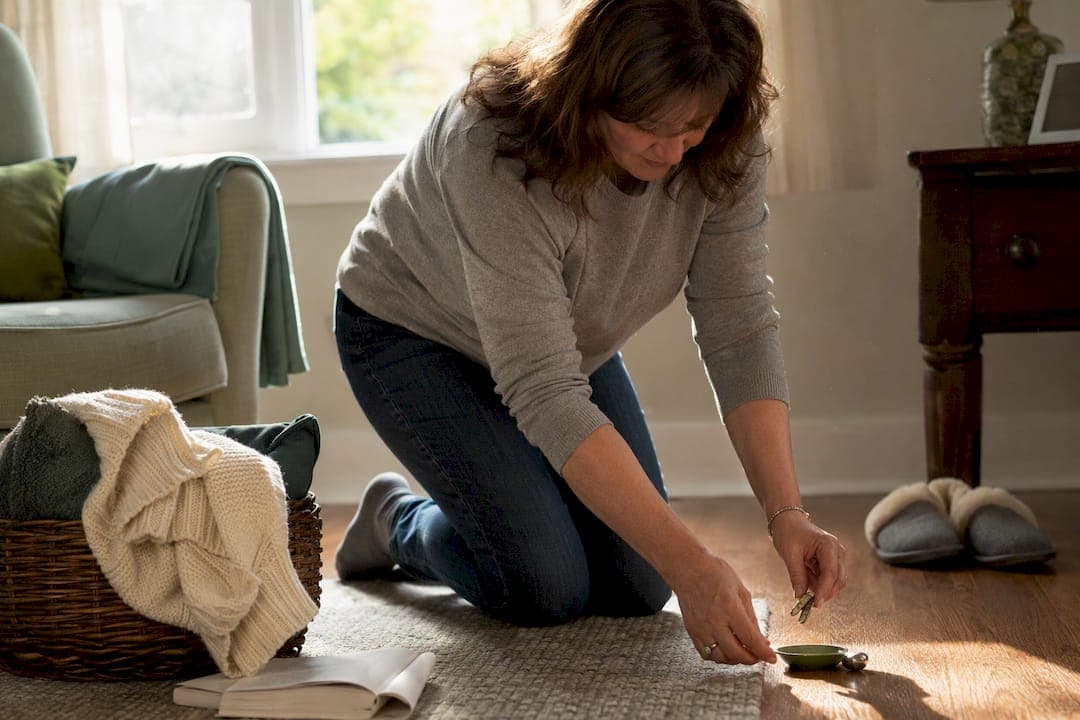
Three things reduce most home hazards fast: clear one main walking path through every room, remove loose rugs and stray cords, and test every smoke and carbon monoxide detector today. Falls happen when feet meet clutter; fires spread faster where escape routes are blocked. Working detectors cut response time when it matters most, according to MedlinePlus. Once those three are done, the rest of this guide helps you build on it.
- Clear a straight walking path through each main room
- Remove loose rugs, cords, and clutter from floors
- Press "test" on every smoke and CO detector right now
Key Takeaways
A safer home comes from small, repeatable routines, not a single overhaul, paired with tested detectors and a negotiated approach with aging parents.
| Point | Details |
|---|---|
| Start with three actions | Clear one path, remove trip hazards, and test all detectors today. |
| Build a routine | Use 10 minutes daily, 30 minutes weekly, and 1 hour monthly to stay ahead of clutter. |
| Prioritize hazard removal | Tackle stairs, bathrooms, and cords before cosmetic decluttering. |
| Test detectors monthly | Replace smoke alarms periodically because their sensors degrade over time, not just their batteries. |
| Negotiate, don't dictate | Use observations and small pilot changes when talking with a parent. |
| Get guided support | Helping-mom offers free checklists, paid Zoom consults, and in-person assessments for the next step. |
Table of Contents
- How Do You Build a Home Safety Routine That Sticks?
- What Should You Declutter First for Safety?
- Where Should Everyday Items Be Stored for Easy Access?
- Which Room-by-Room Fixes Matter Most?
- How Often Should Smoke and CO Detectors Be Tested?
- How Should Medications and Cleaning Products Be Stored?
- How Much Time and Money Does This Actually Take?
- How Do You Talk to a Parent About Safety Changes Without Taking Over?
- Why Small, Steady Changes Beat the Big Overhaul
- How Helping-mom Can Help You Take the Next Step
- Where to Learn More
- Sources
- FAQ
How Do You Build a Home Safety Routine That Sticks?
The goal isn't a one-time overhaul. It's a rhythm you can keep up without it feeling like a chore. Think in three time blocks: 10 minutes a day, 30 minutes a week, an hour a month.

Daily (10 minutes): Clear high-traffic zones like the kitchen floor and hallway. Check that cords aren't crossing walking paths.
Weekly (30 minutes): Wipe down bathroom surfaces for slip hazards. Sort mail and mislaid items that pile up near doors.
Monthly (1 hour): Test detectors, check lightbulbs in stairwells and entryways, and scan closets for anything blocking a quick exit.
- 10 minutes daily: clear pathways, check cords
- 30 minutes weekly: bathroom surfaces, entryway clutter
- 1 hour monthly: detectors, lighting, exit routes
Pro Tip: Attach the daily habit to something already happening, like brewing coffee. Tidy the kitchen floor while the pot fills. Habits that piggyback on existing routines last longer than ones that need their own reminder.
What Should You Declutter First for Safety?
Not all clutter carries equal risk. A stack of magazines is annoying. A loose rug at the top of the stairs is dangerous. Work through hazards in this order:
- Assess high-risk zones — stairways, bathrooms, and paths between bedroom and bathroom used at night.
- Remove trip hazards — loose rugs, exposed extension cords, shoes left in hallways.
- Secure pathways — furniture that narrows a walkway, boxes stored on the floor instead of shelves.
- Store flammables and poisons — away from heat sources and out of easy reach.
Scan every room for these repeat offenders:
- Loose or curling rug edges
- Cords running across (not along) a wall
- Uneven flooring transitions between rooms
- Outlets with more than one high-draw device plugged in
Extension cords run under rugs or draped near a stove are a common, preventable fire risk. CPSC guidance recommends plugging major appliances directly into the wall instead.
Where Should Everyday Items Be Stored for Easy Access?
Clutter often comes back because there's no clear "home" for an item. Fix that once, and the daily tidy takes minutes instead of an hour.
Keep items used daily at arm height, no reaching up or bending down. Label bins so anyone in the house, not just the person who organized them, can find what they need. Use vertical wall storage for brooms and mops instead of leaning them in a corner. Set up a small "drop zone" by the front door for keys, mail, and shoes so they never end up on the floor.
- Cleaning supplies: a labeled bin, up and away from food storage
- Chargers: a basket near the outlet they're used at, not scattered across counters
- Shoes and slippers: a low shelf or rack right by the entry, never loose on the floor
Budget-friendly fixes: stackable labeled bins run $15 to $40 at most home stores. A step up is built-in shelving or a closet system, which costs more but solves the problem permanently.
Which Room-by-Room Fixes Matter Most?
Some rooms carry more risk than others. Focus your energy here first.
Kitchen: Keep the stove area clear of towels and papers. Store small appliances so cords don't dangle. Move cleaning chemicals to a high, locked cabinet. Quick win: clear the counter beside the stove today.
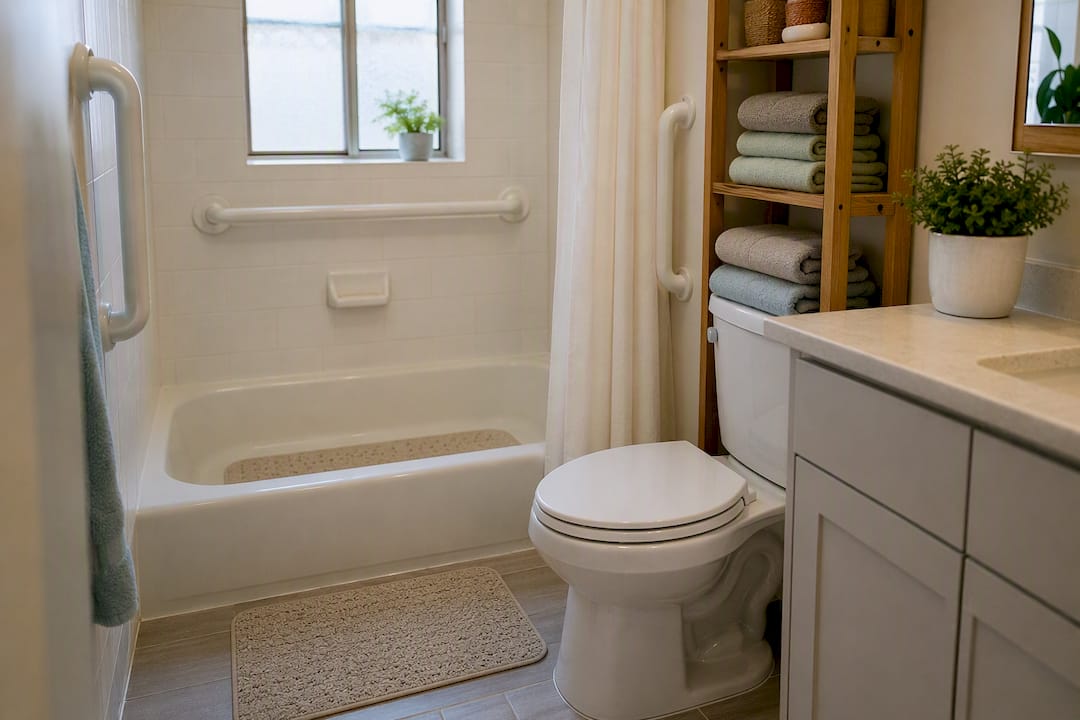
Bathroom: Add non-slip mats inside and outside the tub. Install grab bars near the toilet and shower. Switch to single-lever faucets if arthritis makes twisting hard. Quick win: a non-slip mat helps prevent common bathroom falls.
Stairs and hallways: Handrails on both sides, light switches at the top and bottom, no throw rugs anywhere near steps. Quick win: add a switch-accessible nightlight at the base of the stairs.
Bedroom and living areas: Anchor tall dressers and bookshelves. Route cords away from walking paths. Place a nightlight between the bed and bathroom door. Quick win: move the phone charger cord off the floor tonight.
Pro Tip: Walk each room at night with the lights off except a small lamp. Hazards that are invisible in daylight, a dark cord, an unlit step, show up immediately.
For grab bar options and installation notes, our bathroom safety guide walks through what fits different bathroom layouts.
How Often Should Smoke and CO Detectors Be Tested?
Test every smoke and carbon monoxide detector monthly by pressing the test button. Replace batteries at least once a year, and replace the entire smoke detector unit every 10 years, since the sensor itself degrades even if the battery is fresh, according to Johns Hopkins Medicine.
If a detector fails a test, replace it that day. Don't wait for a restock trip; a $10 unit from any hardware store works in the meantime.
Build an emergency kit that goes beyond the standard flashlight and water. Ready recommends customizing kits with glucose tablets, epinephrine, and extra prescription medications for anyone with ongoing medical needs, plus copies of key documents and a phone charger.
- Water and shelf-stable food for a supply sufficient to manage an emergency
- Medication list plus an emergency backup supply
- Copies of ID, insurance cards, and emergency contacts
- Flashlight, backup batteries, phone charger
If you use a generator during outages, run it outside only, well away from windows and doors, since carbon monoxide from generators is a leading cause of poisoning after storms.
How Should Medications and Cleaning Products Be Stored?
Medications, especially opioids, belong in a locked box or cabinet, not a bathroom drawer. If firearms are in the home, store them locked and separate from ammunition, in a different location entirely. Cleaning products need a secure cabinet, ideally with a child-safety latch even in homes without young kids, since the same latch prevents mix-ups for anyone with memory changes.
- Lock medications in a small lockbox, even common over-the-counter ones
- Store firearms and ammunition in separate, locked locations
- Keep cleaning products in a latched cabinet away from food
- Dispose of unused medications through a local take-back program
For questions about a specific chemical exposure, Poison Control is available at 1-800-222-1222, day or night.
How Much Time and Money Does This Actually Take?
Most of this doesn't require a weekend or a contractor. Quick fixes, clearing cords, adding a nightlight, labeling a bin, take minutes and cost little to nothing. Modest upgrades like non-slip mats, better lighting, or a lockbox usually run somewhere between $20 and $200. Bigger jobs, grab bar installation or stair railings, often land between $200 and $800 depending on your home, higher if you hire a contractor for a full install.
- Low cost: DIY fixes, mats, bins, lockboxes
- Moderate cost: grab bars, railings, upgraded lighting
- Ongoing: monthly detector tests, annual battery swap, yearly full walk-through
A realistic schedule: daily tidying, weekly surface checks, monthly detector tests, and one full annual walk-through of the whole home.
How Do You Talk to a Parent About Safety Changes Without Taking Over?
This is where good intentions can backfire. Show up with a list of demands, and most parents dig in. Home safety works better as a back-and-forth than a directive, described in caregiving research as a "mastered compromise" between independence and risk reduction.
Lead with observations, not conclusions. "I noticed a bruise on your arm" opens a conversation. "You need grab bars" closes one. Offer choices instead of ultimatums: two grab bar styles, two lighting options. Pilot one small change for a month before suggesting the next.
One family we've heard from started with just a nightlight in the hallway. No big conversation, no pressure, just a small fix. A month later, the parent asked for one in the bathroom too. That's how lasting change usually happens: one welcomed step at a time.
Pro Tip: Keep a simple notebook of what you notice, missed calls, small injuries, mail piling up. Patterns are easier to discuss calmly than a single dramatic moment.
Our guide on making a home safer for an elderly parent goes deeper into these conversations.
Why Small, Steady Changes Beat the Big Overhaul
Every family I've talked with expected safety changes to be one hard conversation and a weekend of work. It's rarely that. The homes that actually get safer are the ones where someone tackled one hallway, one bathroom mat, one conversation at a time. Small and steady beats sweeping and stressful, and it's kinder to everyone involved.
How Helping-mom Can Help You Take the Next Step
You don't have to figure this out alone or all at once. Helping-mom is built for exactly this kind of steady, room-by-room progress instead of an overwhelming one-time project. If you want a starting point today, our free elder care checklist gives you a printable version of the room-by-room fixes covered here. If you're ready for more personalized guidance, a booked Zoom consult walks through your specific home and family situation, and for readers in Central Florida, an in-person home safety assessment covers what a photo or checklist can't catch. For a structured next move, our practical guide to making homes safer for seniors lays out the full path from DIY fixes to professional help, so you can pick the option that matches your budget and your timeline right now.
Where to Learn More
- Ready: emergency kit and medical-supply customization
- MedlinePlus: fall and fire prevention basics
- NCBI Bookshelf: negotiated home safety for older adults
- Johns Hopkins Medicine: room-by-room checklist and detector guidance
- Consumer Reports: emergency response and storm prep
Sources
- Ready
- Home Safety Techniques - StatPearls - NCBI Bookshelf
- Staying safe at home: MedlinePlus Medical Encyclopedia
- How to Keep Your Home Safe (and What to Do in an Emergency) - Consumer Reports
- Household Safety Checklist | Johns Hopkins Medicine
FAQ
What Is the 3-3-3 Rule for Decluttering?
Definitions vary, but a common version suggests removing three items from a room, spending three minutes tidying, or clearing three surfaces at a time to keep decluttering manageable and non-overwhelming.
What Are the Five Safety Rules at Home?
A practical version covers clear walkways, working smoke and CO detectors, secured medications and chemicals, non-slip bathroom surfaces, and good lighting on stairs and at entrances.
What Should I Remove First When Decluttering for Safety?
Start with trip hazards, loose rugs, stray cords, and floor clutter in stairways and bathrooms, since these areas carry the highest fall risk.
What Should Every Home Have for Safety?
Every home should have tested smoke and CO detectors, clear exit paths, secured medications and chemicals, and adequate lighting in hallways and stairwells. Helping-mom's aging in place checklist walks through the full list for households supporting an older adult.