

TL;DR:
- Talking to a parent about memory loss is difficult but important for early intervention. It requires careful timing, compassionate language, and steady patience to build trust over multiple conversations.
Talking to a parent about memory loss is one of the most caring things an adult child can do. It is also one of the hardest. The clinical term for this type of conversation is a "cognitive concern discussion," but most families simply call it the talk they have been putting off. Starting early allows for calmer, more rational dialogue before a crisis forces the issue. This guide walks you through when to speak up, what to say, how to handle resistance, and how to support your parent through the next steps, all without losing the trust you have built over a lifetime.
How to talk to your parent about memory loss: timing and setting
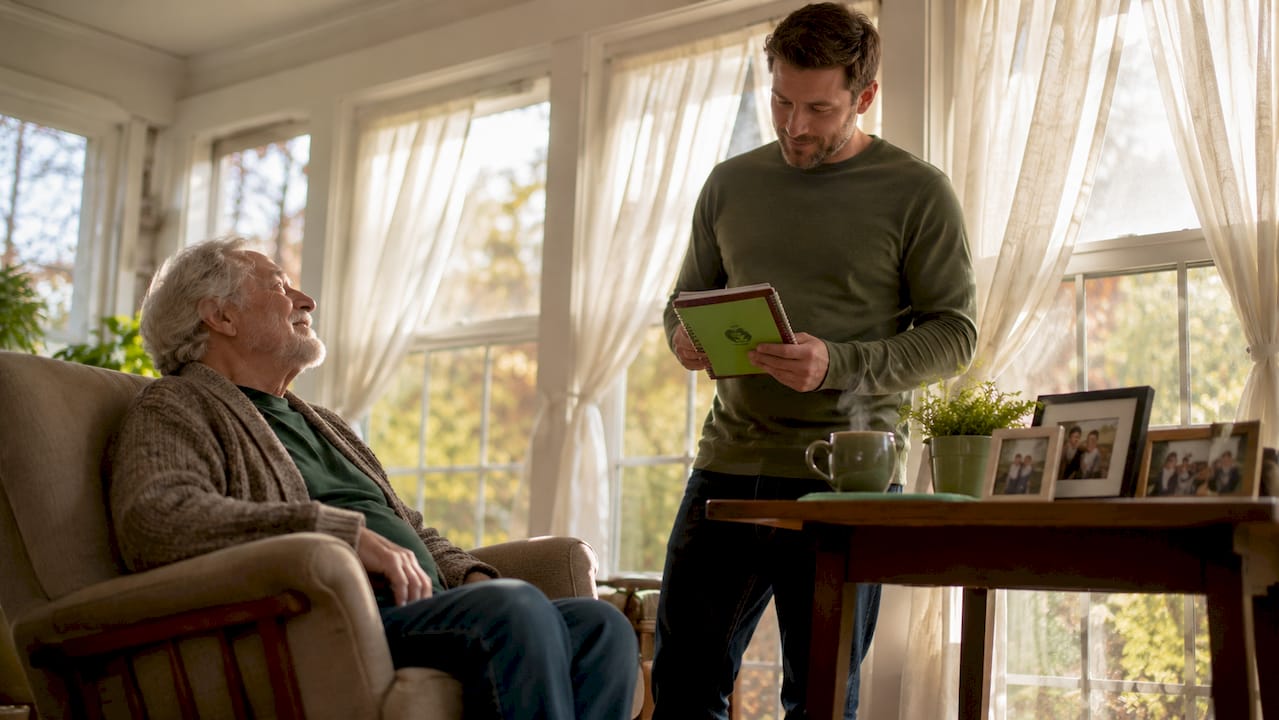
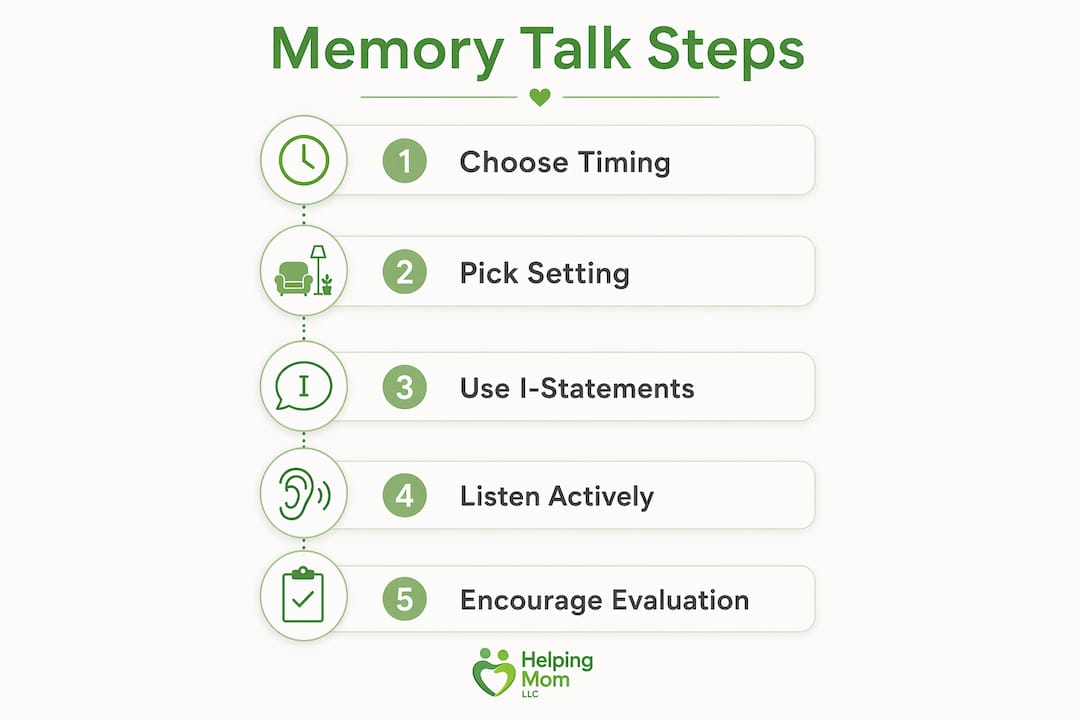
The right moment matters as much as the right words. Calm periods of the day, such as morning or early afternoon, work best because your parent is mentally fresher and less fatigued. Avoid bringing up the topic after a stressful event, a family argument, or late in the evening when energy and patience are both low.
Choose a private, familiar setting. Your parent's own home is often ideal because it feels safe and non-threatening. A one-on-one conversation reduces embarrassment and gives your parent space to respond honestly. Bringing a crowd, even well-meaning siblings, can feel like an intervention and trigger immediate defensiveness.
Plan the conversation in advance, but stay flexible. Know the two or three specific observations you want to share. Have a sense of where you want the conversation to go. At the same time, be ready to pause and continue another day if emotions run high.
Pro Tip: If your parent tends to be sharper and more relaxed after breakfast, that window is your best opening. Small details like this make a real difference in how the conversation lands.
What language works best when discussing memory issues with parents
The words you choose shape the entire conversation. Using "I" statements paired with specific observations reduces defensiveness far more effectively than broad accusations or labels. "I noticed you mentioned the appointment twice and seemed worried about forgetting it" lands very differently than "You keep forgetting things."
Older adults often fear that memory loss threatens their sense of self. Framing the conversation around shared goals, like staying at home longer or keeping independence, reduces that fear. You are not pointing out a flaw. You are expressing care about something you both value.
Avoid clinical terms like "dementia" or "cognitive decline" in the opening conversation. Those words carry heavy emotional weight. Start with what you have seen, not with a diagnosis.
Here are phrases that tend to open doors rather than close them:
- "I've noticed a few things lately and I care about you, so I wanted to talk."
- "I want to make sure we're doing everything we can to keep you feeling your best."
- "Would you be open to checking in with your doctor just to make sure everything is okay?"
- "I'm not trying to alarm you. I just want us to stay ahead of things together."
- "Can we talk about what would help you feel more confident day to day?"
Listen as much as you speak. Ask open questions and give your parent time to respond. Silence is not failure. It often means your parent is processing something real.
Pro Tip: Reframe the conversation around your parent's goals, not your worries. "I want you to stay in your home as long as possible" is far more motivating than "I'm worried about your memory."
What to expect: common reactions and how to respond
Denial is the most common first response. Your parent may say nothing is wrong, change the subject, or become irritated. This is normal and does not mean the conversation failed.
A condition called anosognosia means some people are genuinely unaware of their own memory loss. This is not stubbornness or pride. It is a neurological reality. When your parent says "I'm fine," they may truly believe it. Your observations become the record that matters.
Do not take resistance personally. Your parent is not rejecting you. They are protecting a sense of self that feels threatened. Patience is the most important tool you have. Losing your temper or pushing too hard in one sitting undermines the trust you need for future conversations.
Practical responses to common reactions:
- Denial: Validate the feeling. "I hear you. I just wanted to share what I've noticed because I care about you."
- Anger: Step back calmly. "I can see this is upsetting. We don't have to solve everything today."
- Embarrassment: Normalize the concern. "A lot of people check in with their doctor about memory. It's a smart thing to do."
- Withdrawal: Give space and return to the topic gently in a few days.
Involving a trusted family member or the family doctor can help, but do so carefully. A family meeting works best when it is framed as a support circle, not a confrontation.
How to encourage your parent to seek a professional evaluation
Framing the medical visit correctly makes a significant difference. Schedule a dedicated memory evaluation separate from a routine physical. Combining the two sends the message that memory is just a side note. A focused appointment signals that this matters and deserves full attention.
Present the visit as a positive step toward independence, not a test your parent might fail. Language like "This appointment is about making sure you have everything you need to stay healthy and at home" is far less threatening than "We need to get your memory checked."
Offer to go with them. Your presence provides emotional support and also allows you to share your observations directly with the doctor. Tracking specific symptoms before the appointment, such as dates, incidents, and patterns, gives the physician concrete information to work with.
Here are ways to reduce reluctance:
- Frame the visit as a wellness check, not a memory test.
- Remind your parent that early attention supports better long-term outcomes.
- Offer to handle the scheduling so the task does not feel like a burden.
- Emphasize that the doctor is there to help, not to judge.
- Point out that many people their age have these checkups as a normal part of aging well.
Geriatric care evaluations are framed by specialists as comprehensive health and independence support, not just memory testing. Using that same framing with your parent helps reduce the fear attached to the appointment.
Practical communication aids and ongoing support strategies
Communication needs to adapt as memory challenges grow. Simple written reminders and schedules help many parents stay oriented, even when verbal communication becomes harder. Many people retain reading skills well into cognitive decline, which makes written notes a practical and dignified tool.
Yes/no questions and choice-based prompts reduce the cognitive load of a conversation. Instead of "What do you want for lunch?", try "Would you like soup or a sandwich?" Simpler sentence structure is not condescending. It is respectful of where your parent is right now.
Touch and physical presence communicate care when words fall short. A hand on the shoulder or sitting close during a conversation conveys reassurance that no sentence can fully replace.
| Communication strategy | When to use it |
|---|---|
| Written daily schedule | When your parent asks the same questions repeatedly |
| Yes/no or choice questions | When open questions cause confusion or frustration |
| Short, simple sentences | During any conversation as verbal processing slows |
| Physical presence and touch | When your parent seems anxious or withdrawn |
| Symptom notes for the doctor | Before and after medical appointments |
Set realistic expectations for yourself. Progress in these conversations is rarely linear. Some days will feel like steps forward. Others will not. That is part of helping a parent with memory loss, and it does not mean you are doing it wrong.
Key takeaways
The most effective approach to discussing memory loss with a parent combines careful timing, compassionate language, and steady patience across multiple conversations rather than a single difficult talk.
| Point | Details |
|---|---|
| Timing shapes receptiveness | Choose morning or early afternoon in a private, familiar setting for the best results. |
| "I" statements reduce defensiveness | Lead with specific observations and personal concern, not accusations or labels. |
| Denial is often neurological | Anosognosia means your parent may genuinely not recognize their memory loss. |
| Frame medical visits positively | Present evaluations as independence support, not memory tests, to reduce fear. |
| Written tools preserve dignity | Simple schedules and choice-based questions help communication stay clear and respectful. |
What I've learned from sitting with these conversations
These conversations are genuinely hard. I have spoken with many adult children who put off the memory talk for months, sometimes years, because they were afraid of upsetting their parent or damaging the relationship. What I have found, again and again, is that the fear of the conversation is almost always worse than the conversation itself.
The families who fare best are not the ones who said everything perfectly. They are the ones who kept showing up. They had the talk, then came back a week later. They listened more than they spoke. They let their parent be angry or sad without trying to fix it immediately. That kind of steady, patient presence is what actually builds trust over time.
One thing I wish more adult children knew: you do not need to resolve everything in one sitting. The goal of the first conversation is simply to open a door. If your parent knows you are paying attention and that you care, that is enough for now. The signs of memory loss will not disappear, but your relationship can remain intact and even grow stronger through this process.
Give yourself credit for showing up. This is not easy work, and the fact that you are reading this means you are already doing something right.
— Mike
Practical resources for the road ahead
Once the conversation has started, the next step is making sure your parent's home and daily life support their safety and independence. Helping-mom offers calm, practical guidance for exactly this stage. The home safety guide for seniors walks you through simple modifications that reduce fall risk and support aging in place. If you are thinking about longer-term planning, the aging in place resource hub covers everything from home adjustments to caregiver wellness. These resources are designed for adult children who want clear, real-world steps without the medical jargon.
FAQ
How do I start the memory loss conversation with my parent?
Begin with a specific, caring observation using an "I" statement, such as "I've noticed a few things lately and wanted to talk because I care about you." Starting before a crisis allows for a calmer, more open exchange.
What if my parent refuses to talk about memory problems?
Resistance is common and often reflects fear rather than stubbornness. Validate their feelings, step back without pressure, and return to the topic gently over several conversations rather than pushing for resolution in one sitting.
Should I bring other family members to the conversation?
A one-on-one setting is usually best for the first conversation. Bringing multiple family members at once can feel threatening. If you need family support later, a structured family meeting works better than an unplanned group discussion.
How is a memory evaluation different from a regular doctor visit?
A dedicated memory evaluation is scheduled separately from a routine physical so the physician can focus entirely on cognitive concerns. This focused appointment also allows you to share your observations directly with the doctor.
What communication tools help when memory loss progresses?
Written daily schedules, simple yes/no questions, and short sentences reduce confusion and support dignity. Physical presence and gentle touch also convey reassurance when verbal communication becomes more difficult.