

TL;DR:
- Moving a parent to assisted living involves careful planning, emotional support, and organized logistics. Early preparation and community research help ensure a smooth transition and reduce stress for everyone involved.
Transitioning a parent to assisted living is defined as the planned process of moving an aging adult from their current home into a community that provides daily support, personal care, and social connection. Done well, this process results in a safer, more supported life for your parent and real peace of mind for you. Over 810,000 Americans currently live in assisted living communities, and that number is projected to grow significantly as Baby Boomers age. Knowing how to transition to assisted living with a clear plan makes the difference between a stressful move and a genuinely positive new chapter.
What preparations are essential before moving to assisted living?
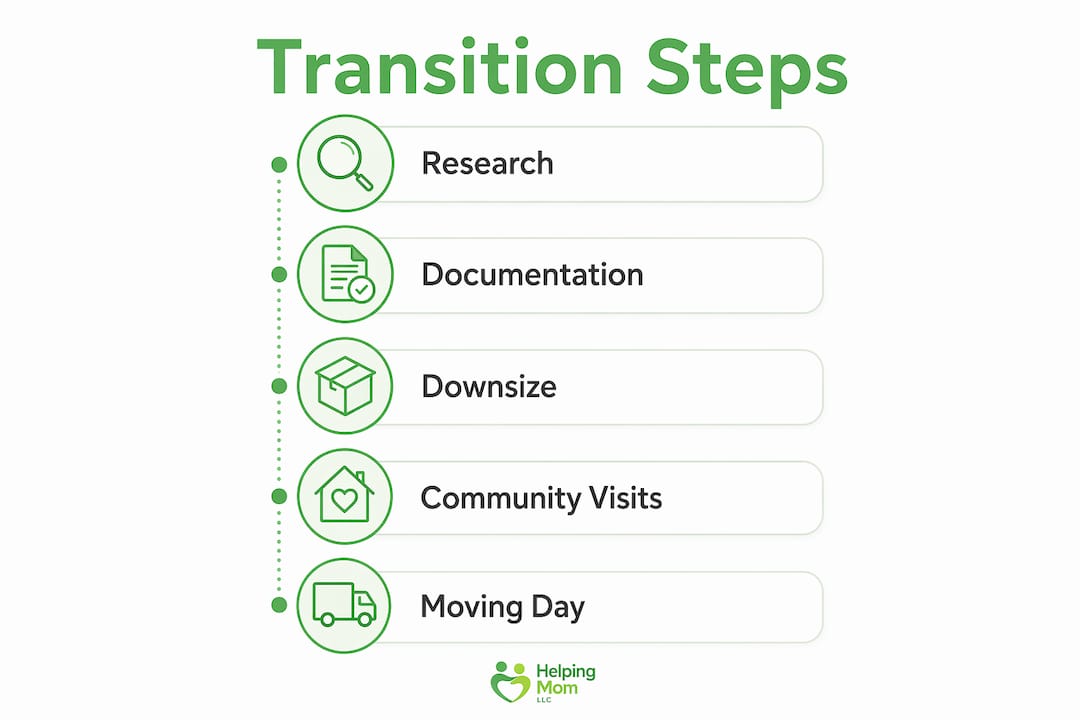
Preparation is the single most important factor in a smooth move. Experts recommend starting at least 2–3 months before moving day. That window gives your family time to handle paperwork, sort belongings, and coordinate care without feeling rushed.
The first step is gathering all necessary documents. You will need medical records, a list of current medications, insurance cards, a power of attorney, and any advance directives. Many communities require a physician's assessment before move-in. Having these ready in advance prevents delays and reduces last-minute stress.
Downsizing is the other major task in this phase. Most assisted living apartments are significantly smaller than a family home. Work with your parent to decide what comes with them, what goes to family members, and what gets donated. Sorting through decades of belongings takes more time than most families expect, so start early and go room by room.
Use a structured assisted living checklist to track every task. A written list keeps the whole family aligned and prevents anything from falling through the cracks.
Key preparation tasks:
- Collect medical records, medication lists, and insurance documents
- Obtain legal documents: power of attorney, advance directives, and financial records
- Schedule a physician's assessment if required by the community
- Begin decluttering and downsizing at least 8 weeks before the move
- Research and confirm costs, including base rent and any additional care fees
- Notify relevant parties: doctors, banks, Medicare, and the post office
| Task | Recommended timeline |
|---|---|
| Research communities and tour options | 3 months before move |
| Gather medical and legal documents | 2–3 months before move |
| Begin downsizing and sorting belongings | 2 months before move |
| Confirm move-in date and logistics | 4–6 weeks before move |
| Pack and finalize arrangements | 1–2 weeks before move |
Pro Tip: Create a shared folder, either physical or digital, where every family member can access important documents. This prevents duplicate calls to doctors and reduces confusion on moving day.
How do you choose the right assisted living community?
Choosing the right community takes more than a quick tour. The best approach is to visit at least three communities, ask specific questions, and pay close attention to details that brochures never mention.
Food quality is the single most reliable indicator of resident satisfaction in assisted living. Ask to eat a meal during your visit. Talk to current residents about the dining experience. Poor food quality is one of the most common reasons families regret their choice.
Medication management is another area that deserves direct questions. Ask how medication errors are tracked and what the community's process is when a mistake happens. Knowing who administers medication is not enough. You want to understand the system behind it.
Costs require careful attention. Many communities charge extra fees for higher care levels, activities, and services beyond the base rent. Always ask for a complete fee schedule and request a sample monthly invoice. Surprises in billing are one of the most common sources of family frustration after move-in.
Questions to ask during community visits:
- What is included in the base monthly fee, and what costs extra?
- How is staffing handled on nights and weekends?
- What happens if my parent's care needs increase?
- How does the community handle medical emergencies?
- Can residents personalize their apartment with their own furniture?
- What social activities and programs are available?
Pro Tip: Visit a community twice: once for a scheduled tour and once unannounced during a mealtime. The unannounced visit tells you far more about the daily reality of life there.
What are effective emotional support strategies during the transition?
The emotional side of this transition is often harder than the logistics. Your parent may feel grief, fear, or a sense of loss. You may feel guilt. Both responses are completely normal, and acknowledging them openly makes the process easier for everyone.
Reframing the conversation from loss to gain is one of the most effective tools available to families. Focus on what assisted living offers: safety, companionship, less home maintenance, and access to support when it is needed. This shift in framing does not dismiss your parent's feelings. It gives them something real to look forward to.
Involving your parent in decisions builds trust and preserves their sense of control. Let them choose between two communities rather than presenting a single option. Let them decide which furniture comes with them. Small choices matter enormously to someone who may feel the bigger decisions are out of their hands.
"This process isn't about taking over. It's about walking alongside your parent so they feel supported, not managed."
Staying connected after the move is just as important as the move itself. Regular visits, phone calls, and small gestures like sending a card or bringing a favorite treat help your parent feel remembered and loved. Loneliness is a real risk in the early weeks, and your presence is the best remedy.
Ways to support your parent emotionally:
- Have honest, calm conversations about the reasons for the move
- Acknowledge their feelings without trying to fix them immediately
- Involve them in choosing their new space and what they bring
- Plan your first few visits before moving day so they have something to anticipate
- Connect them with a counselor or social worker if grief feels persistent
Pro Tip: Before moving day, help your parent write a short list of three things they are looking forward to in their new home. It can be as simple as not having to cook every night. Having it written down gives them something to return to on harder days.
What are the best practices for moving day and settling in?
Moving day sets the tone for how your parent feels about their new home. A calm, organized day reduces anxiety and helps your parent feel welcomed rather than displaced.

The move-in process typically takes 1–2 weeks from start to finish, though emergency situations can be handled in as little as 24–48 hours when medical records are already prepared. For a planned move, use that window to coordinate carefully.
Here is a practical order of operations for moving day:
- Arrive early and meet the staff. Introduce yourself and your parent to the team on duty. A familiar face makes a real difference in the first few hours.
- Set up the bedroom first. Prioritizing the bedroom creates a calm, familiar anchor before the rest of the apartment is arranged. Your parent can rest there if the activity becomes tiring.
- Place familiar items throughout the space. Photos, a favorite blanket, a familiar lamp. Personalizing the new space with recognizable items supports emotional comfort and a sense of independence.
- Use the trash bag trick for clothes. Poke a hole in the bottom of a trash bag and pull it over a group of hanging clothes. This keeps outfits together and wrinkle-free during transport.
- Walk through the community together. Find the dining room, the activity space, and the nearest exit together. Familiarity with the layout reduces disorientation in the first few days.
- Encourage one activity in the first week. It does not need to be a big commitment. A group breakfast or a short craft session is enough to begin building connections with other residents.
Pro Tip: Bring a small basket of your parent's favorite snacks, tea, or coffee to leave in their new space. It makes the apartment feel like theirs from the very first night.
For more detailed guidance on coordinating the physical move, Helping-mom's senior moving guide walks through every step families need to manage.
Key Takeaways
A successful transition to assisted living requires early preparation, careful community selection, emotional support, and a calm, organized moving day.
| Point | Details |
|---|---|
| Start 2–3 months early | Use the lead time for documents, downsizing, and community research. |
| Evaluate food and medication management | These two factors predict resident satisfaction more than any other feature. |
| Reframe the conversation | Focus on safety and connection, not loss, to reduce guilt and resistance. |
| Set up the bedroom first | A familiar, calm space on day one reduces anxiety and helps your parent settle. |
| Stay connected after the move | Regular visits and calls prevent loneliness and reinforce your parent's sense of belonging. |
What I've learned about the hardest part of this transition
Most families focus all their energy on the logistics, and then feel blindsided by the emotional weight of the first few weeks after the move. The boxes are unpacked, the paperwork is done, and yet something still feels unresolved. That feeling is normal. It does not mean you made the wrong decision.
What I have seen work consistently is staying involved after moving day, not just before it. The families who check in with staff regularly, who ask specific questions about how their parent is eating and sleeping and socializing, tend to catch small problems before they become big ones. The families who step back and assume everything is fine sometimes miss early signs that their parent needs more support.
The other thing worth saying plainly: guilt is not evidence of a mistake. Feeling sad about this transition does not mean you chose wrong. It means you love your parent. Those two things can exist at the same time.
Respecting your parent's autonomy throughout this process matters more than most guides acknowledge. Letting them make real choices, even small ones, preserves their dignity and makes the new environment feel like their home rather than a placement. That distinction is everything.
If you are navigating this as a family with siblings involved, a family meeting guide can help you align on decisions before tension builds.
— Mike
Practical resources from Helping-mom for families in transition
Helping-mom offers a range of practical guides built specifically for adult children managing this kind of transition. Whether you are still weighing options or already in the middle of a move, the caregiver well-being resources address the emotional side of caregiving that often gets overlooked. For families thinking about what comes before or alongside assisted living, the home safety guide for seniors covers what to assess and what to change. You can also use the caring for aging parents checklist to stay organized across every stage of the planning process.
FAQ
How long does the assisted living transition take?
The move-in process typically takes 1–2 weeks for a planned transition. Emergency move-ins can happen within 24–48 hours when medical records and paperwork are already prepared.
When should families start planning for assisted living?
Families should begin preparation at least 2–3 months before the target move-in date. That window covers downsizing, document gathering, community tours, and logistics coordination.
What is the most important thing to look for when choosing a community?
Food quality is the single most reliable indicator of resident satisfaction. Visiting during a meal and speaking with current residents gives you a clearer picture than any sales tour.
How do you help a parent who is resistant to moving?
Focus the conversation on what assisted living offers rather than what is being left behind. Safety, social connection, and freedom from home maintenance are real benefits that resonate with many parents over time.
Should I stay with my parent on moving day?
Yes, staying through the first few hours helps your parent feel supported and less anxious. Introduce them to staff, set up the bedroom together, and walk the community before you leave.