
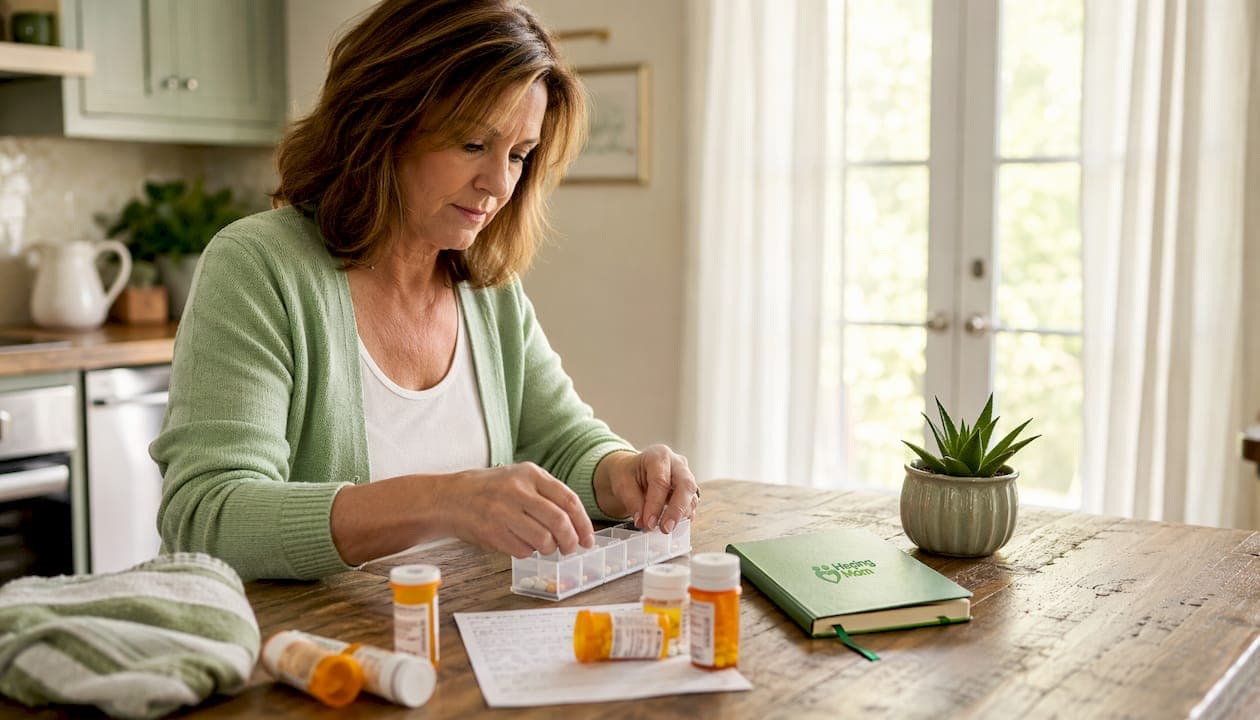
Managing medications safely at home is one of the most concrete ways you can protect your aging parent and reduce the risk of a preventable health crisis. The core practices are straightforward: store medications securely, take them exactly as directed, keep an updated medication list, dispose of expired drugs properly, and stay alert to side effects. When you have a parent on multiple prescriptions, getting these basics right matters more than you might expect. Over 20% of U.S. adults aged 40 and older regularly manage five or more prescription drugs, which means the margin for error is real and the need for a clear system is genuine.
Here is what good home medication management looks like in practice:
- Store all medications in a cool, dry, locked location away from children and pets
- Follow label directions or your doctor's instructions precisely, every single time
- Keep a written or digital medication list with dosages, prescribers, and pharmacy contact
- Dispose of expired or discontinued medications promptly through a take-back program
- Check in regularly with your parent on how they are feeling and whether they are taking doses as scheduled
How to store medications safely at home
Where you store medications affects both their effectiveness and household safety. Bathroom cabinets are one of the worst spots, despite being the most common choice. Heat and humidity from showers degrade medications faster than most people realize. A hall closet shelf, a bedroom drawer, or a dedicated lockbox in a cool, dry room works far better.
A few storage habits that make a real difference:
- Keep medications in their original containers with labels intact to avoid mix-ups between similar-looking bottles
- Use child-resistant safety caps and always lock the cap after each use
- Store eye drops and ear drops in separate, clearly labeled areas since the packaging often looks nearly identical
- Keep medications out of direct sunlight and away from stoves, radiators, or windowsills
- If a vulnerable adult or grandchild visits regularly, consider a small lockbox rather than relying on a high shelf
Pro Tip: Label each medication's storage spot with a small colored sticker that matches the pill organizer slot. It takes five minutes to set up and prevents a lot of confusion.
How to take medications correctly and avoid common errors

The most common dosing errors happen in low-light conditions, when someone is tired, or when they are distracted. Taking medicine in the dark or when exhausted significantly raises the risk of grabbing the wrong bottle or misreading the label. Jessica Merrey, PharmD, at Johns Hopkins Medicine recommends anchoring medication routines to existing daily habits, like taking morning pills right after breakfast, so the behavior becomes automatic rather than something that relies on memory.
Practical steps for safer administration:
- Always turn on a light before reading a label or measuring a dose
- Use the dosing device that comes with liquid medications. Never use kitchen spoons since they vary widely in volume
- Do not split, crush, or open capsules without checking with a pharmacist first, as some formulations are designed to release slowly
- Set a phone alarm or use a medication reminder app to stay on schedule, especially for time-sensitive drugs
- Read the label out loud before taking a dose if your parent has vision or memory challenges
Pro Tip: Place a sticky note on the pill organizer that reads "Did I take this?" It sounds simple, but it prevents double-dosing on forgetful mornings.
How to manage multiple medications without losing track
Managing several prescriptions at once is where most caregiving families run into trouble. The complexity compounds quickly when you factor in different timing requirements, food interactions, and refill schedules. A pharmacist-led review that combines counseling and follow-up has been shown to improve adherence in people with complex regimens, so this is not something to handle entirely on your own.
Strategies that genuinely help:
- Keep a single, updated medication list that includes the drug name, dose, purpose, prescribing doctor, and pharmacy
- Use a weekly pill organizer or ask the pharmacy about blister packs, which pre-sort doses by day and time
- Schedule a medication review for seniors with the pharmacist at least once a year, or after any hospital stay
- Bring the full medication list to every doctor's appointment, including over-the-counter drugs and supplements
- Involve a sibling or other family member in the tracking system so no single person carries the entire responsibility
The period right after a hospital discharge is especially high-risk. Medication transitions after hospitalization are a leading source of errors because the home list and the discharge list often differ. Comparing the two carefully, ideally with a pharmacist's help, catches most of those discrepancies before they cause harm.
How to dispose of expired and unused medications safely
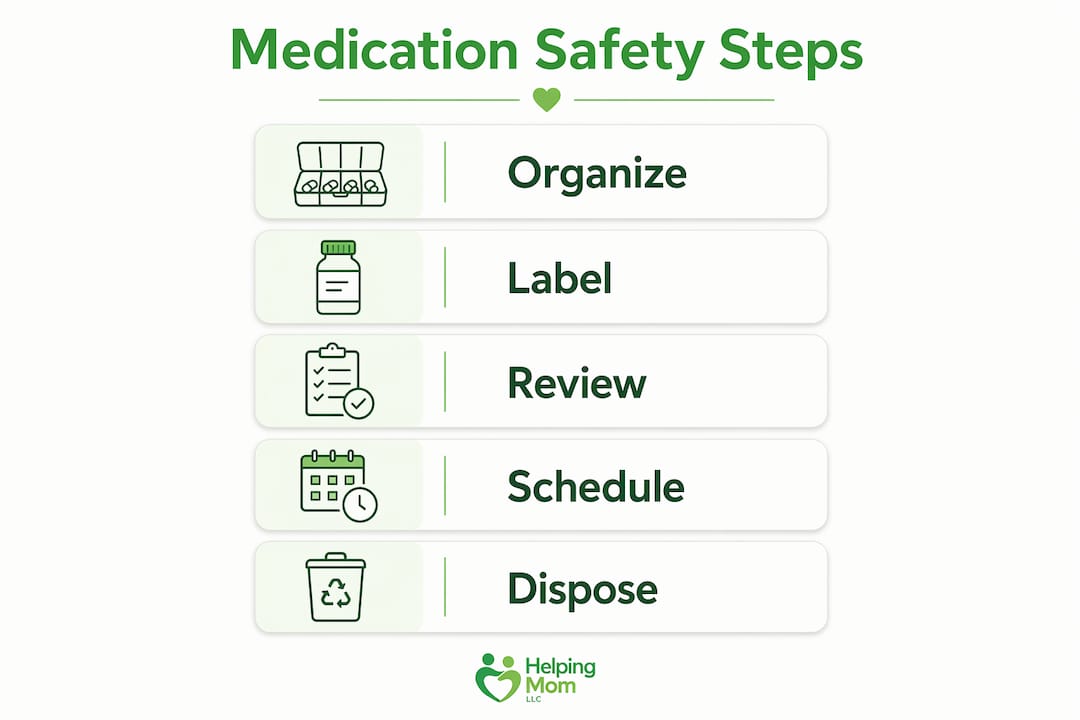
Expired medications sitting in a cabinet are a quiet hazard. They can lose potency, degrade into harmful compounds, or become accessible to someone who should not have them. The right move is to dispose of them as soon as they are discontinued or past their expiration date.
The FDA recommends using authorized drug take-back programs as the first choice. Many pharmacies and local law enforcement agencies host collection kiosks year-round. For medications not covered by a take-back program:
- Check the label or package insert for specific disposal instructions
- Mixing pills with coffee grounds or cat litter before placing them in the trash can reduce the risk of accidental ingestion, but only do this if local guidelines confirm it is appropriate
- Certain high-risk medications, including opioids and some patches, appear on the FDA's flush list and should be flushed immediately if no take-back option is available
- Never leave medications loose in a recycling bin or an unlocked trash can
Expert caregiver tips to keep medications safe day to day
Caregiving is not just about logistics. When your parent feels supported and understood, they are far more likely to follow through with their medication routine. Emotional encouragement and practical structure work together.
Jessica Merrey, PharmD, of Johns Hopkins Medicine notes that a medication ritual anchored to a habitual daily task, like a morning cup of coffee or brushing teeth, reduces cognitive load and makes consistent adherence much more achievable.
A few habits worth building into your caregiving routine:
- Check in weekly about how your parent is feeling physically, not just whether they took their pills
- Keep emergency medications, like nitroglycerin or an EpiPen, accessible but secured, and make sure every family caregiver knows exactly where they are
- Coordinate with the pharmacist for a caregiver-focused medication review when the regimen changes
- Use clear labels with large print on pill organizers if your parent has vision difficulties
- For parents with early memory changes, consider cognitive health resources that address how cognitive decline affects medication adherence
If you are managing care from a distance, a shared notes app or a simple paper log kept in the kitchen works well for tracking doses and flagging concerns between visits.
How to prevent medication contamination at home
Contamination is less talked about than dosing errors, but it is a real concern, especially when medications are stored improperly or handled carelessly. A medication that has been exposed to moisture, extreme heat, or a foreign substance may look fine but no longer be safe or effective.
Keep these practices in place:
- Wash your hands before handling any medication, particularly if you are preparing doses for someone else
- Never transfer pills into a different container without labeling it immediately with the drug name, dose, and expiration date
- Check medications periodically for changes in color, smell, or texture. Any visible change is a reason to contact the pharmacist before using the medication
- Store medications away from cleaning products, vitamins, and supplements to prevent accidental mix-ups
- If a medication has been exposed to flooding, extreme heat, or a power outage affecting refrigeration, call the pharmacy before assuming it is still usable
Refrigerated medications, like certain insulin types or some liquid antibiotics, need consistent cold storage. A brief power outage may not compromise them, but a prolonged one often does.
If you want a broader look at how medication safety fits into your parent's overall home environment, Helping-mom's guide to making home safer for seniors covers the full picture, from fall prevention to medication organization, in one practical resource.
Key Takeaways
Safe medication management at home requires consistent storage habits, accurate administration, regular pharmacist reviews, and prompt disposal of expired drugs.
| Point | Details |
|---|---|
| Store away from heat and humidity | Use a cool, dry location like a hall closet, not a bathroom cabinet. |
| Use proper dosing tools | Never use kitchen spoons for liquid medications; use the device provided with the medicine. |
| Keep an updated medication list | Include drug name, dose, purpose, prescriber, and pharmacy for every medication. |
| Prioritize take-back programs | Dispose of expired or unused medications through authorized pharmacy collection kiosks. |
| Review after hospital discharge | Compare home and discharge medication lists carefully to catch discrepancies early. |
FAQ
What is the safest place to store medications at home?
A cool, dry, dark location away from bathrooms and kitchens is best. A hall closet shelf or a dedicated lockbox works well for most households.
How do I prevent medication errors when managing multiple prescriptions?
Use a weekly pill organizer, keep a single updated medication list, and schedule regular pharmacist reviews. The period after a hospital discharge is especially high-risk, so compare the discharge list to the home list carefully.
When should I use a drug take-back program?
Use a take-back program as soon as a medication is expired, discontinued, or no longer needed. Many pharmacies and local law enforcement agencies offer year-round collection kiosks.
How can I tell if a medication has been contaminated or degraded?
Look for changes in color, smell, or texture. If anything looks or smells different from when the medication was dispensed, contact the pharmacist before using it.
How do I help an aging parent who keeps forgetting their medication?
Anchor the routine to an existing daily habit like breakfast or brushing teeth, use a pill organizer, and set a phone alarm or reminder app. A weekly caregiver check-in also helps catch missed doses early.