

TL;DR:
- Memory loss in aging parents ranges from normal forgetfulness to serious decline affecting daily life. Recognizing early signs, documenting observed changes, and understanding risk factors enable timely evaluation and support. Reversible causes like infections and medication effects should be ruled out before diagnosing dementia, with lifestyle and environmental adjustments aiding ongoing care.
Memory loss in aging parents is defined as a spectrum of cognitive changes ranging from normal, age-related forgetfulness to more serious decline that interferes with daily life. Most adults over 65 experience some slowing in recall and processing speed. This is a natural part of brain aging. The concern arises when those lapses become frequent, disruptive, or paired with confusion, personality shifts, or lost independence. Understanding where your parent falls on that spectrum is the first step toward giving them the right kind of support.
Approximately 6.9 million Americans aged 65 and older currently live with Alzheimer's disease, the most common form of dementia. That number is significant, but it also means the majority of older adults are not living with dementia. Knowing the difference between typical forgetfulness and early cognitive decline gives you clarity instead of constant worry.
What are the signs of memory loss versus dementia in elderly parents?
No sharp biological line separates normal aging memory decline from early dementia. The clearest signal is whether memory problems interfere with daily life. A parent who occasionally forgets where they put their glasses is aging normally. A parent who repeatedly asks the same question within minutes, or who gets lost driving a familiar route, is showing signs that deserve attention.
The clinical term for the middle ground is mild cognitive impairment (MCI). MCI sits between typical aging and dementia, and not everyone with MCI progresses to Alzheimer's. Recognizing it early, however, opens the door to evaluation, lifestyle adjustments, and planning. You can read more about what MCI looks like in practice at Helping-mom's guide to mild cognitive impairment.
Signs that are generally normal in aging:
- Occasionally forgetting a name but remembering it later
- Misplacing items from time to time
- Needing more time to learn something new
- Losing track of the day of the week but figuring it out shortly after
Signs that warrant a closer look:
- Asking the same question repeatedly within a short time
- Forgetting important appointments, events, or recent conversations entirely
- Getting lost in familiar places or losing track of the season or year
- Struggling with tasks that were once routine, like managing finances or following a recipe
- Noticeable changes in mood, personality, or judgment
Functional decline in daily activities is a key marker beyond memory lapses alone. When independence is compromised, that signals a need for medical attention. The shift from "I forgot where I put my keys" to "I forgot how to use my keys" is the line that matters most.
Pro Tip: Keep a simple running note on your phone. When you notice something that concerns you, write down what happened, the date, and the context. These specific, dated observations are far more useful to a doctor than a general sense that "something seems off."
How do genetic and lifestyle factors influence cognitive decline in aging parents?
Two forces shape cognitive aging: the biology your parent was born with and the habits they have built over a lifetime. Both matter, and one of them is still within reach to influence.

On the genetic side, the APOE ε4 gene is the most studied risk factor for late-onset Alzheimer's. APOE ε4 carriers show accelerated cognitive decline that becomes detectable after age 70, with homozygous carriers showing steeper decline on cognitive assessments over time. Knowing this can prompt earlier conversations with a doctor, but it is not a diagnosis. Many carriers never develop dementia.
On the lifestyle side, the evidence for diet is particularly strong. High adherence to diets rich in fruits, vegetables, nuts, legumes, fish, and dairy is linked to measurably slower annual cognitive decline. That finding came from a study of over 3,000 participants followed for more than five years. Small, consistent dietary choices accumulate into real protection for the aging brain.
| Factor | What it means for your parent |
|---|---|
| APOE ε4 gene | Increases risk of accelerated decline after 70; worth discussing with a doctor |
| Diet quality | Higher intake of whole foods linked to slower cognitive decline over years |
| Physical activity | Regular movement supports brain blood flow and reduces dementia risk |
| Vitamin B12 deficiency | A reversible cause of memory problems; easily tested and treated |
| Medication interactions | Some common drugs impair cognition; a pharmacist or doctor can review |
Emerging science is also pointing toward plasma phospholipid biomarkers as early detection tools, improving prediction accuracy for cognitive decline risk. This research is not yet in routine clinical use, but it signals that early, objective detection is becoming more possible. For now, the most practical tool remains consistent observation and a healthy lifestyle.
Pro Tip: If your parent takes multiple medications, ask their doctor or pharmacist for a medication review. Several commonly prescribed drugs, including some antihistamines, sleep aids, and bladder medications, can impair memory as a side effect. This is one of the most overlooked and most fixable contributors to nutritional and medication-related decline.
What practical steps can you take to support a parent with memory loss?
Supporting a parent through memory changes is less about taking charge and more about walking alongside them with patience and preparation. These steps give you a clear place to start.
-
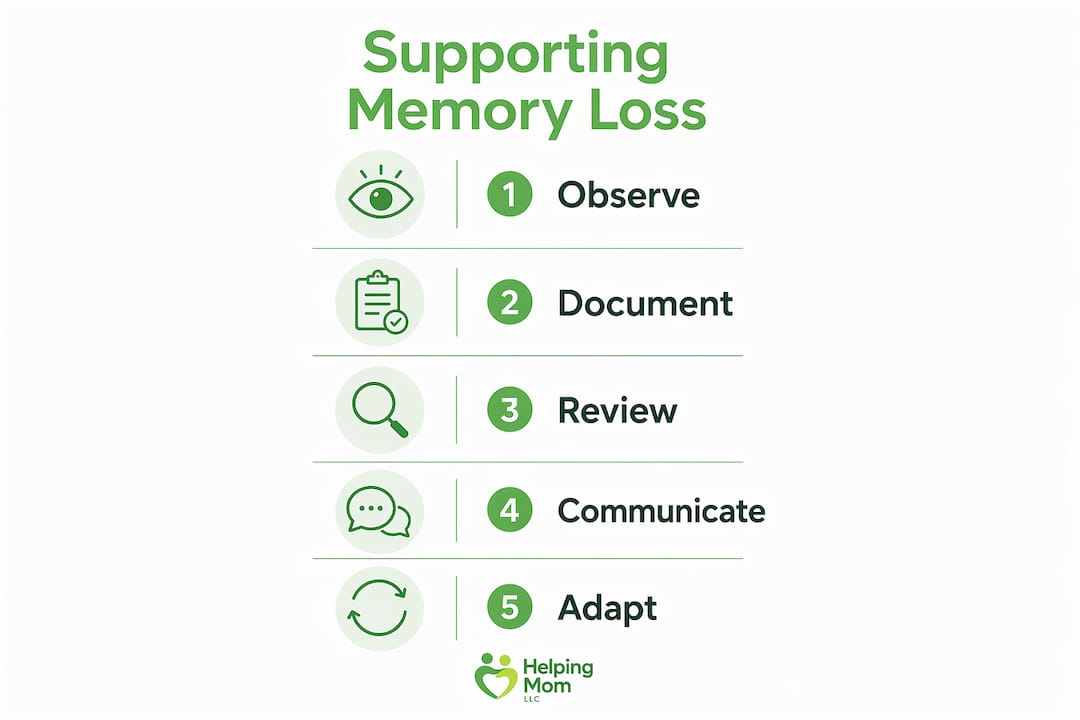
Document what you observe. Adult children often notice decline before the affected parent does. Write down specific incidents with dates rather than general impressions. "On Tuesday, Mom asked me three times what day her appointment was" is far more useful to a clinician than "she seems more forgetful lately."
-
Start the conversation gently. Approach memory concerns with curiosity rather than alarm. Phrases like "I've noticed a few things and I want to make sure you're feeling your best" open a door without triggering defensiveness. Avoid framing it as a confrontation or a loss of control.
-
Encourage brain-healthy habits. Regular physical activity, social engagement, and mentally stimulating activities like reading, puzzles, or learning a new skill all support brain health in aging. These are not cures, but they are meaningful contributors to slowing decline.
-
Adapt the home environment. Simple changes reduce daily friction and support memory. Labeled cabinets, a large-print calendar in a visible spot, consistent routines, and reduced clutter all help a parent with early memory changes stay oriented and independent longer.
-
Request a professional evaluation. A primary care physician can order cognitive screening tests, check for reversible causes like thyroid issues or vitamin deficiencies, and refer to a neurologist or geriatrician if needed. Bring your written observations to this appointment.
-
Plan ahead as a family. Early conversations about legal documents like a durable power of attorney, healthcare preferences, and living arrangements are far easier to have before a crisis. Helping-mom has practical guidance on when to worry about memory loss and what steps to take next.
Pro Tip: Before a doctor's appointment, ask your parent if you can join them. Many parents are more willing to accept this if you frame it as support rather than supervision. Being in the room allows you to share your observations directly with the clinician.
How do you tell reversible memory loss from a serious condition?
Not every sudden change in your parent's thinking or behavior signals dementia. Some causes of confusion and memory problems are fully reversible with the right medical treatment. Knowing the difference can prevent unnecessary fear and get your parent the help they actually need.
Reversible causes like urinary tract infections, medication side effects, and delirium can closely mimic dementia symptoms in older adults. A UTI, for example, can cause sudden confusion, agitation, and disorientation in an elderly person with no prior cognitive issues. Dehydration and poor nutrition can produce similar effects.
The key distinction between delirium and dementia is the speed of onset:
- Delirium comes on suddenly, often over hours or days. It tends to fluctuate, meaning your parent may seem fine one hour and confused the next. It is almost always triggered by a medical cause.
- Dementia develops gradually over months or years. The decline is more consistent and progressive rather than sudden and fluctuating.
Acute behavioral changes like sundowning, outbursts, or sudden confusion are often misread as dementia when they may be fully treatable with the right medical care. If your parent experiences a sudden, noticeable shift in behavior or cognition, treat it as a medical situation that needs prompt attention. Do not wait to see if it passes on its own.
Other reversible contributors worth ruling out include:
- Thyroid dysfunction
- Vitamin B12 deficiency
- Depression (which can present as cognitive slowing)
- Sleep apnea
- Medication interactions or overmedication
A thorough medical evaluation is the only way to sort through these possibilities. The goal is to rule out what is treatable before assuming the worst.
Key takeaways
Memory loss in aging parents requires distinguishing normal forgetfulness from functional decline, ruling out reversible causes, and taking consistent, documented steps toward evaluation and support.
| Point | Details |
|---|---|
| Normal vs. concerning decline | Memory lapses are normal; loss of daily function signals a need for medical evaluation. |
| Genetic and lifestyle risk | APOE ε4 increases risk after 70, but diet and activity can meaningfully slow decline. |
| Document specific incidents | Dated, written observations help clinicians diagnose and differentiate cognitive changes. |
| Reversible causes exist | UTIs, dehydration, and medication side effects can mimic dementia and are treatable. |
| Early action matters | Catching changes early opens more options for planning, treatment, and support. |
What I've learned from watching parents minimize their own symptoms
One thing I have seen consistently is that parents are often the last to recognize their own memory changes. It is not denial exactly. It is more that the changes feel gradual and internal to them, while they are far more visible from the outside. You might notice your mother repeating a story she told ten minutes ago. She has no memory of telling it the first time, so from her perspective, nothing unusual happened.
This gap between what you observe and what your parent experiences is one of the most disorienting parts of this role. It can make you question yourself. It can also make honest conversations feel impossible. My honest advice is to trust your observations, write them down, and bring them to a professional rather than trying to convince your parent directly. The goal is not to win an argument. It is to get them the right evaluation.
The other thing worth saying plainly: caring for a parent through memory changes is emotionally demanding, and you cannot do it well if you are running on empty. Seeking support for yourself, whether through a caregiver group, a counselor, or simply a trusted friend, is not a luxury. It is part of doing this well. This process is not about taking control of your parent's life. It is about walking alongside them with clear eyes and a steady presence.
— Mike
How Helping-mom can support you through this
Helping-mom is built for exactly where you are right now: noticing changes, feeling uncertain, and trying to figure out what to do next without overreacting. The site offers practical, calm guidance for adult children at every stage of the caregiving process.
If memory changes are making you think about your parent's safety at home, the home safety guide for seniors is a strong place to start. It walks through specific, room-by-room adjustments that support independence and reduce risk for a parent with early cognitive changes. You can also explore the full aging in place resources for broader guidance on keeping your parent safe and comfortable at home as their needs evolve.
FAQ
What is the difference between normal aging and dementia?
Normal aging involves occasional forgetfulness that does not disrupt daily life, such as misplacing items or briefly forgetting a name. Dementia causes progressive decline that interferes with independence, including forgetting how to perform familiar tasks or becoming disoriented in known places.
When should I be concerned about my parent's memory loss?
Concern is warranted when memory problems affect daily functioning, such as missed appointments, repeated questions, or difficulty managing finances. A sudden, rapid change in cognition also requires prompt medical attention to rule out reversible causes like infection or delirium.
Can memory loss in elderly parents be reversed?
Some causes of memory loss are fully reversible, including urinary tract infections, vitamin B12 deficiency, medication side effects, dehydration, and depression. A thorough medical evaluation is the only way to identify and treat these contributing factors.
How can I bring up memory concerns with my parent without causing conflict?
Frame the conversation around your concern for their wellbeing rather than their limitations. Phrases like "I want to make sure you're feeling your best" are less likely to trigger defensiveness than direct statements about memory problems.
Does diet really affect cognitive decline in aging parents?
Research following over 3,000 older adults found that high-quality diets rich in fruits, vegetables, nuts, fish, and legumes are linked to measurably slower cognitive decline over time. Consistent dietary habits are one of the most accessible tools for supporting brain health in aging.