
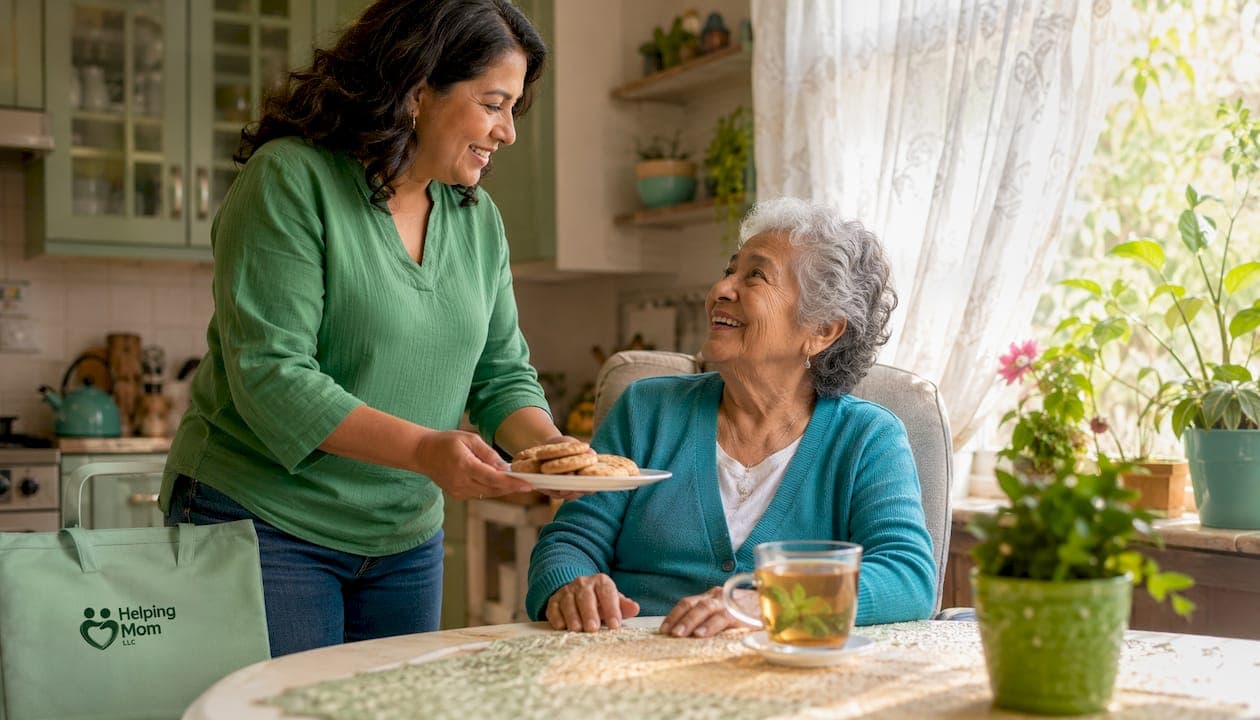
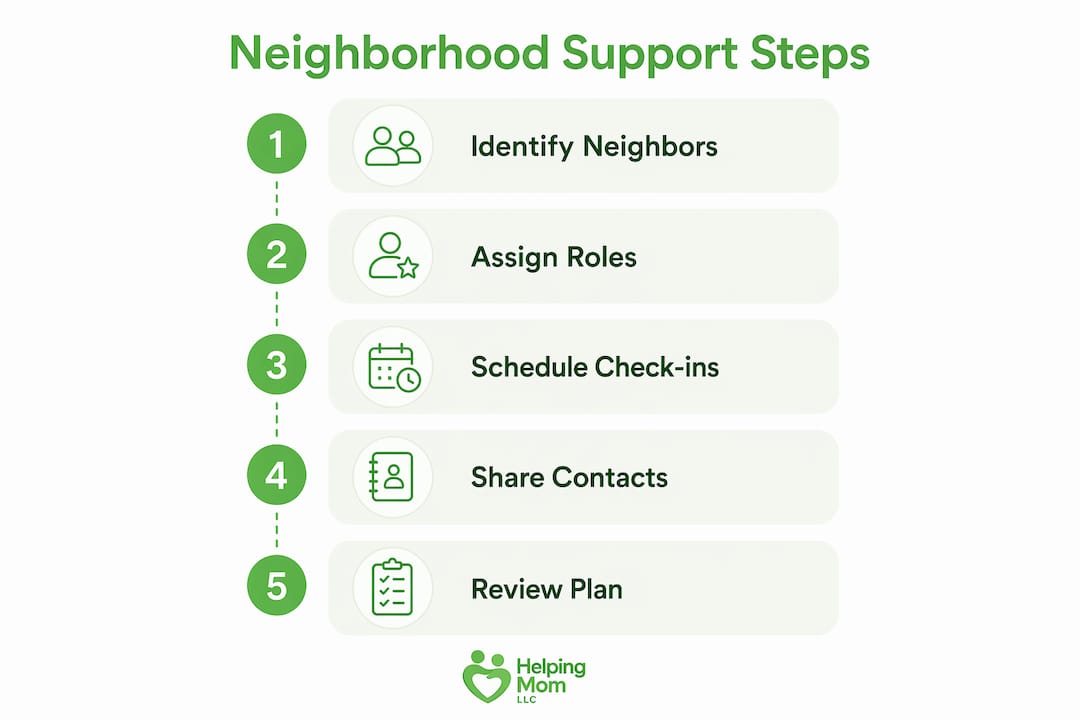
Start by mapping a small safety circle of a few nearby neighbors plus one formal local contact, and you'll have the foundation of a real support plan quickly. That's the core idea here. Not a complicated program, not a village-wide initiative. Just a handful of people who know your parent by name, have a way to reach you, and have agreed to a specific, low-stakes role.
Your first three steps:
- Identify neighbors within a two-minute walk who already have some relationship with your parent (wave hello, chat at the mailbox).
- Pick one outreach script from the templates below and send or deliver it this week.
- Schedule a safety-check window with at least one neighbor, even something as simple as "check that the porch light is on by 9 AM."
Success looks like this: one neighbor has agreed to a weekly check-in, and you've called 211 or your local Area Agency on Aging to note what community assistance programs are available in your county. That's it. Everything else builds from there.
Table of Contents
- What can neighbors and community members realistically do?
- How do you build a neighborhood support plan step by step?
- Where do you find formal local supports, and what do they need from you?
- How do you protect your parent's privacy and set clear boundaries?
- How do you design a resilient local network for emergencies?
- Ready-to-use scripts and an emergency info sheet
- How do you keep neighbors engaged without burning them out?
- When is neighbor support not enough?
- Key Takeaways
- The part nobody talks about
- Helping-mom can help you put this plan together
- Useful sources and what to ask when you call
- FAQ
What can neighbors and community members realistically do?
Neighbors don't need to be caregivers. The most sustainable neighborly acts of kindness are small, specific, and easy to say yes to. Here's what actually works:
- Daily or weekly check-ins: A quick knock, a wave through the window, or a text. Simple, but it closes the gap between visits.
- Porch and home checks: Noticing whether the mail is piling up, the lights are on at unusual hours, or the car hasn't moved in days.
- Errands and grocery runs: Adding one extra item to a shopping list is a low-barrier ask most neighbors will accept.
- Rides to appointments: Especially useful for neighbors who already drive past a clinic or pharmacy.
- Yard, snow, or trash help: Seasonal tasks that matter for safety and dignity.
- Medication reminders (non-medical): A neighbor can knock and say "Did you take your morning pills?" without crossing into medical territory.
- Package and mail watching: Theft and missed deliveries are real safety concerns for older adults living alone.
Think in terms of time commitment. A "15-minute check-in neighbor" is someone who stops by once a week. A "weekly errand buddy" adds your parent's list to their own. A "backup key holder" is someone trusted enough to enter in an emergency. Each role is distinct, low-pressure, and easy to explain.
For coordination, neighborhood apps like Nextdoor or a simple group text work well for sharing updates and making requests. Keep posts brief and specific. Vague asks ("let me know if you need anything") rarely produce results. Specific asks ("Can you check the porch light Tuesday morning?") do.
How do you build a neighborhood support plan step by step?
A plan that works is one you can actually hand to a neighbor and explain in two minutes. Here's a replicable process:
- Map geography and needs. Walk or drive the block. Note who lives within two minutes of your parent. List your parent's top three daily needs that a neighbor could realistically help with.
- Identify 3–6 warm connectors. Look for neighbors who already interact with your parent, or who have shown interest in the block's wellbeing. The Aspen Institute calls these "co-conspirators," neighbors who show early interest and are more likely to say yes to a bigger ask later.
- Make low-stakes outreach first. Before asking for caregiving-adjacent help, start social. Invite neighbors to a porch chat, a block cleanup, or a shared garden project. Resident-led initiatives consistently outperform top-down programs because neighbors know local needs best.
- Formalize a safety circle. Once trust is built, have an explicit conversation. Who checks in, when, and what does "check-in" mean? Who holds a spare key? Write it down, even in a text thread.
- Run a 30-day test. Try the plan for one month, then adjust. What worked? Who dropped off? What needs a backup?
Sample outreach text you can copy:
"Hi [Name], this is [your name], [Parent's name]'s daughter/son. I'm putting together a small group of neighbors who can keep an eye out for Mom/Dad. Would you be open to a quick chat? Nothing big, I promise."
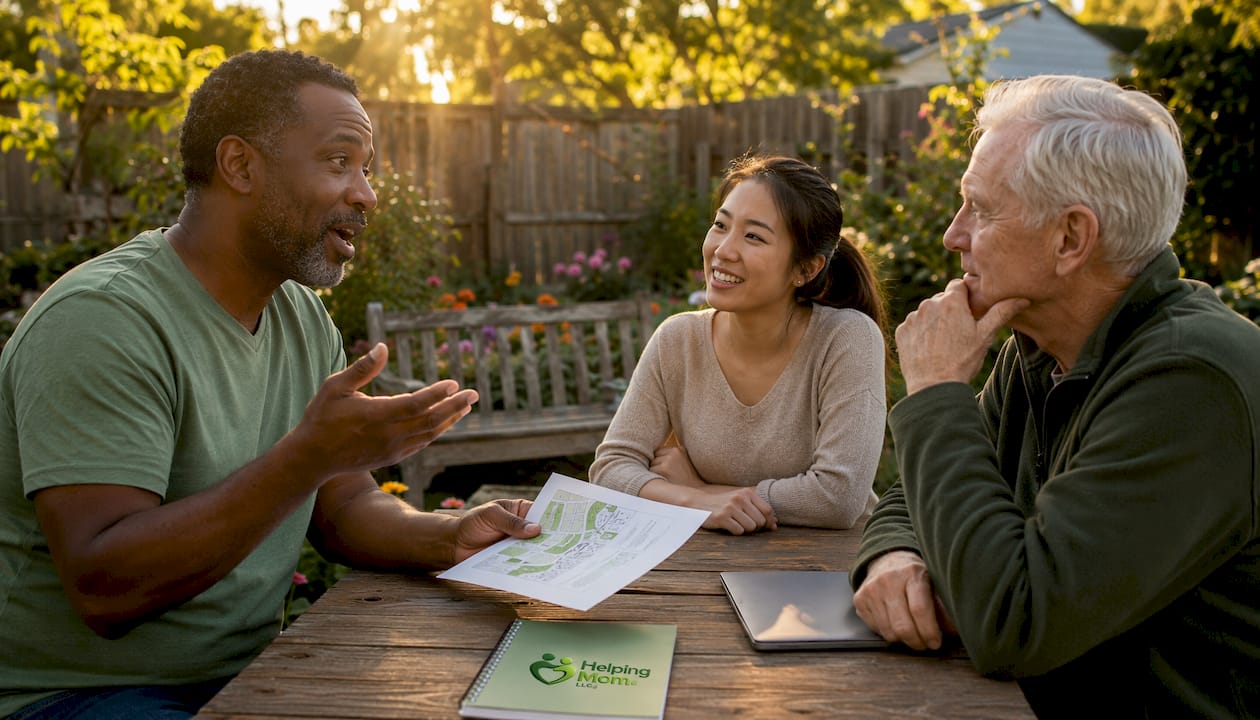
One-page support plan fields: neighbor name, role, availability window, contact number, spare-key protocol, and your contact info. Keep it to one page so people will actually read it.
Pro Tip: Start with a social invitation before any caregiving ask. A porch coffee or a block project lowers resistance and helps you spot who genuinely wants to help.
Where do you find formal local supports, and what do they need from you?
| Resource | What They Offer | How to Reach Them |
|---|---|---|
| Area Agency on Aging | Care assessments, meal programs, transportation | eldercare.acl.gov or call 1-800-677-1116 |
| 211 / United Way | Local referrals, utility help, food, housing | Dial 2-1-1 or visit 211.org |
| Community Action Agency | Case management, utility assistance, CSBG-funded services | Search by county at communityactionpartnership.com |
| Local senior center | Social programs, classes, volunteer connections | Search "[your county] senior center" |
| Volunteer organizations | Friendly visitor programs, errand help | Contact local faith communities or United Way |
Community Action Agencies distribute federal Community Services Block Grant funds at the county level, and many families miss these services simply because they didn't know to ask locally.
When you call, have these documents ready. County programs commonly require:
- Proof of income (recent pay stub, Social Security award letter, or tax return)
- Proof of residency (utility bill or lease)
- Government-issued ID
- A brief written description of the need or hardship
Application tips: Call ahead to confirm funding is available before gathering documents. Ask for a case manager's direct contact and write down the date, time, and name of whoever you spoke with. Tracking numbers matter when following up.
How do you protect your parent's privacy and set clear boundaries?
Your parent's consent comes first, always. Before recruiting any neighbor, have a direct conversation with your parent about who will be involved and what they're being asked to do.
A simple consent checklist:
- Ask your parent's permission before sharing any personal information with a neighbor.
- Explain exactly what you're asking the neighbor to do (check the porch light, not manage medications).
- Get an explicit yes or no for spare-key access and write it down, even in an email to yourself.
- Revisit consent if the situation changes.
Sample language for recruiting a neighbor: "I'd like to ask you to check in on my dad once a week. I want to be clear about what that means: just a knock or a wave to make sure he's up and about. I'm not asking you to handle any medical tasks or finances."
Neighbors should never handle medications beyond a verbal reminder, manage finances, or make medical decisions. If a neighbor starts to overstep, a calm, direct conversation usually resolves it: "I really appreciate your help. I want to make sure we keep your role to [specific task] so it stays manageable for you."
A brief note on HIPAA: neighbors are not covered entities under federal health privacy law. Keep medical details with formal caregivers only, and never share diagnosis or treatment information with volunteers.
How do you design a resilient local network for emergencies?
Social support networks are a protective factor for aging adults, buffering stress and improving outcomes during crises. A safety circle built for routine check-ins can also handle unexpected events with a little extra planning.
Resilience checklist:
- Primary contact plus two backups, all with your number saved.
- Shelter-in-place plan for weather or power outages (who checks in first, who has a generator or extra supplies).
- Medication continuity plan (where is the medication list, who can retrieve a prescription in an emergency).
- Local meeting point if your parent needs to leave home quickly.
- Emergency phone tree or group chat with clear expectations: who sends the first message, who confirms they've checked in.
California Volunteers' "Meet 6 Neighbors" benchmark links knowing at least six neighbors to measurably better health and disaster resilience. That's a practical goal, not an abstract one.
Pro Tip: Include at least one neighbor within a two-minute walk. When something happens, speed matters more than willingness.
A neighborhood emergency handbook can give you ready-made templates for phone trees and meeting-point protocols you can adapt for your parent's specific situation.
Ready-to-use scripts and an emergency info sheet
Keep everything under one page. Neighbors won't read a packet.
Door or text outreach script: "Hi [Name], I'm [your name], [Parent's name]'s son/daughter. I'm building a small support circle for [Parent] and wondered if you'd be open to a quick five-minute chat. No big commitment, I promise."
Follow-up thank-you: "Thank you so much for agreeing to check in on [Parent] on Tuesdays. It means more than you know. Please text me anytime at [number] if anything seems off."
Emergency info sheet fields to share with neighbors:
- Full name and date of birth
- Known allergies
- Primary care doctor name and phone number
- Nearest relative and contact number
- Preferred hospital
- Primary and backup phone numbers
- Spare key location
Volunteer signup fields:
- Name and best contact number
- Availability window (days and times)
- Preferred role (check-in, errands, rides, yard help)
- Any limitations (can't manage stairs, has a dog)
How do you keep neighbors engaged without burning them out?
Volunteer fatigue is the most common reason neighborhood support circles fall apart. Preventing it is simpler than recovering from it.
Practical steps to sustain engagement:
- Rotate duties every few months so no one person carries the weight.
- Celebrate volunteers with a thank-you note, a small potluck, or a public acknowledgment in a group chat.
- Set time-limited commitments from the start ("Would you be willing to do this for three months and then we'll check in?").
- Make opting out easy. If a neighbor needs to step back, thank them and have a backup ready.
For your own wellbeing as the coordinator, caregiver self-care matters just as much. Schedule a weekly check-in with a peer, block time for yourself, and use respite or paid help when the load gets heavy. Small, consistent habits tend to hold better than big self-care gestures, as behavioral wellness research consistently shows.
Pro Tip: Name one paid or formal backstop service in your plan, even if you never use it. Volunteers stay engaged longer when they know they're not the last line of defense.
When is neighbor support not enough?
Neighbor and community support works best as a complement to, not a replacement for, professional care when needs escalate. Watch for these signals:
- Medication management has moved beyond a verbal reminder (missed doses, wrong doses, multiple prescriptions).
- Falls are happening more than once, or your parent is afraid to move around the house.
- Cognitive changes are affecting safety: leaving the stove on, getting lost nearby, or confusion about time and place.
- You or your volunteers are feeling burned out or anxious about gaps in coverage.
- Legal or financial tasks have come up that require a professional.
Next steps when you reach this point:
- Call your local Area Agency on Aging and request a care assessment.
- Schedule a paid home safety assessment to identify hazards and modifications.
- Book a short-term paid caregiver for respite while you evaluate longer-term options.
A practical combination that works well: neighbors handle social visits and light check-ins; a paid caregiver handles complex daily activities. The two roles don't compete. Track incidents and near-misses in a simple log, because that documentation supports referrals for home health or an occupational therapy assessment when the time comes.
Key Takeaways
Building a documented safety circle of six neighbors plus one formal local contact is the single most effective first step an adult child can take to create reliable, sustainable support for an aging parent at home.
| Point | Details |
|---|---|
| Start with a safety circle | Identify six nearby neighbors and assign one specific, low-stakes role to each. |
| Use formal resources too | Call 211 or your Area Agency on Aging and have proof of income, residency, and ID ready. |
| Knowing six neighbors matters | California Volunteers links knowing at least six neighbors to better health and disaster resilience. |
| Protect consent and privacy | Get explicit permission from your parent before sharing any information with neighbors or volunteers. |
| Helping-mom supports the plan | Helping-mom offers printable templates, Zoom consultations, and home safety assessments to complement your neighbor support circle. |
The part nobody talks about
Most articles about building community support make it sound tidy. Identify neighbors, assign roles, done. The reality is messier, and that's okay.
You might knock on three doors and get polite deflections. One neighbor might agree enthusiastically and then go quiet. Another might show up in a way you didn't expect, and turn out to be the most reliable person in the circle. That's how this actually works.
What I've seen, again and again, is that the adult children who build the most durable support networks start small and stay patient. They don't try to recruit a village in a week. They have one good conversation with one neighbor, and then another. They start with a porch chat before they ask for a spare key. They thank people specifically and often.
The emotional weight of coordinating all of this while also worrying about your parent is real. You're allowed to find it hard. Asking for help, for your parent and for yourself, is not a sign that you've missed something. It's the whole point.
Helping-mom can help you put this plan together
You don't have to build the support plan from scratch. Helping-mom offers practical, non-medical resources designed specifically for adult children in your position: printable one-page safety plan templates, a step-by-step home safety guide you can work through at your own pace, and paid Zoom consultations where you can talk through your parent's specific situation with someone who understands the caregiving context.
If you're in Central Florida, in-person home safety assessments are also available. Every resource is caregiver-focused, jargon-free, and built around the reality that you're doing this alongside a full life. Start with the home safety guide and see what fits your situation right now.
Useful sources and what to ask when you call
- Area Agency on Aging (eldercare.acl.gov or 1-800-677-1116): Ask what care assessment, meal delivery, or transportation programs are available in your county, and whether there's a waiting list.
- 211 / United Way (dial 2-1-1): Ask what home help, utility assistance, or food programs are available in your zip code, and what documents you'll need to apply.
- Community Action Agency (search by county at communityactionpartnership.com): Ask about CSBG-funded services including case management, emergency assistance, and weatherization. Ask for a case manager's direct contact.
- Local senior center (search "[your county] senior center"): Ask about volunteer visitor programs, transportation coordination, and any caregiver support groups.
- Local mutual aid or volunteer groups (often listed through United Way or faith communities): Ask what regular tasks volunteers can help with and how to get on their schedule.
When you call any of these, note the date, the name of the person you spoke with, and any reference or tracking number. Funding availability changes, and a paper trail helps when you follow up.
FAQ
What is a safety circle for an aging parent?
A safety circle is a small, documented group of six neighbors or trusted community members who each agree to a specific, low-stakes role, such as weekly check-ins, errand help, or holding a spare key, to support an older adult living at home.
How many neighbors should be in a support network?
California Volunteers recommends knowing at least six neighbors as a benchmark linked to better health and disaster resilience for seniors and their caregivers.
What documents do local assistance programs usually require?
Most county-level programs ask for proof of income, proof of residency, a government-issued ID, and a brief description of the need. Call ahead to confirm what your specific county requires before your appointment.
When should neighbor support be replaced by professional care?
When needs escalate to medication management, frequent falls, cognitive safety concerns, or caregiver burnout, it's time to contact your Area Agency on Aging for a care assessment and consider adding paid professional support alongside your neighbor network.
How does Helping-mom support this kind of plan?
Helping-mom offers printable safety plan templates, paid Zoom caregiving consultations, and in-person home safety assessments in Central Florida, all designed to complement a neighbor-based support circle with practical, non-medical guidance.