

TL;DR:
- Noticing physical, cognitive, or emotional changes in aging parents early helps prevent crises and support well-being. Document specific observations, communicate calmly, and seek external support to address concerns effectively. Early, respectful intervention preserves independence and reduces long-term caregiving burdens.
Noticing changes in aging parents is the first and most important step toward keeping them safe, supported, and living well. These changes can be physical, cognitive, or emotional, and they rarely announce themselves loudly. The number of family caregivers grew by nearly 6 million between 2011 and 2022, with average weekly caregiving hours rising by 50%. That shift reflects a reality many adult children are already living. You don't need a medical degree to notice that something feels different. You just need to know what to look for and what to do next.
What physical changes in aging parents should you watch for?
Physical changes are often the easiest to spot, but they are also the easiest to dismiss as "just getting older." The distinction between normal aging and a warning sign comes down to pattern and pace. A change that happens gradually over years is different from one that appears over weeks.
Watch for these physical signs during visits:
- Hygiene and grooming lapses. Unwashed hair, uncut nails, or wearing the same clothes repeatedly can be early indicators of cognitive decline, often appearing before obvious memory errors.
- Unexplained weight loss. Clothes that suddenly look too big, or a refrigerator full of expired food, signal that meals are being skipped or forgotten.
- Mobility changes. Shuffling steps, holding onto walls, or avoiding stairs they once used freely all point to fall risk.
- Medication mismanagement. Pill bottles that are full when they should be empty, or empty when they should be full, suggest your parent is not taking medications as prescribed.
- Home condition. Stacked mail, unwashed dishes, or a yard that has gone untended can reflect declining energy or cognitive function.
These signs warrant prompt attention because they often cluster together. One sign alone may mean little. Two or three together usually mean something has shifted.
Pro Tip: On your next visit, spend five minutes in the kitchen and bathroom. Open the fridge, check the pill organizer, and glance at the shower. These two rooms reveal more about daily functioning than any conversation.

How do you recognize cognitive and behavioral shifts in aging parents?
Cognitive changes are harder to spot because your parent may compensate well in the early stages. They might laugh off a forgotten name or blame a missed appointment on a busy week. The key is to notice whether these lapses are new, more frequent, or out of character.
Common cognitive and behavioral warning signs include:
- Forgetting routines they have followed for years, such as weekly calls or regular meals
- Repeating the same question or story within a single conversation
- Getting confused in familiar places, like their own neighborhood
- Difficulty managing bills, banking, or paperwork they once handled easily
- Personality changes, such as increased suspicion, agitation, or unusual passivity
The distinction between normal aging and early dementia matters here. Occasionally forgetting where you put your keys is normal. Forgetting what keys are for is not. If you notice signs of possible memory loss, it is worth taking seriously rather than waiting to see if it resolves.
Your instinct is a real clinical tool. Reporting when something "feels different" is the most valuable action adult children take in preventing major health crises. Healthcare providers are trained to respond to that kind of observation.
| Cognitive sign | What it may indicate |
|---|---|
| Missed meals or skipped hygiene | Early functional decline or depression |
| Repeated questions in one conversation | Short-term memory loss |
| Confusion in familiar places | Moderate cognitive impairment |
| Difficulty managing finances | Executive function decline |
| Sudden personality change | Possible neurological or medical cause |
Pro Tip: Keep a simple notes app on your phone. After each visit or call, jot down anything that felt off. Dates and specific examples give a doctor far more to work with than a general concern.
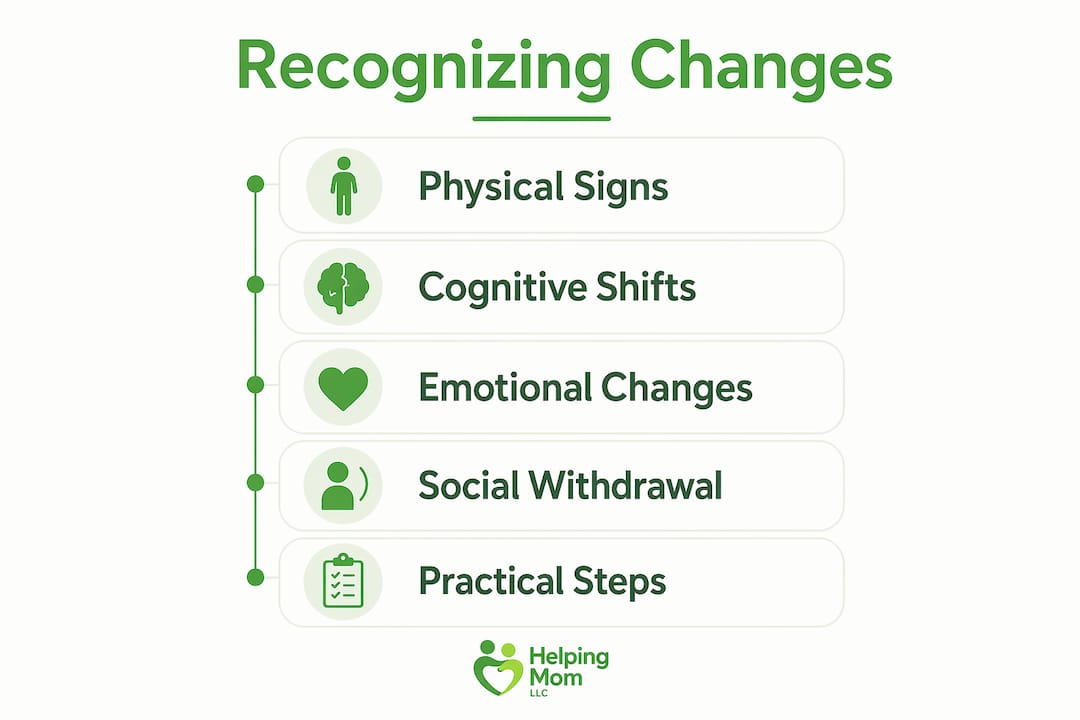
What emotional and social changes signal a problem in aging parents?
Emotional and social changes are the most overlooked category of aging-related shifts. They are easy to attribute to personality or mood rather than health. But mood swings, irritability, social withdrawal, and communication difficulties commonly accompany aging-related conditions and directly affect caregiving relationships.
Signs worth noting include:
- Pulling back from friends, hobbies, or family gatherings they once enjoyed
- Increased anxiety about everyday tasks, such as driving or cooking
- Irritability or anger that seems disproportionate to the situation
- Expressions of hopelessness, worthlessness, or persistent sadness
- Reluctance to talk about how they are feeling or what they need
Social withdrawal is not just a personality shift. It is a recognized warning sign for depression, cognitive decline, and physical health problems. When a parent who used to call every Sunday stops reaching out, or declines invitations they would have accepted without hesitation, that change deserves a gentle conversation.
Approach these conversations with curiosity rather than concern. Instead of "I'm worried about you," try "I've noticed you seem quieter lately. How are you feeling?" That framing invites honesty rather than defensiveness. Helping-mom offers practical guidance on starting these sensitive conversations without putting your parent on the defensive.
What practical steps should you take when you notice concerning changes?
Noticing a change is only the first step. Acting on it, calmly and early, is what makes the difference between a manageable situation and a crisis. Here is a clear path forward.
-
Write it down. Document specific observations with dates. "Mom forgot she had already eaten dinner twice this week" is more useful to a doctor than "Mom seems confused sometimes." Simple, specific language like "this is different from her usual" helps healthcare providers respond effectively.
-
Talk to a doctor. Share your written observations at your parent's next appointment, or call the office directly. You do not need your parent's permission to share concerns, though involving them when possible builds trust.
-
Have a family conversation. Siblings and close family members need to be on the same page. Assigning clear caregiving roles prevents conflict and gaps in care. One person coordinates medical appointments, another handles finances, another manages daily check-ins.
-
Assess the home environment. Walk through your parent's home with fresh eyes. Look for fall hazards, poor lighting, cluttered hallways, and bathroom safety gaps. A home safety review is one of the most practical things you can do early.
-
Seek external support. The National Family Caregiver Support Program provided over 6 million hours of respite care to nearly 604,000 caregivers. Formal support exists and is more accessible than most families realize.
-
Embrace the caregiver role early. Many people who perform significant care tasks do not identify as caregivers. Embracing this role early opens access to support services, community networks, and planning resources before a crisis forces the issue.
| Support option | Best for |
|---|---|
| Primary care physician | Medical evaluation of new symptoms |
| Local Area Agency on Aging | Connecting to community services |
| Respite care programs | Short-term caregiver relief |
| Family meeting with set roles | Preventing sibling conflict and care gaps |
| Home safety assessment | Reducing fall and accident risk |
Pro Tip: Before a family meeting, read through Helping-mom's family meeting guide to structure the conversation. An agenda prevents the discussion from becoming emotional and unproductive.
Understanding how to track and share health observations also helps with medical coordination. Resources that explain how to read medical records can make you a more effective advocate at your parent's appointments.
Key Takeaways
Early observation and calm, specific communication are the most effective tools adult children have when supporting aging loved ones through physical, cognitive, and emotional changes.
| Point | Details |
|---|---|
| Physical signs come first | Hygiene lapses, weight loss, and medication errors often appear before memory problems become obvious. |
| Document with specifics | Written observations with dates give doctors far more useful information than general concerns. |
| Assign family roles early | Clear caregiving responsibilities among siblings prevent conflict and gaps in support. |
| Emotional changes matter | Social withdrawal and mood shifts are recognized warning signs, not just personality quirks. |
| Formal support exists | Programs like the National Family Caregiver Support Program provide respite care to hundreds of thousands of families. |
What I've learned from watching families wait too long
The hardest part of this work is not identifying the signs. It is convincing families that acting early is not an overreaction.
I have seen adult children notice something off in october and wait until the following spring to say anything, because they did not want to upset their parent or seem alarmist. By then, a manageable situation had become a crisis. The fall had already happened. The bills had gone unpaid for months. The window for a calm, collaborative conversation had closed.
What I have found is that the families who do best are the ones who treat early observation as a form of respect, not surveillance. They check in regularly, they talk openly, and they do not wait for a dramatic event to justify their concern. They also take care of themselves. Family caregivers spend more than $7,000 annually out of pocket on average. That financial and emotional weight compounds quickly when families delay planning.
The other thing I would tell you is this: you do not need to have all the answers before you start the conversation. You just need to show up, pay attention, and be willing to say, "I've noticed something, and I want to make sure you're okay." That sentence, said with warmth and without accusation, opens more doors than any formal intervention.
This is not about taking over. It is about walking alongside your parent while they still have the capacity to be part of the decisions that affect their life.
— Mike C.
Helping-mom resources for families navigating these changes
Helping-mom is built for exactly this moment. When you notice something has shifted but are not sure what to do next, the guides and checklists on the site give you a clear, calm place to start. The home safety guide for seniors walks you through the most common hazards room by room, with practical fixes that do not require a renovation. The caregiver well-being resources address the emotional weight that builds when you are managing your parent's needs alongside your own life. Whether you are in the early stages of noticing changes or already deep in the caregiving role, Helping-mom provides the guidance you need to move forward with confidence and care.
FAQ
What are the first signs of aging to watch for in a parent?
The earliest signs are often changes in daily functioning, such as hygiene lapses, skipped meals, or medication errors. These physical changes frequently appear before obvious memory problems.
How do I bring up concerns without upsetting my aging parent?
Use specific, calm observations rather than general worry. Phrases like "I noticed you seemed tired lately" invite conversation without putting your parent on the defensive.
When should I involve a doctor about changes in my aging parent?
Involve a doctor when changes are new, worsening, or out of character for your parent. Bring written notes with specific examples and dates to the appointment.
What is the difference between normal aging and early dementia?
Normal aging includes occasional forgetfulness, like misplacing keys. Early dementia involves functional changes, such as forgetting how familiar objects are used or getting lost in a known neighborhood.
How do I coordinate care with siblings when we disagree?
Assign specific roles to each sibling based on availability and strengths. Clear responsibilities reduce conflict and prevent important tasks from falling through the gaps.