

TL;DR:
- Supporting only child caregivers involves building a professional and community network to share caregiving tasks. It helps prevent burnout by setting boundaries, utilizing respite care, and focusing on care coordination. Professional advisors, community services, and self-care practices are essential for sustainable solo caregiving.
Only child caregiver support is the practice of building a dedicated network and using available resources to share the caregiving burden when no siblings are present. If you are the sole adult child of aging parents, you already know this role carries a weight that is hard to describe to anyone who has not lived it. Every decision lands on your desk. Every phone call from the doctor comes to you. The good news is that solo caregiving does not have to mean doing everything alone. With the right structure, the right people, and the right tools, you can care for your parent well without losing yourself in the process.
What are the biggest emotional challenges of only child caregiver support?
Solo caregiving carries a specific emotional burden that adult children with siblings rarely face. Experts call it "isolation guilt," the feeling that you are both the only person responsible and somehow still not doing enough. This guilt is not a character flaw. It is a predictable response to an objectively hard situation, and recognizing it is the first step toward managing it.
One of the quieter risks for only children is denial. Without a sibling to compare notes with, it is easy to normalize a parent's gradual decline. You see them every week, so the changes feel subtle. Engaging outside perspectives early, such as a neighbor, a family friend, or a home health aide, helps clarify what is actually changing and accelerates appropriate care decisions before a crisis forces your hand.
Decision-making fatigue is another real hazard. When every choice, from medication schedules to home modifications to financial planning, falls to one person, the mental load compounds fast. Reframing your role from "sole provider" to "care manager" changes everything. A care manager does not do it all personally. A care manager coordinates the right people to do it well.
Practical coping strategies that work:
- Schedule a weekly check-in with a therapist or counselor, even by phone, to process decisions before they pile up.
- Join a peer support group through the Caregiver Action Network, which offers free nationwide resources for family caregivers.
- Set one firm boundary each month, such as protecting Sunday mornings for yourself, and treat it as non-negotiable.
- Write down three things you handled well each week. Solo caregivers rarely pause to acknowledge what they are getting right.
Pro Tip: If therapy feels like one more thing to schedule, look for caregiver-specific support groups that meet online. Many run on weekday evenings and require no registration fee.
How do you build a support network as an only child caregiver?
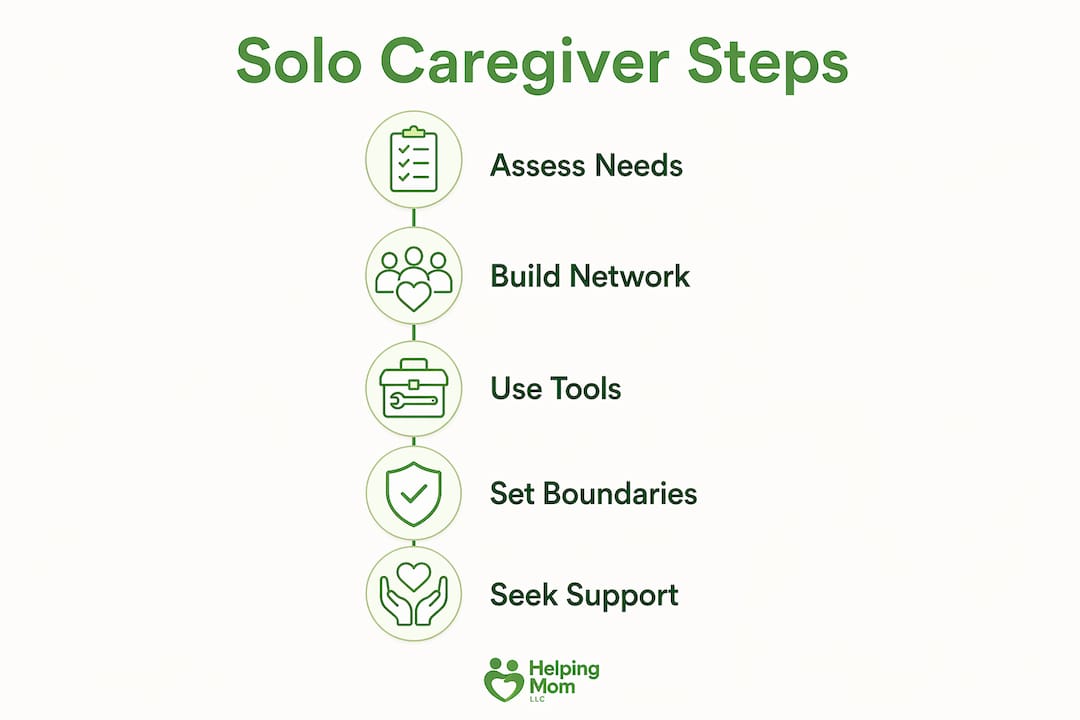
The most effective support network for a solo caregiver includes at least one objective outsider. Experts recommend including a geriatric care manager or elder law attorney in your circle specifically because they bring professional distance to decisions that feel deeply personal. They have seen hundreds of families navigate the same crossroads you are facing.
Think of your network as a small, purposeful team. Here is how to build it:
- Start with your closest person. Your spouse, partner, or best friend can serve as your emotional anchor. Give them a specific role, such as attending one doctor's appointment per quarter with you, so the support is concrete rather than vague.
- Add a professional advisor. A geriatric care manager assesses your parent's needs and recommends services. An elder law attorney handles legal documents like powers of attorney and advance directives. Both reduce the solo decision burden significantly.
- Connect with a peer group. The National Family Caregiver Support Program funds counseling, respite care, and training through local Area Agencies on Aging. These services reduce caregiver depression and extend how long parents can stay at home.
- Engage community organizations. Local senior centers often coordinate volunteer visitor programs, meal delivery, and transportation. These services give your parent social contact on days you cannot be there.
- Consider respite care early, not as a last resort. Adult day programs and in-home professional care give you scheduled time off. Using respite services before burnout sets in keeps you effective for the long term.
Pro Tip: Assign each person in your network a specific task rather than a general offer to "help." People follow through more reliably when the ask is clear. "Can you drive Mom to her cardiology appointment on the 14th?" works better than "Let me know if you can help sometime."
For families thinking through end-of-life planning alongside caregiving, Bravo Family Mortuary's resource library covers practical guidance on building support networks that include professional advisors.
What practical tools and services help only child caregivers?
The right tools reduce the daily physical load of caregiving and improve your parent's safety at home. Assistive devices cover four main areas: mobility, memory, vision, and hearing. Grab bars, non-slip mats, and bed rails address fall risk. Medication management apps and pill dispensers with alarms help with memory. Large-print phones and amplified doorbells support vision and hearing changes.
Home modifications for aging in place are often more affordable than families expect. Removing throw rugs, improving lighting in hallways, and installing a walk-in shower can be done in stages. You do not need to renovate the entire house at once.
Community-based services fill the gaps between your visits. Here is a quick comparison of the most useful options:
| Service | What it provides | Best for |
|---|---|---|
| Adult day programs | Supervised activities, meals, social contact | Parents who are safe at home but need daytime structure |
| In-home professional care | Personal care, medication reminders, companionship | Parents who need daily help but prefer to stay home |
| Meal delivery programs | Nutritious meals delivered to the door | Parents with limited mobility or cooking ability |
| Senior center programs | Classes, social events, transportation coordination | Parents who are mobile and benefit from peer connection |
| State eldercare hotlines | Referrals to local services, benefits counseling | Caregivers who need a starting point for local resources |
State eldercare hotlines connect you to local Area Agencies on Aging, which coordinate most of these services at low or no cost. Call 211 in most U.S. states to reach your local referral line.
When home care is no longer enough, senior living communities provide 24/7 care and social connection. Many only children find that this transition allows them to return to being a son or daughter rather than a full-time caregiver. That shift is not giving up. It is choosing the right level of care.
For a room-by-room look at home safety modifications, Helping-mom's practical home safety guide walks you through the changes that matter most.
How do you manage time and set boundaries as a solo caregiver?
Sustainable caregiving requires structure. Without it, care expands to fill every available hour, and your own health and relationships quietly erode. The goal is not to do less. The goal is to do the right things at the right times.
- Create a weekly caregiving calendar. Block specific times for parent-related tasks: appointments, medication checks, grocery runs. Everything outside those blocks is your time. A written schedule makes it easier to say no to last-minute requests without guilt.
- Prioritize by consequence, not urgency. Not every caregiving task carries the same weight. Medication management and fall prevention matter more than whether the house is perfectly tidy. Focus your energy where the stakes are highest.
- Use respite care as a scheduled resource. Full-time caregiving beyond six months is unsustainable for most people. Plan regular breaks before you need them, not after you are already depleted.
- Practice saying no with a redirect. "I can't do that this weekend, but I can help you schedule it for next week" is a complete answer. You do not owe an explanation for protecting your time.
- Review your schedule quarterly. Your parent's needs will change. Your schedule should change with them. A quarterly review keeps your plan realistic rather than outdated.
Pro Tip: Set a simple rule: one caregiving task per personal errand. If you are already driving across town, that is the day for the pharmacy run. Batching tasks protects your energy and your schedule.
Only children experience isolation guilt as the sole emotional buffer for their parent. Setting boundaries is not abandonment. It is what makes care sustainable over years, not just weeks. For more on managing the stress that builds with solo caregiving, Helping-mom's guide on reducing caregiver stress offers concrete, practical steps.
Key Takeaways
Only child caregiver support works best when you shift from sole provider to care manager, build a small team of trusted people and professionals, and protect your own well-being with the same intention you bring to your parent's care.
| Point | Details |
|---|---|
| Reframe your role | Think of yourself as a care manager who coordinates help, not a sole provider who does it all. |
| Build a real network | Include at least one professional advisor, such as a geriatric care manager or elder law attorney, alongside personal supporters. |
| Use community services | Adult day programs, meal delivery, and state eldercare hotlines reduce your daily load at low or no cost. |
| Set boundaries early | Scheduled respite care and a weekly caregiving calendar prevent burnout before it starts. |
| Prioritize self-care | Sustained caregiving requires your own health to stay intact. Self-care is part of the care plan, not separate from it. |
What I have learned about solo caregiving that most articles miss
I have talked with a lot of only children who are caring for aging parents, and the thing that strikes me most is how long they wait before asking for help. Not because they are stubborn, but because they genuinely believe that asking for help means they are failing their parent. That belief is understandable. It is also the fastest route to burnout.
The reframe that actually helps is this: your parent does not need you to do everything. Your parent needs good care. Those are not the same thing. When you bring in a geriatric care manager, a respite aide, or an adult day program, you are not stepping back from your parent. You are stepping up as their advocate and coordinator.
The other thing I see often is only children who feel guilty for having any life outside of caregiving. They cancel plans, skip their own doctor appointments, and quietly disappear from friendships. Then they wonder why they feel so alone. Helping isolated elderly parents is important work. So is keeping yourself connected to the people and activities that sustain you.
Realistic goal setting matters more than most caregivers realize. You are not going to prevent every hard thing that comes with aging. You are going to show up, make thoughtful decisions, and get help when you need it. That is enough. That is, in fact, exactly what good caregiving looks like.
— Mike C.
Practical resources from Helping-mom for solo caregivers
Caring for an aging parent on your own is a real and specific challenge. Helping-mom exists to make that challenge more manageable with clear, practical guidance you can actually use. The caregiver well-being resources on the site address the emotional side of solo caregiving directly, with tools for managing stress, setting limits, and staying grounded. For the practical side, the home safety checklist for caregivers walks you through the modifications that reduce fall risk and help your parent stay safely at home longer. Both resources are free, straightforward, and written for adult children, not medical professionals.
FAQ
What is only child caregiver support?
Only child caregiver support is the practice of building a network of professionals, community services, and personal supporters to share the caregiving burden when no siblings are available. It shifts the caregiver's role from sole provider to care coordinator.
How do only child caregivers avoid burnout?
Using respite care on a scheduled basis, setting firm time boundaries, and connecting with peer support groups are the most effective ways to prevent burnout. Full-time solo caregiving beyond six months is unsustainable without structured breaks.
What professionals should an only child caregiver include in their network?
A geriatric care manager and an elder law attorney are the two most valuable professional additions. They bring objective expertise to care decisions and legal planning that would otherwise fall entirely on the caregiver.
Where can only child caregivers find community support?
The National Family Caregiver Support Program funds counseling, respite care, and training through local Area Agencies on Aging. Calling 211 in most U.S. states connects you to local eldercare referral services at no cost.
Is it okay to consider senior living for my parent as an only child?
Senior living communities provide 24/7 care and social connection that one person cannot replicate alone. Many only children find that this transition allows them to return to a son or daughter relationship rather than a full-time caregiver role.
Recommended
- How to Find Caregiver Support: Practical Steps for Adult Children | Helping Mom LLC
- Caregiver Support - Helping Mom LLC | Resources & Support for Family Caregivers
- The Role of Caregivers: Practical Support for Adult Children Caring for Aging Parents | Helping Mom LLC
- Types of Caregiver Support: Practical Options for Your Family | Helping Mom LLC