
A loose rug. A dim hallway. A bathroom with no grab bar. These seem like minor details, but for an aging parent, any one of them can become a turning point. Falls are the leading cause of injury-related deaths among adults 65 and older, with over 38,000 fatalities recorded in 2021 alone. The good news is that most of these risks are preventable with thoughtful, practical changes. This guide walks you through exactly what to look for, what to do first, and how to keep your parent's home safe as their needs evolve over time.
Table of Contents
- Why home safety matters: Impact and risks for seniors
- What you need to assess before making changes
- Top actionable steps: How to make home safer for seniors
- Staying proactive: Monitoring, reassessment, and follow-up
- A hard truth: Home safety is a moving target, not a one-time fix
- Get guidance and support for every step
- Frequently asked questions
Key Takeaways
| Point | Details |
|---|---|
| Falls are the biggest risk | Preventing falls is the most vital step for keeping seniors safe at home. |
| Assess and update often | Regular check-ins ensure safety adjustments match your parent's current needs. |
| Focus on high-traffic areas | Start with main walkways, bathrooms, and bedrooms for the greatest impact. |
| Small changes matter | Simple fixes, like improved lighting or grab bars, can prevent serious injuries. |
| Home safety is ongoing | Modify the home as your parent's situation evolves, not just once. |
Why home safety matters: Impact and risks for seniors
Home should feel like the safest place in the world. For many seniors, though, it holds more risks than most of us realize. The layout that felt comfortable for decades may no longer match your parent's current balance, vision, or strength.
Falls are the most pressing concern. Nearly 3 million emergency visits for older adult falls were recorded in 2021 alone. That number represents real people, real disruptions, and real losses of independence. One fall can trigger a hospital stay, lead to surgery, and fundamentally shift how much care your parent needs going forward. It is not just physical. Many seniors who fall become fearful of moving around their own home, which can lead to reduced activity, social withdrawal, and a faster decline in overall well-being.
But falls are not the only hazard to think about. Other common risks inside the home include:
- Burns from stoves or hot water, especially if reaction time or sensation has changed
- Cuts from knives or broken items that are harder to see or handle
- Medication errors, including taking wrong doses or mixing up pills, which can cause dizziness and increase fall risk
- Carbon monoxide and fire hazards from aging appliances or detectors with dead batteries
- Slipping on wet surfaces, particularly in bathrooms and kitchens
"A single accident at home can take away not just physical health, but a person's confidence in their own ability to live independently."
That loss of confidence is often underestimated. When a parent becomes afraid of their own home, the emotional and practical ripple effects reach the whole family. Understanding what is at stake is the first step toward preventing falls at home and protecting the independence your parent values deeply.
Now that we see what's at stake, let's focus on what you'll need to get started.
What you need to assess before making changes
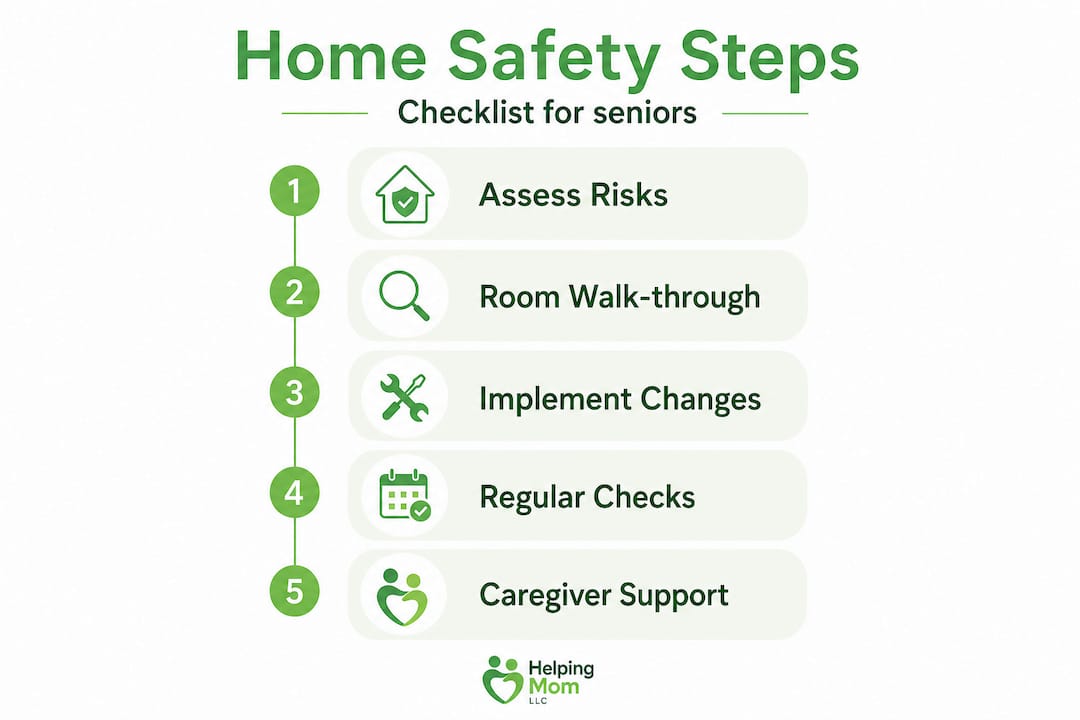
Before you move a single piece of furniture or order a grab bar online, it helps to do a calm, structured walk-through of your parent's home. Going room by room with a clear eye makes the process feel manageable and ensures you do not miss anything important.
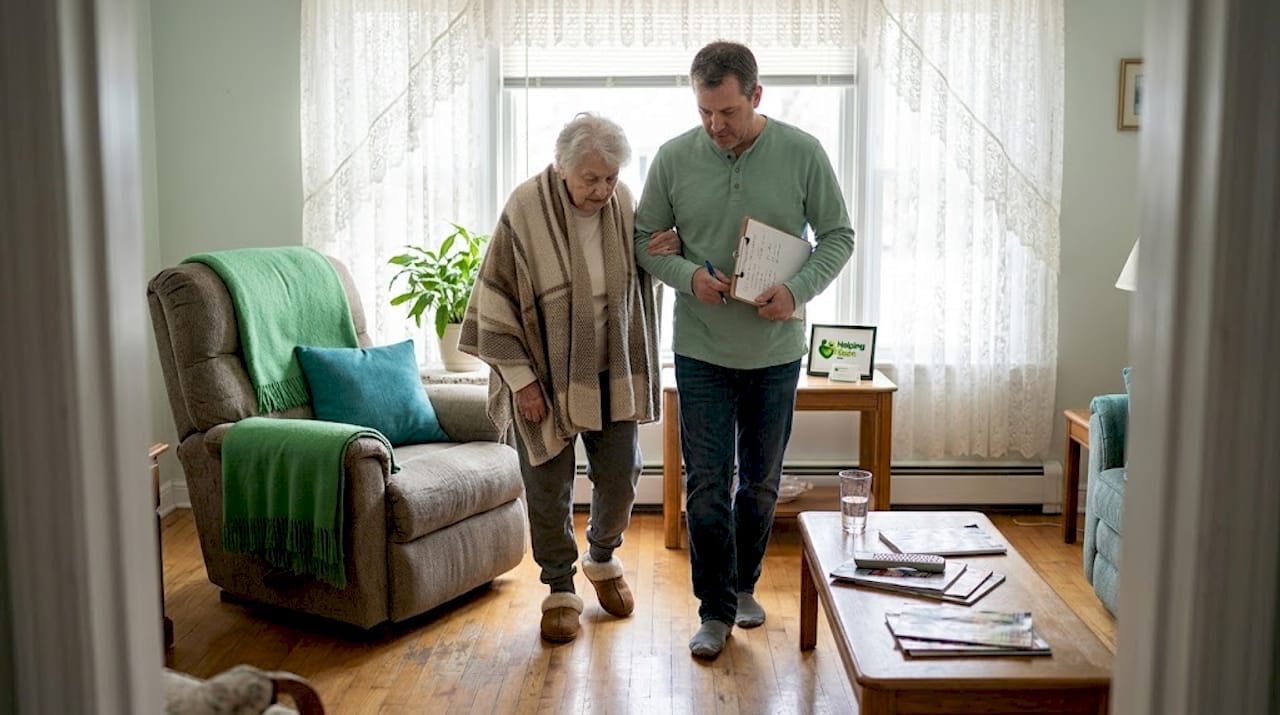
Here are the basic tools that make a home safety assessment much easier:
| Tool | Why it helps |
|---|---|
| Flashlight | Reveals dim spots and shadows in hallways, closets, and stairwells |
| Notepad or phone | Lets you document hazards room by room as you walk |
| Tape measure | Helps assess doorway widths, step heights, and grab bar placement |
| Safety checklist | Keeps you focused and ensures you cover every area |
| Camera or phone | Photographs problem areas to review later or share with a professional |
The key areas to examine during your walk-through include:
- Floors and rugs: Look for loose edges, curling corners, slippery surfaces, and cluttered pathways
- Lighting: Check every hallway, staircase, and nighttime path from bedroom to bathroom
- Stairs: Assess handrail stability, step visibility, and whether any steps are uneven
- Bathrooms: Note the presence or absence of grab bars, non-slip mats, and shower seats
- Kitchen: Look at storage height, appliance accessibility, and floor surface conditions
- Bedroom: Check ease of getting in and out of bed, access to lighting at night, and clear pathways
One thing families often overlook: fall risk is not fixed. Medications, recent vision changes, and even a minor illness can shift your parent's balance and coordination significantly. What felt safe six months ago may not be safe today. This means your assessment is not a one-time task. It is something to revisit whenever your parent's health or medications change.
You can find a structured elderly home safety checklist that walks you through this process room by room. It is a simple tool that takes the guesswork out of knowing what to look for.
Pro Tip: Do the walk-through with your parent whenever possible. They know their home better than anyone. They can point out the spot where they almost slipped last month or the drawer they struggle to open. Involving them also helps them feel respected and part of the solution rather than talked over or managed.
With your preparation in place, you'll be ready to act on the most important safety improvements.
Top actionable steps: How to make home safer for seniors
Now comes the part where you can actually make a difference. The good news is that many of the most impactful changes are simple, affordable, and do not require a contractor. A few targeted updates can transform a hazardous space into a genuinely safer one.
Here are the most effective steps, roughly in order of priority:
- Remove tripping hazards: Roll up or remove loose rugs. Tuck away cords. Clear pathways through main living areas, especially between the bedroom, bathroom, and kitchen.
- Improve lighting throughout the home: Add nightlights along hallways and in the bathroom. Replace dim bulbs with brighter LED options. Consider motion-activated lights for nighttime trips.
- Install grab bars in the bathroom: Place them near the toilet and inside the shower or tub. These are among the most impactful safety additions you can make and are often underestimated.
- Add non-slip mats and surfaces: Use non-slip mats in the bathroom, kitchen, and any tiled areas. Check that existing mats have rubber backing.
- Organize medications clearly: Use a weekly pill organizer. Keep medications in a consistent, well-lit location. Consider a medication reminder app or alarm.
- Check and update smoke and carbon monoxide detectors: Test them regularly and replace batteries at least once a year. Make sure your parent can actually hear the alarm from every room.
- Assess stair safety: Ensure both handrails are secure. Add contrast tape to stair edges if visibility is limited. Consider whether a stair lift is appropriate for the future.
"The CDC highlights specific steps proven to reduce falls in the home, and most of them do not require major renovation."
Some changes are straightforward to do yourself. Others benefit from professional installation. Here is a simple comparison to help you decide:
| Modification | DIY or professional? | Approximate cost | Complexity | Best for |
|---|---|---|---|---|
| Non-slip mats | DIY | $10 to $40 | Very low | Immediate action |
| Nightlights and LED bulbs | DIY | $5 to $30 | Very low | Quick wins |
| Grab bar installation | Professional recommended | $150 to $400 | Moderate | Lasting safety |
| Stair handrail reinforcement | Professional | $100 to $300 | Moderate | Structural security |
| Ramp installation | Professional | $500 to $2,500 | High | Mobility aid users |
| Walk-in shower conversion | Professional | $3,000 to $10,000+ | High | Long-term aging in place |
Pro Tip: Start with the rooms your parent uses most often, especially the bedroom, bathroom, and the path between them. That is where the majority of nighttime accidents happen. You do not need to overhaul the whole house at once. Small, consistent improvements add up quickly.
For a deeper look at what works and why, explore these safer home improvements and our full home modification guide to help you plan with confidence.
Making great changes only works if they stay updated and are regularly checked.
Staying proactive: Monitoring, reassessment, and follow-up
Here is something that surprises many families: installing grab bars and adding a nightlight is not the finish line. Home safety is an ongoing process, not a one-time project. As your parent's health changes, so does their level of risk at home.
Knowing when to reassess is just as important as knowing what to change. Consider revisiting your safety setup when:
- A fall occurs, even a minor one with no injury
- A new medication is prescribed, especially one that affects balance, blood pressure, or alertness
- A new mobility aid is introduced, such as a cane, walker, or wheelchair, since these change how your parent moves through the home
- Vision changes, including a new prescription or a diagnosis like cataracts or macular degeneration
- A hospitalization or illness, which can affect strength and stability even temporarily
- Significant seasonal changes, like winter when rugs, wet floors, and cold stiffness can increase risk
Fall prevention is ongoing, and health organizations consistently recommend regular evaluation rather than a single-time approach. The goal is to stay a step ahead of changes before they become hazards.
You may also want to consider a professional home safety assessment. Occupational therapists are trained specifically to evaluate how a person moves through their environment and can spot risks that even attentive family members miss. Some areas offer these assessments through local aging services, and some insurance plans may cover them. A home safety assessment from a qualified professional can give you peace of mind and a clear action plan.
For routine check-ins between professional visits, a simple walk-through once or twice a year works well. Walk each room with your parent, look for anything that has shifted or worn down, and update your checklist as you go.
Pro Tip: Set a recurring calendar reminder every six months labeled "home safety walk-through." It takes about 30 minutes and keeps the process from slipping through the cracks during busy seasons of caregiving.
With ongoing attention, your parent's home will continue to support their independence. But most families overlook a key truth about home safety...
A hard truth: Home safety is a moving target, not a one-time fix
Most families breathe a sigh of relief after the first round of safety updates. The grab bars are in. The rugs are gone. The nightlights are glowing. It feels done. And that feeling, while understandable, is actually where the risk creeps back in.
The conventional wisdom around senior home safety treats it like a checklist. Check the boxes, move on. But real life does not work that way. A parent who walked steadily six months ago may now be adjusting to a new blood pressure medication that causes lightheadedness in the morning. Their walker may have changed the width they need to navigate doorways. Their cataracts may have worsened just enough to make that bright hallway less helpful than it used to be.
We have heard from many families who made solid improvements, then were caught off guard months later when circumstances shifted. The changes they made were right for their parent at that point in time. They just did not realize the plan needed to evolve.
The most important shift is in how you think about home safety. Rather than a project to complete, think of it as a conversation you keep having. A relationship with your parent's home that you tend regularly, the way you would tend a garden. You notice what has grown and what needs attention.
Equally important is keeping your parent part of that conversation. Seniors often notice subtle changes in how they move or feel at home before anyone else does. When they feel safe enough to say "I've been avoiding that step" or "the shower feels harder lately," that is exactly the kind of information that prevents accidents. Creating an environment where they can speak up without fear of losing their independence is one of the most protective things you can do.
Home safety that sticks is built on trust, not just tools.
Get guidance and support for every step
Caring for an aging parent at home takes attention, patience, and the right information at the right time. You do not have to figure all of this out alone. At Helping Mom, we have built practical resources specifically for adult children walking through exactly this stage of caregiving.
Start with our free caregiver safety checklist to guide your next home walk-through. Then explore our full aging in place safety guide for deeper guidance on modifications that support long-term independence. If you want personalized support, our virtual safety consultations connect you with knowledgeable advisors who can help you think through your specific situation calmly and clearly.
Frequently asked questions
What is the most common cause of falls for seniors at home?
Environmental hazards like loose rugs and poor lighting are among the top causes of falls in seniors' homes, along with clutter in pathways and lack of grab bars in bathrooms.
How often should we reassess home safety for an aging parent?
Reassess after any fall, a medication change, or a shift in mobility, and aim for a full walk-through at least every six to twelve months even when nothing obvious has changed.
Are there professionals who can help evaluate home safety for seniors?
Yes. Occupational therapists and certified home safety assessors can conduct in-home evaluations and provide specific, practical recommendations based on your parent's individual needs and environment.
What should I do if my parent resists home modifications?
Involve your parent directly in the conversation and frame changes around protecting their ability to stay in their own home independently, since most seniors respond better when they see modifications as tools for freedom rather than signs of decline.