

TL;DR:
- Preparing an aging parent for surgery involves organizing medical records, home safety modifications, and a detailed care plan weeks in advance. Proper planning reduces risks like medication errors, falls, and post-surgical confusion, improving recovery outcomes. Starting early and assigning clear roles help families navigate the stressful surgical process more effectively.
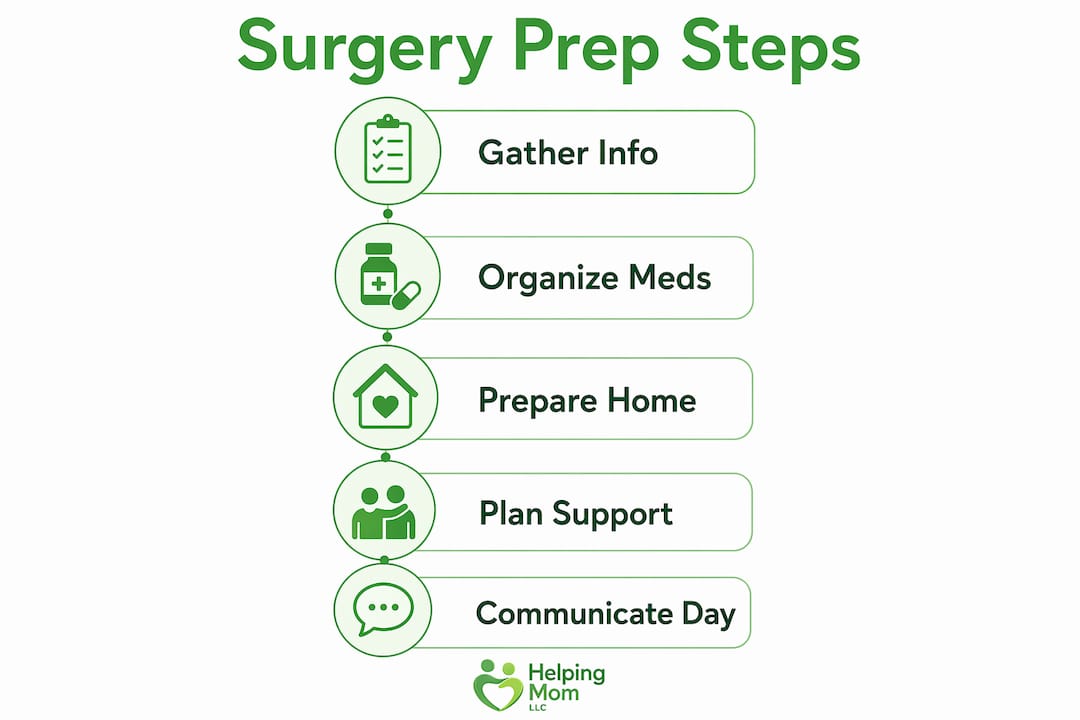
Preparing for surgery with an aging parent is one of the most demanding caregiving responsibilities you will face. Adults aged 65 and older account for 35% of U.S. hospitalizations, yet average hospital stays run only 5–6 days. That short window means families often come home underprepared. The good news is that thorough planning across medical, emotional, and home safety areas makes a real difference. This guide gives you a clear, step-by-step path through every phase, from the first pre-op appointment to the weeks of recovery that follow.
What does preparing for surgery with an aging parent actually involve?
Surgery preparation for a senior covers far more than packing a hospital bag. It means organizing complete medical records, understanding how your parent's physical condition affects surgical risk, modifying the home for safe recovery, and building a concrete support schedule before the procedure ever happens.
The biggest mistake families make is treating surgery as a single event rather than a process. The real work happens in the weeks before and after the operating room. When you plan ahead, you protect your parent from the two most common post-surgical dangers: medication errors and falls at home.
How to gather and organize medical information before surgery
A complete medical summary is the single most useful document you can bring to any pre-op appointment. Gather the following before your first meeting with the surgical team:
- All current diagnoses, including chronic conditions
- Every medication, including over-the-counter drugs, vitamins, and supplements
- Known allergies and past reactions
- Previous surgeries and any complications
- Contact information for all current providers
Supplements matter more than most families realize. Blood thinners, fish oil, and herbal remedies like ginkgo biloba can affect bleeding and anesthesia. Bring the actual bottles if you are unsure of exact doses.
Medication reconciliation is especially critical for seniors because the risk of errors spikes during transitions between care settings. A written, up-to-date medication list given directly to the surgical team reduces that risk significantly.
Pro Tip: Prepare 5–7 specific written questions for every pre-op visit. Ask about expected recovery time, activity restrictions, pain management, and what warning signs to watch for at home. Written questions get more complete answers during rushed clinical visits.
Why does frailty matter more than age for surgical risk?
Frailty, not chronological age, is the superior predictor of surgical risk in older adults. A 78-year-old who walks daily and eats well may recover faster than a 70-year-old who is sedentary and malnourished. Frailty is measured across several factors:
- Nutritional status and unintended weight loss
- Muscle strength and walking speed
- Activity level and endurance
- Cognitive function
- General fatigue
Ask your parent's surgeon or primary care doctor how frailty is assessed and whether anything can be improved before the procedure. Even small gains in nutrition or mobility in the weeks before surgery can shift outcomes.
Cognitive complications are a separate concern that families often miss until they are already happening. Post-surgical delirium is common in older adults and can look like sudden confusion, agitation, or personality changes. You can reduce the risk by keeping familiar objects in the hospital room, maintaining good lighting, and asking the care team to minimize sedative and narcotic use when possible.
Untreated depression before surgery is linked to higher surgical mortality in older adults. If your parent has been showing signs of low mood, withdrawal, or hopelessness, raise it with their doctor before the procedure date is set. Treating depression pre-operatively is a concrete step that can improve outcomes.
How to prepare the home environment weeks before surgery
Start home preparation 4–6 weeks before surgery. That timeline gives you enough space to order equipment, arrange deliveries, and test the setup before your parent arrives home. Waiting until the day of discharge is one of the most common and avoidable mistakes caregivers make.
Follow these steps in order:
- Set up first-floor living. Move your parent's sleeping area to the ground floor if possible. Stairs are a leading fall risk during early recovery.
- Clear walking paths. Remove rugs, cords, and any furniture that narrows hallways or doorways.
- Install grab bars. Place them in the bathroom near the toilet and inside the shower or tub.
- Add non-slip mats. Cover bathroom floors and any other slippery surfaces.
- Gather essential equipment. A walker, raised toilet seat, shower chair, and reacher tool cover most post-surgical mobility needs.
- Set up a recovery station. Place a comfortable chair with armrests, a side table, phone charger, water bottle, and medications within easy reach.
Pro Tip: Borrow or rent equipment before buying. Many communities offer medical equipment loan programs through local senior centers or Area Agencies on Aging. This saves money and lets you return items once recovery is complete.
Home safety modifications like grab bars and clear walker paths directly reduce fall risk during the recovery period. Falls are a leading cause of hospital readmission in seniors, so this preparation is not optional.

| Modification | Purpose |
|---|---|
| Grab bars in bathroom | Prevent falls during toileting and bathing |
| Raised toilet seat | Reduces strain on hips and knees post-surgery |
| Shower chair | Allows safe bathing without standing fatigue |
| First-floor sleeping area | Eliminates stair risk during early recovery |
| Clear walking paths | Reduces trip hazards for walkers and canes |
Build a concrete help schedule at the same time. Map out who handles transportation, meals, medication reminders, and overnight supervision for at least the first two weeks. Hospitals often discharge seniors with less than 24 hours' notice, so having this schedule ready before surgery day prevents last-minute scrambling.
What should you do on surgery day?
Surgery day runs more smoothly when roles are assigned in advance. Decide ahead of time who drives, who waits at the hospital, and who serves as the main contact for family updates. One designated spokesperson reduces confusion and prevents the surgical team from fielding calls from multiple family members.
Bring the following to the hospital:
- Government-issued photo ID for your parent
- Insurance cards and any pre-authorization documents
- The complete medication list (printed, not just on a phone)
- Healthcare power of attorney and advance directive documents
- Comfort items: a familiar blanket, reading glasses, hearing aids, or a phone charger
The person holding healthcare power of attorney should be present and identified to the care team early. This person has the legal authority to make decisions if your parent cannot communicate clearly after surgery.
Set up a group text or shared note to update siblings and other family members. Designate one person to send updates so the waiting room does not become a coordination problem. Bring a notepad and write down everything the surgeon tells you after the procedure. Memory under stress is unreliable, and written notes prevent misunderstandings about discharge instructions.
Pro Tip: Ask the surgical team for a written discharge summary before you leave the hospital. This document lists medications, activity restrictions, follow-up appointments, and warning signs. It is your reference guide for the first week at home.
How do you support your parent's recovery at home?
Medication errors peak within 8–72 hours after discharge. That narrow window is the highest-risk period of the entire surgical experience. Before leaving the hospital, confirm every medication with a pharmacist, not just the discharge nurse. Ask specifically which pre-surgery medications to resume, which to pause, and whether any new prescriptions interact with existing ones.
Set up these systems before your parent comes home:
- A weekly pill organizer filled and checked daily
- Phone alarms or a medication reminder app for each dose
- A printed medication schedule posted in a visible location
- A pharmacist review appointment within the first week
Schedule a follow-up with the surgeon or primary care doctor within 7 days of discharge. Coordinating therapy orders and transportation to physical or occupational therapy before discharge prevents delays that slow recovery. Confirm that the therapy provider is in your parent's insurance network before the first appointment.
Emotional recovery deserves the same attention as physical recovery. Post-surgery depression and confusion are common and are linked to higher readmission rates. Watch for signs of low mood, withdrawal, unusual irritability, or persistent disorientation in the first few weeks. These are not just emotional reactions. They are clinical signals worth reporting to the care team.
| Recovery priority | What to do |
|---|---|
| Medication safety | Pharmacist review within 24 hours of discharge |
| Follow-up care | Surgeon or primary care visit within 7 days |
| Physical therapy | Confirm orders and transportation before discharge |
| Emotional monitoring | Check in daily for mood, confusion, and anxiety |
| Nutrition and hydration | Prepare easy meals and keep water accessible |
Pro Tip: Keep a daily recovery log for the first two weeks. Note medications taken, meals eaten, mood, mobility, and any symptoms. A shared digital note like Google Keep or Apple Notes lets multiple family members contribute and gives the doctor a clear picture at the follow-up visit.
Key Takeaways
Preparing an aging parent for surgery requires organized medical records, a home ready for safe recovery, and a concrete care plan built weeks before the procedure.
| Point | Details |
|---|---|
| Start home prep early | Begin home modifications 4–6 weeks before surgery to avoid last-minute gaps. |
| Organize medical records | Bring a complete medication list, allergy history, and written questions to every pre-op visit. |
| Understand frailty risk | Ask the surgical team how frailty is assessed and what can be improved before the procedure. |
| Prevent medication errors | Confirm all medications with a pharmacist within 24 hours of hospital discharge. |
| Monitor emotional health | Watch for depression and confusion post-surgery and report changes to the care team promptly. |
What I've learned from watching families navigate this
I have seen families walk into surgery day completely unprepared, not because they didn't care, but because no one told them how much work happens before the hospital. The clinical team focuses on the procedure. The preparation work falls to you.
The families who handle this best treat it like a project with a deadline. They start the home modifications early. They write down their questions before every appointment. They assign roles before surgery day so no one is improvising in a waiting room. And they plan for the night shift, because overnight supervision in the first week is where most families underestimate their needs.
One thing I would tell every adult child: your parent's opinion matters in this process. Ask them what they are worried about. Ask what would make them feel safe at home. That conversation often surfaces practical concerns the medical team never thought to ask about, like whether they can reach the bathroom at 2 AM or whether they are afraid of being alone.
The other thing families consistently underestimate is the cognitive piece. A parent who was sharp before surgery may seem confused or unlike themselves for days or even weeks afterward. This is not always permanent. But it is alarming if you are not expecting it. Knowing it can happen, and knowing how to respond, changes everything.
If you are feeling unsure about where to start, the role of caregivers guide at Helping-mom is a good grounding point. You do not have to figure this out alone. And you are more prepared than you think.
— Mike C.
How Helping-mom can support your next steps
Helping-mom provides calm, practical guidance for adult children who are getting a parent's home ready for surgery and recovery. The home safety guide for seniors walks you through every modification, from grab bar placement to first-floor living setup, in plain language without clinical jargon. If you want a structured starting point, the aging in place home safety page gives you a clear overview of where to focus first. Helping-mom is built for exactly this moment: when you need real guidance, not a textbook.
FAQ
What should I bring to a pre-op appointment for my parent?
Bring a complete medication list including supplements, a written list of diagnoses and allergies, past surgical history, and 5–7 specific questions for the surgical team. Written questions consistently produce more complete answers during short clinical visits.
How early should I start preparing my parent's home for surgery recovery?
Start home modifications 4–6 weeks before the surgery date. This timeline allows time to order equipment, install grab bars, and arrange first-floor sleeping without rushing.
What are the signs of post-surgical delirium in seniors?
Post-surgical delirium appears as sudden confusion, agitation, disorientation, or personality changes, often within the first 1–3 days after surgery. Keeping familiar objects nearby, maintaining good lighting, and minimizing sedative use reduces the risk.
How do I prevent medication errors after my parent comes home?
Confirm all medications with a pharmacist within 24 hours of discharge. Set up a pill organizer, use phone alarms for each dose, and schedule a follow-up medical visit within 7 days to review the full medication list.
Who should be the main contact with the hospital on surgery day?
The person holding healthcare power of attorney should be the designated family spokesperson. Identify this person to the care team early and have all legal documents present at the hospital.