
Yes, used intentionally and with sensitivity, humor genuinely helps family caregivers reduce stress, strengthen connection, and sustain the emotional energy that caregiving demands day after day. The role of humor in caregiving is not about performing or being funny on command. It's about noticing small, lighthearted moments and letting them breathe.
Three things you can try in the next 72 hours:
- Sing something silly at breakfast. A 30-second made-up song about scrambled eggs or a favorite old jingle can shift the mood in a room without any planning.
- Schedule a 5-minute "fun break" daily. Set a phone reminder. Watch a short funny video together, flip through an old photo album, or just share a memory that makes you both smile.
- Keep a one-line humor journal. At the end of each day, write down one moment that felt light or funny, even briefly. Over time, you'll start noticing more of them.
Pro Tip: Always read the room first. If your parent is in pain, confused, or visibly distressed, skip the humor and offer presence instead. A gentle touch or quiet company matters more in those moments.
Key Takeaways
Humor, used with intention and sensitivity, is one of the most accessible tools a family caregiver has for reducing stress and strengthening connection with an aging parent.
| Point | Details |
|---|---|
| Affiliative humor works best | Warm, inclusive humor predicts better outcomes; self-defeating humor predicts worse ones, per a 66-dyad study. |
| Laughter has real physiological effects | It triggers endorphin release, lowers cortisol, and reduces blood pressure, making it a genuine stress-management tool. |
| Humor is a skill you can build | A structured intervention with nursing trainees showed measurable gains in humor habits and positive affect over time. |
| Adapt carefully for dementia and palliative care | Use broad, physical, or musical humor; avoid sarcasm and complex wordplay; always follow the care recipient's lead. |
| Helping-mom offers guided support | Caregiver well-being resources and paid Zoom consultations help you build sustainable routines, including humor habits. |
Table of Contents
- What research says about the role of humor in caregiving
- Which humor styles help, and which ones hurt
- Practical ways to bring lightness into daily caregiving
- Adapting humor when your parent has dementia or is in palliative care
- When humor backfires, and how to recognize it
- A simple 4-step humor habit you can build over 2 to 4 weeks
- Ready-to-use props and programs that make it easier
- A note from Mike C. on why this matters
- Helping-mom supports caregivers who want to build sustainable routines
- Sources
- FAQ
What research says about the role of humor in caregiving
The evidence here is real, though modest in scale. A study of 66 caregiver-recipient dyads found that caregivers who used affiliative humor — the warm, inclusive kind that invites others in — predicted better quality-of-life outcomes for people with mild-to-moderate dementia. Caregivers who relied on self-defeating humor, by contrast, were linked to worse outcomes for the people they cared for.
A humor intervention with approximately 104 nursing trainees, published in Frontiers in Public Health, showed immediate improvements in positive mood and some sustained gains in humor habits and work enjoyment at follow-up. The study supports something encouraging: humor is a skill, not a personality trait. You can get better at it with practice.
A small randomized pilot with 55 patients in a palliative care setting reported reduced stress and increased cheerfulness after tailored humor visits. The authors are careful to note that results are preliminary and the setting is demanding, so this finding is best read as a promising signal rather than a firm conclusion.
Physiologically, laughter triggers endorphin release, lowers cortisol, and can reduce blood pressure. The AMA Journal of Ethics and Mayo Clinic both list laughter among practical, low-risk stress-management strategies. The Association for Applied and Therapeutic Humor (AATH) recommends building "humor habits" through intention and improvisation rather than trying to be a comedian.
| Study | Participants | Key outcome |
|---|---|---|
| Caregiver humor styles and dementia quality of life (PMC) | 66 dyads | Affiliative humor linked to better recipient quality of life |
| Humor intervention for nursing trainees (Frontiers) | ~104 trainees | Improved positive affect; sustained humor habits at follow-up |
| Palliative humor visits pilot (Springer) | 55 patients | Reduced stress and increased cheerfulness; results preliminary |
Which humor styles help, and which ones hurt
Not all humor works the same way in caregiving. Researchers identify four main styles, and the differences matter.
Affiliative humor is the most useful. It's warm, inclusive, and invites the other person to laugh with you. Think of gently teasing your dad about his lifelong habit of hoarding rubber bands, in a way that makes him smile because he knows you love him. This style builds connection and is the one most strongly linked to positive outcomes in care settings.
Self-enhancing humor is the ability to find something funny about your own situation, even when it's hard. A caregiver who can laugh quietly at themselves for forgetting where they put the medication chart for the third time that morning is using this style. It's a healthy coping tool, similar to the kind of resilient humor people use to get through stressful jobs.
The styles to avoid:
- Self-defeating humor — making yourself the butt of jokes in a way that signals distress or invites pity. In caregiving, this can subtly communicate to your parent that you're not okay, which adds to their worry.
- Aggressive humor — sarcasm, mockery, or humor at someone else's expense. Even when it feels like gentle ribbing, it can land as criticism, especially for someone who is already feeling vulnerable.
- Complex cultural references or rapid wordplay — these can confuse or exclude someone with cognitive changes, hearing loss, or limited English, leaving them feeling left out rather than included.
The PMC study on caregiver humor styles makes the distinction clear: affiliative humor predicts better outcomes; self-defeating humor predicts worse ones. That's a meaningful signal about which direction to lean.
Practical ways to bring lightness into daily caregiving
You don't need to be funny. You need to be present and open to the moments that are already there.
Set up the environment
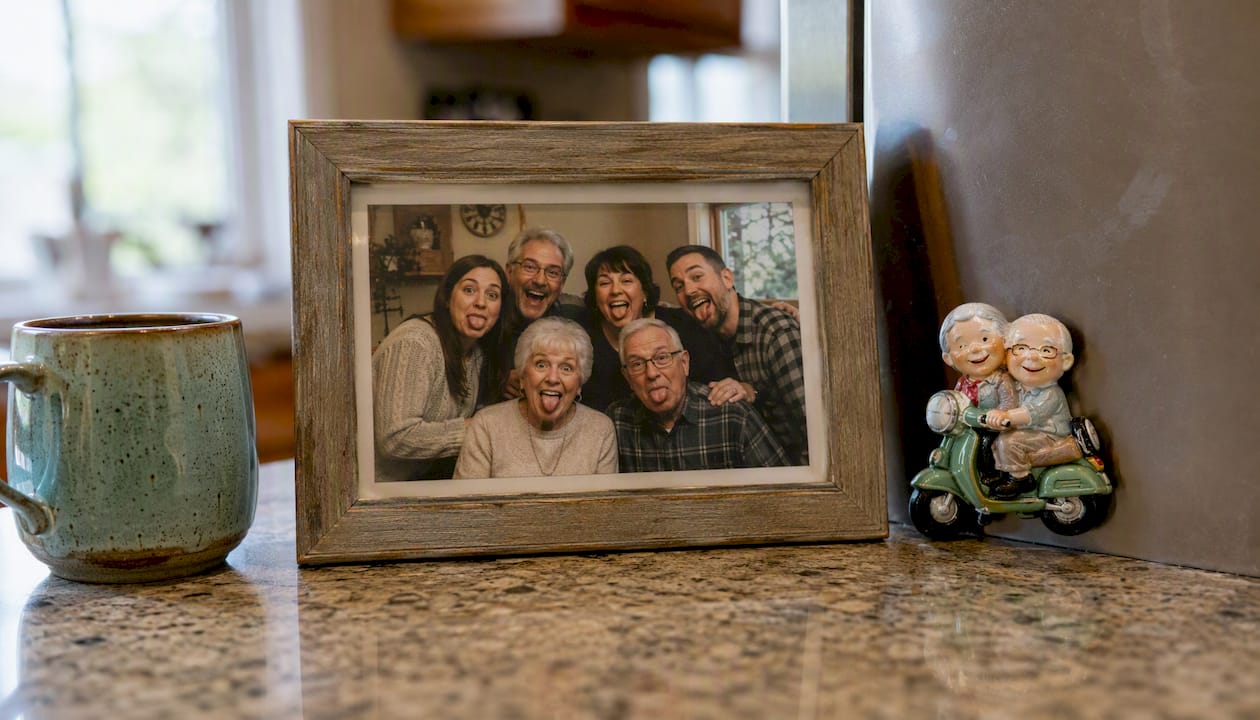
A small framed photo of a funny family memory on the kitchen counter, a playlist of your parent's favorite upbeat songs from their 30s, or a silly magnet on the refrigerator can all serve as low-effort prompts. These aren't jokes. They're invitations. When your parent notices the photo and smiles, that's the moment you're looking for. Creating a safe, familiar environment also makes it easier to introduce lighthearted activities without disruption.
Build small rituals
Rituals work because they're predictable. A Tuesday morning where you always watch one funny animal video together, or a nightly routine where you each share "the weirdest thing that happened today," gives humor a natural home in the day. It removes the pressure to perform and replaces it with a shared expectation.
Try gentle, familiar teasing
When appropriate and when your parent's mood is good, light teasing about a well-known quirk can be a genuine moment of connection. The key word is familiar. You're not introducing new material. You're revisiting something that has always been part of your relationship.
Three micro-exercises to try this week:
- The Silly Song (30 seconds at breakfast): Make up a short, nonsensical song about whatever you're doing. "We're making oatmeal, oatmeal, oatmeal" to any tune. It doesn't have to be good. The absurdity is the point.
- The Old Photo Game (5 minutes, any time): Pull out a photo album and ask your parent to tell you the funniest thing they remember about someone in a picture. Listen more than you talk.
- The Shared Laugh Log (1 minute at night): Before bed, tell your parent one thing that made you smile that day, then ask if they had one too. Even a small exchange builds the habit.
Pro Tip: Watch for micro-cues. A slight smile, relaxed shoulders, or a quiet chuckle tells you the humor landed. A blank look, a frown, or a change in body language means it didn't. Stop, pivot, and try again another day. Consent in humor is mostly nonverbal, and reading it is a skill worth developing.
Caregiver support groups also use humor strategically to reduce tension and strengthen bonds, which suggests that sharing funny moments with siblings or other family members involved in care can extend the benefit beyond just you and your parent.
Adapting humor when your parent has dementia or is in palliative care
This is where thoughtfulness matters most. The good news is that humor doesn't disappear with dementia or serious illness. It shifts.
What tends to work:
- Broad, physical humor: a silly face, a funny hat, exaggerated gestures
- Musical humor: a playful song, a familiar tune with silly made-up words
- Props that invite participation: a puppet, a stuffed animal, a funny photo
- Humor rooted in shared humanity: gentle observations about everyday life that don't require memory or context to appreciate
- Validating feelings first, then gently introducing lightness once the person feels heard
What to avoid:
- Sarcasm or irony, which requires cognitive processing that may no longer be reliable
- Complex wordplay or jokes with punchlines that depend on memory
- Humor during visible pain, acute distress, or moments of confusion
- Rushing past a sad or anxious moment to get to something funny
A brief example: a caregiver whose mother had mid-stage Alzheimer's kept a small hand puppet in the kitchen. When her mother grew agitated during morning routines, she'd bring out the puppet and have it "ask" for breakfast in a silly voice. Her mother couldn't always remember the puppet's name, but she laughed almost every time. The laughter wasn't about the joke. It was about the warmth and the familiar silliness of the moment.
The palliative care pilot study found that tailored humor visits reduced stress and increased cheerfulness even in end-of-life settings, with the important caveat that humor must be brief, gentle, and adapted to the individual. A narrative review in the Canadian Oncology Nursing Journal reinforces this: therapeutic humor shows real promise in palliative care, but it requires training, careful adaptation, and a willingness to follow the patient's lead.
When humor backfires, and how to recognize it
Humor can do harm when it's used to sidestep hard conversations, dismiss real pain, or make the caregiver feel better at the care recipient's expense. Recognizing the signs early protects the relationship.
Red flags to watch for:
- Your parent withdraws, goes quiet, or looks away after a joke
- Increased agitation or irritability following a lighthearted attempt
- Tearful silence that follows a comment you meant to be funny
- Repeated confusion about why you're laughing
- A pattern where humor feels like relief for you but leaves your parent looking flat or uncomfortable
A short self-check after trying a new humor tactic:
- Did my parent's face or body language show any sign of enjoyment?
- Was I using humor to connect, or to avoid a conversation I needed to have?
- Did the moment feel mutual, or did I carry it alone?
- Would I be comfortable if my parent described this moment to someone else?
- Did the humor match where my parent was emotionally, or did I push past a feeling they were having?
If the answer to question 2 or 5 gives you pause, that's worth sitting with. Humor should never replace honest caregiving conversations or serve as a way to manage your own discomfort. When humor starts feeling like a shield rather than a bridge, it may be a sign that caregiver burnout is closer than you think.
A practitioner review in Frontiers in Psychology emphasizes that humor must never replace validation of feelings and must be tailored to the individual's style and cultural background. That framing is useful: humor is a complement to good care, not a substitute for it.
A simple 4-step humor habit you can build over 2 to 4 weeks
The Frontiers nursing study showed that humor skills can be taught and that even a structured intervention produced measurable gains in positive affect and work enjoyment. You don't need a 3-hour training. A simple, repeatable habit works.
- Notice. Each day, pay attention to one moment that felt even slightly lighter or funnier than the rest. It might be something your parent said, a small mishap, or a funny memory that surfaced. Write it down.
- Prime. Before a caregiving task that often feels tense, spend 60 seconds doing something that puts you in a lighter mood: a funny video clip, a text to a friend who makes you laugh, or a memory that reliably makes you smile.
- Try. Introduce one small humor attempt during the day. Keep it low-stakes: a silly comment, a funny photo, a playful question. Don't force it. If it doesn't land, let it go.
- Reflect. At the end of the day, note whether the attempt changed anything: your mood, the tone of an interaction, your parent's response. Over 2 to 4 weeks, patterns will emerge.
What to watch for: fewer tense interactions, a small lift in your own energy after caregiving sessions, or moments where your parent initiates something lighthearted. Those are signs the habit is taking hold.
When to stop or adapt: if after two weeks you feel more pressure than relief around humor attempts, scale back. The goal is lightness, not performance. The Frontiers intervention research showed that humor habits build gradually, and the benefits tend to grow with consistency rather than intensity.
Ready-to-use props and programs that make it easier
You don't have to create humor from scratch. A few simple tools can do a lot of the work.
- Photo albums: Familiar faces and old memories are natural conversation starters. Introduce one by saying, "I found this old photo and I thought you'd get a kick out of it."
- Playlists: A playlist of upbeat songs from your parent's 20s and 30s can shift the mood in minutes. Music bypasses a lot of cognitive barriers.
- Silly hats or props: A funny hat kept in a visible spot gives your parent something to reach for on their own terms. No setup required.
- Simple puppets or stuffed animals: Especially useful in dementia care. A puppet can say things that feel safer or sillier than a direct comment, and many people respond to them warmly.
- Short funny video clips: A 2-minute clip of animals doing something unexpected, or a classic comedy sketch your parent already loves, is low-effort and often reliable.
Programs like Laughter on Call combine trained performers with caregiver coaching to bring humor into dementia and elder care settings. Laughter yoga groups, available in many communities and virtually, offer a structured way to practice humor and breathing together with others. These aren't for everyone, but they're worth knowing about.
When introducing a prop for the first time, keep it simple: "I brought something silly. Want to see?" That's enough. Let your parent's response guide what happens next.
A note from Mike C. on why this matters
Caregiving is serious work, and it's easy to feel like there's no room for laughter when so much is at stake. But the small, funny moments, the ones that catch you both off guard, are often the ones you'll remember most. They're not a distraction from the hard parts. They're part of what makes the relationship real.
You don't have to be a comedian. You just have to be willing to notice what's already there and let it land. Try one small thing this week. If it doesn't work, that's fine. Try something different next week. The permission to experiment is part of what makes this sustainable.
Helping-mom supports caregivers who want to build sustainable routines
Humor is one piece of a larger picture of caregiver wellness, and sometimes it helps to have a guide alongside you. Helping-mom's caregiver well-being resources include practical tools for managing stress, building daily routines, and finding moments of connection even on the hardest days. If you'd like personalized support, a paid Zoom consultation gives you one-on-one time to talk through what's working, what isn't, and what small changes might make the biggest difference. Book a session at Helping-mom and come with your questions. You don't need to have it figured out first.
Sources
- Caregiver humor styles may affect quality of life in people with dementia - PMC
- How to Use Humor in Clinical Settings | Journal of Ethics | American Medical Association
- Care for Joy: Evaluation of a Humor Intervention and Its Effects on Stress, Flow Experience, Work Enjoyment, and Meaningfulness of Work - Frontiers
- Humour intervention in palliative care (Springer) - pilot randomized study
- How to Add Humor to Your Caregiving Routine - Guideposts
- Stress relief: Tips to tame stress - Mayo Clinic
FAQ
What does humor actually do for a family caregiver?
Humor reduces cortisol, triggers endorphin release, and shifts how caregivers mentally appraise stressful situations, making difficult moments feel more manageable. Over time, a consistent humor habit can improve mood, reduce tension in daily interactions, and strengthen the emotional bond with the person being cared for.
How can I use humor safely with a parent who has dementia?
Stick to broad, physical, or musical humor, such as a silly song, a funny hat, or a familiar comedy clip, and avoid sarcasm, complex jokes, or anything that requires memory to follow. Always read your parent's body language first; if they seem distressed or withdrawn, offer presence rather than humor.
When should I avoid humor in caregiving?
Skip humor when your parent is in visible pain, acutely confused, grieving, or showing signs of distress. Humor should complement good care, not replace honest conversation or sidestep a feeling your parent needs to express.
What are the most important qualities for a family caregiver?
Patience, consistency, and the ability to read the other person's emotional state tend to matter most. Humor fits naturally into all three when it's used to connect rather than to perform or deflect.
What can I do when caregiver stress feels too big for humor to help?
Humor is one tool among many. If stress is affecting your sleep, health, or ability to function, that's a signal to look at broader caregiver stress management strategies and consider whether professional support, respite care, or a structured consultation might help you reset.