

TL;DR:
- Role reversal with an aging parent involves an adult child becoming the primary caregiver, managing medical, financial, and emotional needs. It begins gradually and is often recognized only in hindsight, emphasizing the importance of early conversations and shared responsibility. Addressing emotional challenges and securing legal documents proactively are essential for sustainable, compassionate caregiving.
Role reversal with an aging parent is defined as the transition where an adult child shifts from being cared for to becoming the primary caregiver, taking on responsibilities the parent once held. This shift covers four core domains: medical management, daily living activities, legal and financial coordination, and emotional support. Clinicians and elder care specialists often call this transition "parentification in reverse" or simply elder care role reversal. Approximately 53 million Americans provide unpaid care to adult family members, averaging 19 hours weekly. That number tells you this is not a rare family experience. It is one of the most common life transitions adults face, and most families walk into it without a plan.
What triggers role reversal with an aging parent?
The shift rarely arrives as a single moment. It builds slowly, through small favors that gradually become full caregiving responsibilities. You start driving your mom to appointments once a month. Then every week. Then you realize you are also managing her prescriptions, calling her doctors, and checking her bank statements. That is role reversal in motion.
Parents often hide medication use, symptoms, or financial issues to maintain their sense of autonomy. This protective behavior is completely understandable, but it delays recognition of the caregiving transition. By the time you notice something is wrong, the shift may already be well underway.
Common early signals include:
- Missed medications or doctor appointments
- Unpaid bills or unusual financial decisions
- Withdrawal from hobbies or social activities
- Increased forgetfulness about recent conversations
- Reluctance to discuss health or money matters
Most adult children recognize the role reversal only in hindsight. You look back and realize the shift happened months or even years before you named it. That retrospective recognition is normal, and it is not a sign that you failed to pay attention.
Pro Tip: The 40-70 rule offers a practical starting point: begin caregiving conversations when you are around 40 and your parent is around 70, before any crisis forces the discussion. Early conversations protect everyone's options.
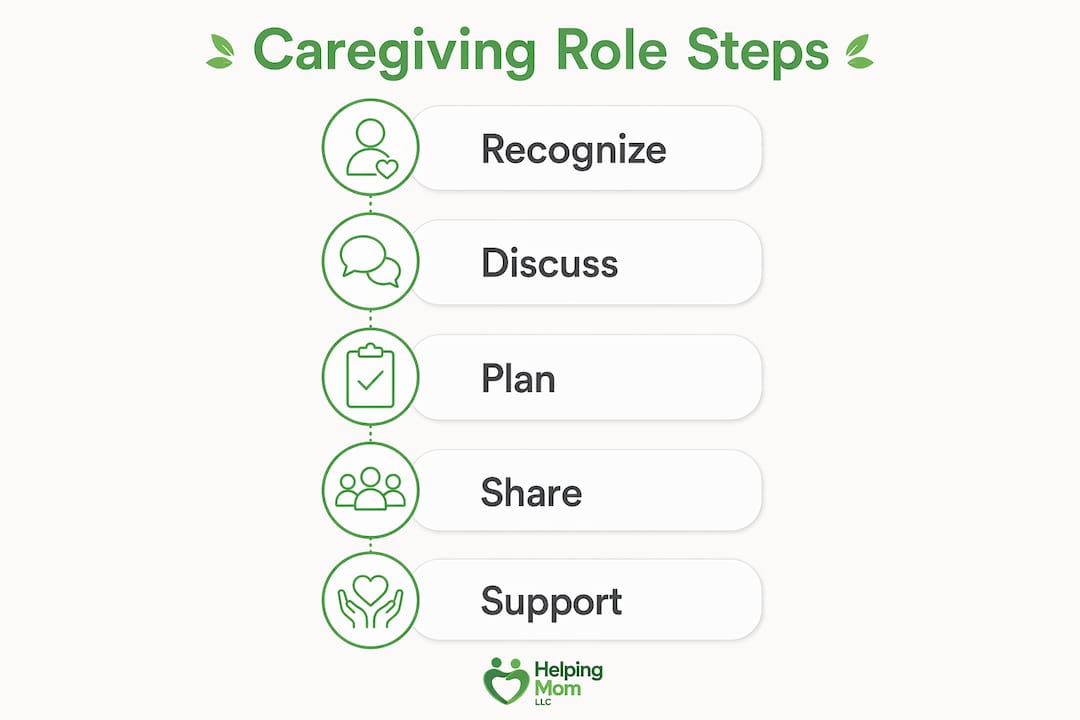
Starting the conversation before a health event gives your family time to plan thoughtfully instead of reacting under pressure. Helping-mom has a practical guide on how to help an aging parent without upsetting them, which is a good place to start if you are not sure how to open the door.
What are the emotional challenges of elder care role reversal?
The emotional weight of caring for aging parents is real, and it is often underestimated. Adult children in caregiving roles experience what practitioners call role loss, a gradual erosion of their identity as a child as the care manager role takes over. You may find yourself grieving the parent you knew while simultaneously managing their daily needs. That grief is valid.
Guilt is one of the most reported emotions among caregivers. You feel guilty when you cannot do more. You feel guilty when you need a break. You feel guilty for feeling frustrated. Accepting guilt and grief as normal rather than as personal failure helps caregivers endure the emotional complexity of this transition. These feelings do not mean you are doing it wrong.
"You can offer compassion without taking on responsibility for your parent's emotional state. That balance is not selfish. It is what makes long-term caregiving possible."
The stakes of ignoring your own emotional health are serious. Caregivers experiencing significant emotional strain face elevated mortality risk. That finding is not meant to alarm you. It is meant to make clear that caregiver well-being is not optional. It is a health matter.
Pro Tip: Distinguish between compassion and emotional responsibility. You can be present for your parent's pain without absorbing it as your own. This distinction is one of the most protective things you can practice as a caregiver.

If you are struggling with caregiver guilt, Helping-mom's guide on coping with caregiver guilt offers calm, practical support without judgment.
How can families manage caregiving duties without burning out?
Sustainable caregiving requires a team. One person carrying the full load is the fastest path to burnout, and burnout does not serve your parent or you. Sharing responsibilities, using respite care, and setting boundaries all improve care quality and extend how long a caregiver can sustain their role.
Here is a practical framework for building a care team:
- Map the tasks. List every caregiving responsibility, from medication management to grocery runs to emotional check-ins. Write it all down before dividing anything.
- Involve siblings honestly. Assign roles based on geography, skill, and availability, not just who feels most guilty. A sibling who lives far away can handle finances or insurance calls. One nearby can manage appointments.
- Bring in professionals where needed. A geriatric care manager can assess your parent's needs, coordinate services, and serve as a neutral third party when family disagreements arise.
- Schedule respite care. Respite care means arranging temporary relief so you can rest. Many families resist this, seeing it as giving up. Professionals recommend it as a core strategy for sustainable caregiving, not a last resort.
- Revisit the plan regularly. Caregiving needs change. A plan that works today may not work in six months. Build in quarterly check-ins with your care team.
Sibling dynamics add another layer of complexity. Unequal contributions create resentment quickly. The most effective approach is a structured family meeting where roles are discussed openly and documented. Helping-mom's guide on coordinating care as a family walks through this process step by step.
The financial impact of caregiving is also significant. Many adult children reduce their work hours or leave jobs entirely to manage parent care. Before making any major work adjustment, explore what paid services, community programs, or government resources might reduce the caregiving load instead.
What legal and financial steps are essential during role reversal?
Legal and financial planning is the area most families delay until a crisis forces their hand. That delay is costly. Durable power of attorney and healthcare proxies must be established while your parent still has legal capacity. Once cognitive decline limits that capacity, these documents cannot be created without court intervention.
The table below outlines the most critical documents and why timing matters.
| Document | Purpose | Why Timing Matters |
|---|---|---|
| Durable Power of Attorney | Authorizes you to manage financial decisions | Must be signed while parent has legal capacity |
| Healthcare Proxy | Designates who makes medical decisions | Required before a health crisis, not during one |
| Living Will | Records your parent's care preferences | Reduces family conflict during emergencies |
| HIPAA Authorization | Allows you to access medical records | Needed to communicate with doctors on your parent's behalf |
| Beneficiary Designations | Directs assets to the right people | Should be reviewed and updated regularly |
Start these conversations early and frame them as a gift your parent gives the family, not as a loss of control. Most parents, when approached calmly and respectfully, want to have these plans in place. They do not want their children scrambling during a crisis.
For families thinking ahead about end-of-life planning, resources like Bravo Family Mortuary's pre-planning guide offer a calm, practical starting point for conversations that feel hard to begin.
Helping-mom also has a straightforward guide on aging parent finances that covers the basics without overwhelming you.
Key takeaways
Sustainable elder care role reversal requires early planning, shared responsibilities, and consistent attention to caregiver well-being alongside the parent's needs.
| Point | Details |
|---|---|
| Define the shift early | Role reversal begins gradually; naming it early gives your family time to plan instead of react. |
| Use the 40-70 rule | Start caregiving conversations around age 70 for parents and 40 for adult children to protect everyone's options. |
| Protect your emotional health | Caregiver emotional strain carries real health risks; distinguishing compassion from responsibility prevents burnout. |
| Build a care team | Shared caregiving with siblings, professionals, and respite care improves quality and sustainability. |
| Secure legal documents now | Durable power of attorney and healthcare proxies must be in place before cognitive decline limits your parent's legal capacity. |
What i have learned about walking this road
By Mike
After spending years working with families at Helping-mom, the pattern I see most often is this: adult children wait too long to ask for help because they believe needing help means they are not doing enough. That belief causes more harm than almost anything else in the caregiving experience.
The families who navigate this transition best are not the ones who do the most. They are the ones who accept the most. They accept that they cannot do it alone. They accept that their parent's decline is painful and that grief belongs in the room alongside the practical tasks. They accept that a care manager, a respite worker, or a family meeting is not a sign of failure. It is a sign of clarity.
What I have also seen is that the parent-child relationship does not disappear during role reversal. It changes shape. The love is still there. The history is still there. You are not replacing the relationship you had. You are redefining it, and that redefinition can hold real tenderness if you let it.
If you are in the middle of this right now, give yourself permission to be imperfect. You will not get every decision right. Neither will your siblings. Neither will the professionals you bring in. What matters is that you keep showing up, keep communicating, and keep taking care of yourself well enough to keep going.
Seek professional support when you need it. A counselor who works with caregivers, a geriatric care manager, or even a caregiver support group can make a meaningful difference. You do not have to figure this out alone.
— Mike
Practical resources to help you move forward
Helping-mom is built specifically for families in the middle of this transition. If you are ready to take the next step, start with the home safety guide for seniors, which covers the practical changes that help aging parents stay safe and independent at home. The elderly home safety checklist gives you a room-by-room walkthrough you can complete in an afternoon. For caregiver well-being, the caregiver wellness resources section offers calm, grounded support for the emotional side of this work. And if you need to bring your family together around a care plan, the family meeting guide walks you through the conversation step by step.
FAQ
What is role reversal with an aging parent?
Role reversal with an aging parent is the transition where an adult child becomes the primary caregiver, managing medical, daily living, financial, and emotional responsibilities the parent once handled independently. Clinicians also refer to this as elder care role reversal or parentification in reverse.
When does role reversal typically begin?
Role reversal often begins gradually, with small favors escalating into full caregiving. The 40-70 rule recommends starting care planning conversations when the parent is around 70 and the adult child is around 40, before any health crisis forces the issue.
How do i avoid caregiver burnout during role reversal?
Burnout is best prevented by sharing responsibilities across siblings and professionals, scheduling regular respite care, and setting clear boundaries. Team-based caregiving consistently outperforms solo caregiving in both care quality and caregiver longevity.
What legal documents should i prioritize first?
Durable power of attorney and a healthcare proxy are the two most time-sensitive documents. Both must be signed while your parent has legal capacity. Waiting until a cognitive decline or health crisis makes these documents far harder, and sometimes impossible, to obtain.
Is it normal to feel grief while caring for a parent who is still alive?
Yes. Adult children commonly experience grief over the loss of the parent-child dynamic even while the parent is still present. Accepting this grief as normal rather than as a personal failure is one of the most important steps toward emotional sustainability in caregiving.