
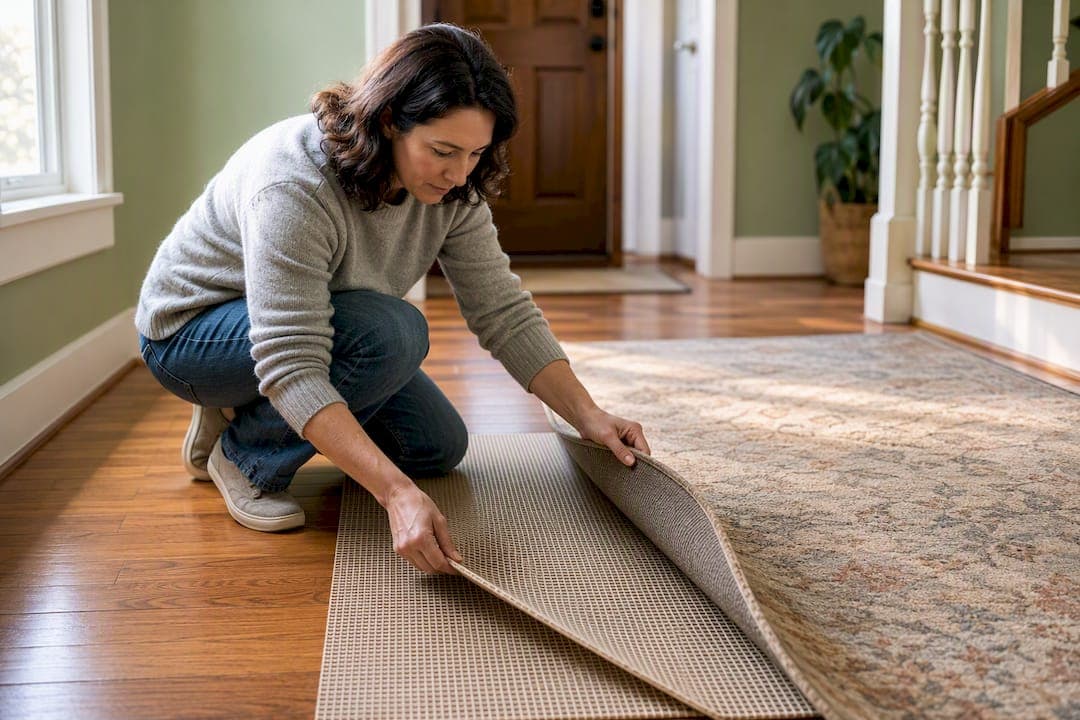
Rugs can be safe for older adults, but only under specific conditions: low pile, secure backing, flat edges, and thoughtful placement away from bathrooms and stairways. A rug that fails any one of those tests is a hazard waiting for a hurried trip to the bathroom at 2 a.m.
If you're standing in your parent's living room right now wondering whether to act, here's what to do in the next five minutes:
- Pick up and remove any small throw rugs that aren't anchored to the floor.
- Press down on the corners and edges of remaining rugs. If they curl, lift, or slide, that rug needs attention today.
- Grab a roll of painter's tape or double-sided carpet tape as a temporary hold until you can install a proper pad.
Once you've done that, walk through the two-minute checklist below to catch what's easy to miss on a first pass.
Key Takeaways
Rug safety for seniors comes down to three controllable factors: low pile height, secure non-slip backing, and thoughtful placement away from bathrooms and rushed transition zones.
| Point | Details |
|---|---|
| Pile height matters | Keep pile at or under 1/2 inch, aiming closer to 1/4 inch for parents using a cane or walker. |
| Bathrooms carry the highest risk | 35.7% of home rug-related ED visits happen in the bathroom, so prioritize non-slip bath mats there first. |
| Secure before you decorate | A properly sized felt-and-rubber pad beats plush fibers for actual safety performance. |
| Inspect monthly, replace early | Curled edges, flaking backing, or repeated bunching mean it's time to replace, not patch again. |
| Pair rugs with a bigger plan | Combine rug fixes with strength work, vision checks, and medication review for the best results. |
| Get hands-on help when needed | Helping-mom's home safety assessments and Zoom consults turn this guide into a prioritized, room-specific action plan. |
Table of Contents
- Two-Minute Checklist: What To Do Right Now
- What the Research and Statistics Say About Rugs and Falls
- How To Choose Safer Rugs for an Older Adult
- How To Secure Rugs and Manage Transitions
- Where Rugs Are Usually a Bad Idea and Safer Alternatives
- Maintenance: Keeping Rugs Safe and Knowing When To Replace Them
- A Home-Check Walkthrough You Can Do With Your Parent
- When Buying: Shopping Checklist and Typical Cost Ranges
- How Rug Changes Fit Into a Broader Fall-Prevention Plan
- Talking to Your Parent About Rugs Without a Fight
- How Helping-mom Can Help
- Sources
- FAQ
Two-Minute Checklist: What To Do Right Now
You don't need a toolbox or a weekend to make a real dent in rug safety for seniors. You need about two minutes and a willingness to get down on one knee.
Start in the room your parent uses most, then work outward:
- Nudge every rug with your foot. If it shifts more than an inch, it's not secure.
- Check all four corners and every edge for curling, fraying, or lifting.
- Flip a corner back and look at the backing. Cracked, flaking, or missing backing means it's not gripping the floor anymore.
- Walk the path from the bedroom to the bathroom specifically. This route sees the most rushed, half-awake footsteps in the house.
- Remove or replace any rug sitting directly outside a shower or tub.
Pro Tip: Keep a roll of carpet gripper tape in a kitchen drawer. It takes thirty seconds to press a strip under each corner of a rug, and it buys you time until you can install a real pad or decide to remove the rug entirely.
For triage, use this rule: if a rug can be fixed with a pad or tape in under ten minutes, secure it. If it's in a bathroom, hallway, or at the top of stairs, remove it. If you're not sure, take it up for now and put it back only after you've read the placement guidance further down.
What the Research and Statistics Say About Rugs and Falls
Rugs and carpets are tied to a meaningful share of fall injuries among older adults, and the data points to specific, fixable patterns rather than a vague sense of risk.
By the numbers: An estimated 37,991 adults age 65 and older are treated annually in U.S. emergency departments for fall injuries associated with rugs or carpets. Nearly three out of four of those falls, 72.8%, happened at home. Bathrooms accounted for 35.7% of the home injuries, making them the single most common room for a rug-related fall.
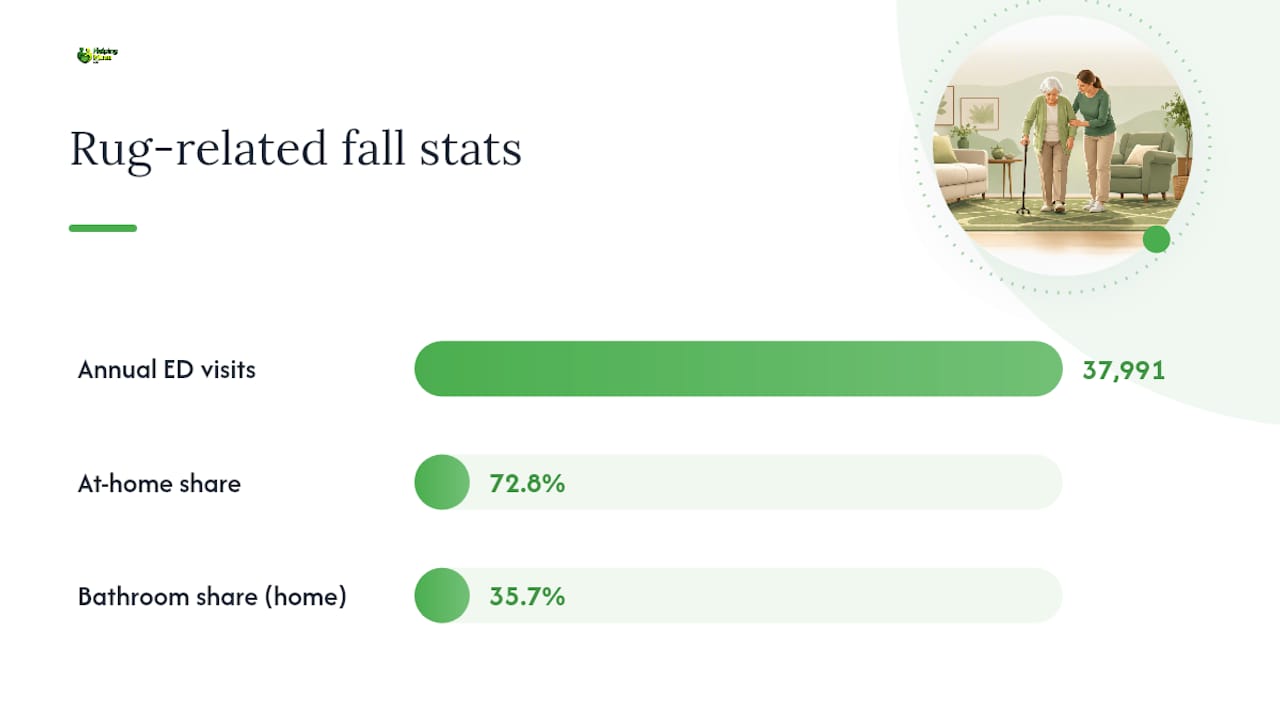
That bathroom number tends to surprise people. Most caregivers picture a loose rug in a hallway as the main threat, but the data says the highest-risk moment is often a quick trip to the toilet on a wet floor.
The same research identified a handful of recurring circumstances behind these falls, and they show up again and again:
- Transitions between a rug or carpet and a bare floor, where a small change in height or friction catches a foot.
- Wet rugs, especially bath mats that have absorbed water and become slick or bunched.
- Hurried movement, particularly rushing to the bathroom during the night or after waking from a nap.
- Loose throw rugs that shift underfoot the moment weight is placed on them.
It's also worth knowing that throw rugs and curled edges aren't rare exceptions. Home hazard surveys have found loose throw rugs in a large share of homes and curled carpet edges in more than a third, which tells you this isn't a niche problem limited to a few unlucky households.
None of this means rugs alone cause falls in isolation, and it's worth being honest about that limit. Fall risk is rarely one factor. A rug becomes dangerous when it's paired with poor lighting, a medication side effect, weaker leg strength, or vision changes. That's why the strongest guidance treats environmental fixes like securing or removing rugs as one piece of a larger plan, ideally alongside an occupational therapist's input, strength work, and a medication review with a doctor.
How To Choose Safer Rugs for an Older Adult
The single rule that matters most: a rug is only as safe as its pile height, its grip, and its edges. Get those three things right and a rug can stay in the home without adding real risk.
Pile height guidance
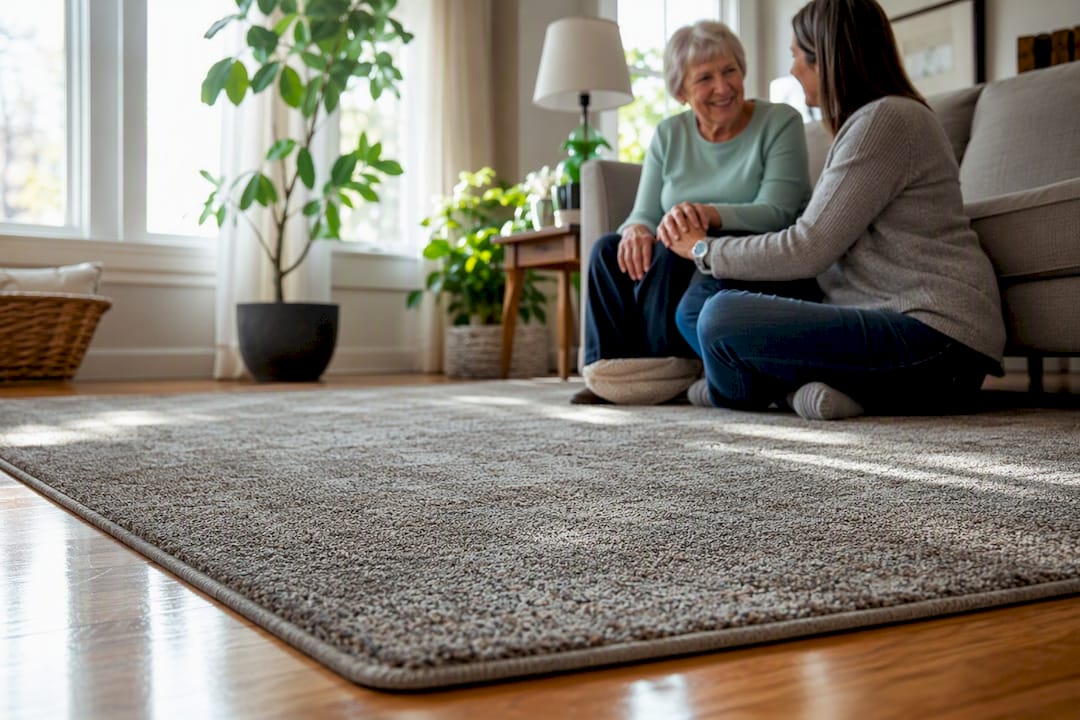
Pile height, essentially how thick or plush the rug is, has a direct effect on tripping risk. ADA-aligned accessibility guidance sets 1/2 inch as the maximum pile height for accessible routes. That's the outer limit, not the target. For a parent using a cane, walker, or simply moving more cautiously than they used to, many caregivers and safety guides recommend aiming lower, around 1/4 inch or less, for extra margin. The thicker the pile, the more it compresses unevenly underfoot and the more likely it is to catch the tip of a cane or the wheel of a walker.
Material tradeoffs
No single material wins on every measure, so match the choice to the room and the person.
- Flat-weave rugs grip well, clean easily, and rarely bunch. They're a strong default choice for living rooms and hallways.
- Wool, low-pile rugs offer warmth and durability but can be pricier and need more regular cleaning to keep the backing performing well.
- Synthetic low-pile rugs (polypropylene, nylon blends) tend to be the most budget-friendly and often come with integrated non-slip backing already built in.
Size and placement rules
Small throw rugs are the biggest offender in most homes, and the fix is often simple: eliminate them from high-traffic paths and transition points. Runners work well in hallways as long as they're anchored at both ends. Larger area rugs are safer when anchored by heavy furniture on at least two sides, since that weight keeps the edges from lifting. As a general guide, favor fewer, larger, well-secured rugs over several small, loose ones scattered across a floor.
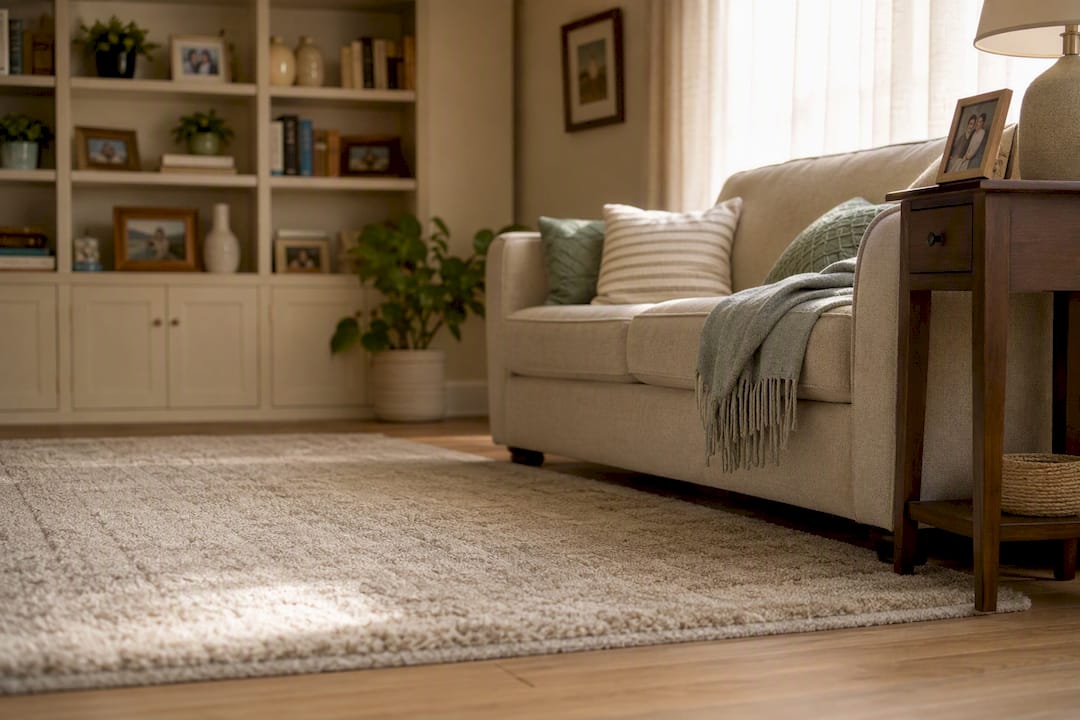
Pro Tip: If your parent has vision changes or memory loss, skip high-contrast borders and busy patterns. A dementia-sensitive rug with a solid, muted color and no strong pattern contrast is easier for aging eyes to read correctly, and it won't be mistaken for a step or a hole in the floor, which is a real and startling perception issue for some people with dementia.
How To Secure Rugs and Manage Transitions
For most smooth floors, the most reliable fix is a rug with integrated rubber backing, or a properly sized felt-and-rubber pad underneath a rug that lacks one. Tape alone is a reasonable stopgap, but a real pad holds up longer and performs better over time.
Here's how to install a pad correctly:
- Vacuum both the floor and the underside of the rug so dust and debris don't interfere with the pad's grip.
- Measure the rug and cut the pad about 1 inch smaller on all sides so it stays fully hidden underneath.
- Lay the pad flat, smoothing out any air bubbles or wrinkles before placing the rug on top.
- Press the rug down firmly along the edges and corners so the backing makes full contact with the pad.
- Test it by nudging each edge with your foot. If it shifts, add a strip of double-sided carpet tape at the corners.
A short list of what you'll want on hand:
- A felt-and-rubber rug pad sized to the rug
- Double-sided carpet tape or rug grippers for extra hold at corners
- Beveled threshold strips for spots where a rug meets bare floor
- A vacuum or broom for prep
Transitions deserve extra attention because they're where a lot of these falls happen. Even a small height difference between a rug's edge and the surrounding floor can be enough to catch a toe, especially in dim lighting. A beveled or tapered threshold strip smooths that height change out. For hallway runners or long stretches, professional-grade seam tape or mechanically fastened threshold strips tend to outlast standard consumer tape, though for most households a quality pad plus a periodic check every month or two is a practical, affordable middle ground. If a transition point sees frequent, hurried foot traffic, like the stretch between a bedroom and a bathroom, it's often simplest to remove the rug from that specific spot rather than trying to engineer around it.
Where Rugs Are Usually a Bad Idea and Safer Alternatives
Bathrooms, bedsides, and narrow transition points are the three zones where rugs cause the most trouble, largely because they combine moisture, low light, and rushed movement in one place. Standard non-slip backings and adhesive tapes also tend to lose their grip in humid bathroom conditions, which means a bath mat that felt secure when installed can slip within a few months.
A few realistic swaps work well in these spots:
- In bathrooms, choose a suction-backed or certified non-slip bath mat rated specifically for wet use, or consider slip-resistant flooring treatments instead of a fabric rug.
- Beside the bed, a low, wide fall mat with a non-skid base gives cushioning without the trip risk of a loose throw rug.
- In narrow hallways or at the top of stairs, bare floor with good lighting is often safer than any rug at all.
| Zone | Common rug hazard | Safer option |
|---|---|---|
| Bathroom | Wet, slick fabric that loses grip over time | Certified non-slip bath mat or textured flooring |
| Bedside | Loose throw rug caught during a nighttime rise | Low-profile fall mat with non-skid base |
| Hallway transitions | Height change catching a foot or cane tip | Bare floor with a beveled threshold, or a firmly anchored runner |
Maintenance: Keeping Rugs Safe and Knowing When To Replace Them
A simple rule of thumb covers most households: inspect rugs monthly, and replace one the moment its edges curl, its backing flakes, or it starts bunching even after you've re-secured it.
A quick monthly routine keeps small problems from becoming falls:
- Flip the rug and check the underside for dust buildup, which can reduce a pad's grip over time.
- Run a hand along every edge, feeling for curling or fraying.
- Confirm the pad or tape is still adhering fully, not just at the center.
- Wipe up any spills immediately and let the rug dry fully before it's walked on again.
Watch for a few specific warning signs that mean it's time to stop patching and start replacing: backing that's visibly separating from the fabric, edges that curl again within days of flattening them, stains that leave a slick residue even after cleaning, or a rug that keeps bunching no matter how well it's anchored. A basic rug pad runs a modest cost and takes minutes to install, while a full low-pile replacement rug is a bigger investment but often cheaper than repeated patch fixes over a year.
Pro Tip: Let a rug dry completely before laying it back down, and skip waxy or oil-based floor cleaners on the surface underneath. Those cleaners leave a film that keeps rubber backing from bonding properly, which quietly undoes all the securing work you just did.
A Home-Check Walkthrough You Can Do With Your Parent
The goal of a single walkthrough is simple: find and fix the highest-risk rug hazards in one visit, together, without turning it into a confrontation.
Here's a room-by-room approach that works well in practice:
- Start in the bedroom. Walk the exact path your parent takes to the bathroom at night, and note every rug edge or transition along the way.
- Move to the bathroom. Check the bath mat's grip by pressing on it with your full weight, and look for any dampness lingering underneath.
- Walk the main living area. Ask your parent to walk it too, at their normal pace, so you can see where they naturally hesitate or shuffle.
- Check the kitchen. Rugs near the sink or stove face the same wet-floor risk as bathrooms, so treat them the same way.
- Finish at the entryway, where wet shoes and quick, distracted movement often meet a loose mat.
Opening the conversation matters as much as the checklist itself. Try something like, "I want to walk through the house with you and just double-check a few things, nothing's wrong, I just want us both to feel good about it." That framing keeps the focus on partnership rather than correction.
If the walkthrough turns up issues beyond what tape and a pad can fix, an occupational therapist can help. Bring these questions to that visit:
- Which specific rooms or rugs pose the highest risk given my parent's current mobility?
- Would a home modification referral or a formal fall-risk assessment make sense here?
- Are there mobility aids, like a cane or walker, that change what "safe" pile height or rug placement looks like?
When Buying: Shopping Checklist and Typical Cost Ranges
The single most important purchase rule: buy low-profile rugs with integrated non-slip backing whenever one is available, rather than adding a separate pad as an afterthought.
Before buying, run through this checklist:
- Pile height at or under the 1/2 inch ADA-aligned maximum, ideally closer to 1/4 inch
- Integrated rubber or non-slip backing, not just a fabric weave
- Beveled or low-profile edges rather than a thick, raised border
- A clear return policy in case the grip or fit doesn't work in the room
- Washable or spot-cleanable instructions, since spills need fast cleanup
Typical cost ranges for common fixes run roughly like this: a rubber-based rug pad, low to moderate cost; adhesive carpet tape, a few dollars per roll; a basic low-pile runner, moderate cost; a full replacement low-pile area rug, moderate to higher cost depending on size. Across all of these, spend more on pad quality and correct installation and less on chasing plush, expensive fibers. A $15 pad installed correctly does more for rug safety for seniors than a $200 rug with no backing at all.
How Rug Changes Fit Into a Broader Fall-Prevention Plan
Rug fixes work best when they're paired with a few other proven steps, not treated as a complete solution on their own.
The National Council on Aging recommends environmental modifications as one part of a broader prevention strategy, alongside:
- Occupational therapist-led home modifications, which catch hazards a family member might miss
- Lower-body strength and balance programs, which address the physical side of fall risk
- Vision checks and a medication review, since certain prescriptions and uncorrected vision changes raise fall risk independent of anything in the home
If your parent has had a recent fall, a new balance complaint, or a diagnosis that affects mobility, that's a good moment to loop in a doctor or occupational therapist rather than relying on rug changes alone. Our guide on how to prevent falls at home for aging parents walks through how these pieces fit together.
Pro Tip: Sequence your changes. Fix the highest-risk rugs first, the ones in bathrooms, bedside paths, and transitions, then layer in a balance-strengthening routine over the following weeks. Trying to overhaul the whole house and start a new exercise program in the same weekend usually leads to neither one sticking.
Talking to Your Parent About Rugs Without a Fight
Picture this: you point out that the rug by your mom's reading chair needs to go, and she says, "I've had that rug for thirty years, nothing's ever happened." That reaction is normal, and pushing harder rarely helps.
A calmer approach usually starts with curiosity instead of correction: "I noticed that rug shifts a little when I walk on it, have you noticed that too?" That opens a conversation instead of issuing an order.
For a parent attached to a specific rug, offer a swap rather than a removal: "What if we found a rug you like just as much, but with a backing that won't slide?" For a parent resistant to any change at all, doing the walkthrough together, side by side, tends to land better than announcing a decision after the fact. And for a parent worried the house will look bare or clinical without certain rugs, remind them that a low-pile runner or flat-weave rug can look just as warm while doing its job better underfoot.
Small, collaborative steps tend to stick. A single removed rug this week, a pad installed next week, feels manageable in a way that a full weekend overhaul doesn't.
How Helping-mom Can Help
Reading through pile heights, pad measurements, and transition fixes is one thing. Walking your parent's actual home and knowing which three changes matter most is another, and that's where Helping-mom steps in.
Helping-mom offers in-person home safety assessments local to Central Florida, paid Zoom consultations for caregivers anywhere, and downloadable checklists you can use on your own timeline. Here's what a consult or in-person visit typically covers:
- A room-by-room walkthrough that flags the highest-risk rugs and transitions first
- A prioritized list of fixes, ranked by risk and effort, so you're not guessing where to start
- A simple shopping list matched to your parent's specific floors and mobility needs
- Installation guidance for pads, tape, and threshold strips, explained in plain language
If you'd rather start with a self-guided resource before booking anything, the practical guide to making home safer for seniors walks through the full home safety picture, rugs included, and points you toward next steps whenever you're ready for more hands-on help.
Sources
- Slipping and tripping: fall injuries in adults associated with rugs and carpets - PMC
- Falls prevention — National Council on Aging
FAQ
What are the safest rugs for seniors?
Low-pile rugs (1/4 inch or less) with integrated rubber backing and beveled edges are the safest choice, since they minimize both slipping and toe-catching risk.
Should elderly people have rugs at all?
Rugs can stay in the home safely as long as they're low profile, properly secured, and kept out of bathrooms, bedside paths, and narrow transition zones where most rug-related falls happen.
What's safer for seniors, carpet or hardwood floors?
Neither is automatically safer. Wall-to-wall low-pile carpet reduces transition hazards but can trap moisture, while hardwood is easy to clean but riskier without slip-resistant rugs or mats in key spots. The safest setup usually combines a stable, low-pile surface with good lighting and secured mats at bathroom and bedside points.
How often should rugs be inspected for safety?
Check rugs monthly for curled edges, worn backing, or shifting, and inspect more often in bathrooms and kitchens where moisture speeds up wear.
Can Helping-mom assess rug safety in my parent's home?
Yes. Helping-mom offers in-person home safety assessments in Central Florida and Zoom consultations for caregivers anywhere, both of which include a prioritized, room-specific rug and fall-prevention plan.