
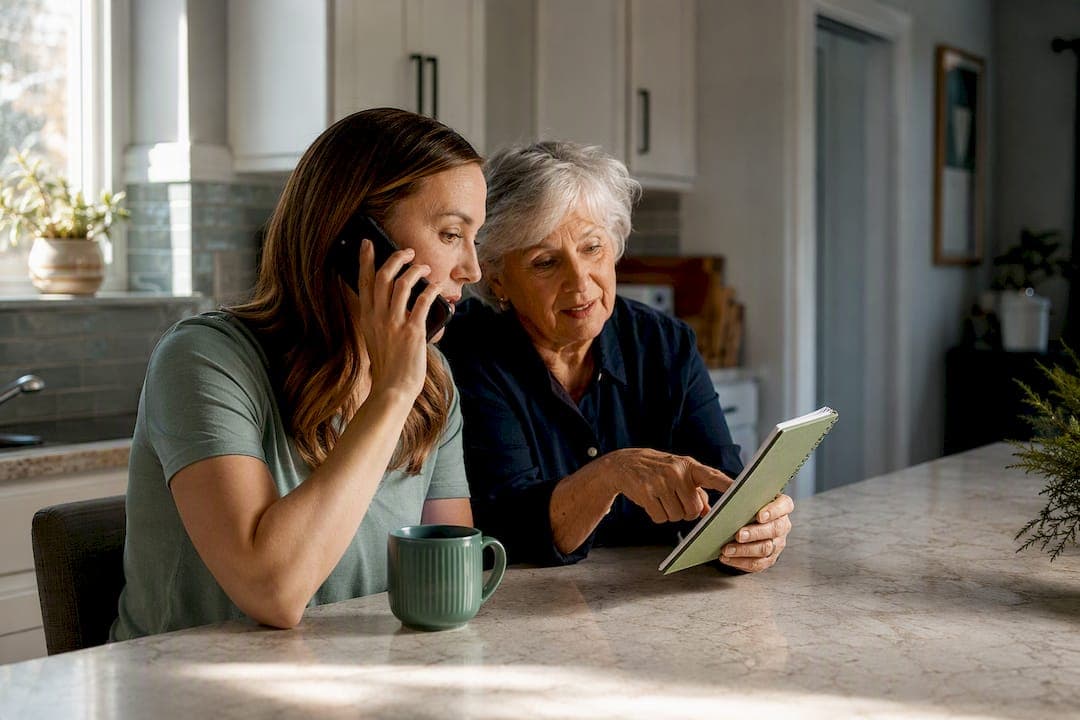
Senior resources in Orlando, in the sense that matters most right now, means practical, non-medical caregiving support: home safety guides, checklists, and virtual or in-person consultations that help you protect your parent without a medical background. Your single best first move is one of two things: start a room-by-room safety checklist tonight, or call the Eldercare Locator at 1-800-677-1116 to reach your parent's local Area Agency on Aging. Both are free, and either one moves you from worrying to actually doing something.
TL;DR:
- The Eldercare Locator is the primary free resource for connecting families to local senior support services, including safety assessments and transportation help.
- Home safety checks should prioritize the bathroom and bedroom-to-bathroom path, with simple fixes like grab bars and lighting made within a few weekends or less.
- Caregiver support, including respite care and adult day programs, prevents burnout and should be arranged before a crisis occurs, not afterward.
- Gathering essential documents such as medication lists, Power of Attorney, and advance directives in a physical and digital folder is crucial for emergencies and legal clarity.
- Regularly revisit safety assessments annually or after health changes since fall risks and home hazards often evolve over time.
Table of Contents
- What Senior Resources Actually Help Right Now?
- How Do You Do a Room-by-Room Safety Check?
- What Keeps Caregivers From Burning Out?
- What Documents Should You Gather First?
- How Do You Actually Reach These Resources?
- Where Can Orlando Families Find Local Senior Support?
- What Transportation Options Exist for Orlando Seniors?
- What Social Programs Keep Orlando Seniors Connected?
- What Financial Assistance Is Available to Orlando Seniors?
- Where Can You Find Elder Rights and Legal Aid Help?
- A Two-Week Plan That Actually Works
- How Helping Mom Can Support Your Next Step
- Sources
- FAQ
What Senior Resources Actually Help Right Now?
You don't need to solve everything this week. You need the right two or three resources, used in the right order.
Start with the Eldercare Locator, run by the federal Administration for Community Living. It's a free national service that connects you to your parent's local Area Agency on Aging, which can arrange in-home safety assessments, respite referrals, and transportation help. Call 1-800-677-1116 or search the site. Think of it as the front door to nearly every local support your parent qualifies for, without you having to hunt down twelve different phone numbers yourself.
Next, get eyes on the house itself. A home-safety assessment, whether that's you walking through with a printed checklist or a professional doing it over video or in person, tells you exactly where the real risks are instead of where you assume they are. Many families guess wrong about which room is dangerous. The data usually says otherwise.
Then look at caregiver supports: respite care, adult day programs, and support groups exist specifically so you don't burn out trying to do this alone. Waiting until you're exhausted to look these up is the most common mistake caregivers make.
Finally, gather the paperwork basics: a current medication list, Power of Attorney, and an advance directive. None of this requires a lawyer's office visit to start.
- Eldercare Locator / Area Agency on Aging — your best single connector for local services
- Home-safety assessment (virtual or in-person) plus a printable room-by-room checklist
- Caregiver supports — respite care, adult day programs, support groups
- Legal and administrative basics — medication list, POA, advance directive
Each of these solves a different problem. Together, they cover almost everything a family asks us about in the first few months.
How Do You Do a Room-by-Room Safety Check?
The bathroom and the path from the bedroom to the bathroom deserve your attention first. The National Institute on Aging points to these two spots as the highest-priority areas for preventing falls, and it's not hard to see why: wet floors, low lighting, and a groggy 2 a.m. walk are a rough combination. Falls are a common risk for adults over 65, so the CDC recommends a home-safety assessment that typically takes a moderate amount of time, repeated annually or after any major health change.
Here's a practical order to work through the house:
- Bathroom first. Add grab bars near the toilet and shower, a non-slip mat, and a raised toilet seat if needed.
- Bedroom-to-bathroom path. Clear clutter, add a nightlight or motion-sensor light, and secure or remove any throw rugs.
- Living areas. Widen walking paths, tape down loose cords, and check that frequently used items are within easy reach.
- Stairs and entrances. Confirm handrails are sturdy on both sides and that outdoor steps have good lighting.
- Kitchen. Move everyday items to waist-level shelves so nobody's climbing on a stool.
A room-by-room checklist from AOTA and Rebuilding Together walks through exactly this kind of prioritized list, with specifics like beveled thresholds and improved lighting that are easy to miss on your own.
Some fixes are weekend projects: grab bars, rugs, bulbs, nightlights. Others, like a walk-in shower conversion or stair lift, are bigger and worth getting a written quote before committing. Walk through with your phone, snap photos of anything that worries you, and write it down. Then pick a two-week window to knock out the easy fixes first.
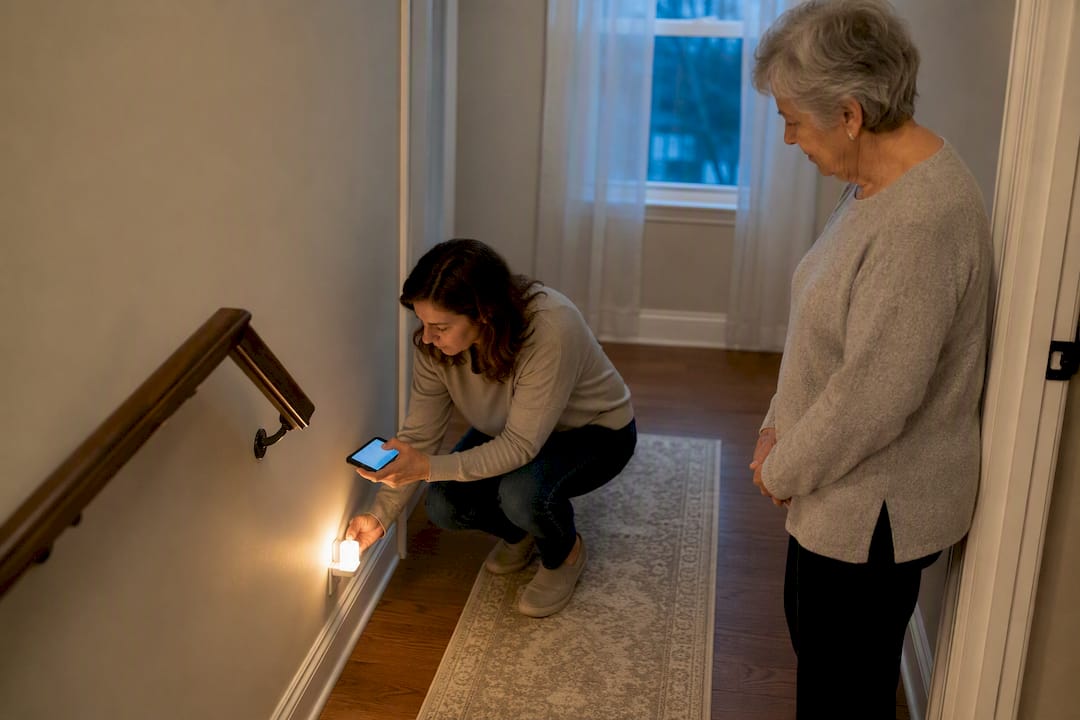
Pro Tip: Don't try to fix everything in one weekend. Pick the bathroom and the nighttime path first, finish those, and let the momentum carry you into the next room.
What Keeps Caregivers From Burning Out?
The most common mistake we see is waiting for a crisis, a fall, a hospital stay, a scary phone call, before putting any support in place. By then you're making decisions exhausted and scared instead of calmly and ahead of time. Building in support early is what actually makes caregiving sustainable over the months and years ahead, not a heroic solo effort that eventually cracks.
A few concrete supports make a real difference:
- Respite care, even a few hours a week, gives you a break without guilt.
- Adult day programs give your parent structured social time while you get things done.
- Scheduled help from siblings or family friends, even just one afternoon a week, prevents the "it's all on me" spiral.
- Support groups, in person or online, remind you that what you're feeling is normal.
Simple routines help too. Keep a centralized info binder with medications, doctor names, and insurance details. Do a five-minute weekly check-in with your parent, even by phone, so small problems surface before they become big ones.
Pro Tip: If you've said "I'm fine, I've got this" three weeks in a row and you're not sure it's true, that's usually the sign it's time to accept paid help or a professional assessment, not push through another month.
What Documents Should You Gather First?
You don't need a filing cabinet. You need a handful of documents that matter most in an emergency or a doctor's visit.
- Current medication list, including dosages and prescribing doctors
- Insurance cards and Medicare or Medicaid information
- Pharmacy name and contact info
- Power of Attorney, so someone can legally act on your parent's behalf
- Advance directive, spelling out care wishes
- HIPAA release, so doctors can talk to you directly
- Emergency contact list, including neighbors, not just family
CaringInfo offers free templates for advance directives and other end-of-life planning documents, which saves you from starting these from a blank page. Store copies in a physical binder kept somewhere obvious, like the kitchen counter, and also in a shared digital folder every sibling or trusted family member can access. Redundancy here isn't overkill. It's the whole point.
How Do You Actually Reach These Resources?
Knowing a resource exists and knowing how to use it are two different things. Here's the practical path:
- Call the Eldercare Locator at 1-800-677-1116 or visit Eldercare. Ask specifically for a local in-home safety assessment and respite care referrals; naming what you want speeds things up considerably.
- Check CaringInfo and the Caregiver Action Network's Family Caregiver Toolbox for document templates and broader caregiver support resources.
- When booking any assessment, ask three questions: How long will it take? Is there a cost? Will I get written recommendations afterward, not just verbal suggestions?
That last question matters more than people expect. A verbal walkthrough fades from memory within days. A written list of specific fixes is something you can actually act on.
Where Can Orlando Families Find Local Senior Support?
Central Florida has a genuinely strong network of aging services, and the trick is knowing which door to knock on first. The Area Agency on Aging that serves Orange, Seminole, Osceola, Lake, and surrounding counties can connect you to case management, in-home services, and benefits counseling, and reaching them starts with that same Eldercare Locator call.
Beyond the AAA, most Central Florida counties run a senior services division through county government, often handling things like home-delivered meals, minor home repairs, and utility assistance programs. Local senior centers, community centers, and faith-based organizations frequently host benefits counseling days or host visiting AAA staff for one-on-one appointments, which can save you a lot of phone tag.
If your parent is a veteran, the regional VA benefits office is worth a separate call. Veterans often qualify for home-safety modifications, in-home aide programs, or Aid and Attendance benefits that aren't available through general aging services. It's a different intake process entirely, so don't assume the AAA has already checked that box for you.
The common thread across all of these: nobody expects you to know the org chart. Call one number, ask what your parent qualifies for, and let the intake staff route you from there.
What Transportation Options Exist for Orlando Seniors?
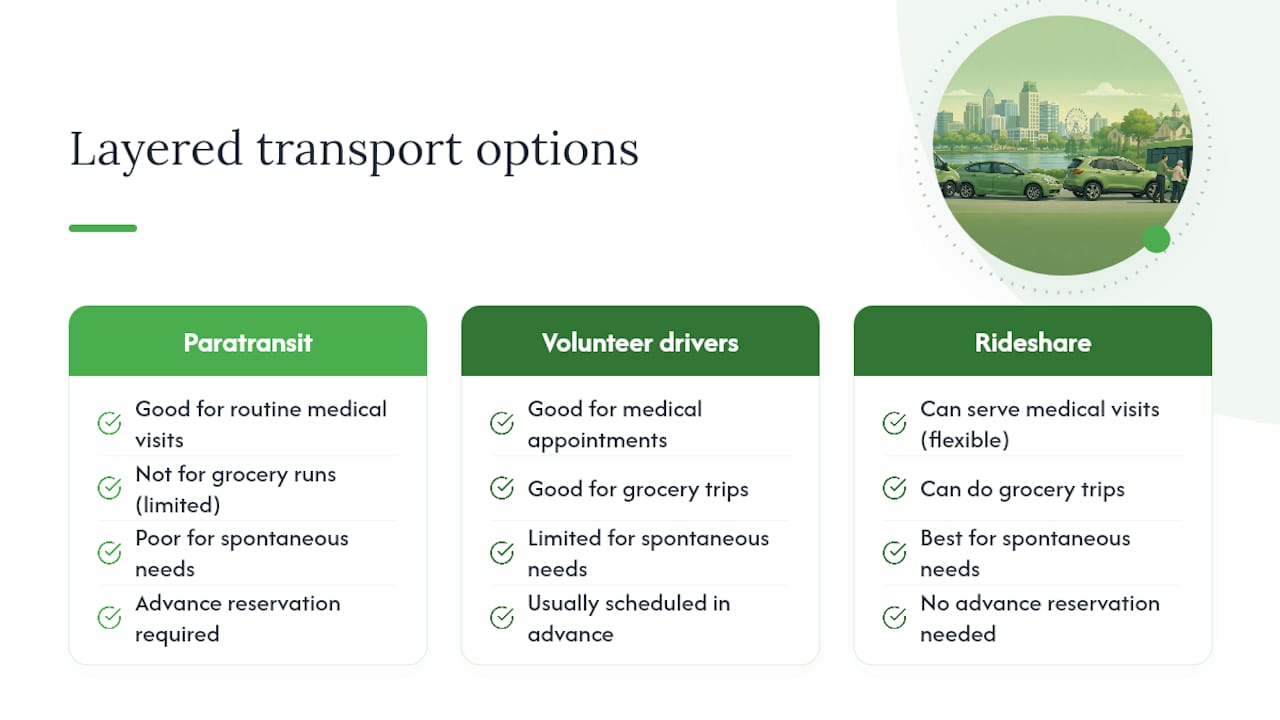
Giving up driving is one of the hardest conversations families have, and it helps enormously to already know what comes next before you have it. Central Florida's public transit system, LYNX, offers ADA paratransit service for residents who can't use regular bus routes due to a disability or age-related limitation, with door-to-door pickup by advance reservation.
Beyond public transit, many Area Agencies on Aging contract with volunteer driver programs specifically for medical appointments and grocery runs, often at no cost or a small suggested donation. Some senior centers run their own shuttle service to and from their own programs, which solves the transportation problem and the isolation problem in one trip.
Rideshare services like Uber and Lyft also work for families who want more flexibility, though they require either the parent or a family member managing the app. A few AAAs now partner directly with rideshare companies to offer subsidized rides for medical appointments, so it's worth asking about specifically when you call.
The best approach is usually layered: reserve paratransit or a volunteer driver for routine medical visits, keep rideshare as the backup for spontaneous needs, and treat the conversation about giving up the car keys as a transition, not a single hard cutoff.
What Social Programs Keep Orlando Seniors Connected?
Isolation is one of the quieter risks in aging, and it's often easier to fix than people assume. Orlando and the surrounding counties run an active network of senior centers offering everything from fitness classes and card games to art workshops and day trips, usually at low or no cost to residents.
Many of these centers also host educational programs on topics like nutrition, fall prevention, and technology basics, which double as a natural way to meet neighbors going through the same life stage. Faith communities across Central Florida frequently run their own senior fellowship groups and meal programs, which can be a comfortable entry point for a parent who's hesitant about a formal "senior center."
If mobility or transportation is the barrier keeping your parent from these programs, ask the center directly about pickup options. Quite a few coordinate rides for members, precisely because they know transportation is the biggest reason people stop coming.
Encouraging participation doesn't need to be a big production. Suggesting one specific class on one specific day, rather than a vague "you should get out more," tends to work far better.
What Financial Assistance Is Available to Orlando Seniors?
Money worries compound every other caregiving stress, so it's worth knowing what's actually available before assuming there's nothing. The Area Agency on Aging can screen your parent for benefits like SNAP (food assistance), utility bill assistance, and property tax exemptions available to Florida seniors, many of which go unclaimed simply because nobody applied.
Medicaid's home and community-based services waiver programs can help cover in-home care costs for seniors who qualify financially and medically, potentially delaying or preventing the need for a nursing facility. The application process takes time, so starting the paperwork early, well before it's urgently needed, saves real stress later.
Veterans and their surviving spouses should also ask about VA Aid and Attendance, a benefit that can help pay for in-home care or assisted living costs and is separate from standard VA disability compensation. It's underused largely because families don't know it exists.
Local nonprofits and community foundations in Central Florida sometimes offer emergency grants for home repairs or medical equipment as well. None of these programs replace careful budgeting, but together they can meaningfully soften the financial load of caregiving.
Where Can You Find Elder Rights and Legal Aid Help?
Elder financial abuse and legal disputes are more common than most families expect, and knowing where to turn before a problem arises makes a real difference. Florida's Department of Elder Affairs oversees an Ombudsman Program, which investigates complaints about care facilities and advocates for residents' rights.
For legal questions around guardianship, Power of Attorney disputes, or suspected financial exploitation, local legal aid organizations in Central Florida often provide free or low-cost consultations to seniors and their families, income limits permitting. Adult Protective Services, reachable through the Florida Department of Children and Families, investigates suspected abuse, neglect, or exploitation of vulnerable adults and can be reached at any hour for urgent concerns.
If your parent needs help drafting or updating a will, Power of Attorney, or advance directive, an elder law attorney is worth the consultation fee even when the situation feels straightforward. These documents are far easier to get right the first time than to untangle later during a health crisis. Local bar associations typically maintain referral services if you don't already have an attorney in mind.
A Two-Week Plan That Actually Works
Most families overthink this before they start and underthink it once they're in the middle of it. The families who make real progress don't try to fix everything at once. They pick a two-week window: one weekend for easy fixes like grab bars and better lighting, one afternoon for a single paperwork task like the advance directive, and one phone call to a support contact like the Eldercare Locator. That's it. Small, focused actions, done in sequence, prevent the crisis that panics everyone. You don't need a perfect plan. You need a next Tuesday with one task on it.
— Mike C.
How Helping Mom Can Support Your Next Step
You've got three honest paths forward, and which one fits depends on distance and urgency. If your parent lives nearby and you want a guided conversation about priorities without leaving your kitchen table, the Caregiving Clarity Session for $97 gives you a focused hour to sort out what actually needs attention first. If you're not local, or you simply want expert eyes on the home without scheduling travel, the Virtual Home Safety Consultations walk through every room over video and flag what matters most. And if your parent is in the Lakeland, Florida area, the In-Home Age-Safe Home Safety Assessments put someone in the house directly, checklist in hand, so you get a written list of fixes instead of a vague sense of worry. Whichever fits your situation, the next step is simple: pick one, and book it.
Sources
- AOTA / Rebuilding Together — Aging in Place safe-at-home checklist (PDF)
- Eldercare Locator — Administration for Community Living
- CaringInfo — National Hospice and Palliative Care Organization resource hub
- National Institute on Aging — Preventing falls in the home
FAQ
What Are Senior Resources in Orlando?
In this context, senior resources means non-medical caregiving tools: home-safety checklists, virtual or in-person safety consultations, and guidance on paperwork and caregiver support. These help adult children act quickly without needing a medical background.
How Do I Start an Aging-In-Place Safety Check?
Start with the bathroom and the path from the bedroom to the bathroom, since the National Institute on Aging identifies these as the highest-risk areas. A basic walk-through with a printed checklist takes around half an hour to an hour for most homes.
How Much Does a Home Safety Assessment Cost?
Helping Mom's In-Home Age-Safe Home Safety Assessments and Virtual Home Safety Consultations have pricing available directly on the booking page, and the Caregiving Clarity Session is a flat $97. Many Area Agencies on Aging also offer free or low-cost basic assessments.
Who Should I Call First for Senior Support?
Call the Eldercare Locator at 1-800-677-1116 or visit eldercare.acl.gov. It routes you to your parent's local Area Agency on Aging, which can arrange assessments, respite referrals, and transportation help.
How Often Should a Home Safety Assessment Be Repeated?
Repeat the assessment annually, or sooner after any fall, hospitalization, or major health change. The CDC notes that fall risk changes as mobility and health status shift, so a once-and-done checklist isn't enough over time.