

TL;DR:
- Solo adult children who care for aging parents often face emotional and physical strain without outside help. Building layered support systems, using assistive tools early, and practicing self-care can prevent burnout and ensure sustainable caregiving. Prioritizing legal planning and community resources helps manage responsibilities and protect both caregiver and parent.
Being a solo caregiving adult child means managing your aging parent's care entirely on your own, without siblings or a partner to share the load. Approximately 1 in 8 adults in the U.S. provides care for an aging parent, and a significant portion of those caregivers do it alone. The industry term for this role is "primary family caregiver," though the lived experience is far more complex than any label suggests. This guide covers the specific challenges solo caregivers face, how to build a support structure that actually holds, and practical ways to protect both your parent and yourself.
What challenges do solo caregiving adult children face?
Solo caregiving carries a weight that shared caregiving simply does not. When there are no siblings to call, no partner to hand off to, and no backup for a bad day, every decision and every task lands on you. Understanding what makes this role distinct is the first step toward managing it well.
The role expansion in caregiving is one of the most underacknowledged challenges. You are not reversing roles with your parent. You are adding an entirely new set of responsibilities on top of your existing identity as their child. Medical coordination, safety monitoring, financial oversight, and daily personal care all become yours to manage. Grief is a normal part of this shift, and it often arrives quietly, long before any formal diagnosis.
The emotional burden compounds quickly for an adult child caregiver working alone:
- Guilt for not doing enough, even when you are doing everything
- Grief over watching your parent change
- Compassion fatigue, which is the emotional exhaustion that comes from sustained caregiving without recovery time
- Isolation, because friends and colleagues rarely understand the full scope of what you are carrying
- Decision fatigue, from making dozens of care-related choices every single day
Relying on a single caregiver for 100% of care is a leading cause of burnout. That is not a personal failing. It is a structural problem that requires a structural solution.
Pro Tip: Keep a simple weekly log of your caregiving hours. Most solo caregivers dramatically underestimate how much time they spend. Seeing the real number helps you make the case for outside help, to yourself and to others.
How can solo caregivers create a sustainable support system?
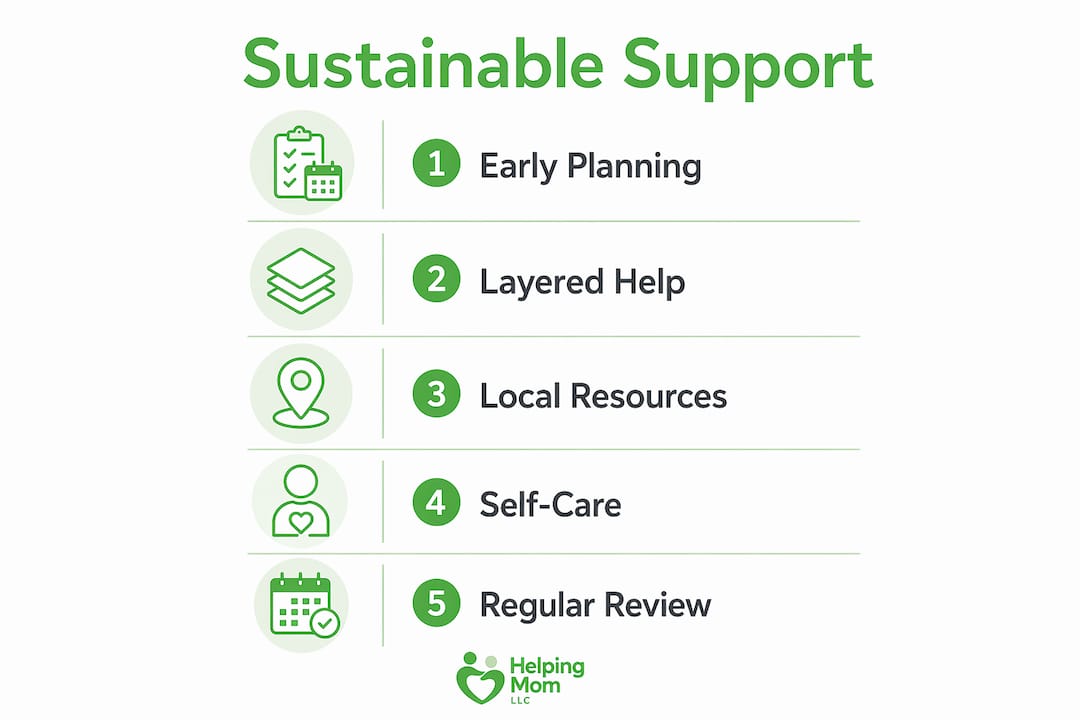
A sustainable support system does not mean finding one perfect solution. It means layering several smaller ones so that no single point of failure can collapse your entire caregiving structure.
Start by mapping what you actually need help with. Be specific. "Help with Mom" is too vague to delegate. "Someone to drive her to her Tuesday appointments" is something a neighbor, a volunteer driver program, or a paid aide can actually do.
Here are the core layers of a strong support system for solo caregivers:
-
Community resources. Local Area Agencies on Aging are a practical starting point. They connect you with meal delivery, transportation, and in-home aide programs. Many also offer Lifespan Respite grants that can fund 4–8 hours per week of paid home care, even if your parent does not qualify for Medicaid. That is real, funded relief you may not know exists.
-
Professional care advisory services. These services match you with vetted home care providers. Professional care advisory platforms report a 95% success rate in matching solo caregivers with appropriate support. That figure reflects how much easier the search becomes when someone guides it.
-
Remote monitoring technology. Medical alert systems, motion sensors, and medication reminder apps reduce the number of times you need to be physically present. They also give you peace of mind during the hours you cannot be there.
-
Advance legal planning. Updated legal documents like a power of attorney and healthcare directive remove impossible choices during emergencies. Getting these in place before a crisis is one of the most practical things you can do. Helping-mom's elder care planning guide walks through exactly what to prepare and when.
-
A defined backup plan. Identify at least one person who can step in for 24–48 hours if you get sick or face an emergency. This does not need to be a family member. A neighbor, a faith community contact, or a paid respite care provider all count. Care plans must include predefined backup coverage to avoid crisis scrambling.
Pro Tip: Call your local Area Agency on Aging before you think you need it. Getting on their radar early means faster access to programs when your needs increase.
What daily strategies help you balance care and personal well-being?
Good daily habits protect you from the slow erosion that solo caregiving can cause. The goal is not perfection. The goal is a routine that is sustainable for months and years, not just weeks.

A shared digital calendar, such as Google Calendar, keeps medical appointments, medication schedules, and care tasks visible and organized. Color-coding by category takes about five minutes to set up and saves significant mental energy every week. Pair it with a simple aging parents checklist to track recurring tasks without relying on memory.
Assistive tools are not luxuries. Transfer belts, elevated toilet seats, and automated medication dispensers function as critical safety equipment for solo caregivers. A transfer belt protects both you and your parent during mobility assistance. An automated dispenser removes the daily stress of medication management. Early adoption of these tools reduces injury risk and physical strain before either becomes a crisis.
| Daily Task | Practical Tool or Approach |
|---|---|
| Medication management | Automated pill dispenser with reminder alerts |
| Appointment tracking | Shared digital calendar with color-coded categories |
| Grocery and supply orders | Recurring delivery subscriptions (Amazon, Instacart) |
| Mobility assistance | Transfer belt and grab bars in key areas |
| Home safety monitoring | Motion sensors or a medical alert wearable |
Setting realistic boundaries protects your mental health without compromising your parent's care. Decide in advance which tasks you will do yourself and which you will delegate or automate. Grocery delivery, for example, is a simple automation that reclaims several hours each week. Those hours matter.
How should solo caregivers handle burnout prevention?
Compassion fatigue is the clinical term for the emotional and physical exhaustion that builds when you give care continuously without adequate recovery. It is not the same as ordinary tiredness. Signs of compassion fatigue include emotional numbness, frequent physical illness, and a persistent sense of hopelessness. Recognizing these signs early is what separates a difficult season from a full breakdown.
"Caregiving is about building a support structure that limits burnout and protects caregiver health. No one can sustain care for another person without also caring for themselves."
The most effective burnout prevention strategies for an adult child caregiver are not complicated. They are simply easy to skip when you are busy:
- Use respite care regularly, not just in emergencies. Even a few hours each week creates meaningful recovery time.
- Join a caregiver support group. Peer connection with people who understand your specific situation reduces isolation faster than almost anything else.
- Talk openly with your parent's care team. Physicians and social workers can flag resources you do not know to ask for.
- Call the 988 Suicide and Crisis Lifeline if hopelessness becomes severe. This line is not only for suicidal crises. It supports anyone in acute emotional distress, including caregivers.
- Schedule one non-caregiving activity each week. Protect it the same way you protect a medical appointment.
Recognizing caregiver burnout early gives you options. Waiting until you are depleted removes them. Helping-mom's guide on reducing caregiver stress offers specific, calm steps you can take right now.
Key Takeaways
Solo caregiving adult children need layered support structures, daily systems, and consistent self-care to sustain care without burning out.
| Point | Details |
|---|---|
| Role expansion, not reversal | Caregiving adds new responsibilities alongside your existing identity as a child. |
| Build layered support | Combine community resources, professional services, and technology rather than relying on yourself alone. |
| Use assistive tools early | Transfer belts, medication dispensers, and monitoring devices reduce strain before injuries occur. |
| Recognize burnout signs | Emotional numbness and persistent illness signal compassion fatigue requiring immediate attention. |
| Plan legally before a crisis | Updated power of attorney and healthcare directives prevent impossible decisions during emergencies. |
What I've learned from watching solo caregivers get it right and wrong
The caregivers I see struggle most are not the ones with the hardest situations. They are the ones who waited too long to ask for help, convinced themselves that needing support meant failing their parent.
The caregivers who sustain this role well share one habit: they treat their own capacity as a resource that requires maintenance. They schedule respite. They use assistive tools before they are desperate. They make decisions with their parent using active listening, rather than making decisions for them. That distinction matters more than most people realize. A parent who feels consulted stays more cooperative and more trusting, which makes the daily work easier for everyone.
The hardest thing to accept in solo caregiving is that you cannot do it all, and you were never supposed to. The goal is not to be your parent's entire world. The goal is to be their most consistent advocate while building a structure around both of you that holds. If you are reading this and thinking about end-of-life planning as part of that structure, resources like Bravo Family Mortuary's articles offer calm, practical guidance on that piece of the picture too.
Start smaller than you think you need to. Get one thing in place this week. Then add another.
— Mike C.
Practical resources for adult children managing care alone
Helping-mom exists specifically for adult children in their 40s and 60s who are figuring out caregiving without a manual. If home safety is on your mind, the practical guide to making home safer for seniors covers the specific changes that reduce fall risk and support aging in place without requiring a renovation. For the emotional side of caregiving, the caregiver well-being resources offer grounded, non-clinical support for managing stress over the long term. Both are free, written for real caregivers, and built around the idea that small, steady steps are more sustainable than dramatic overhauls.
FAQ
What is a solo caregiving adult child?
A solo caregiving adult child is an adult who manages their aging parent's care without sibling or partner support. The role includes medical coordination, daily personal care, safety monitoring, and financial oversight.
How common is solo caregiving for aging parents?
1 in 8 adults in the U.S. provides care for an aging parent, and many do so as the sole family caregiver.
What are the first signs of caregiver burnout?
Emotional numbness, frequent illness, and a persistent sense of hopelessness are the primary signs of compassion fatigue. Seeking support early, including calling the 988 Suicide and Crisis Lifeline, prevents these from worsening.
Where can solo caregivers find free or low-cost help?
Local Area Agencies on Aging offer Lifespan Respite grants that can fund 4–8 hours per week of paid home care, even without Medicaid eligibility. Caregiver support groups and community volunteer programs are also widely available at no cost.
What legal documents should solo caregivers prioritize?
A durable power of attorney and a healthcare directive are the two most critical documents. Having both in place before a health crisis removes the burden of making irreversible decisions under pressure.
Recommended
- The Role of Caregivers: Practical Support for Adult Children Caring for Aging Parents | Helping Mom LLC
- Caregiving Guides for Aging Parents | Helping Mom LLC
- How to Support Aging Parents: Practical Steps for Families | Helping Mom LLC
- How to Find Caregiver Support: Practical Steps for Adult Children | Helping Mom LLC