
TL;DR:
- Installing handrails on both sides of the stairs significantly reduces fall risk for seniors. Adequate lighting, non-slip surfaces, clutter-free stairs, and safe habits further enhance stair safety. Regular professional assessments and medication reviews help identify when stairs become unsafe to navigate.
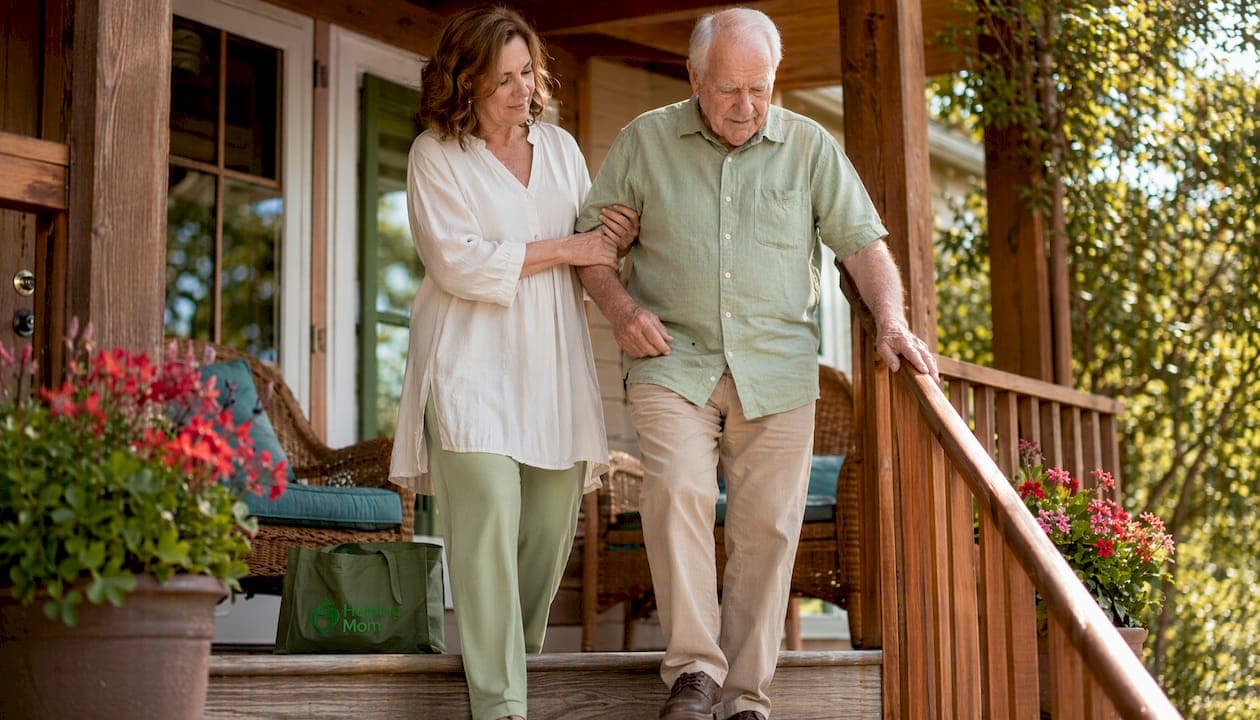
Stair safety for seniors is best achieved by combining structural modifications with consistent safe-use habits, and the single highest-impact change you can make is installing handrails on both sides of the staircase. Falls on stairs are often linked to modifiable factors like home environment and medications, not inevitable aging. That means most stair-related risks are within your control as a caregiver. The steps below cover everything from handrail specs to lighting, non-slip surfaces, and daily habits, giving you a clear, practical path to reducing fall risk for your parent without turning their home into an obstacle course.
1. Install handrails on both sides of the stairs
Installing a second handrail on the opposite wall is the highest-impact stair modification you can make for an aging parent. CDC data shows most senior falls occur when only one handrail is available. A second rail means your parent can grip with both hands, which is especially important when one side is weaker or when carrying something small.
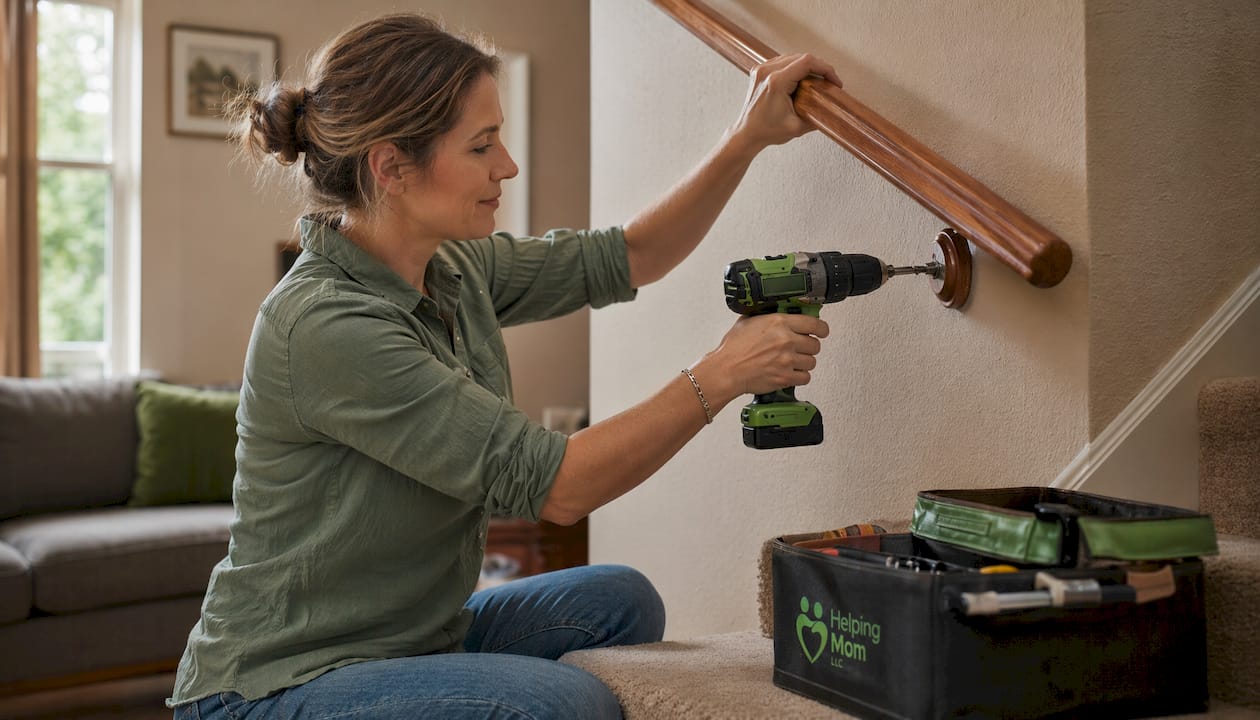
Building safety guidelines recommend handrails be mounted at 34–38 inches high, run continuously along the full staircase, and extend 12 inches past both the top and bottom treads. Those extensions matter because most misjudgments happen at the transition points, where the surface level changes and the body needs extra support.
The design of the rail itself also affects safety. The ideal handrail profile is a 1.25–2 inch diameter round or oval shape. Decorative square or ornate railings often fail this standard and provide poor grip in an emergency.
- Mount rails directly into wall studs or structural framing
- Confirm the rail can withstand a 200-pound pull load; drywall anchors alone are not safe
- Choose a round or oval profile, not flat or decorative
- Extend rails 12 inches past the top and bottom steps
- Keep the surface smooth but not slippery; avoid painted metal without texture
Pro Tip: Modular handrail kits are available at most home improvement stores and cost around $55 per linear foot installed. They are designed for DIY installation and come with stud-finding hardware, making them a practical starting point before calling a contractor.
2. Improve lighting at every step
Adequate lighting is the second most important factor in preventing stair falls. Every step edge must be clearly visible, from top to bottom, in both directions. A single overhead bulb at the top of the stairs is not enough. Shadows on lower steps are a common cause of misjudgment, even when a light is technically on.
Occupational therapists identify lighting gaps as one of the most overlooked stair hazards during home assessments. The fix is often simple but requires deliberate placement.
- Install bright bulbs with a minimum of 800 lumens in stairwell fixtures
- Add motion-sensor lights that activate automatically, especially at night
- Place step-level LED strip lighting along the wall at tread height for direct illumination
- Install light switches at both the top and bottom of the stairs
- Use bulbs with a warm white color temperature (2700–3000K) for better contrast without glare
Visual contrast also plays a real role. Painting or taping step edges in a contrasting color helps your parent's eyes register the depth change between steps. Colored non-slip strips serve double duty: they improve grip and mark the edge of each tread clearly.
Pro Tip: Walk the stairs yourself at night with the current lighting setup. If you hesitate on any step, your parent almost certainly does too. That hesitation is your signal to add step-level lighting or brighter bulbs.
3. Add non-slip surfaces to every tread
Smooth or worn stair surfaces are a direct slip hazard, and the risk is highest at the top and bottom steps. Stair transitions at the top and bottom are the most critical points for non-slip treatment because that is where misjudgments and surface changes combine.
Many seniors also experience reduced sensation in their feet due to neuropathy or circulation changes. This affects proprioception, which is the body's ability to sense where the foot is landing. Good traction compensates for that reduced feedback and gives your parent more confidence on each step.
Practical non-slip options include:
- Adhesive non-slip strips: Affordable, easy to apply, and effective on wood, tile, or painted stairs
- Carpet stair treads: Add cushion and grip; choose low-pile options that lie flat and won't shift
- Full stair carpeting: Provides consistent texture but requires regular inspection for loosening or fraying
- Contrast tape on step edges: Marks the tread edge visually and adds light grip
Inspect the stairs every few months for loose carpet, cracked treads, or peeling strips. A loose tread is more dangerous than a bare step because it creates an unexpected shift underfoot. Replacing a worn strip costs a few dollars. A fall costs far more.
4. Keep stairs clear and clutter-free
Objects left on stairs are a straightforward trip hazard, and they are more common in family homes than most caregivers realize. A single shoe, a folded blanket, or a stack of mail on a step can cause a fall in seconds. Establishing a household rule that nothing stays on the stairs is one of the simplest and most effective stair safety tips you can put in place today.
This rule matters most for seniors who may not notice small objects at their feet, especially in lower light or when fatigued. Peripheral vision and depth perception both decline with age, making floor-level objects harder to detect.
A few practical habits make a real difference:
- Designate a basket or shelf at the bottom of the stairs for items that need to go up
- Never leave items on individual steps, even temporarily
- Check the stairs as part of a daily walkthrough, especially in the evening
- Remove throw rugs at the top or bottom of the staircase entirely
This is also a good conversation to have with your parent directly. Framing it as a shared household habit rather than a safety rule tends to land better and gets more consistent follow-through.
5. Encourage safe stair habits every time
Physical modifications protect your parent, but habits protect them on every single trip. The most important habit is simple: always use the handrail, going up and going down, every time. Many falls happen on familiar stairs precisely because familiarity breeds inattention.
Encourage your parent to take one step at a time, pause if they feel dizzy or short of breath, and avoid carrying items that require both hands. A small bag or backpack keeps hands free for the rail. If your parent regularly carries laundry or groceries up the stairs, a lightweight tote with a shoulder strap is a practical fix.
Balance programs reduce falls by 23% in older adults. Mind-body exercises like tai chi and yoga are particularly effective because they build the slow, controlled movement that stair navigation requires. Even a short daily walk improves leg strength and coordination over time.
Pro Tip: Ask your parent's doctor to review their medications at least once a year. Some common prescriptions cause orthostatic hypotension, a drop in blood pressure when standing, which increases dizziness on stairs. A structured medication review can catch these interactions before they cause a fall.
6. Address medications that increase fall risk
Medications are one of the most underestimated contributors to stair falls. Structured medication reviews are a recognized intervention for reducing orthostatic hypotension and dizziness-related fall risk. Blood pressure medications, sleep aids, antihistamines, and some antidepressants all carry fall-related side effects.
The tricky part is that your parent may not connect their medication to their unsteadiness on stairs. They may describe it as "just feeling a little off" or attribute it to tiredness. That subtle shift in balance is worth flagging with their doctor.
Ask the prescribing physician or pharmacist to review the full medication list with fall risk in mind. This is a standard request and most providers welcome it. Falls among seniors are preventable when multiple risk factors, including medications, home environment, and physical fitness, are addressed together rather than in isolation.
7. Consider a professional home hazard assessment
A professional assessment gives you a complete picture of stair risks that you might miss on your own. Occupational therapists are preferred for detailed home hazard assessments because they evaluate the interaction between your parent's physical abilities and their specific home environment. That combination is something a checklist alone cannot replicate.
An occupational therapist will look at handrail placement, lighting levels, surface conditions, and your parent's gait and balance on the actual stairs. They can also recommend adaptive equipment, like a stair lift, if modifications alone are no longer sufficient. Medicare may cover occupational therapy at home under certain conditions, which makes this a realistic option for many families.
A fall risk assessment is also recommended after any significant fall or if your parent has had multiple near-misses. Clinical guidelines recommend comprehensive assessments when falls become a pattern, with exercise and activity guidance as primary follow-up interventions.
Key takeaways
Stair safety for seniors requires both structural changes and consistent habits, and no single fix is enough on its own.
| Point | Details |
|---|---|
| Handrails on both sides | Install a second rail at 34–38 inches high, mounted into studs, with a 1.25–2 inch round profile. |
| Lighting at every level | Use 800-lumen bulbs, step-level LEDs, and switches at both ends of the staircase. |
| Non-slip surfaces at transitions | Prioritize the top and bottom steps with adhesive strips or carpet treads. |
| Safe habits every trip | Always use the handrail, take one step at a time, and keep hands free of bulky items. |
| Medication and professional review | Review medications for fall-risk side effects and consider an occupational therapy assessment. |
What I've learned from watching families make these changes
The most common oversight I see is the single handrail. Families install one, check the box, and move on. But a second rail on the opposite wall is not a luxury. It is the modification that makes the biggest difference, and it is often skipped because the wall "looks fine" or the staircase is narrow.
The second thing I notice is that lighting improvements get underestimated. Families assume that because a light is on, the stairs are safe. Walk those stairs at night yourself. You will often find that the bottom three steps are in shadow, and that is exactly where falls happen.
What I find most encouraging is that these changes do not have to happen all at once. Start with the handrail. Add the lighting. Then work through the surface and habit changes over a few weeks. That pacing feels manageable for most families, and it respects your parent's sense of ownership over their home.
The harder conversation is knowing when stairs are no longer safe regardless of modifications. If your parent is hesitating at the top of the stairs, gripping the wall instead of the rail, or avoiding the second floor altogether, those are signals worth taking seriously. A stair lift is not a defeat. It is a practical tool that extends independence when the stairs themselves have become the barrier.
— Mike C.
Practical next steps for safer stairs at home
Helping-mom has put together a set of practical resources for caregivers who want to go beyond stair safety and look at the full picture of home safety for aging parents. The practical guide to making home safer covers modifications room by room, with clear guidance on what to prioritize first. If you are just getting started, the home safety for aging parents page gives you a grounded starting point without overwhelming detail. Both resources are written for adult children who want calm, real-world guidance they can actually use this week.
FAQ
What is the most effective stair modification for seniors?
Installing a second handrail on the opposite wall is the single highest-impact modification. CDC data shows most senior stair falls occur when only one handrail is available.
How high should stair handrails be for elderly adults?
Building safety guidelines recommend handrails be mounted at 34–38 inches high, running continuously with 12-inch extensions past the top and bottom treads.
What non-slip solutions work best on stairs?
Adhesive non-slip strips and carpet stair treads are the most practical options. Prioritize the top and bottom steps first, as those transitions carry the highest slip risk.
Can medications cause falls on stairs?
Yes. Blood pressure medications, sleep aids, and some antidepressants can cause dizziness or orthostatic hypotension. A structured medication review with a doctor or pharmacist can identify and reduce these risks.
When should a senior stop using stairs?
When physical modifications no longer provide confident, safe navigation, a stair lift or ground-floor living arrangement becomes the safer choice. An occupational therapist can help assess when that threshold has been reached.