

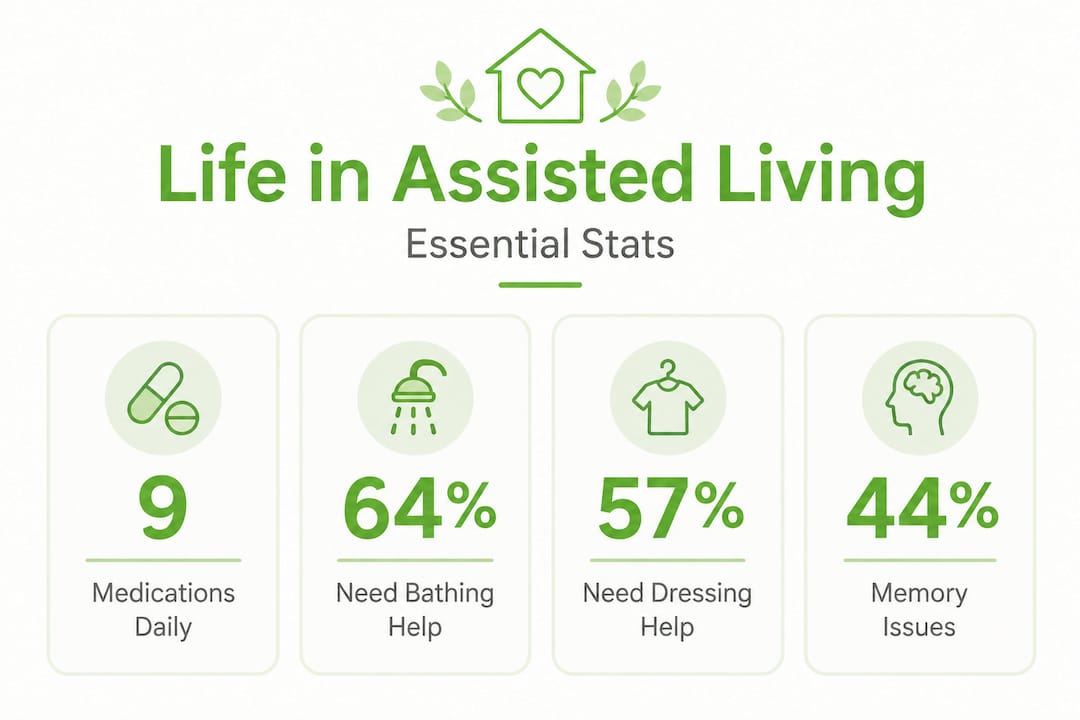
Many families picture assisted living as a last resort, a place you go when things have gotten very bad. But that picture is far from accurate. In reality, assisted living communities are designed to give older adults the support they need to keep living well, with help close by when they need it. Research benchmarks show that around 64% of residents need help with bathing and 57% with dressing, yet most continue to enjoy meaningful daily routines, social connections, and a real sense of purpose. This guide will help you understand what assisted living truly offers, so you can make decisions from a place of clarity rather than worry.
Table of Contents
- What is assisted living?
- Who benefits most from assisted living?
- Daily life and support in assisted living
- Key factors when considering assisted living for your parent
- The real truth families overlook about assisted living
- Helpful resources and next steps for your family
- Frequently asked questions
Key Takeaways
| Point | Details |
|---|---|
| Assisted living supports independence | Residents receive help with daily tasks while still enjoying autonomy and social connection. |
| Common needs addressed | Services cover bathing, dressing, medication management, and memory care for those with dementia. |
| Early decisions can improve outcomes | Choosing assisted living before a crisis leads to better physical, emotional, and safety results. |
| Physical activity impacts future care | Maintaining physical activity can reduce the risk of needing skilled nursing care sooner. |
What is assisted living?
Assisted living is a type of residential community designed for older adults who need some help with daily activities but do not require the intensive, around-the-clock medical care that a nursing home provides. Think of it as a middle ground: more support than living at home alone, but far more freedom and independence than a skilled nursing facility.
The goal of assisted living is not to take over someone's life. It is to fill in the gaps. A resident might need a hand getting dressed in the morning, a reminder to take their medications, or help navigating a shower safely. Beyond those moments of assistance, they are living their own life, making their own choices, and spending their days the way they prefer.
"Assisted living is about building a life, not simply managing one. It offers the support that makes independence possible for longer."
Most assisted living communities offer private or semi-private apartments, communal dining, planned social activities, transportation, and on-site staff available around the clock. Residents keep their personal belongings, decorate their own spaces, and set their own schedules as much as possible.
Here is a quick overview of how assisted living compares to other care options:
| Feature | Home care | Assisted living | Nursing home |
|---|---|---|---|
| Level of independence | High | Moderate to high | Low to moderate |
| Medical support | Limited | Moderate | Extensive |
| Social environment | Limited | Strong | Varies |
| On-site staff 24/7 | No | Yes | Yes |
| Personalized daily help | Scheduled visits | Ongoing, flexible | Full-time nursing care |
| Best for | Early support needs | Moderate daily help | Complex medical needs |
It is worth knowing that assisted living statistics show residents manage an average of 9 medications per day, and communities are set up to handle that level of complexity safely and consistently. That alone can be a major relief for families who have been trying to manage medication schedules from a distance.
The timing for assisted living is often the hardest part of the conversation. Most families wonder whether they are acting too soon or too late. Understanding what assisted living is, and what it actually provides, makes that conversation much easier to approach with confidence.
One often-overlooked area in senior care is oral care for seniors, which assisted living communities typically help residents maintain through daily routines and scheduled dental appointments. It is a small detail, but it speaks to the broader commitment these communities have to overall well-being, not just physical safety.
Key features most assisted living communities offer:
- Help with personal hygiene, bathing, and dressing
- Medication reminders and management support
- Nutritious meals served in a communal dining area
- Housekeeping, laundry, and maintenance
- Transportation to appointments and outings
- Social programming and recreational activities
- Emergency response systems in every room
- On-site staff available at all hours
Who benefits most from assisted living?
Now that we understand what assisted living provides, let's look at who actually benefits most from these services.
The short answer is that assisted living is best suited for older adults who need regular help with daily tasks but are not dealing with a serious, ongoing medical condition that requires constant clinical supervision. However, that covers a wide range of people, and the fit can look different from one family to the next.
Research data tells us that roughly 64% of assisted living residents need bathing assistance, 57% need help with dressing, and about 42% have some form of dementia. These numbers paint a picture of real people with real needs, not people who have "given up" on independence. They are individuals who have simply reached a point where some help makes life safer and more enjoyable.
Here is a comparison to help you think through whether assisted living, home care, or skilled nursing is the right fit:
| Care type | Best suited for | Level of daily help needed |
|---|---|---|
| Home care | Early support needs, strong family network | Occasional assistance with tasks |
| Assisted living | Regular help with daily activities, some memory concerns | Consistent help with ADLs and medications |
| Skilled nursing | Complex medical needs, post-hospital recovery | Around-the-clock clinical care |
If your parent is struggling with any combination of the following, assisted living may be worth exploring seriously:
- Falls or near-falls at home, especially more than once
- Difficulty managing medications reliably on their own
- Poor nutrition from skipping meals or not cooking safely
- Social isolation and withdrawal from activities they used to enjoy
- Signs of early memory loss or confusion that are affecting daily safety
- Family caregiver burnout, where the current arrangement is no longer sustainable
For families navigating memory concerns, it helps to understand the relationship between dementia and assisted living options, and to learn how to spot signs of dementia early so you are not playing catch-up later.
Pro Tip: When assessing your parent's needs, look at both their current situation and where things might be in 12 to 18 months. Assisted living works best when it is chosen based on present needs and realistic future expectations, not just crisis moments.
One important and encouraging finding from research is that physical activity plays a real role in outcomes. Residents who maintain better physical activity levels and physical performance tend to need less intensive care over time. That means encouraging your parent to stay active, whether at home now or in a future assisted living community, is genuinely worthwhile.
Daily life and support in assisted living
Understanding the people served by assisted living, let's explore what daily life is really like inside these communities.
For many families, the biggest fear is that their parent will feel lonely, bored, or stripped of dignity. The reality is often the opposite. A typical day in a well-run assisted living community is structured but flexible, social but not forced, and centered around the resident's preferences.

Mornings usually begin with personal care support. Staff assist residents with bathing, dressing, and grooming in a way that respects privacy and dignity. There is no rush, and the goal is always to help the resident do as much as they can on their own. Meals follow in a communal dining room where residents sit with neighbors and have real choices about what they eat.
What a typical assisted living day might include:
- Morning personal care assistance tailored to individual needs
- Breakfast in a communal dining area with menu choices
- Activities such as gentle exercise classes, arts and crafts, or group outings
- Medication reminders and management throughout the day
- Lunch and dinner with social time built in
- Afternoon programming including music, gardening, games, or spiritual activities
- Evening wind-down routines and overnight staff availability
For residents with dementia, many communities offer a dedicated memory care wing with specialized staff, secure environments, and programming designed specifically for cognitive support. If your parent is showing early signs of dementia, understanding what memory care looks like can be very reassuring. Purposeful memory care activities have been shown to reduce agitation and support emotional well-being.
On the medical side, residents managing an average of 9 medications per day benefit enormously from structured medication management. Missing doses or taking medications incorrectly at home is a common and serious risk. In assisted living, trained staff handle this consistently, which can prevent hospitalizations and keep residents healthier for longer.
Pro Tip: Stay involved even after your parent moves in. Visit regularly, join family meetings offered by the community, and communicate openly with staff. Families who stay engaged tend to notice positive changes faster and can advocate more effectively for their loved one's needs.
For families caring for a parent with dementia, knowing that trained staff are nearby around the clock provides a kind of peace that home care simply cannot always match.
Key factors when considering assisted living for your parent
Once the daily realities are clear, it is time to turn toward the key decision points and factors when considering assisted living.
This is where many families feel the most stuck. The idea of choosing a care community for your parent can feel overwhelming. But breaking it into clear steps makes it much more manageable.
- Observe current daily functioning. Notice what your parent can and cannot do safely on their own. Are they eating well? Managing their medications? Staying clean and comfortable? Getting out of the house?
- Have an honest family conversation. Bring siblings, spouses, or other involved family members into the discussion early. Disagreements are common, but alignment on the basics will help you move forward more smoothly.
- Talk with your parent directly. Include them in the conversation rather than making decisions around them. Many older adults feel relieved when the topic is raised openly and without pressure.
- Visit communities in person. No website or brochure can replace walking through a community, meeting staff, and sitting in on an activity. Go at different times of day if you can.
- Ask about physical activity programs. Research shows that better physical activity significantly lowers the risk of transferring to a skilled nursing facility. Communities that prioritize movement give residents a real advantage.
- Review financials and care agreements carefully. Understand exactly what is included in the monthly fee and what costs extra. Ask about how rates change if care needs increase.
If you are not sure whether assisted living is the right move yet, exploring the full range of options alongside the aging in place checklist can help you see the broader picture. You may also find the caregiving resources section helpful as you gather information and support for yourself during this process.
Pro Tip: Do not wait for a crisis to start this process. Families who begin exploring options early, even just researching and visiting a few communities, feel far more prepared and make calmer decisions when the time actually comes.
The real truth families overlook about assisted living
Here is something that rarely gets said directly: the families who wait the longest to consider assisted living are often the ones who struggle the most when a transition becomes unavoidable.
Guilt is at the center of most delays. Many adult children feel that placing a parent in assisted living means they have failed, or that they are abandoning someone they love. That feeling is real and deeply understandable. But it is also worth examining honestly.
Staying home longer is not always safer or better. Falls happen more often in unsupervised settings. Medications get missed. Isolation quietly takes a toll. And family caregivers, no matter how devoted, often reach a point of exhaustion that affects everyone involved. When a parent finally moves into assisted living after years of a difficult home situation, both the parent and the family are often surprised by how much better things feel.
What research consistently shows, and what experienced caregivers confirm, is that earlier transitions tend to produce better outcomes. Residents who move into assisted living while they still have some energy and social openness adapt far more easily than those who arrive in a crisis state. They make friends more quickly. They engage with activities. They settle in.
This journey with your aging parent is not about making a single, defining decision correctly. It is about walking alongside them, gathering information, and staying open to the kind of support that actually helps. Recognizing signs of dementia in elderly parents earlier, for example, opens more options rather than fewer.
Choosing assisted living is not a surrender. It is often one of the most caring and courageous things a family can do.
Helpful resources and next steps for your family
With new clarity about assisted living, here are concrete resources to help your family take the next step. At Helping Mom, we know that reading about assisted living is just the beginning. Actually moving forward, having conversations, evaluating your parent's home, and planning for future needs, takes practical tools you can trust.
Start with the elderly home safety checklist to assess whether your parent's current home is set up safely while you are still in the planning stage. If aging in place is still on the table, our guide to aging in place home safety walks you through the modifications and safeguards that can extend safe, independent living at home. These resources work together, because understanding your parent's home situation helps you see more clearly whether and when assisted living becomes the right next step. You do not have to figure this out alone.
Frequently asked questions
How is assisted living different from a nursing home?
Assisted living focuses on supporting independence and daily needs, while nursing homes provide intensive medical care for those with chronic or complex health conditions. Daily activity support rather than skilled nursing care is the defining distinction.
What kinds of daily support can my parent expect in assisted living?
Typical help includes bathing, dressing, and managing medications, along with meals, housekeeping, and social activities. 64% of residents need bathing help and 57% need dressing assistance, with an average of 9 medications managed per day.
Is assisted living right for someone with dementia?
Yes, many assisted living communities offer specialized memory care wings with trained staff and tailored programming. About 42% of residents in assisted living have some form of dementia, making it a common and well-supported situation.
Will my parent eventually need a nursing facility after assisted living?
It is possible and worth planning for. Research shows that 59% of residents eventually transition to skilled nursing care as their needs increase, though maintaining physical activity can help delay that transition.