
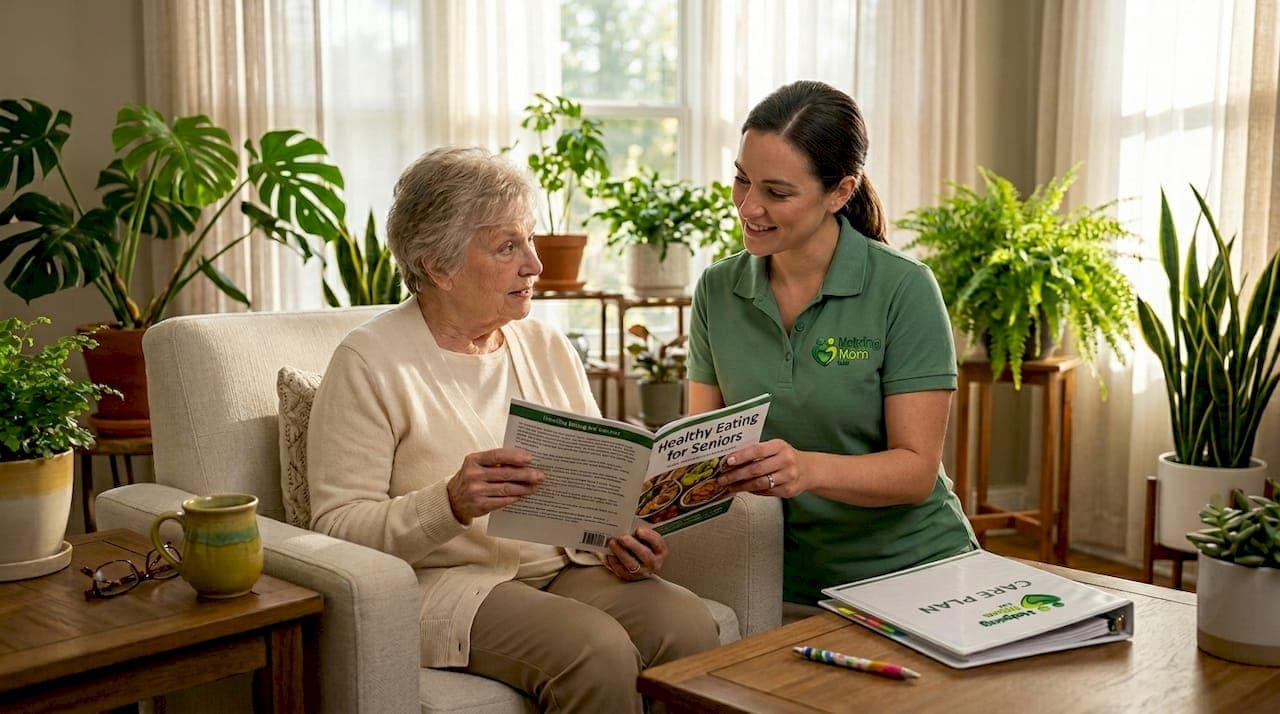
When a parent starts struggling with daily tasks, one of the first questions adult children ask is what is a home health aide and whether one could help. It's a fair question, and the answer is less complicated than it might seem. A home health aide is not a nurse, not a housekeeper, and not a companion in the casual sense. They occupy a specific, trained role that sits right at the intersection of personal care and basic health support. Understanding that role clearly is what helps you make confident decisions for your parent's safety and independence.
Table of Contents
- Key Takeaways
- What is a home health aide, exactly?
- Core duties of a home health aide
- Understanding scope and limits of HHA care
- When to consider hiring a home health aide
- My honest take on what families get wrong
- Resources to help you plan the next step
- FAQ
Key Takeaways
| Point | Details |
|---|---|
| HHAs are trained caregivers | They assist with personal care and health-related tasks but are not nurses or medical professionals. |
| Duties focus on daily living | Bathing, dressing, mobility support, and meal prep are core home health aide responsibilities. |
| Scope has clear limits | HHAs cannot administer medications or make clinical decisions; that remains the nurse's role. |
| Medicare coverage is conditional | Medicare only covers home health aide services when medical necessity and skilled care are also involved. |
| Hire based on function, not age | The right time to consider an aide is when daily tasks become unsafe, not simply when a parent turns a certain age. |
What is a home health aide, exactly?
A home health aide is a trained caregiver who provides hands-on personal care and basic health-related assistance, most often in a person's home. They help older adults, people recovering from illness or surgery, and those living with chronic conditions manage their daily lives with greater safety and dignity.
The training is real and regulated. Medicare-certified HHAs must complete at least 75 hours of training, including 16 hours of supervised practical work. Many states require more than the federal minimum. Indiana, for example, mandates additional training hours beyond what federal rules require, and this pattern of state-specific variation is common across the country.
Home health aides typically work in private homes, but they also work in assisted living facilities and adult day programs. They are not nurses. They don't diagnose, treat, or prescribe. What they do is provide consistent, physical, day-to-day support that makes it possible for a parent to stay safely at home.
Here is what the home health aide job description generally covers:
- Personal hygiene assistance (bathing, grooming, oral care)
- Help with dressing and undressing
- Mobility support, including transfers from bed to chair
- Toileting assistance
- Meal preparation tied to the client's care needs
- Light housekeeping directly related to client safety
- Monitoring and reporting changes in a client's condition
Pro Tip: When you're reading agency brochures, look for the phrase "activities of daily living" (ADLs). That phrase is the clearest signal you're reading an accurate home health aide job description, not a generic companion care listing.
Core duties of a home health aide
The duties of a home health aide center on helping a person stay clean, safe, nourished, and mobile at home. These are not small tasks. For a parent who can no longer manage them independently, they are the difference between living at home and moving to a facility.
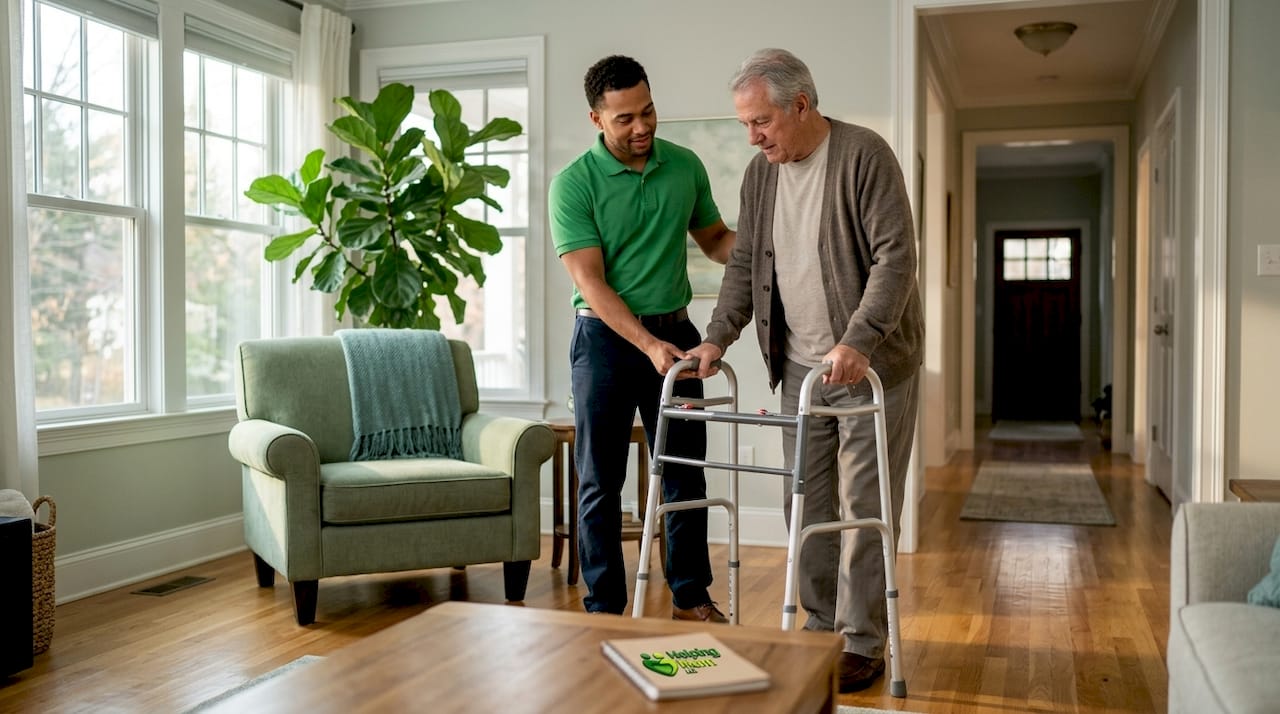
Personal care is the heart of the role. Bathing, dressing, grooming, and toileting require physical skill and sensitivity. A good aide handles these tasks in ways that protect dignity as much as they protect safety. Mobility assistance, including transferring a parent from bed to wheelchair or helping them walk to the bathroom, requires proper body mechanics to reduce the risk of falls for both the aide and the client.
Meal preparation is included, but with an important distinction. An HHA prepares meals based on a client's care needs, not as a general cooking service. If your parent has a dietary requirement related to their health condition, an HHA can follow those guidelines during meal prep.
Medication management is an area where families frequently misunderstand what aides can do. HHAs cannot administer medications or make clinical decisions about dosing. They can remind a client that it's time to take a pill. That distinction matters enormously when you're setting expectations.
One underappreciated part of the role is observation and reporting. Families often miss how valuable this is. When an aide notices that your parent seems more confused than usual, is eating less, or has new bruising, they report that to the supervising clinician. Those reports can prompt early medical interventions that prevent bigger problems down the road.
Pro Tip: Ask any aide you're considering about how they document and report changes. A good aide should be able to describe a clear, consistent process. Vague answers here are a warning sign.
Understanding scope and limits of HHA care
Understanding what a home health aide can and cannot do saves families real frustration. The role exists within a broader care team and has defined boundaries that protect both the client and the aide.
Here is a clear comparison of the most common caregiving roles families encounter:
| Role | Training level | Scope of care | Can give medications? |
|---|---|---|---|
| Home health aide (HHA) | 75+ hours (federally required) | Personal care, ADLs, health observation | No. Reminders only. |
| Personal care assistant (PCA) | Varies, often less than HHA | Personal care and homemaking | No. |
| Licensed practical nurse (LPN) | 1 year program, state licensed | Wound care, medications, monitoring | Yes. |
| Registered nurse (RN) | 2-4 year degree, state licensed | Full clinical care and care planning | Yes. |
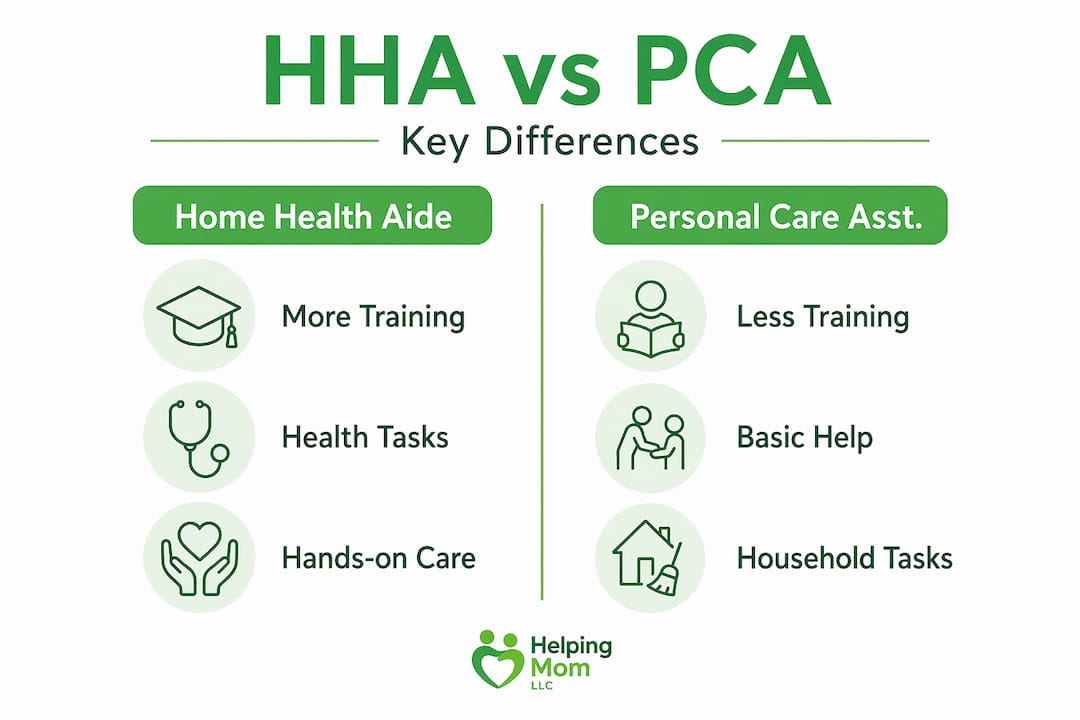
The difference between an HHA and a personal care assistant deserves attention. HHAs have higher training and can provide health-related observations and basic care under clinical supervision. A personal care assistant handles personal care and homemaking but with a more limited scope. Neither can perform nursing tasks.
Medicare's role in this picture is specific. Medicare home health aide services require medical necessity and are tied to larger certified home health services. Medicare will not pay for a standalone home health aide who simply helps with bathing. The aide's visits must be part of a care plan that also includes skilled nursing or therapy services. A physician order and a face-to-face meeting are required for Medicare certification of these services.
Medicare's home health authorization also has a time limit. Coverage is certified in 60-day periods and requires re-certification to continue. Families coordinating ongoing care need to track these windows carefully.
For long-term, ongoing personal care without a skilled nursing component, families typically pay out of pocket or use long-term care insurance. Understanding this structure early prevents surprises.
When to consider hiring a home health aide
The most common question families ask is not "what does an HHA do" but rather "when do we actually need one?" The honest answer is that timing should be based on functional decline and safety, not on your parent's age alone. A 78-year-old who manages independently may not need any help, while a 71-year-old recovering from a hip replacement may need significant support.
Watch for these specific signs that it may be time to explore home health aide services:
- Bathing has become difficult or is being skipped because of fear of falling or physical limitations.
- Your parent struggles with dressing due to pain, weakness, or cognitive changes.
- Toileting accidents are occurring because they can't get to the bathroom safely or quickly enough.
- Mobility around the home feels unsteady, and you've noticed near-falls or actual falls.
- Meals are being skipped or are nutritionally poor because preparation has become too hard.
- You've noticed changes in hygiene that suggest self-care is no longer manageable.
When you start interviewing aides or agencies, focus specifically on safe mobility and transfers. Ask how the aide would assist your parent from bed to a chair. Ask about their training in body mechanics. Falls are among the most serious risks for older adults at home, and an aide's physical technique directly affects that risk.
On the cost side, private duty care agencies vet their aides, handle payroll taxes, and carry liability insurance. They typically cost more than hiring independently, but that structure also reduces the administrative and legal responsibility on your family. For most families, especially those new to coordinating care, an agency is the more manageable starting point.
Pro Tip: Before your parent's first day with a new aide, walk through the home together and identify any safety concerns. This is also a good moment to use an aging in place checklist to catch things you might otherwise overlook.
My honest take on what families get wrong
I've seen families go into this process with two opposite problems. Some expect too much from a home health aide, assuming the person will handle cooking, housekeeping, and nursing-level care all at once. Others underestimate what a skilled HHA actually brings, treating the role as optional or as a last resort.
What I've found is that the families who get this right are the ones who treat the aide as a member of a team, not a solo solution. The aide observes your parent daily. That makes them one of the most valuable sources of real-time information you have. When I talk to adult children who feel disconnected from what's actually happening with their parent's health between doctor visits, I always ask: "Is anyone watching closely every day?" An HHA often is.
I also think families underestimate the emotional load that comes with supporting senior independence while also respecting a parent's dignity. A good aide does that naturally. A poor match makes it worse. Spending time observing how an aide interacts with your parent in the first few visits is not hovering. It's good care coordination.
The other thing worth saying plainly: setting clear expectations about what an HHA can and cannot do protects everyone. When families understand the HHA role from the start, frustration drops and the actual caregiving improves. That clarity is a gift you give yourself.
— Mike
Resources to help you plan the next step
At Helping-mom, we know that figuring out the right level of care for a parent is rarely just about one decision. Hiring a home health aide is one piece. Making the home safe enough to support that care is another. Our guide to making home safer for seniors walks you through the practical changes that reduce fall risk and support your parent's independence alongside any professional care they receive.
You'll also find our aging in place home safety guide helpful if you're thinking through longer-term planning. Both resources are written for adult children who want clear, calm guidance without being overwhelmed. If you're not sure where to start, the home safety checklist is a good first step you can complete in an afternoon.
FAQ
What does a home health aide do daily?
A home health aide helps with bathing, dressing, grooming, toileting, mobility, and meal preparation based on a client's care needs. They also monitor and report any changes in their client's condition to the supervising clinician.
Is a home health aide the same as a nurse?
No. A home health aide is not a licensed nurse and cannot perform clinical tasks, administer medications, or make medical decisions. Nurses and doctors remain responsible for all clinical care and treatment decisions.
How many hours of training does a home health aide need?
Federal rules require a minimum of 75 hours of training, including 16 hours of supervised practical work. Many states require additional hours beyond that federal minimum.
Does Medicare pay for home health aide services?
Medicare covers home health aide services only when they are part of a certified home health plan that includes skilled nursing or therapy, and when medical necessity is established with a physician's order. Coverage is authorized in 60-day periods.
When should you hire a home health aide for a parent?
The right time is when daily tasks like bathing, toileting, or moving safely around the home become difficult or unsafe, regardless of age. Functional decline and safety concerns are the clearest indicators that professional support is needed.