

When you search "what is aging workforce," you're likely trying to understand what's happening with your own parent, not the labor market. In this guide, that's exactly what we mean: an older family member who wants to keep living independently at home and needs some non-medical support to do it safely. Older adults with multiple chronic conditions see more than 13 different physicians per year on average, which tells you how much coordination this stage of life can require. The National Institute on Aging notes that most older adults prefer to stay in their own homes, but doing that safely takes some planning.
Here's where to start this week:
- Walk through your parent's home today and note anything that could cause a fall (loose rugs, dim hallways, no grab bars).
- Set a 20-minute family call this week to talk through who can help with what.
Key Takeaways
Aging in place safely depends on early home-safety changes, clear family coordination across four caregiving domains, and protecting the caregiver's own wellbeing along the way.
| Point | Details |
|---|---|
| Start with safety | Clear trip hazards, install grab bars, and check lighting this week. |
| Divide the four domains | Split medical, ADL, financial/legal, and emotional support tasks across family. |
| Watch for escalation signs | Repeated falls, missed meds, or burnout signal it's time for more help. |
| Protect the caregiver | Schedule respite and share tasks to avoid burnout before it starts. |
| Use Helping-mom's tools | Free checklists, paid Zoom consults, and in-home assessments support each step. |
Table of Contents
- What Is Aging Workforce, Really, for a Family Like Yours?
- The Four Caregiving Domains You Will Manage
- Which Home-Safety Changes Should You Make First?
- How Do You Start Without Feeling Overwhelmed?
- When Should You Consider More Help or a Move?
- How Do You Protect Your Own Wellbeing While Caregiving?
- What Documents and Services Should You Gather Now?
- Definition and Explanation of "Aging Workforce" in the Labor Market
- Demographic Trends Behind the Aging-in-Place Conversation
- How Does This Affect Daily Life and Family Dynamics?
- What Challenges Come Up Most Often?
- What Strategies Actually Help Families Manage This Stage?
- What Legal and Planning Basics Should You Know?
- Sources
- FAQ
What Is Aging Workforce, Really, for a Family Like Yours?
A significant number of American adults are caring for an aging parent right now, so if this feels new and disorienting, you're in good company. The practical stakes are real: with the average older adult managing appointments across more than 13 physicians per year, someone has to track prescriptions, follow-up calls, and test results. That someone is usually you.
Here's the reassuring part. Psychology Today frames this well: caregiving is a role expansion, not a role reversal. You're adding responsibilities, not erasing who your parent is or who you are to them. Many families also spread these tasks across siblings, neighbors, and paid help rather than one person carrying it all.
To figure out what needs attention now versus later, sort tasks into three buckets:
- Safety first: fall risks, medication mix-ups, and anything that could cause an emergency this month.
- Legal basics next: power of attorney, a documented medication list, key contacts.
- Communication ongoing: regular family check-ins so no one is caught off guard.
The Four Caregiving Domains You Will Manage
Most caregiving work for a parent falls into four buckets. Knowing them helps you see where you're already contributing and where you might need backup.
- Medical coordination. This means tracking appointments, medications, and provider notes. A common scenario: your mom sees a cardiologist, a primary care doctor, and a physical therapist, and none of them talk to each other unless you connect the dots.
- Activities of daily living (ADLs). Bathing, dressing, meal prep, and mobility support fall here. Maybe your dad still cooks but needs help remembering to turn off the stove.
- Financial and legal coordination. Bill paying, insurance claims, and making sure documents like a power of attorney are in place before they're urgently needed.
- Emotional support. Loneliness and loss of independence weigh on aging parents as much as physical decline does. A weekly phone call that isn't just logistics matters more than it seems.
Helping-mom built templates for exactly this kind of organization, including a care plan and family-meeting agenda that helps you assign these domains across siblings instead of defaulting to one person handling everything.
Which Home-Safety Changes Should You Make First?
Falls, kitchen mishaps, and bathroom accidents account for most home injuries among older adults, and the good news is that most of these are preventable with fairly simple changes. Here's how to prioritize.
Do first (this week, low cost):
- Clear trip hazards: loose rugs, cords, clutter in walkways.
- Install grab bars near the toilet and in the shower.
- Check lighting in hallways, stairs, and entryways. If you can't read a label comfortably at night, it's too dim.
- Do a full medication check: expired bottles, confusing duplicates, unclear dosing.
Next (within a month):
- Add non-slip bath mats and a handheld showerhead.
- Install sturdy stair rails on both sides of any staircase.
- Consider a simple mobility aid (cane, walker) if balance seems unsteady.
Later (as needed):
- Wheelchair ramps or wider doorways.
- Bathroom remodels for walk-in showers.
Pro Tip: Do a "flashlight test" at night. Walk through the house with the lights on as your parent would, and note any spot where you'd want a flashlight. That's where you need a brighter bulb or a motion light.
If a full walkthrough feels like more than you can tackle alone, Helping-mom's home-safety checklist breaks this down room by room, and an in-person assessment can catch things a family member might miss.
How Do You Start Without Feeling Overwhelmed?
The first few weeks of caregiving often feel disorganized simply because no one has mapped out who does what. A short starter plan fixes that faster than you'd expect.
This week:
- Walk through the home and note safety concerns (use the checklist above).
- Gather a current medication list, including dosages and prescribing doctors.
- Schedule a 20-minute family call, even if it's just two of you.
Family-meeting agenda template:
- Open with a shared goal: "We want Mom to stay safe and independent as long as possible."
- Review the four domains and ask who can take on which one.
- Discuss any safety concerns from your home walkthrough.
- Assign one small action item per person before the next call.
- Close with a date for the next check-in.
Keep meetings under 30 minutes and stick to the agenda. If tension runs high between siblings, a neutral third party, even a friend who isn't emotionally involved, can help keep things on track.
When Should You Consider More Help or a Move?
Some signs are hard to miss once you're watching for them:
- Repeated falls or near-falls.
- Missed medications or confusion about dosing.
- A home that's become visibly harder to navigate safely.
- Noticeable weight loss or changes in hygiene.
- Increasing confusion or memory lapses.
- Concerns about driving safety.
- You, the caregiver, feeling stretched thin or resentful.
A simple timeline helps take emotion out of the decision: monitor for a few weeks, then trial extra help (a home aide a few days a week), then revisit within three months. If things haven't improved, it may be time to plan a move to a more supported setting. Keeping a short written log of what you observe, dates, specifics, makes these conversations with siblings and doctors far less emotional and far more productive.
How Do You Protect Your Own Wellbeing While Caregiving?
Burnout is common among family caregivers, and it's not a sign you're failing. The NIA points to warning signs like irritability, exhaustion, sleep trouble, and pulling away from friends. If that sounds familiar, you're not alone, and it's fixable.
A few concrete steps help:
- Schedule respite time on your calendar, not just "when you can."
- Share tasks explicitly with siblings or other family, rather than assuming they'll offer.
- Look into local caregiver support groups.
- Book a paid consult or home-safety visit so you're not solving everything alone.
Pro Tip: Treat respite like a doctor's appointment. Put it on the calendar and protect it the same way you would a checkup, because if it's optional, it's the first thing that gets skipped.
Helping-mom's caregiver wellbeing resources and burnout guide are good starting points if you're noticing these signs in yourself.
What Documents and Services Should You Gather Now?
Before a crisis hits, it helps to know who to call and where key papers live. A few service types worth contacting sooner rather than later:
- Primary care provider (to loop in on overall status).
- A home-safety assessor for a professional walkthrough.
- In-home care agencies for hourly help.
- An eldercare attorney or legal aid office.
- A financial advisor familiar with elder care costs.
- Community services like Meals on Wheels or local transportation programs.
| Document | Why It Matters |
|---|---|
| Medications list | Prevents dangerous duplication or missed doses across providers. |
| Insurance cards | Needed quickly in emergency rooms or urgent care visits. |
| Advance directives | Clarifies your parent's wishes if they can't speak for themselves. |
| Power of attorney | Allows you to manage finances or medical decisions legally. |
| Account and contact list | Saves hours of searching during a crisis or hospitalization. |
Store originals somewhere secure but accessible, and give one trusted family member digital copies. Agree in advance on who holds passwords for accounts and who gets copies of legal paperwork, so nothing is locked away when it's needed most.
Definition and Explanation of "Aging Workforce" in the Labor Market
You may have landed here from a search that also surfaces a completely different topic: "aging workforce" as an economic term describing older employees staying in paid jobs longer. That's a labor-market and human-resources subject, covering things like retirement timing, workplace ergonomics, and employer policy.
This article isn't about that. Everything here focuses on aging parents and family caregiving, not workplace demographics. If you searched expecting guidance on managing older employees at a company, that's a distinct topic from what Helping-mom covers. Our focus stays squarely on what "aging" means for your parent and your family: staying safe and supported at home, not staying employed longer.
Demographic Trends Behind the Aging-in-Place Conversation
The reason so many adult children are navigating this at once comes down to simple demographics. Life expectancy has extended, and more older adults are living with multiple chronic conditions that require ongoing management rather than a single diagnosis and treatment. That's part of why the average patient with several chronic conditions sees more than 13 physicians annually: care has become more specialized, and specialists don't automatically coordinate with each other.
At the same time, preferences haven't shifted. Most older adults still want to remain in their own homes rather than move to assisted living or a relative's house. That combination, more complex health needs plus a strong preference to stay put, is exactly why home safety and family coordination have become such a common concern for people in your position. It's not that families are less capable than previous generations. It's that the logistics have simply grown more complicated.
How Does This Affect Daily Life and Family Dynamics?
Coordinating care changes daily rhythms in ways that are easy to underestimate before you're in it. A single missed appointment or medication mix-up can cascade into a hospital visit, which then triggers a new round of follow-ups and paperwork.
Family dynamics shift too. Siblings who live nearby often end up doing more hands-on tasks, while those farther away contribute through phone calls, bill-paying, or covering costs. That imbalance can create friction if it isn't discussed openly. The Merck Manual notes that caregiving ranges from a few hours a week to around-the-clock support, and that this workload can affect a caregiver's own job performance and mental health if it isn't shared or supported.
The upside: families who set clear roles early tend to handle transitions with far less stress than those who wait until a crisis forces the conversation.
What Challenges Come Up Most Often?
A few challenges show up again and again in families navigating this stage.
Coordination fatigue. Juggling multiple providers, prescriptions, and appointments becomes a part-time job on top of your own. This is often the most draining part, not because any single task is hard, but because there are so many of them.
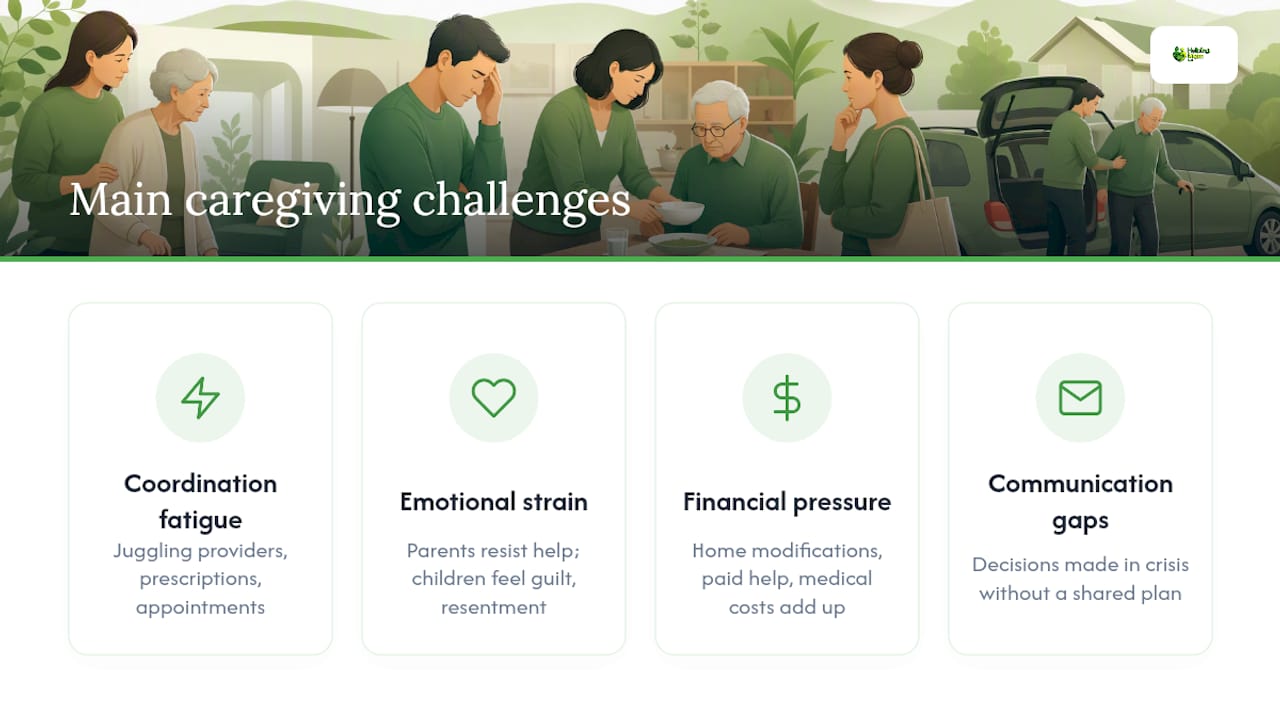
Emotional strain on both sides. Parents may resist help because it feels like losing independence. Adult children may struggle with guilt over not doing enough, or resentment if siblings aren't contributing equally.
Financial pressure. Home modifications, paid help, and medical costs add up, and many families haven't planned for these expenses in advance.
Communication gaps. Without a shared plan, decisions get made in the moment, often during a crisis, which raises stress for everyone involved.
None of these challenges are unusual, and none mean you're doing something wrong. They're simply the predictable friction points of this stage of life, and naming them early makes them easier to manage.
What Strategies Actually Help Families Manage This Stage?
A few practical strategies consistently make this easier, and none require special training.
Build a written care plan. The NIA points to written plans with scheduled respite and assigned tasks as one of the most protective habits for avoiding caregiver burnout. Treating caregiving as a solo project is the most common mistake families make.
Use flexible scheduling among family members. Rotate who handles appointments or check-ins so no single person is always on call. Even a simple shared calendar helps.
Make small home adjustments early. Grab bars, better lighting, and decluttered walkways cost little but prevent the accidents that often force sudden, stressful decisions.

Bring in outside help before you're desperate. A part-time home aide, a care manager, or a single paid consultation can relieve pressure long before burnout sets in.
Keep communication regular, not just reactive. Short, scheduled family check-ins prevent the buildup of resentment that comes from decisions made without input.
These strategies work because they distribute the load and remove guesswork. You're not trying to do everything perfectly. You're trying to build a system sturdy enough that one bad week doesn't turn into a crisis.
What Legal and Planning Basics Should You Know?
A few legal basics deserve attention well before they're urgently needed. Power of attorney lets you manage financial or medical decisions if your parent becomes unable to. Advance directives document their wishes for medical care, which spares the family from guessing during a difficult moment.
Psychology Today recommends having these conversations while your parent is still healthy and able to weigh in clearly. Waiting until a medical event forces the issue often means decisions get made under pressure, without your parent's input.
This isn't about legal complexity so much as timing. An eldercare attorney or your local legal aid office can walk you through the specific documents relevant to where your parent lives. The goal isn't a perfect legal file. It's having the basics in place so a hospital visit or sudden decline doesn't turn into a scramble for paperwork nobody can find.
A Note From Helping-mom
Caregiving rarely announces itself all at once. It grows, one appointment and one hard conversation at a time, and that's exactly why small, steady steps matter more than grand gestures. You don't need to have this figured out today. Planning ahead, even in small pieces, means fewer decisions get made in a panic later.
A Practical Next Step With Helping-mom
You don't have to build a care plan from scratch or guess whether a home is safe enough. Helping-mom offers free guides and checklists to start with, paid Zoom consultations if you want personalized guidance, and in-person home safety assessments if you're in Central Florida and want a professional set of eyes on the house. If you're ready for a clear starting point, the practical home-safety guide walks you through exactly what to check first, room by room, and how to book a consultation if you want extra support along the way.
Sources
- Journal of the American Geriatrics Society (article hosted on PMC)
- NIA: Aging in place — growing older at home
- Merck Manuals: Care providers for older adults — family and friends
- Psychology Today (Adult children on the front lines of caregiving for parents)
FAQ
What Does "Aging in Place" Actually Mean?
It means an older adult continuing to live safely and independently in their own home, often with some support, rather than moving to assisted living.
How Many Doctors Does an Older Parent Typically See?
Older adults with multiple chronic conditions see more than 13 different physicians per year on average, which is why medical coordination becomes a real family task.
What's the First Home-Safety Change I Should Make?
Start by clearing trip hazards and checking lighting in hallways and stairs. These are the lowest-cost, highest-impact changes for preventing falls.
How Do I Know When It's Time for More Help?
Watch for repeated falls, missed medications, or your own burnout. A simple approach is to monitor for a few weeks, trial extra help, and reassess within three months.
Can Helping-mom Help if I'm Overwhelmed and Don't Know Where to Start?
Yes. Helping-mom offers free checklists, paid Zoom consultations, and in-person home safety assessments in Central Florida to help you build a plan without doing it alone.