

Knowing when to step in with an aging parent is defined by one principle: patterns of decline matter more than isolated incidents. A single fall or forgotten appointment does not automatically signal a crisis, but repeated falls, growing confusion, or unpaid bills despite available funds tell a different story. Resources like the WTOP senior care checklist, GeriatRx medication safety guidance, and Franke at Seaside's financial safeguard recommendations all point to the same conclusion. Effective caregiving means watching for escalating patterns, then responding in ways that protect your parent's safety without stripping away their independence and dignity.
What are the key signs it's time to step in with your aging parent?
The clearest signal that intervention is needed is a pattern of risky or unmanageable behavior, not a single bad day. Experts recommend tracking the frequency and severity of falls, wandering episodes, and medication errors to determine when stepping in becomes necessary. One stumble in the kitchen is worth noting. Three stumbles in a month, combined with increasing unsteadiness, is a pattern that calls for action.
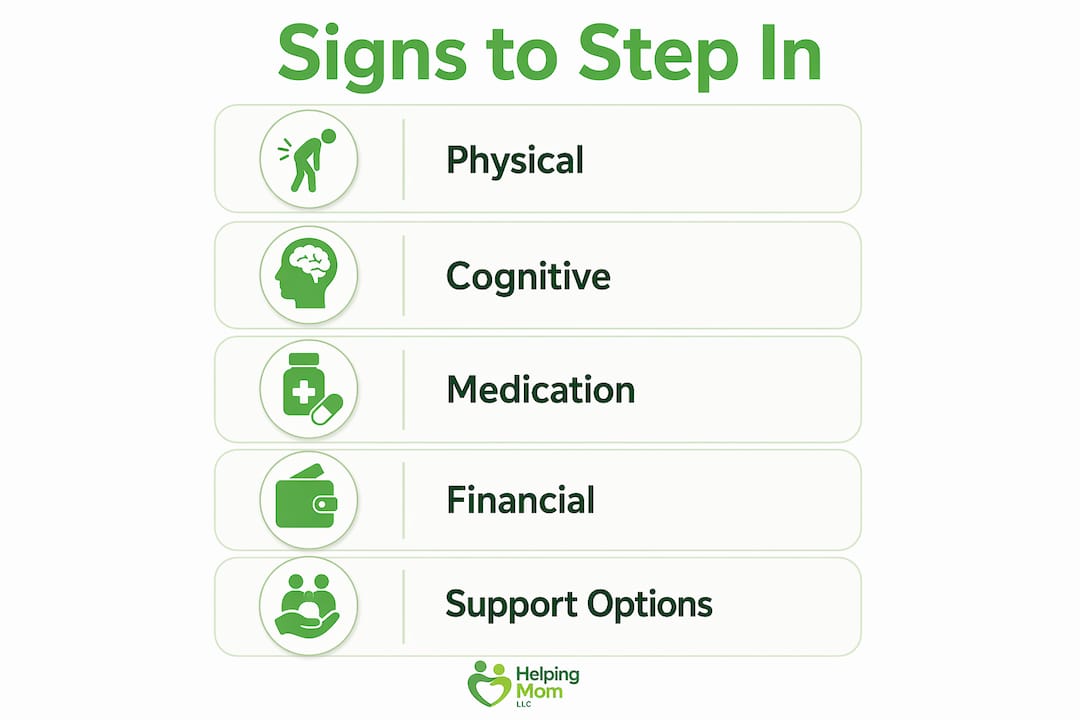
Physical decline is often the most visible starting point. Watch for balance problems, difficulty getting up from a chair, or trouble managing everyday tasks like bathing, cooking, and grocery shopping. These are called activities of daily living, or ADLs, and declining ability across multiple ADLs is a reliable indicator that your parent needs more support than they currently have.

Cognitive changes are equally important to track. Increasing forgetfulness, getting lost on familiar routes, or confusion about time and people can all point to early memory concerns. Wandering, especially at night, is a more urgent sign that residential or supervised care may need to be considered sooner rather than later.
Here are the key warning signs to watch for when caring for elderly parents:
- Repeated falls or near-falls within a short period
- Difficulty managing medications (missed doses, double doses, wrong timing)
- Unexplained weight loss or signs of poor nutrition
- Increasing confusion, forgetfulness, or disorientation
- Withdrawal from social activities or hobbies they previously enjoyed
- Unpaid bills, missed appointments, or financial disorganization
- Poor personal hygiene or unkempt living conditions
- Wandering or getting lost in familiar places
Pro Tip: Start a simple observation log on your phone or in a notebook. Record dates, what you noticed, and how often it happens. This log becomes your most useful tool when talking to a doctor or other family members about next steps.
How can medication and health changes signal the need for early intervention?
Medication changes are one of the most overlooked early warning signs in elderly parents. A sudden shift in memory, alertness, mood, or sleep after a medication adjustment is an early warning sign that deserves prompt attention. Many families assume these changes are just part of aging, when in fact they may be a direct and reversible side effect of a new prescription or dosage change.
GeriatRx and the American Academy of Family Physicians both reference the 4Ms framework as a practical way to evaluate risk in older adults. The four areas are: what matters most to your parent, medication safety, mentation (mental clarity and mood), and mobility. When two or more of these areas show simultaneous changes, that overlap is a strong signal to request a medication review before the next routine appointment.
The STEADI tool, developed for fall risk screening, uses a short set of questions about unsteadiness, recent falls, and fear of falling. A positive STEADI screening should trigger a broader assessment that includes orthostatic blood pressure checks and a full medication review. You do not need to wait for a specialist referral to ask your parent's primary care provider to use this tool.
The table below shows common symptoms before and after a medication change, helping you spot red flags early:
| Symptom area | Before medication change | After medication change (red flag) |
|---|---|---|
| Balance and mobility | Steady walking, manageable stairs | New unsteadiness, shuffling gait, or falls |
| Mental clarity | Consistent memory, clear conversation | Sudden confusion, brain fog, or disorientation |
| Mood and alertness | Engaged, responsive | Unusual drowsiness, agitation, or withdrawal |
| Sleep patterns | Regular sleep schedule | Significant changes in sleep duration or quality |
If you notice two or more of these shifts within days of a medication change, contact the prescribing provider directly rather than waiting for a scheduled visit.
When does financial oversight become a critical reason to step in?
Financial red flags are among the most urgent reasons to intervene with an aging parent, and they are often the last ones families notice. Power of attorney abuse often manifests as unexplained withdrawals, unpaid bills despite available assets, and refusal to allow financial transparency. By the time these signs are obvious, significant harm may already have occurred.
Common financial warning signs include large or unexplained bank withdrawals, new "friends" or acquaintances who seem unusually interested in your parent's finances, and a sudden reluctance to discuss money matters. A parent who was previously organized about bills but now has stacks of unopened mail is showing a behavioral change worth investigating.
Verbal reassurances from a power of attorney holder are not sufficient protection. Early transaction monitoring and account alerts are the practical safeguards that actually prevent long-term financial harm. Here are practical steps to establish financial oversight:
- Set up automatic transaction alerts on your parent's bank and credit card accounts so any withdrawal above a set threshold triggers a notification.
- Request read-only access to accounts if your parent agrees, so you can review statements without controlling funds.
- Establish a third-party oversight arrangement where a trusted family member or financial advisor reviews statements monthly.
- Review any existing power of attorney documents to confirm they include transparency and recordkeeping requirements.
- Contact Adult Protective Services if you suspect abuse. Families can report based on reasonable suspicion without needing proof. Agencies determine whether an investigation is warranted.
Acting quickly matters here. Delays in reporting financial abuse consistently worsen outcomes for older adults, and recovery of lost funds is rarely guaranteed.
How do you decide between more home support and senior living?
The decision between increasing support at home and considering a senior living option is one of the most emotionally charged choices in caring for elderly parents. The good news is that many mild-to-moderate concerns can be addressed effectively with home safety improvements, professional home health aides, and regular check-ins. The harder truth is that some needs eventually exceed what any home environment can safely provide.
Home-based support works well when your parent's needs are predictable and manageable. A home health aide can assist with bathing, meals, and medication reminders. Fall prevention strategies at home, like removing trip hazards, adding grab bars, and improving lighting, can significantly reduce risk for parents with mild mobility concerns. Memory care units and residential care become more appropriate when needs are unpredictable or too complex to manage safely at home, such as frequent wandering, severe isolation, or repeated falls despite modifications.
| Factor | Home-based support | Senior living option |
|---|---|---|
| Level of need | Mild to moderate, predictable | Moderate to high, unpredictable |
| Caregiver availability | Family or hired aide can cover gaps | 24-hour professional staffing |
| Cognitive safety | Early memory concerns, manageable | Wandering risk, significant confusion |
| Social connection | Possible with effort and planning | Built-in community and activities |
| Cost structure | Variable, can start small | Higher fixed cost, broader services |
| Parent preference | Often strongly preferred | May resist initially |
Ongoing conversations about what matters most to your parent improve care alignment and reduce conflict. Advance directives alone do not build understanding. Regular, open dialogue does.
Pro Tip: When discussing care options with your parent, frame the conversation around their goals, not your concerns. Ask "What would make you feel most comfortable and safe?" rather than "We think you need more help." This shift in framing preserves their sense of control and makes the conversation far more productive.
Key takeaways
Stepping in with an aging parent requires recognizing escalating patterns across physical, cognitive, financial, and medication-related areas, not waiting for a single dramatic event.
| Point | Details |
|---|---|
| Patterns over incidents | Track frequency and severity of falls, confusion, and missed medications rather than reacting to single events. |
| Medication changes are early signals | A sudden shift in alertness, balance, or mood after a prescription change warrants prompt review, not watchful waiting. |
| Financial oversight starts early | Set up transaction alerts and third-party account reviews before problems appear, not after. |
| Home support has real limits | Home-based care works for predictable needs; unpredictable or complex situations often require residential options. |
| Involve your parent in decisions | Conversations about what matters most to them improve care outcomes and preserve dignity throughout the process. |
What I've learned about stepping in at the right time
I've spoken with a lot of adult children who describe the same experience: they knew something felt off for months before they acted. They second-guessed themselves, worried about overstepping, and hoped things would stabilize on their own. And then something happened that made the decision for them, usually in a way that was harder and more disruptive than earlier action would have been.
The thing I've come to believe is that stepping in is not about taking control. It's about walking alongside your parent with clearer eyes. The families who navigate this well are not the ones who waited for certainty. They are the ones who started keeping notes, asked questions at doctor's appointments, and had honest conversations early, even when those conversations were uncomfortable.
One practical shift that makes a real difference: stop waiting for the annual checkup to raise concerns. Tracking dates and symptoms in a log helps you advocate for timely assessments rather than waiting for routine visits. Doctors respond differently when you arrive with documented observations rather than a general sense of worry.
I also want to say this directly: taking care of yourself in this process is not optional. Caregiver burnout is real, and it affects the quality of care your parent receives. You cannot make good decisions when you are exhausted and overwhelmed. Getting support early, whether from a professional, a sibling, or a community resource, is part of doing this well.
— Mike
How Helping-mom can support you through this
At Helping-mom, we know that recognizing the signs is only the first step. The next step is knowing what to actually do about them. Our home safety guide for seniors walks you through practical, room-by-room changes that reduce fall risk and make daily life safer for your parent at home. If you are weighing whether aging in place is still realistic, our aging in place home safety guide gives you a clear framework for that evaluation. We also have resources specifically for caregiver wellbeing, because supporting your parent well starts with supporting yourself. All of our guides are written in plain language, with no medical jargon and no pressure.
FAQ
What is the most reliable sign it's time to step in?
Repeated patterns of risky behavior, such as multiple falls, missed medications, or increasing confusion, are more reliable indicators than any single incident. Experts advise tracking frequency and severity over time to determine when intervention is genuinely needed.
Can I report suspected financial abuse without proof?
Yes. Families can report suspected abuse or neglect to Adult Protective Services based on reasonable suspicion alone. The agency determines whether a formal investigation is warranted.
How do I know if a medication change is causing the problem?
Compare your parent's alertness, balance, mood, and sleep before and after any prescription change. A sudden shift in two or more of these areas after a medication adjustment is a clear signal to contact the prescribing provider promptly rather than waiting for a scheduled visit.
When does home care stop being enough?
Residential care becomes appropriate when your parent's needs are unpredictable or too complex to manage safely at home. Frequent wandering, repeated falls despite modifications, and severe social isolation are the clearest indicators that a higher level of care is needed.
How do I start the conversation with my parent about needing more help?
Focus the conversation on their goals and comfort rather than your concerns. Ask what would make them feel safest and most supported. Ongoing dialogue about what matters most to your parent builds trust and leads to better care decisions than a single difficult conversation ever can.