

An overwhelmed caregiver is defined by the emotional, physical, and mental exhaustion that builds when the demands of caring for an aging parent consistently outpace your time, energy, and support. This experience is so common it has a clinical name: caregiver burnout. The U.S. Office on Women's Health and Sutter Health both recognize it as a predictable response to sustained caregiving, not a personal failure. If you are in your 40s or 50s and managing your parent's medications, appointments, and daily needs while holding down a job and raising your own family, what you are feeling has a name. And there are real ways through it.
What does it feel like to be an overwhelmed caregiver?
Recognizing the signs early is the most direct path to getting help before burnout takes hold. The symptoms of caregiver stress include frustration, sadness, sleep changes, irritability, and physical pain. These are not signs of weakness. They are signals that your system is overloaded.
Emotional signs to watch for:
- Persistent anxiety or a low-level sense of dread that does not go away
- Irritability with your parent, your partner, or your kids over small things
- Feeling isolated, as though no one around you truly understands what you carry
- Sadness or a creeping sense of hopelessness about the future
Physical warning signs:
- Fatigue that sleep does not fix
- Frequent headaches, stomach issues, or body aches with no clear cause
- Weight changes, either gaining or losing without trying
- Getting sick more often than usual
Behavioral red flags:
- Making mistakes with your parent's medications or appointments
- Withdrawing from friends and activities you used to enjoy
- Skipping your own doctor visits or neglecting your health
- Feeling resentful of your parent, then feeling guilty about the resentment
Pro Tip: Keep a simple weekly log of your mood and sleep. Patterns become visible quickly, and that awareness is often the first step toward asking for help.
Which coping strategies actually reduce caregiver overwhelm?
The most effective approach to reducing caregiver stress combines targeted self-care with concrete outside support. General advice to "take care of yourself" rarely helps. Specific, named strategies do.

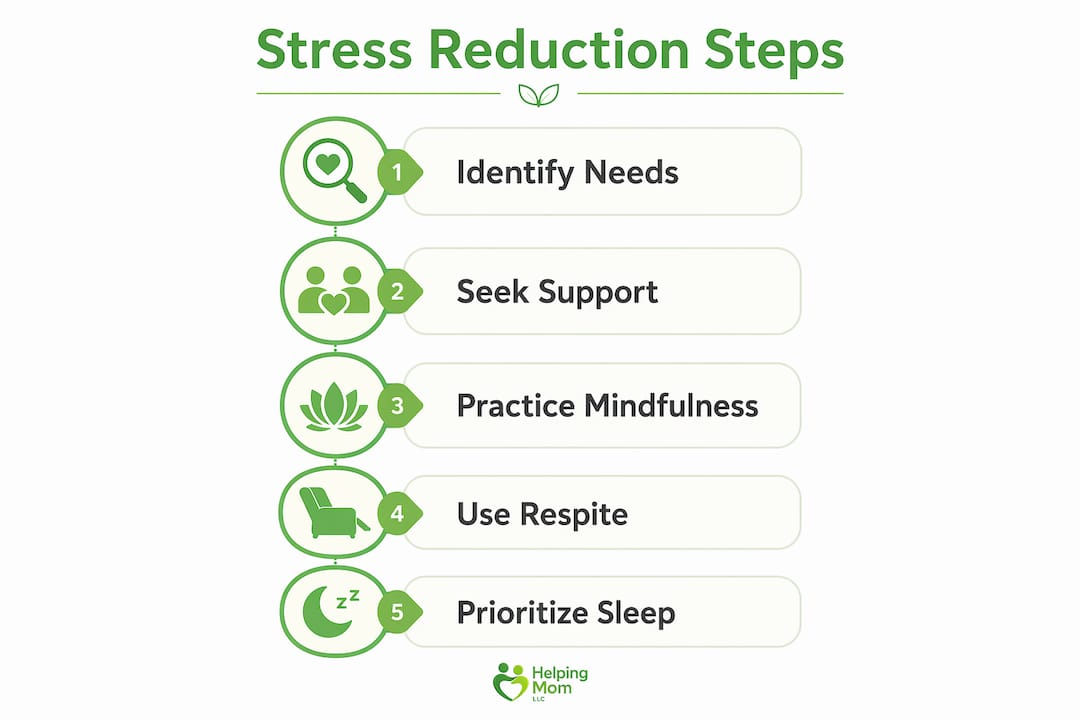
Harvard Health recommends mind-body practices such as mindfulness meditation, breath awareness, and prioritizing sleep and nutrition as core tools for caregiver health. Self-compassion, specifically treating yourself with the same kindness you extend to your parent, is described as a practical necessity, not a luxury. This framing matters. When you see self-care as part of doing your job well, it becomes easier to protect.
Here is a comparison of common caregiver stress solutions by how accessible and realistic they are for most family caregivers:
| Strategy | Accessibility | Approximate Cost | What it addresses |
|---|---|---|---|
| Mindfulness and breath work | High (apps like Calm or Insight Timer) | Free to low | Anxiety, sleep, emotional regulation |
| Caregiver support groups | Moderate (in-person or online) | Free to low | Isolation, emotional support |
| Respite care or adult day programs | Moderate (requires planning) | Varies widely | Physical exhaustion, time off |
| Professional counseling or therapy | Moderate (telehealth increases access) | Moderate to high | Burnout, grief, anxiety |
| In-home care services | Lower (requires coordination) | Moderate to high | Practical load, safety |
Sutter Health specifically highlights respite care and support groups as two of the most effective recovery tools for caregivers who are already in burnout. Adult day programs give your parent structured social time while giving you uninterrupted hours to rest, work, or simply breathe.
CancerCare recommends talking with healthcare professionals early rather than waiting until stress affects your own health. Documenting your parent's medication questions and care tasks before appointments reduces the mental load you carry into those conversations.
Pro Tip: If formal therapy feels like too big a step right now, start with a free online caregiver support group through the Family Caregiver Alliance or AARP. Hearing someone else describe exactly what you are experiencing can shift something quickly.
How can you balance caregiving with work and the rest of your life?
Balancing caregiving with a full-time job and family responsibilities is one of the hardest parts of this role. The Family and Medical Leave Act (FMLA) allows eligible employees to take up to 12 weeks of unpaid, job-protected leave per year to care for a parent with a serious health condition. Approximately 60% of employees qualify, depending on employer size and length of employment. FMLA does not pay your salary, but it does protect your job and your health insurance while you are away. Some states, including California, New York, and Washington, supplement FMLA with paid family leave programs worth checking.
Beyond formal leave, here are four practical steps for managing caregiving alongside work:
- Talk to your employer before a crisis hits. A brief, factual conversation with HR about your situation opens the door to flexible scheduling, remote work options, or intermittent FMLA leave before you are already at your limit.
- Schedule micro-resets into your day. The Office on Women's Health notes that many caregivers are almost always on call, which leaves almost no time for recovery. A 20-minute walk, a quiet lunch, or 10 minutes of intentional stillness during a caregiving day is not indulgent. It is maintenance.
- Divide tasks explicitly among family members. Vague agreements to "help more" rarely stick. A written list that assigns specific tasks, such as grocery runs, medication pickups, or weekend check-ins, to specific siblings or family members works far better.
- Use technology to reduce your mental load. Pill dispensers with alarms, medical alert devices, and shared digital calendars for care coordination can each remove a layer of daily worry.
Exploring in-home care options is also worth doing earlier than you think you need to. Even a few hours of professional in-home help per week can restore enough breathing room to keep you functioning well.
What unmet needs make caregiver burnout worse?
Unmet caregiver needs are the single strongest predictor of burnout. A BMC Nursing study found that unmet needs significantly increase burnout (β = 0.490, p < 0.001), and that burnout in turn strongly predicts physical health symptoms (β = 0.656, p < 0.001). This means the path from unmet need to physical illness is direct and measurable. Addressing specific gaps is more effective than general stress reduction alone.
The most common unmet needs among family caregivers include:
- Time. Not just days off, but predictable, protected windows of non-caregiving time each week.
- Equipment. Grab bars, shower chairs, hospital beds, and mobility aids that reduce the physical strain of hands-on care.
- Practical help. Meal preparation, transportation, housekeeping, and errands that pile up when one person is doing everything.
- Respite. Structured, reliable breaks that do not depend on someone else volunteering at the last minute.
The same research notes that when caregivers' unmet needs go unaddressed for too long, the desire to place a parent in institutional care increases significantly. This is not a moral failure. It is a predictable outcome of a system stretched past its limits. Early intervention, meaning identifying and filling specific gaps before burnout peaks, protects both you and your parent.
A practical way to start: write down the three tasks that drain you most each week. Then ask which of those could be handled by a family member, a paid helper, or a community resource. You do not need to solve everything. You need to solve the right things first. The caregiver resources at Helping-mom include guides on hiring in-home help and finding adult day programs that can address exactly these gaps.
Nutrition also plays a role that caregivers often overlook. When you are managing someone else's meals and medications, your own eating habits slip. Research on nutrition for caregivers supporting loved ones with chronic illness shows that consistent, adequate nutrition directly supports caregiver resilience and reduces fatigue.
Key takeaways
An overwhelmed caregiver recovers most effectively by identifying specific unmet needs, using named support resources, and protecting small daily windows of rest rather than waiting for a crisis to force change.
| Point | Details |
|---|---|
| Burnout is predictable, not personal | Caregiver overwhelm is a normal response to sustained demand, not a character flaw. |
| Specific unmet needs drive burnout | Addressing gaps in time, equipment, and respite is more effective than general stress tips. |
| FMLA protects your job | Eligible caregivers can take up to 12 weeks of job-protected leave to care for a parent. |
| Micro-resets matter daily | Brief, scheduled breaks during caregiving days reduce overwhelm more sustainably than waiting for full days off. |
| Ask for help before crisis hits | Early communication with employers, family, and healthcare providers prevents the worst outcomes. |
What I have learned from walking alongside caregivers
I want to say something directly: the guilt you feel about struggling is often heavier than the caregiving itself. You are managing a parent's health, your own job, your relationships, and the grief of watching someone you love change. Feeling stretched is not a sign that you are doing it wrong. It is a sign that you are doing a lot.
What I have seen work, time and again, is not a dramatic overhaul. It is one small, honest step. Telling a sibling you need them to take Saturday mornings. Calling your parent's doctor to ask a question you have been carrying for weeks. Sitting outside for 15 minutes without your phone. These things sound small because they are small. But they compound.
Self-compassion is not softness. Harvard Health frames it as a practical caregiving tool, and I agree completely. You cannot give from empty. Protecting your own capacity is how you stay present for your parent over the long run, not just through the next hard week.
If you are reading this and recognizing yourself in these pages, that recognition is worth something. It means you are paying attention. And paying attention is always where the next right step begins.
— Mike
How Helping-mom can support you from here
Helping-mom is built specifically for adult children in the middle of what you are managing right now. The caregiver well-being resources on the site cover emotional support, self-care methods, and mental health tools written in plain language without clinical jargon. If your parent is living at home and safety is a growing concern, the home safety guide for seniors walks you through practical modifications that reduce accidents and reduce your worry. You can also explore the full caregiving resource library for guides on managing stress, having difficult family conversations, and planning ahead. Every resource is written for where you actually are, not where you think you should be.
FAQ
What is caregiver burnout?
Caregiver burnout is a state of physical, emotional, and mental exhaustion caused by the sustained demands of caring for another person. Sutter Health describes it as a predictable response to caregiving overload, not a personal failure.
How do I know if I am experiencing caregiver fatigue?
Common signs include persistent tiredness that sleep does not fix, irritability, social withdrawal, and making more mistakes with your parent's care. The Office on Women's Health also lists body aches, sadness, and sleep changes as frequent symptoms.
Can I take time off work to care for my parent?
Yes. Under FMLA, eligible employees can take up to 12 weeks of unpaid, job-protected leave per year to care for a parent with a serious health condition. Some states also offer paid family leave programs.
What is the fastest way to reduce caregiver stress?
Sutter Health and Harvard Health both point to respite care, support groups, and daily self-care practices as the most effective starting points. Even one reliable break per week can meaningfully reduce overwhelm.
Why do unmet needs matter so much for caregivers?
A BMC Nursing study found that unmet caregiver needs are the strongest predictor of burnout, which then leads directly to physical health symptoms. Filling specific gaps in time, equipment, and practical help protects both your health and your parent's care.
Recommended
- Feeling Overwhelmed Caring for Elderly Parent? Get Help | Helping Mom LLC
- Caregiver Support - Helping Mom LLC | Resources & Support for Family Caregivers
- How to Balance Caregiving Without Losing Yourself: Practical Strategies for Family Caregivers | Helping Mom LLC
- Managing Caregiver Stress - Practical Strategies for Caregivers | Helping Mom LLC