
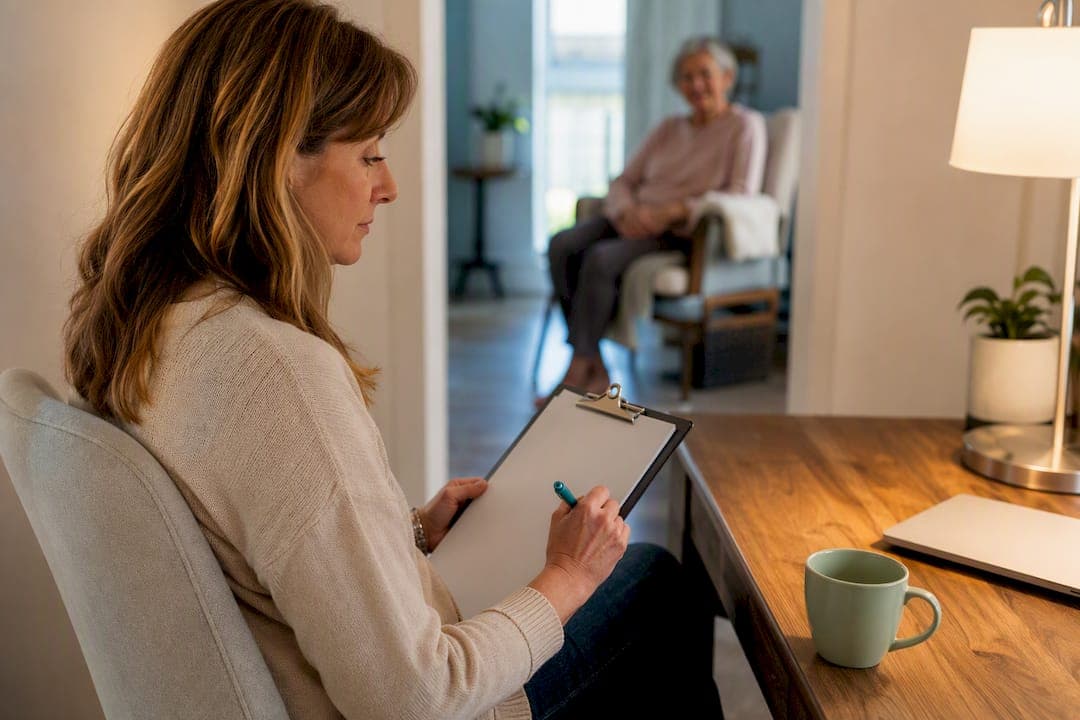
A caregiver daily log is a one-page sheet where whoever is on duty writes down meals, meds, moods, and anything unusual, so the next person can pick up without a phone call. The fastest way to start is simple: grab a printable template today, put it on the kitchen counter or clipboard by the bed, and fill it out as the day happens.
TL;DR:
- A caregiver daily log should include clear fields for medications, meals, bathroom notes, mood, incidents, and next steps to ensure accurate handoffs.
- Using a consistent, visible placement for the log, like a clipboard or countertop, significantly increases daily usage and effective communication.
- Digital copies or photos support remote sharing and weekly archiving, but paper logs are preferable for quick, in-home handoffs.
- Adding a brief caregiver wellness check-in on each sheet helps identify stress early and prevents burnout.
- Archive completed sheets weekly in private storage to track patterns and provide accurate information for medical visits.
Table of Contents
- What Does a Caregiver Daily Log Actually Do?
- What Fields Belong on Every Caregiver Daily Log?
- Where Can You Find Printable Caregiver Log Templates?
- How Should You Actually Use the Log Day to Day?
- Should the Log Include a Caregiver Wellness Check-In?
- How Do You Keep a Caregiver Log Private and Secure?
- How Do You Use the Log for a Smooth Handoff?
- What I've Seen Work in Real Households
- Get a Head Start With Helping-mom's Printable Kit
- Sources
- FAQ
What Does a Caregiver Daily Log Actually Do?
Think about the last time you tried to remember whether your mom took her afternoon pills, or whether the home aide mentioned she seemed dizzy on Tuesday. That gap between what happened and what you remember is exactly what a caregiver daily log closes.
A shared sheet creates a clean handoff between whoever cared for your parent that day and whoever takes over next, whether that's you, a sibling, or a hired aide. It replaces the string of half remembered texts ("did she eat lunch? I think so?") with one page anyone can glance at. That matters more than it sounds like it should, because a printable caregiver daily log is designed specifically to cut down on that back and forth.
There's a second, quieter benefit. Daily notes reveal patterns that are easy to miss in the moment but obvious in hindsight. A week of "ate half her breakfast" entries tells a different story than one bad morning. That kind of trend is often exactly what a doctor wants to hear about.
You'll get the most value from the log during:
- Shift changes between family members or paid caregivers
- Any stretch with a hired aide who doesn't know your parent's routines yet
- Weekly family coordination calls, so everyone's working from the same facts
- The days before a doctor's appointment, when patterns matter more than any single moment
What Fields Belong on Every Caregiver Daily Log?
A good daily log doesn't need to be complicated. It needs the right handful of fields, filled in consistently. Structured notes with clear identification, observations, and follow-ups are standard practice in caregiver documentation, and the same structure works just as well for a family member as it does for a professional aide.
Here's what to include, in order:
- Header details. Date, your parent's name, who's on duty, and shift hours if more than one caregiver is involved.
- Medications. Name, dose, and the exact time each one was given, logged as it happens rather than at the end of the day.
- Meals and fluids. What was offered and roughly how much was eaten or drunk. "Half a sandwich, one glass of water" is more useful than "ate okay."
- Bathroom and continence notes. Frequency and anything out of the ordinary.
- Mood and activity. Short, factual phrases work best: "watched TV, seemed tired" instead of "had a rough day."
- Incidents. Falls, confusion, refused medication, anything that stood out.
- Next steps. A short line for the incoming caregiver: call the pharmacy, watch for a rash, confirm the Thursday appointment.
Pro Tip: Keep a timestamped meds row instead of one big medication box. In homes with more than one caregiver, a quick glance at the last timestamp prevents the honest, common mistake of double dosing.
Where Can You Find Printable Caregiver Log Templates?
You don't need to design this yourself. Several trusted, free options already exist, and each one fits a slightly different household.
- NIH caregiver worksheets. The National Institute on Aging offers downloadable worksheets built for coordinating responsibilities among family members, tracking medications, running through home safety checklists, and organizing questions before a doctor visit. These work best as a periodic deep dive rather than a daily sheet.
- Simple one-sheet daily logs. A printable one-page template is the quickest option for households juggling more than one caregiver, since it's built specifically to make handoffs fast.
- 24-hour shift logs. If your parent has round-the-clock care or a rotation of paid aides, a shift-based daily log with fields for shift times, vitals, hygiene, mood, and safety notes fits the situation better than a single daily sheet.
- Fillable PDFs versus paper. Both work. Choose whichever your household will actually use consistently. A fillable PDF suits a caregiver who's usually on a laptop; paper suits a home where someone's hands are full most of the day.
Feel free to tweak whatever you download. Bump up the font size if your parent or an older relative caregiver will also read it. Add a dedicated meds table if pills are complicated. Just keep the core fields intact so the sheet still works for a handoff, not just for you.
How Should You Actually Use the Log Day to Day?
The best caregiving tool in the world does nothing sitting in a drawer. Placement and routine matter almost as much as what's on the page.
Pick one visible spot and stick with it. The kitchen counter, a clipboard at the bedside, wherever caregiving actually happens in your parent's home works better than a shared folder nobody remembers to open, since accessibility is what drives real use. Keep a pen attached to it. It sounds small. It's not.
A few habits make the difference between a log that gets used and one that gets abandoned after a week:
- Use one sheet per day, not a running weekly page that gets crowded and hard to scan.
- Have each caregiver initial and time their entries so everyone knows who wrote what.
- Fill things in soon after they happen rather than trying to reconstruct the day at 9 p.m.
- Have the incoming caregiver scan the header and initial it before starting their shift.
Paper wins for speed and reliability in most in-home handoffs. Digital, whether that's a photo of the sheet or a shared document, helps when a sibling three states away wants to stay looped in. A lot of families do both: paper for daily use, a weekly photo or scan sent to the family group chat.
Pro Tip: Archive one week's worth of sheets in a folder before recycling them. A short weekly archive gives your parent's doctor real pattern evidence without turning your closet into a filing cabinet.
Should the Log Include a Caregiver Wellness Check-In?
Yes, and it's the part most templates skip. Add three small lines to the bottom of the daily sheet: how you're feeling today, one thing you're grateful for, and one thing you need help with.
That's it. It takes fifteen seconds and it does something a purely clinical log can't: it puts caregiver stress on paper before it becomes a crisis. Caregiver wellness guidance points to exactly this kind of brief check-in as a way to surface strain early enough for family to actually respond.
It also helps the whole care team, not just you. When a sibling flips through the week's sheets and sees "exhausted, could use a Saturday off" written three days in a row, that's a much clearer signal than a text that says "I'm fine" when you clearly aren't. If burnout has been creeping up on you, Helping-mom's caregiver wellness resources go deeper into recognizing it and asking for backup before it wears you down.
How Do You Keep a Caregiver Log Private and Secure?
A daily log holds real personal information about your parent's health, habits, and daily life, so it deserves a little thought about who sees it.
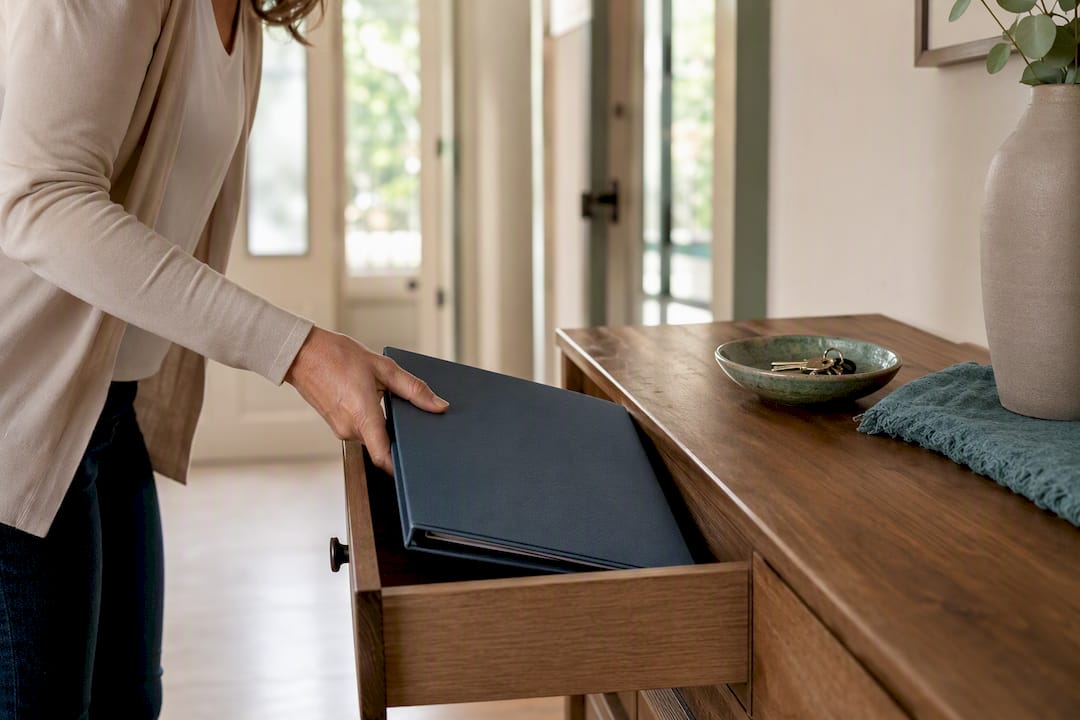
Keep the physical binder somewhere household members and approved caregivers can reach easily, but not somewhere every visitor flips through. A drawer near the clipboard's usual spot works fine. If you're sharing pages digitally with siblings, use a private family group or a shared folder with limited access rather than posting photos somewhere public.
Be mindful about what you write, too. Objective, factual language ("ate half of lunch, seemed withdrawn") is both more useful medically and less exposing than anything overly personal or speculative. If a paid aide or agency is involved, ask what their own documentation policy is, since some agencies keep their own records that don't need to duplicate your family's.
When you archive old sheets instead of tossing them, store them somewhere private, a labeled folder or a locked drawer, rather than a recycling pile where anyone in the house might see them. If you scan sheets to share with an out of town sibling, a private cloud folder shared only with immediate family is safer than email attachments that can sit in inboxes indefinitely. None of this needs to be complicated. It just needs to be a habit, the same way locking the front door is a habit.
How Do You Use the Log for a Smooth Handoff?
The whole point of a caregiver daily log is the moment one person hands the day off to the next. Getting that thirty seconds right matters more than almost anything else about the sheet.
When your shift ends, don't just leave the sheet on the counter. Walk the incoming caregiver through anything that stands out: "She skipped breakfast but ate a big lunch," or "she seemed a little more confused around 3 p.m., keep an eye on it." The sheet backs up what you're saying; it doesn't replace the thirty second conversation.
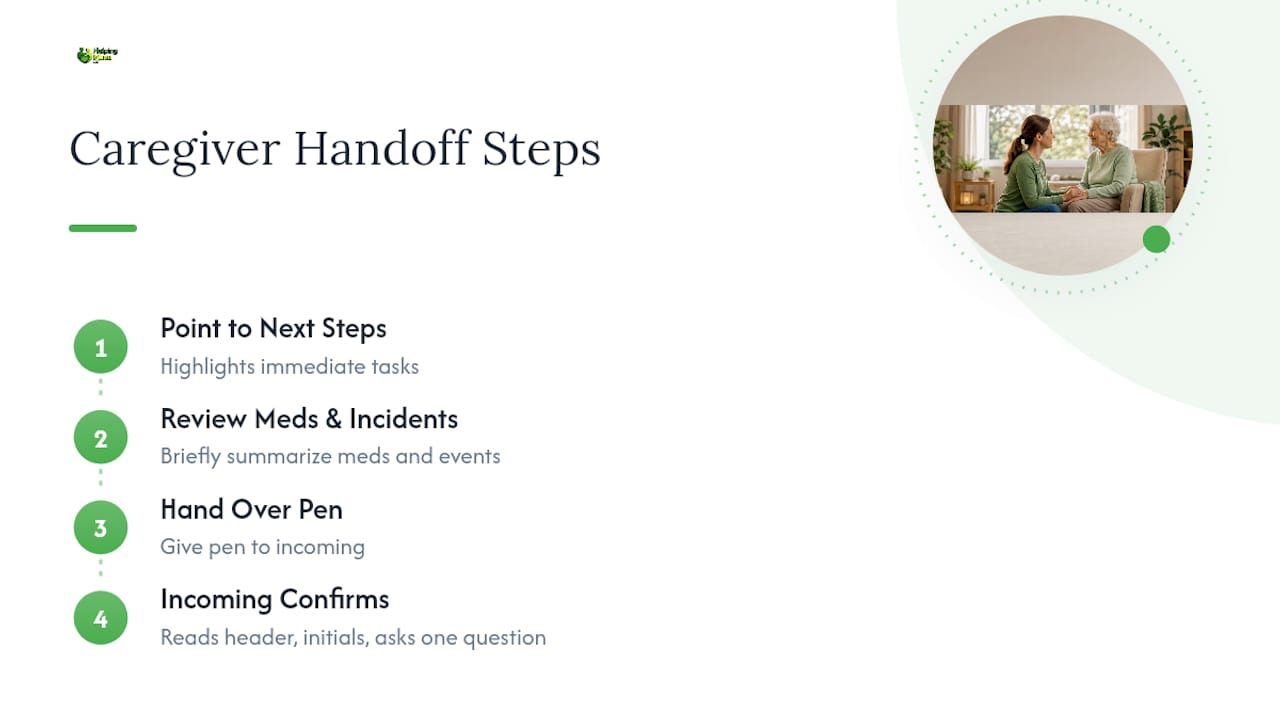
A strong handoff usually looks like this: the outgoing caregiver points to the "next steps" line first, then briefly reviews meds and any incidents, then hands over the pen. The incoming caregiver reads the header, initials it, and asks one clarifying question if something's unclear. That's the whole exchange. It takes less time than describing it does.
If no one's physically handing off (say, a family member checking in remotely), a quick photo of the day's sheet sent to the group chat covers most of the same ground. Tools built for capturing and organizing conversations, like Noise, can also help when you need to summarize a doctor's appointment for family members who couldn't be there. The habit that actually sticks is consistency: same sheet, same spot, same quick verbal handoff, every single day.
What I've Seen Work in Real Households
The households that stick with a caregiver daily log aren't the ones with the fanciest template. They're the ones that started simple and adjusted as they went.
One detail that comes up again and again: a plain appetite note, three days running of "ate less than usual," is often the thing that gets flagged to a doctor before anything else does. Nobody notices a single off day. Everybody notices a pattern once it's written down. Start with the basics, adjust the fields to fit your parent's specific situation, and don't worry about getting it perfect on day one.
— Mike C.
Get a Head Start With Helping-mom's Printable Kit
A printable caregiver kit can give you a ready-made daily log sheet, weekly binder pages for archiving, and built-in caregiver check-in prompts, all designed to work together instead of being bolted on after the fact.
That saves you the trial and error of building your own fields, testing them for a week, then realizing you forgot a meds table. A good daily log works best with one sheet per day, clear handoff fields, and a short wellness check-in so caregiver stress doesn't get buried under everything else. If home safety is also on your radar, our practical guide to making a home safer for seniors pairs naturally with daily logging, since safety notes and daily observations tend to point to the same issues. Download a free sample page from the kit and see how it fits into your family's routine before adding the full set to your binder.
Sources
- Free printable caregiver daily log (PDF) · KeptWell
- Caregiver Worksheets | National Institute on Aging - NIH
- 24 Hour Home Care – Daily Caregiver Log (Printable PDF) | CARE Homecare
- Daily Care Notes Template & Guide for Caregivers | Noota
- Preventing caregiver burnout starts early — CareLink
FAQ
What Is a Caregiver Daily Log?
It's a one-page sheet, filled out once per day, that tracks meds, meals, mood, and incidents so caregivers can hand off care without a phone call.
What Fields Should a Caregiver Daily Log Include?
At minimum: date and caregiver name, medication times and doses, meals and fluids, bathroom notes, mood and activity, incidents, and next steps for the next shift.
Is Paper or Digital Better for a Caregiver Log?
Paper tends to work best for quick, in-home handoffs, while digital copies or photos help remote family members stay informed and support weekly archiving.
How Long Should You Keep Old Caregiver Log Sheets?
Archive daily sheets in short weekly batches for pattern tracking and doctor visits, keeping sheets longer only if an ongoing issue requires closer follow-up.
Where Can I Find a Free Printable Caregiver Daily Log?
The National Institute on Aging offers free official worksheets, and a printable kit offers a ready-to-use daily log sheet built for family handoffs.