
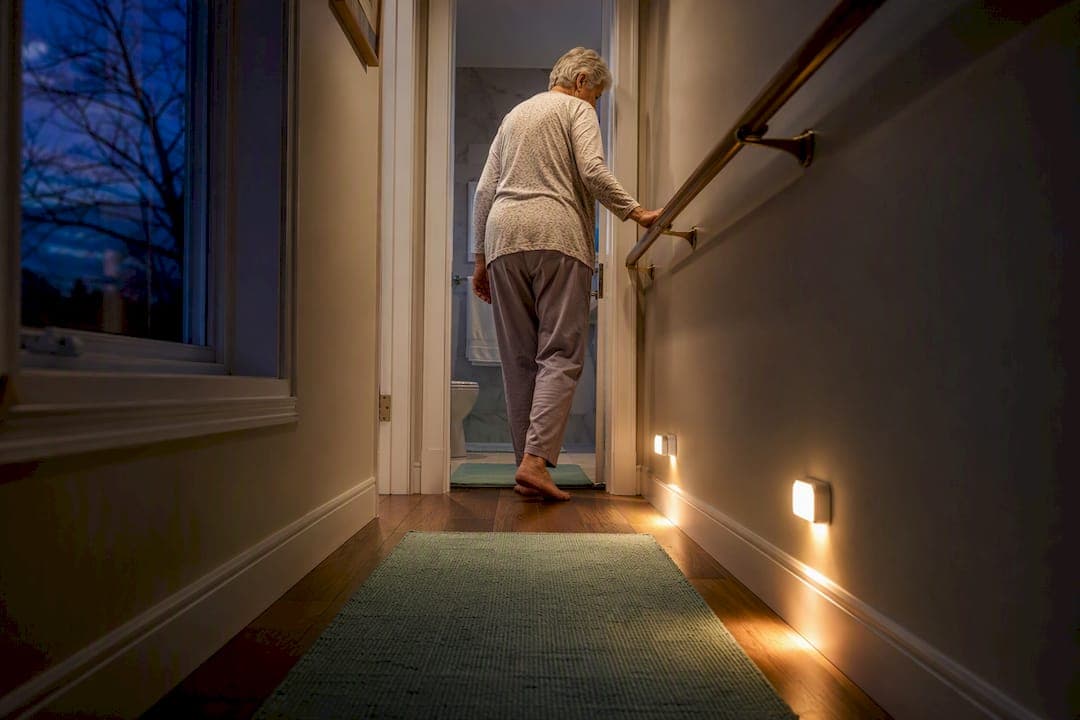
The three fixes that matter most are better lighting, a clear walking path, and a secure handrail. These address the conditions behind most falls: poor visibility, obstacles underfoot, and nothing sturdy to catch a wobble. More than one in four adults 65 and older falls each year, and hallways are prime territory for it because they're narrow, often dim, and used constantly, day and night. Start with the checklist below, then come back for the details on each fix.
TL;DR:
- Proper hallway lighting should be even, warm-white, and placed at transition points to avoid harsh shadows and improve visibility at all hours.
- Clutter, loose rugs, and crossing cords are common trip hazards that can be eliminated or secured quickly with minimal cost and effort.
- Installing a secure, properly mounted handrail at appropriate heights is crucial, with attention to mounting into wall studs and testing its strength regularly.
- Non-slip surface treatments like tape, rugs with grip backing, or fixing worn flooring can significantly reduce slip risks without extensive renovations.
- Conducting a professional home safety assessment is recommended after a fall or multiple near-misses, especially for complex layouts or if current hazards are unclear.
Table of Contents
- Hallway Safety Checklist for Seniors: What to Do Now
- Lighting for Hallways: Getting It Bright Enough Without Glare
- Clearing Hallway Trip Hazards for Elderly Parents
- Handrails and Grab Bars: Getting the Installation Right
- Non-Slip Flooring and Quick Fixes for Slippery Hallways
- Nighttime Hallway Safety and What to Do After a Fall
- When to Schedule a Professional Home Safety Assessment
- Where These Recommendations Come From
- A Caregiver's Honest Take on Hallway Fixes
- Sources
- FAQ
Hallway Safety Checklist for Seniors: What to Do Now
You don't need a contractor to make a hallway safer this weekend. Most of the highest-impact changes cost nothing or close to it, and you can knock several out in an afternoon.
- Clear the floor completely. 15 minutes, $0. Walk the hallway and remove anything that doesn't need to be there.
- Test every light switch. 10 minutes, $0. Note any bulb that's out, dim, or hard to find in the dark.
- Secure or remove loose rugs. 20 minutes, $0 to $15 for non-slip backing.
- Check for cords crossing the path. 10 minutes, $0. Reroute them along the wall.
- Add a plug-in night light near the bedroom door. 15 minutes, $10 to $20.
- Swap one overhead bulb for a warmer, brighter LED. 20 minutes, $8 to $15 per bulb.
- Install a motion-sensor light at the hallway's darkest point. 30 minutes, $20 to $40.
- Wobble-test any existing handrail. 5 minutes, $0. If it moves, flag it for repair.
- Schedule a professional home-safety assessment if there's been a recent fall or near-miss. 1 to 2 hours, cost varies.
The Consumer Product Safety Commission estimates that fixes this simple, lighting and slip-resistant surfaces chief among them, are also the ones people skip longest, usually because no one sat down and made the list.
Lighting for Hallways: Getting It Bright Enough Without Glare
Hallway lighting has one job: let your parent see the floor clearly at every hour, without a sudden blast of brightness that leaves their eyes struggling to adjust. That second part trips people up. A single harsh overhead fixture can create sharp shadows near doorways, exactly where missteps happen.
Aim for even, low-glare light in the 2700 to 3000K range. That's the warm-white end of the spectrum, closer to a soft lamp than a fluorescent office light.
A few devices make this easy to achieve:
- LED overhead fixtures with a diffused cover, not a bare bulb
- Wall-mounted sconces at hip height for softer, shadow-free light
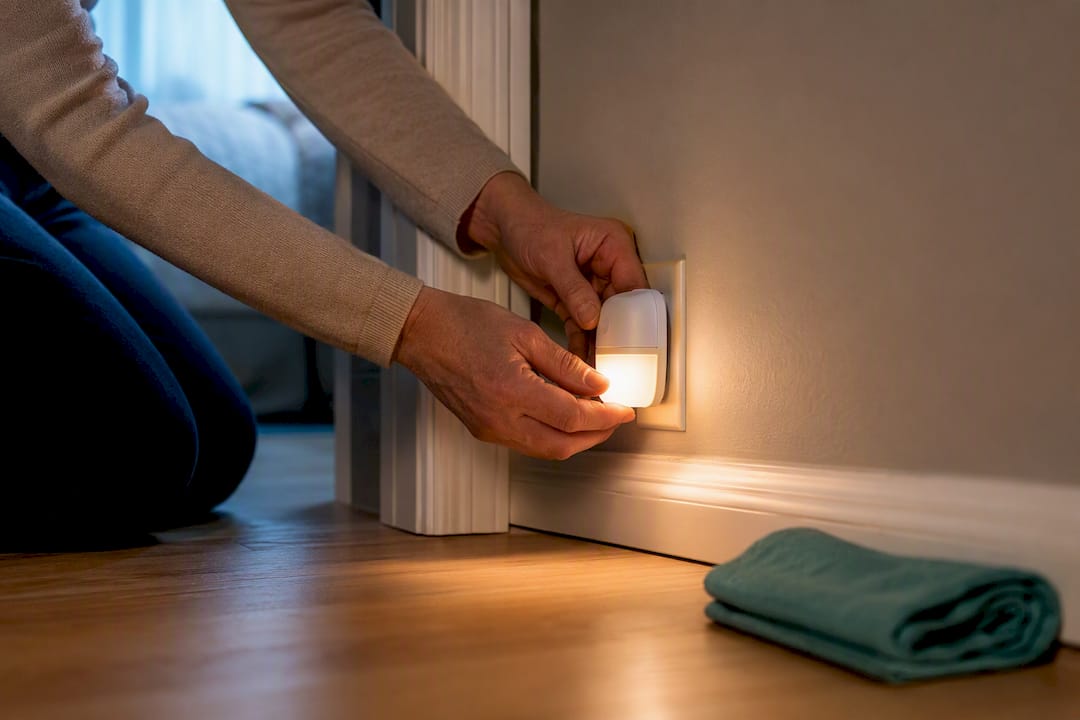
- Plug-in motion sensor lights for hallways without existing outlets nearby
- Floor-level guide lights along the baseboard for nighttime walks
- Illuminated rocker switches, so the switch itself is visible in the dark
Place a light source at every transition point: bedroom to hallway, hallway to bathroom, and at the top or bottom of any step. Motion sensors work best where someone's hands are already busy, holding a cane or a railing, so reaching for a switch adds risk instead of removing it.
Pro Tip: Install a plug-in night light at outlet height rather than a lamp on a table. Table lamps get bumped, unplugged, or blocked by furniture over time; a plug-in unit stays put and lights the floor exactly where feet land.
Clearing Hallway Trip Hazards for Elderly Parents
A trip hazard doesn't announce itself. It's the throw rug that's been in the same spot for a decade, the phone charger cord that's always been there, the pile of shoes by the door. Walking the hallway with fresh eyes, ideally at night with the lights on as your parent would use them, reveals problems you'd otherwise miss.
- Walk the path slowly, both directions, day and night. Note anything you'd have to step around or over.
- Deal with rugs first. Remove them if possible; if not, add non-slip backing or double-sided tape at all four corners.
- Reroute cords along the baseboards, secured with adhesive clips rather than left loose across the floor.
- Check thresholds between rooms. A raised threshold over half an inch can catch a shuffling foot; a rubber transition ramp fixes this for under $20.
- Set a footwear rule. Slippers with no back strap and socks on bare floors are common culprits; a supportive shoe with a rubber sole is safer for walking indoors, as Mayo Clinic notes.
Bringing this up doesn't have to feel like a confrontation. Something like "I noticed the hallway rug slides, want me to grab some grip tape this week?" lands a lot softer than a lecture about safety. Our guide on making a home safer for an elderly parent has more scripts for these conversations if they've felt tense before.
Handrails and Grab Bars: Getting the Installation Right
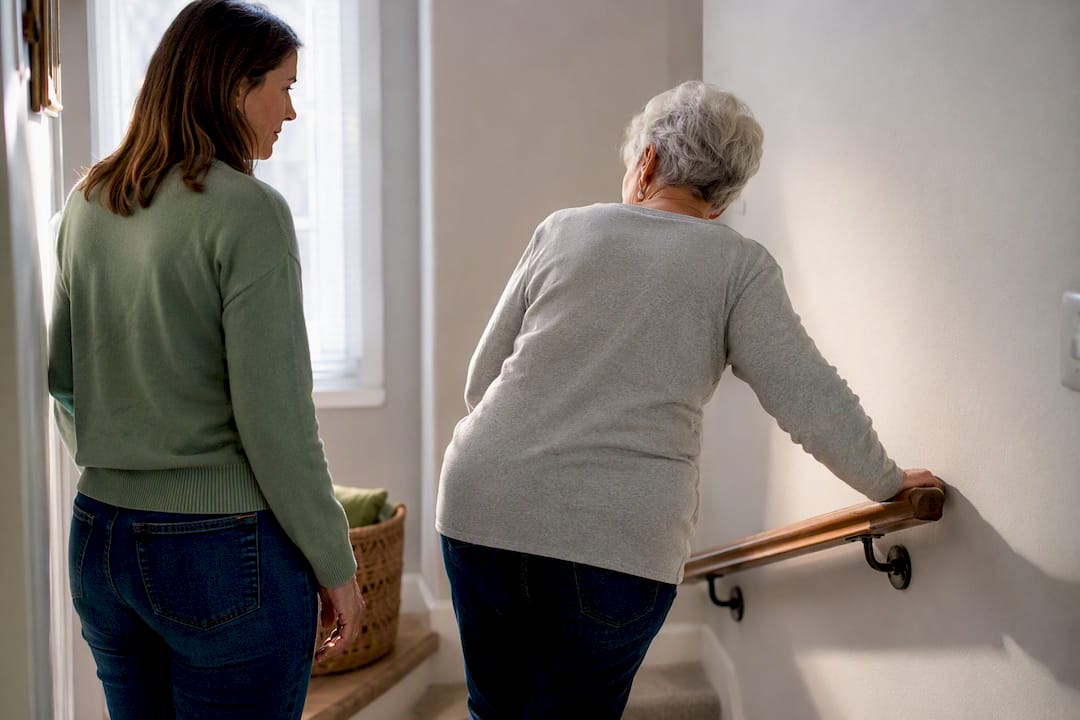
A continuous handrail makes sense for a long hallway your parent walks multiple times a day. A single grab bar makes more sense near a specific trouble spot, like a step down or a spot where they pause to catch their balance. The difference matters because a poorly placed short rail can give a false sense of security in the wrong location.
- Mount into wall studs, not just drywall anchors; drywall alone can't hold body weight during a real stumble.
- Standard mounting height runs 34 to 38 inches from the floor, though a taller or shorter parent may need adjustment.
- Test a new rail by leaning your full weight on it gradually during installation, then recheck it after 30 days of use.
- Warning signs of a failing mount include creaking, visible wobble, or any give when pushed sideways, according to CPSC testing guidance.
An improperly mounted grab bar is one of the more overlooked hazards in a caregiver's home safety plan, since it looks secure until someone actually needs it. If you're not confident finding a stud or matching the right anchor to your wall type, hiring a handyman for an hour is worth it. Ask them directly whether they've mounted grab bars rated for body-weight loads before, not just towel bars.
Pro Tip: If the rail feels solid to your hand but you're still unsure, have your parent lean on it on purpose while you watch. A rail that passes a light touch test can still fail under a real stumble's sideways force.
Non-Slip Flooring and Quick Fixes for Slippery Hallways
Not every flooring problem needs a full replacement. A loose tile or a warped floorboard should move to the top of the list regardless of budget, since those create an unpredictable surface that no rug or light fixes. Everything else can usually wait for a treatment rather than a renovation.
- Adhesive non-slip tape on smooth tile or hardwood, a same-day fix that costs $10 to $20 a roll
- A low-pile runner with grip backing, safer than a plush rug that shifts underfoot
- Rug pads under any runner that stays, secured at all edges
- Refinishing or replacing worn wood as a longer-term project once the immediate risks are handled
Mayo Clinic's guidance points to exactly this kind of layered approach: fixing the obvious hazards first, then treating the surface, then planning bigger repairs when time and budget allow. Our senior-friendly home setup guide walks through flooring choices room by room if you're planning a broader update.
Nighttime Hallway Safety and What to Do After a Fall
Nighttime bathroom trips are one of the most common situations for a fall, mostly because a person is half-asleep, disoriented, and walking through a hallway lit only by whatever's on the nightstand. Floor-level guide lighting and motion sensors that ramp up gradually work better here than a bright overhead light, which can be disorienting on its own after eyes have adjusted to darkness.
A few device options worth considering: a wearable pendant alarm, a fall-detecting watch, or simply keeping a charged phone on the nightstand within arm's reach.
If a fall does happen, a calm, short plan helps everyone act faster:
- Stay with your parent and ask them not to move right away.
- Check for pain, confusion, or an inability to move a limb normally.
- Call 911 if there's any sign of head injury, severe pain, or inability to get up safely.
- If they seem unhurt and want to try standing, help them up slowly using stable furniture, not a chair on wheels.
- Note what happened and when, useful information for a doctor or a home-safety follow-up.
Keep a written emergency contact list and a flashlight in a fixed spot near the bed, the same spot every time, so no one has to search for it at 2 a.m.
When to Schedule a Professional Home Safety Assessment
A recent fall, a visible change in balance, or more than one near-miss in the hallway are all good reasons to bring in an occupational therapist rather than guessing at fixes yourself. The USPSTF recommends individualized use of multifactorial home assessments for older adults at risk of falling, alongside strength and balance exercise, which carries a stronger Grade B recommendation on its own.
An OT visit typically covers mobility testing, exact mounting heights for rails, and referrals for vision or medication issues that might be contributing, something a family member usually can't diagnose from a hallway walkthrough. To prepare, bring a list of any falls or near-misses, current medications, and a few photos of the space.
- Recent fall or repeated near-misses in the hallway
- Noticeable decline in balance or gait
- Complex layout with multiple thresholds or narrow turns
- No clear answer on where to mount a rail or grab bar
If an in-person OT isn't available nearby, a remote consultation or a service like Helping Mom's home safety guidance can help you prioritize before a specialist visit.
Where These Recommendations Come From
- USPSTF recommendation: the clinical case for pairing exercise with home assessments
- National Institute on Aging: room-by-room home safety guidance
- CPSC checklist: the government's own home safety inspection list
- Mayo Clinic: practical, doctor-reviewed fall prevention tips
Reading through the official checklists before you make major changes helps you avoid guessing, especially on mounting heights and flooring choices where the details matter more than they seem.
If you're ready for a more structured plan, our practical guide to making a home safer for seniors walks through the full checklist with templates you can fill in room by room, and it's a natural next step once the hallway basics above are handled.
A Caregiver's Honest Take on Hallway Fixes
Most home safety advice treats every fix as equally urgent, and that's where it fails caregivers. You don't have unlimited weekends or unlimited budget, so the real skill isn't knowing every possible hazard. It's knowing which three things to fix this week and which ones can wait a month.
Lighting wins that priority contest more than anything else, and it's consistently underrated. A rug is an obvious hazard; a dim hallway at 2 a.m. is not, until you've actually walked it yourself in the dark. Rails come second, not because they matter less, but because a badly mounted rail is worse than no rail at all, and rushing that install is a common mistake I'd steer you away from.
Where conventional advice falls short is the assumption that one big home makeover solves this. It doesn't. Balance changes, vision changes, and medication side effects shift over months, not once. A hallway that was safe last year might not be safe now, quietly, without anyone noticing until a near-miss forces the issue.
If you take one thing from this: do the free fixes this week, watch for near-misses over the next month, and treat a professional assessment as a normal part of aging in place, not an admission that something's gone wrong.
— Mike C.
Sources
- USPSTF recommendation: Interventions to prevent falls in community-dwelling older adults
- National Institute on Aging — Preventing falls: home-by-home tips
- U.S. Consumer Product Safety Commission — Home Safety Checklist for Older Consumers
- Mayo Clinic — Fall prevention: Simple tips to prevent falls
FAQ
What are some important safety precautions for elderly people at home?
The highest-impact steps are improving lighting, clearing walking paths of clutter and loose rugs, and installing secure handrails or grab bars in hallways and bathrooms, backed by CDC and CPSC guidance.
What should a 70-year-old be doing every day at home to stay safe?
Daily habits that reduce fall risk include wearing supportive indoor shoes, keeping hallways and walkways clear, and doing light balance or strength exercises, which the USPSTF recommends as a Grade B intervention for older adults at risk of falls.
Does Medicare cover a home safety evaluation?
Medicare may cover an occupational therapy home safety evaluation when it's ordered by a doctor and tied to a specific medical need, though coverage details vary, so it's worth confirming directly with the provider or plan beforehand.
What are some good home safety devices for seniors?
Motion-sensor lights, plug-in night lights, wearable pendant alarms, and floor-level guide lighting are among the most useful devices for reducing hallway falls, particularly during nighttime bathroom trips.