
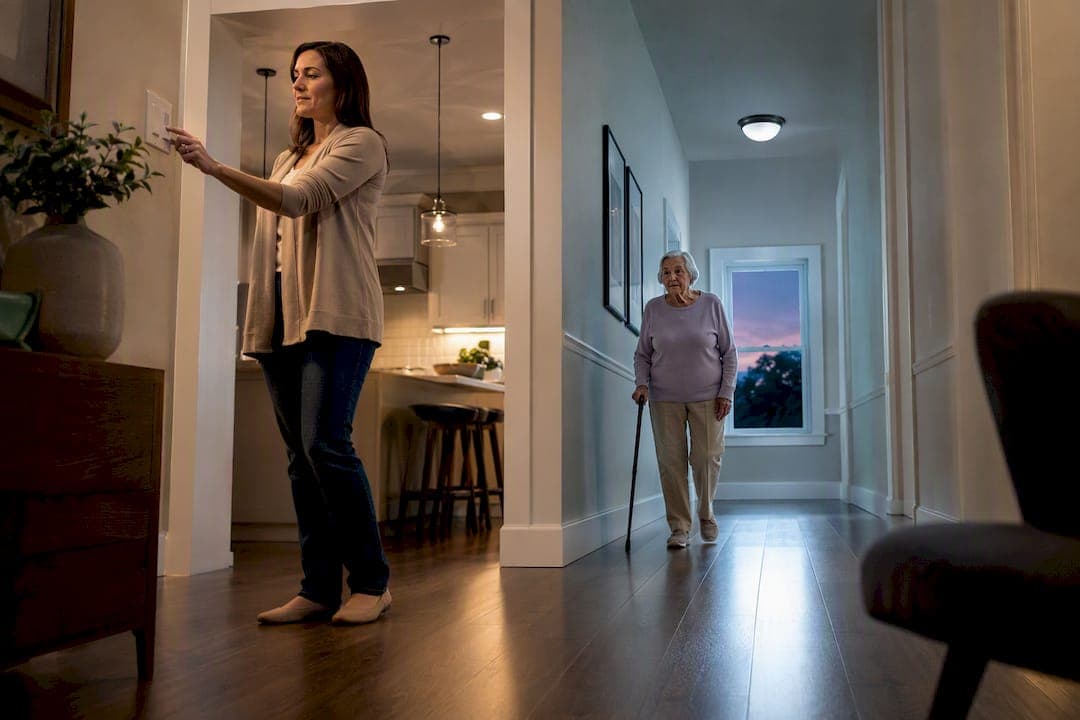
The fastest way to make a home safer is to add uniform, layered lighting throughout, then install motion-activated night lights along the path between bed and bathroom. Do that with warm-to-neutral dimmable LEDs and simple presets, and you address the two things that matter most: fall risk and independence. A 4-month intervention study found that older adults who got better lighting reported real gains in daily tasks, and similar improvements are observed in homes when practical lighting changes are made.
TL;DR:
- Raising living room lighting to about 200 lux significantly improves older adults’ ability to perform daily tasks, especially when combined with layered, glare-controlled lighting.
- Uniform, layered lighting that includes ambient, task, and accent lights, along with motion sensors and smooth transitions, reduces fall risks and enhances independence.
- Focused lighting on the nighttime path, with motion-activated low-glow lights and consistent illumination, prevents dark gaps that often cause falls during night trips.
- Choose warm-to-neutral LED bulbs with high CRI, dimmable features, and placement at eye level to optimize contrast, reduce glare, and accommodate age-related vision changes.
- Implementing quick fixes like nightlights, under-cabinet strips, and plug-in motion sensors in the first week can drastically improve safety while planning for comprehensive improvements.
Table of Contents
- Why Aging Eyes Need a Different Approach to Lighting
- Layered Lighting, Glare Control, and Smooth Transitions
- How Bright Should Senior Home Lighting Be?
- Room-by-Room Lighting Checklist
- Building a Safe Path for Nighttime Trips
- Controls Seniors Can Actually Use
- The Fastest, Cheapest Fixes to Start With
- What the Research Actually Shows
- Your First 30 Days: A Simple Priority Plan
- How Helping-mom Can Help You Take the Next Step
- Sources
- FAQ
Why Aging Eyes Need a Different Approach to Lighting
Your parent isn't imagining it when they say the hallway feels darker than it used to. Aging eyes let in less light, adjust more slowly when moving between rooms, and struggle more with glare from bare bulbs or shiny floors. Contrast sensitivity drops too, which is why a beige rug on a beige floor can hide a step edge that used to be obvious.
This is not a small cosmetic issue. In the Norwegian intervention study, researchers raised living room light levels from roughly 35 lux to about 200 lux and gave residents a simple three-level control. The result: a statistically significant improvement in self-reported ability to handle daily activities like reading and writing, compared to the control group.
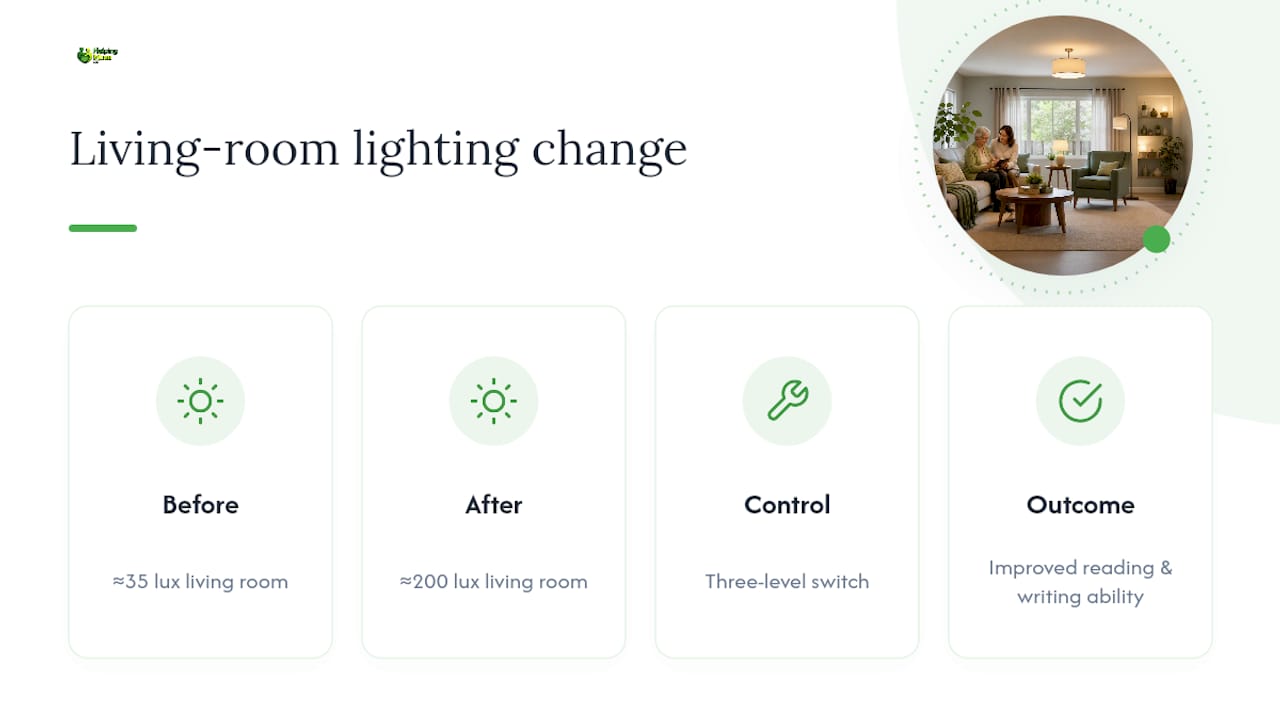
That's the target for the rest of this guide: even, layered light with no jarring transitions, minimal glare, and controls a person with arthritis or low vision can actually use.
Layered Lighting, Glare Control, and Smooth Transitions
Good senior-friendly lighting isn't about one bright fixture in the ceiling. It works in three layers, and each one does a different job.
- Ambient light fills the whole room evenly, usually from overhead fixtures or multiple lamps, so there are no dark corners.
- Task light targets a specific activity, like reading, cooking, or sorting pills, and sits close to where the work happens.
- Accent light highlights hazards or transitions, such as a step edge, a doorway, or a light switch itself.
Glare is the enemy of all three. Bare bulbs, glossy lampshades, and uncovered fixtures scatter harsh light that aging eyes struggle to filter out. Choose fixtures with frosted or diffused covers, point lamps away from eye level, and avoid highly polished countertops or floors near light sources when you can.
Uniformity matters just as much as brightness. Walking from a bright kitchen into a dim hallway forces the eyes to readjust, and that lag is exactly when a stumble happens.
Pro Tip: Walk the home at dusk before making any changes and note every spot where you personally have to pause to let your eyes adjust. Those are your priority zones.
How Bright Should Senior Home Lighting Be?
Lumens measure the total light a bulb produces. Lux measures how much of that light actually lands on a surface, which is what your eyes respond to. A bulb's lumen rating on the box tells you output; where you place it determines the lux your parent experiences at the kitchen counter or the top of the stairs.
Practical lux targets to aim for:
- Living rooms and bedrooms: around 150 to 200 lux for general activity, matching the level participants preferred in the Norwegian study.
- Kitchens and bathrooms: 300 lux or higher at task areas like the stove, sink, and mirror.
- Hallways and stairs: consistent, even lighting with no dark gaps between fixtures.
When shopping, look for a Color Rendering Index (CRI) of 80 or above so colors and contrast look natural rather than washed out. Choose warm-to-neutral white bulbs (around 2700K to 3500K) for living spaces, and slightly cooler, brighter bulbs for task zones like kitchen counters. Dimmable LEDs give you flexibility to adjust as needs change, and they last far longer than incandescent bulbs, which matters if your parent has trouble climbing a step stool to change one. A free smartphone lux meter app can give you a rough reading in any room in under a minute.
Room-by-Room Lighting Checklist
Go through each space with fresh eyes, ideally at the same time of day your parent is most active there.
- Living room. Layer the overhead fixture with a floor lamp and a table lamp near the favorite chair. Add accent lighting near any steps, thresholds, or rug edges, and make sure light switches are within easy reach without crossing a dark patch of room first.
- Kitchen. Install under-cabinet lighting so countertops aren't shadowed by the cook's own body. Overhead light should be even across the whole room, not concentrated over one spot, and stove or sink areas need dedicated task lighting.
- Bathroom. Use bright, glare-free overhead and vanity lighting, since this is a high-fall-risk room with hard, unforgiving surfaces. Add a soft nightlight near the toilet and choose moisture-rated fixtures that can handle steam and splashes.
- Hallways and stairs. Keep light levels consistent from one end to the other, with dedicated lighting on stair treads. Motion sensors at the top and bottom of the stairs mean nobody has to fumble for a switch in the dark.
- Bedroom. A motion-activated light under the bed or along the floor helps with nighttime bathroom trips without a jarring overhead light. Keep the path to the door clear of cords and furniture, and consider a voice-activated or remote-controlled main light for anyone with limited mobility.
Pro Tip: Ask your parent to walk you through their actual nighttime routine, bed to bathroom, room to room. You'll spot the dark gaps faster than any checklist alone.
Building a Safe Path for Nighttime Trips
The walk from bed to bathroom is where most nighttime falls happen, and it's the single most valuable stretch of home to fix. Motion-activated, warm-toned lights work better here than switches, because nobody has to find anything in the dark.
Aim for an unbroken chain of light rather than one bright spot:
- A low-glow light under or beside the bed that triggers as soon as feet hit the floor.
- A motion sensor light in the hallway that overlaps with the bedroom light's reach, so there's no dark gap between the two.
- A soft light at the bathroom entrance and another near the toilet itself.
For power, plug-in nightlights are the most reliable since they never run out of charge, but battery-operated or rechargeable stick-on lights work well anywhere there's no outlet, like partway down a hallway. Whichever you choose, check batteries monthly. A motion light that's died quietly is worse than no light at all, because everyone assumes it still works. Research on nightlight preferences also notes that seniors often say they prefer dimmer, cooler light, but objective walking-safety measures favor slightly brighter, warm-toned setups, so lean toward safety over initial comfort and adjust from there.
Controls Seniors Can Actually Use
The best lighting plan fails if the controls are confusing. Aim for simplicity over sophistication.
- Set up three simple presets, normal, medium, and low, rather than a dimmer with a dozen subtle gradations nobody remembers how to use.
- Choose motion or occupancy sensors for hallways, stairs, and closets, but set the sensitivity carefully so lights don't flash on too abruptly or trigger from a passing pet.
- Retrofit dimmer switches are often more reliable for someone with limited tech comfort, since the wall switch still works normally if the smart features fail. Smart bulbs offer more flexibility, including voice control, but only if your parent already has a smart speaker they're comfortable using.
Whatever you install, make sure there's always a manual fallback. A house that goes dark because an app crashed is not an improvement.
The Fastest, Cheapest Fixes to Start With
You don't need an electrician to make a real difference this weekend.
- Do today: Place motion nightlights along the bed to bathroom route, swap in higher lumen dimmable bulbs wherever the fixture allows it, and add one lamp at whatever spot your parent does close work, like a favorite reading chair.
- Do this weekend: Install plug-in motion sensor lights in hallways, add an under-cabinet light strip in the kitchen, and replace any exposed bathroom vanity bulb with a diffused fixture.
- Shopping list: warm or neutral dimmable LED bulbs (check the lumen rating on the box), a few plug-in motion sensor lights, one under-cabinet LED strip, several battery-powered nightlights, and a simple remote or preset hub if your parent wants voice or one-touch control.
Pro Tip: Buy two or three motion nightlights before you commit to a full house plan. Test placement for a few nights first. It's far cheaper to move a $12 light than to redo an installed fixture.
What the Research Actually Shows
The case for better lighting isn't guesswork. A controlled home intervention found that raising living room light to a preferred 200 lux with simple presets led to measurable improvement in older adults' ability to manage daily tasks. Separately:
- ANSI/IES RP-28 treats lighting as a holistic tool for independence, covering circadian health and glare control, not just brightness.
- A systematic review links pathway lighting cues and low-level LEDs to better postural stability, meaning fewer stumbles.
- The National Institute on Aging confirms that age-related vision changes genuinely increase how much light a person needs to function comfortably.
Your First 30 Days: A Simple Priority Plan
In week one, map the nighttime route, install motion path lights, swap in a better bedside light, and note any dark gaps. By month one, work through the full room checklist, set up your three-level presets, and let your parent test and adjust for comfort. If the home has multiple hazards or you're not sure where to start, that's when a home safety consultation or guided walkthrough earns its cost.
**
How Helping-mom Can Help You Take the Next Step
You don't have to figure this out room by room on your own. Helping-mom's practical guide to making a home safer for seniors turns everything in this article into a room-by-room plan with templates you can hand to a spouse, sibling, or contractor. If you want a free starting point first, our elderly home safety checklist walks you through the same priorities at no cost.
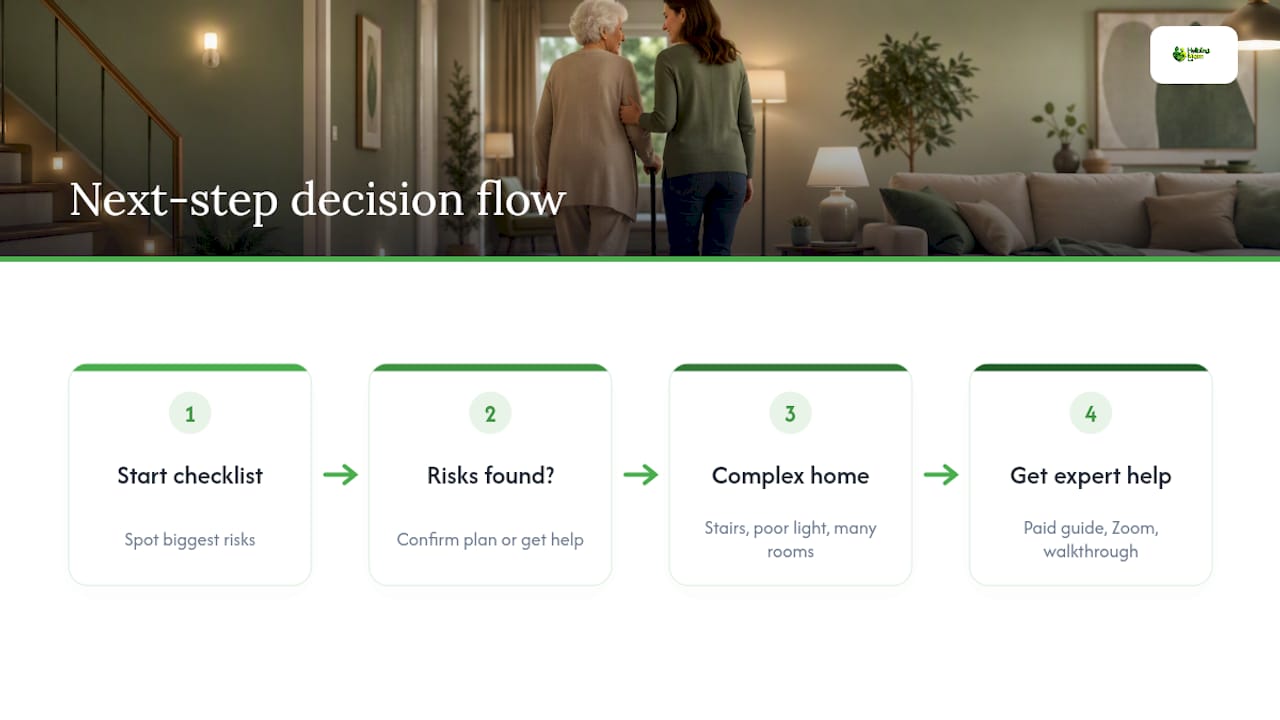
The checklist is the right move if you're early in this process and want to spot the biggest risks yourself. A paid guide or a Zoom consultation makes more sense once you know changes are needed but want an outside eye confirming your plan, or if your parent's home has stairs, poor natural light, or several rooms that need attention at once. Either way, start with the free checklist today, and consider a walkthrough with an expert when you're ready for more detailed guidance on important safety details.
Sources
For deeper reading, the PMC intervention study shows lighting's real effect on daily function. ANSI/IES RP-28 sets the professional standard for senior lighting design. The NIA's eye aging page explains why light needs increase with age. The University of Florida systematic review ties lighting cues to fall prevention.
- Improved indoor lighting improved healthy aging at home – an intervention study in 77-year-old Norwegians (PMC)
- Lighting effects on older adults' visual and nonvisual performance: A systematic review (Shimberg/University of Florida)
- Aging and your eyes — National Institute on Aging (NIA)
- Designing nightlights to facilitate evening activities among older adults: Illuminance and hue preferences (2024 DOI)
FAQ
What Type of Lighting Is Best for Elderly People?
Warm-to-neutral LED lighting (around 2700K to 3500K) with a CRI of 80 or higher, layered across ambient, task, and accent sources, works best for reducing glare while keeping rooms bright enough for daily tasks.
What Is the 5'7" Lighting Rule?
This design guideline suggests placing key light sources near seated or standing eye level, so light falls evenly on faces and work surfaces without creating harsh shadows or glare from overhead fixtures alone.
What Are Some Good Lamps for Elderly People?
Look for dimmable LED lamps with wide, diffused shades, a sturdy base that won't tip easily, and a large, simple switch or touch control instead of a small twist knob.
What Type of Lighting Is Best for People With Macular Degeneration?
Brighter, evenly distributed task lighting with minimal glare and strong contrast helps most, since central vision loss makes glare and shadow far more disruptive than for typical age-related vision changes; any specific adaptations should come from an eye care provider.