

Yes, short, practical mindfulness practices can lower caregiver stress and help you stay present while supporting your parent. You don't need a meditation cushion or a spare hour. A breathing reset, the S.T.O.P. technique, a one-minute body scan, and a gratitude check-in each take under five minutes and slot into the caregiving day you already have.
TL;DR:
- Short mindfulness practices, when integrated into daily routines, can significantly reduce caregiver stress and improve emotional resilience without requiring extra time.
- Techniques like the S.T.O.P. method, mindful breathing, and body scans can be performed during routine tasks or waiting periods, making them accessible and sustainable.
- Consistently using one practice for a week before adding another increases the likelihood of forming a lasting habit that supports mental health.
- Short practices help manage immediate stressful moments but should be combined with support for burnout signs, such as fatigue and social withdrawal.
- Structural safety improvements and seeking support are crucial when stress and burnout symptoms persist despite mindfulness efforts.
Table of Contents
- What Mindfulness Actually Does for Caregiver Stress
- Six Simple Mindfulness Techniques You Can Use Anywhere
- Fitting Mindfulness Into a Day That Has No Free Time
- Staying Present During Actual Care Tasks
- Making the Practice Stick: Habits, Help, and Boundaries
- When Mindfulness Isn't Enough
- A Caregiver-First Take on Why Small Practices Work
- How Helping-mom Supports the Habits You're Building
- Sources
- FAQ
What Mindfulness Actually Does for Caregiver Stress
Mindfulness is not about clearing your mind or feeling calm all the time. It's the practice of noticing what's happening right now, in your body and your thoughts, without immediately reacting to it. For caregivers, that small shift changes a lot.
Research from the National Institute on Aging links mindfulness with lower cortisol levels, reduced blood pressure, better sleep, and fewer symptoms of anxiety and depression. Those are the exact things caregiving tends to wreck. A randomized trial on Mindfulness-Based Stress Reduction (MBSR) found the structured program reduced stress and improved mental health outcomes specifically in family caregivers, not just in general wellness populations.
Here's the part that surprises people: mindfulness doesn't ask you to disengage from your parent's care. It helps you stay attentive while protecting your own emotional footing, according to caregiver-focused guidance from Guideposts. You’re not stepping back from your mom or dad. You’re building a small buffer so you can respond, instead of react, when things get hard.
Six Simple Mindfulness Techniques You Can Use Anywhere
These don't require privacy, silence, or extra time in your day. Most work while you're already standing in the kitchen or sitting in a waiting room.
- The extended exhale breathing reset. Inhale through your nose for a few counts, hold briefly, then exhale slowly through your mouth at a comfortable pace. Two rounds of this, done before you walk into a doctor's appointment or answer a difficult phone call, can help calm your nervous system.
- The S.T.O.P. technique. When your loved one becomes agitated or resistant to care, Stop what you're doing, Take a breath, Observe what you're feeling in your body and what's actually happening in the room, then Proceed with intention rather than frustration. This pause, recommended by VNS Health for caregiving moments specifically, can defuse a tense exchange before it escalates.
- A one to three minute body scan. Between tasks, close your eyes and mentally check your shoulders, jaw, and hands. Caregivers hold tension in these three spots constantly without noticing.
- Loving-kindness phrases. Silently repeat something like, "May I be patient with myself today. May I be gentle with my mom today." It sounds small. It shifts your internal tone anyway.
- A gratitude micro-reflection. Name one thing, out loud or in a notes app, that went okay today. Not perfect. Okay.
- A sensory grounding check-in. Name five things you can see, four you can hear, three you can touch. This resets an anxious mind faster than trying to "think calm thoughts."
Pro Tip: Pick just one of these six and use it for a week before adding another. Mindfulness sticks when it's simple, not when you try to overhaul your whole routine overnight.
Fitting Mindfulness Into a Day That Has No Free Time
You don't need a quiet room. You need a cue you already pass by. Caregiver-focused mindfulness programs increasingly recommend tying practice to routine tasks rather than expecting a separate session, and that approach shows better follow-through than long sit-down meditation.
- Waiting on hold with the pharmacy or insurance company: three slow breaths before you speak to the representative.
- Before you knock on your parent's door in the morning: one breath, one thought: "I'm here now."
- While the coffee brews or the microwave runs: a 30 second body scan, shoulders down, jaw unclenched.
- In the car before you walk into a doctor's appointment: two rounds of the extended exhale.
- Right after your parent falls asleep for the night: a single gratitude line in your phone.
If a short break still feels selfish, reframe it. A calmer version of you makes better decisions and has more patience left for your parent. That's not indulgence. It's maintenance.
Staying Present During Actual Care Tasks
Mindfulness works best woven directly into the moments that cause the most friction, not saved for later when you finally have a break.
- Before a transfer or bathing routine, take one breath and silently name your intention: "Slow and steady." This single second of pause reduces the rushed movements that lead to falls or resistance.
- When your parent refuses medication or gets combative, label the emotion out loud in your head rather than swallowing it: "I'm feeling frustrated right now." Naming it, a technique noted by Psychology Today's caregiving coverage, creates just enough distance that you respond rather than snap.
- If a safety issue is unfolding right now, a wandering parent near stairs, a stove left on, act first. Mindfulness is never a reason to delay a safety response. Ground yourself after the moment passes, not during it.
- Pair a safety check with a grounding breath. After you've confirmed the walker is locked or the bath water temperature is safe, take one slow breath before moving to the next task. It's a two-second habit that adds up over a full day of caregiving.
Making the Practice Stick: Habits, Help, and Boundaries
Mindfulness only helps if you're not running on empty. Pairing short practices with real support is what makes them sustainable.
- Ask for specific help, not general help. "Can you sit with Mom Tuesday from 2 to 4 so I can go to my own appointment" gets a yes far more often than "Let me know if you can ever help." Being direct removes the guesswork for whoever you're asking, according to NIA caregiver guidance.
- Set a boundary script ready to go: "I can't take that call right now, I'll call you back at 6."
- Even a few hours of respite a week measurably improves caregiver well-being, per the CDC, so treat respite as maintenance, not a luxury.
- A consistent short practice beats an occasional perfect one. Five minutes daily outperforms a rare hour.
For a fuller framework on requesting help and setting limits, Helping-mom's guide to reducing caregiver stress walks through scripts you can adapt today.
When Mindfulness Isn't Enough
Short practices ease day-to-day stress, but they aren't a substitute for real support when burnout has taken hold. Watch for chronic fatigue that sleep doesn't fix, irritability that feels out of character, ongoing sleep disturbances, or pulling away from friends and activities you used to enjoy. The Harvard Health overview on caregiver burnout lists these as the core warning signs.
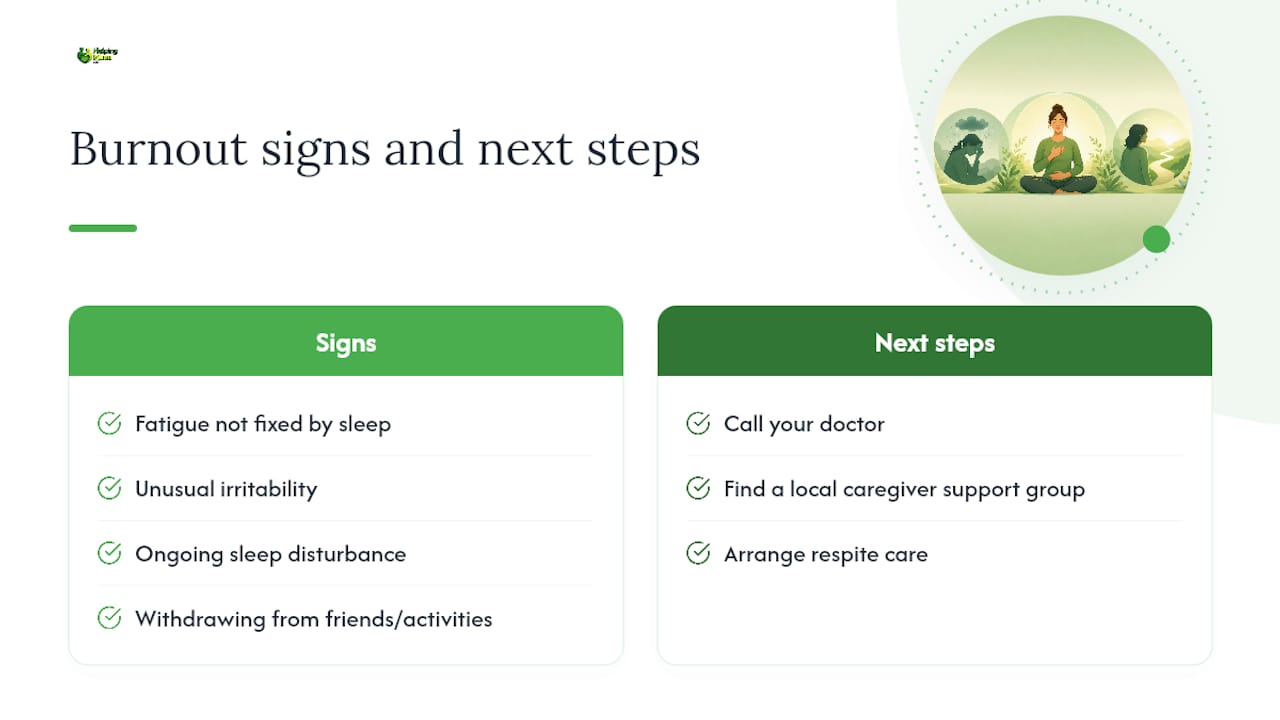
If you're seeing several of these at once, it's time to call your doctor, look into a local caregiver support group, or arrange respite care. Helping-mom's guide to recognizing caregiver burnout walks through what those next steps look like in practical terms.
A Caregiver-First Take on Why Small Practices Work
Most advice about caregiver stress assumes you have room in your day to add something. You don't. That's exactly why the mindfulness advice that actually works for caregivers looks nothing like the version marketed to everyone else. It's not a 20 minute app session. It's a breath in a hallway, a labeled thought while your hands are still busy, a gratitude line typed with one thumb while the other holds a glass of water.
The caregivers who stick with mindfulness long enough to feel a difference are the ones who stopped treating it as a project and started treating it as a habit stapled onto something they were already doing. That's the whole trick. Helping-mom's caregiver wellbeing resources exist because the emotional side of caregiving deserves the same practical, no-jargon treatment as the safety side.
Picture the moment right after a hard conversation with a parent who doesn't recognize you that day. That's not the moment for a 20-minute meditation app. It's the moment for one breath, one labeled feeling, and permission to keep going without carrying the whole weight of it into the next hour.
— Mike C.
How Helping-mom Supports the Habits You're Building
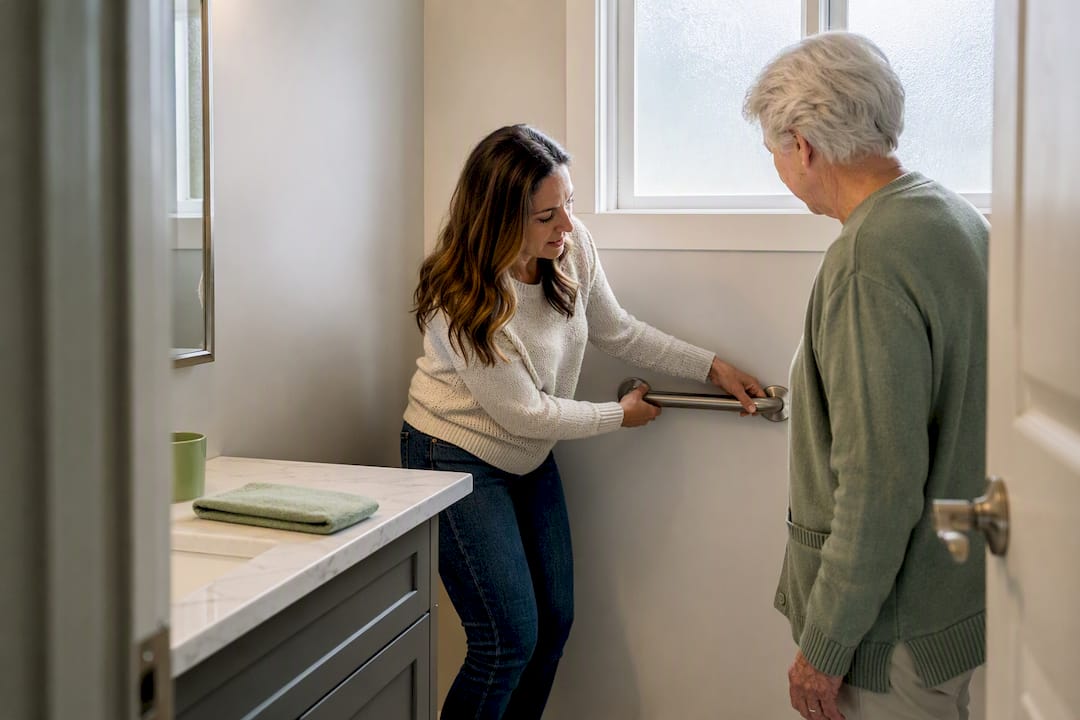
Short mindfulness practices calm you in the moment, but the exhaustion behind caregiver stress often comes from something structural, unsafe stairs, a bathroom without grip bars, a home that requires constant vigilance. That's where Helping-mom's practical guides fill the gap that breathing exercises can't.
Helping-mom's Managing Caregiver Stress guide walks through scheduling, delegation scripts, and burnout warning signs in plain language, no clinical terms, no overwhelming checklists. If part of your stress comes from worrying about your parent's safety when you're not there, the Practical Guide to Making Home Safer for Seniors gives you a clear, room-by-room starting point instead of a vague sense that you should "do something."
For caregivers who want more than a self-guided read, one-on-one Zoom consultations are available to talk through your specific situation and build a plan you can actually follow. Start with the safety guide, then reach out for a consultation if you want a second set of eyes on your particular setup.
Sources
For deeper reading on the physiological and clinical side of caregiver mindfulness, the NIA's caregiver self-care guidance, Harvard Health's burnout overview, the Alzheimer's Foundation of America's mindfulness suggestions, and the PMC randomized MBSR trial each offer research-backed detail beyond what fits here. For a European caregiver perspective, Finlandic's practical caregiver tips covers similar ground from a different angle.
- Taking care of yourself: Tips for caregivers | National Institute on Aging
- Relief for caregiver burnout | Harvard Health
- Mindfulness-Based Stress Reduction for Family Caregivers (randomized controlled trial) | PMC
- Caring for yourself as a caregiver | CDC
FAQ
How Does Mindfulness Help Caregivers?
Mindfulness lowers physiological stress markers like cortisol and blood pressure while improving sleep and mood, according to the National Institute on Aging. It also creates a brief pause between a stressful trigger and your response, which reduces reactive frustration during hard caregiving moments.
What Are Three Symptoms of Caregiver Burnout?
Chronic fatigue, irritability, and sleep disturbances are three common signs, along with social withdrawal, according to Harvard Health. If you notice several of these together, it's worth talking to your doctor or looking into respite support.
What Are Positive Affirmations for Caregivers?
Simple, honest phrases work best: "I am doing the best I can with the resources I have" or "I am allowed to take a break," both suggested by the Alzheimer's Foundation of America. These shift focus away from guilt and toward what you're actually managing to do.
Can I Practice Mindfulness Without Setting Aside Extra Time?
Yes. Short mindfulness practices like a three breath reset while on hold with a pharmacy or a one minute body scan while coffee brews fit directly into tasks you're already doing, without requiring a separate block of time.
When Should I Seek Help Beyond Mindfulness?
If fatigue, irritability, or sleep problems persist despite short practices, it's time to call a clinician, arrange respite care, or join a caregiver support group rather than relying on mindfulness alone.