
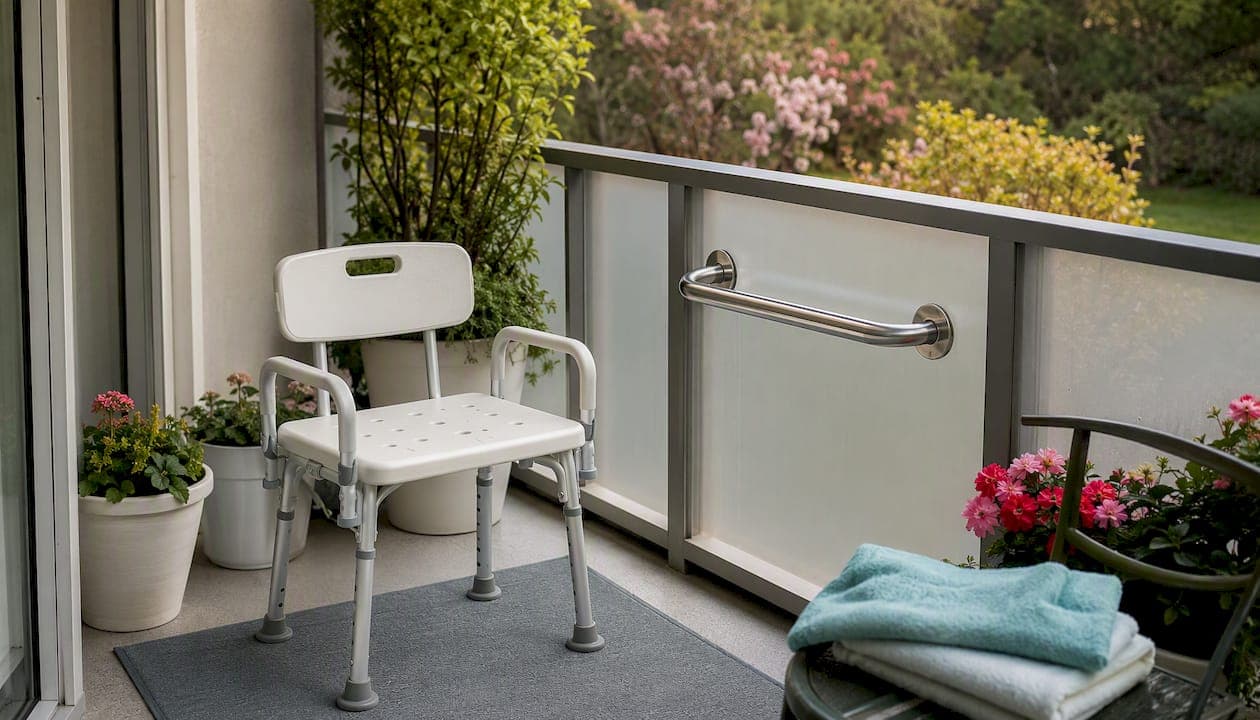
The role of daily living aids is simple to state, even when the emotions around them are not: they let your parent handle essential self-care tasks safely and with less strain on both of you. A raised toilet seat, a shower chair, a well-placed grab bar. None of these fix the underlying reason your mom or dad has slowed down. But they close the gap between what a task demands and what your parent's body can currently do.
That gap is where falls happen, where dignity gets chipped away, and where caregiving hours quietly pile up on your calendar. Daily living aids work by shrinking it.
Here's what that looks like in practice:
- Maintaining independence — letting your parent dress, bathe, or cook without needing you in the room every time.
- Preventing falls and injury — grab bars and non-slip surfaces address the leading causes of bathroom accidents.
- Preserving dignity — tools that reduce the need for hands-on help with toileting or bathing matter more emotionally than most families expect.
- Lightening caregiver load — some studies link assistive device use to fewer informal caregiving hours, though the research base is still small.
The rest of this guide walks through the categories of aids, how to choose one that actually fits, where to find or borrow equipment, and a checklist you can start using this week.
Key Takeaways
Daily living aids reduce fall risk, preserve independence and dignity, and can ease caregiving hours, but only when the device genuinely fits the task and the person.
| Point | Details |
|---|---|
| Aids close a specific gap | They work by matching a task's demands to what your parent can currently do, not by fixing the underlying condition. |
| Fit matters more than the device | Well-being gains are strongest when a device fully accommodates the need, not just when it's present. |
| Bathing and toileting see the most success | Around 28.7% and 37.9% of older adults successfully accommodated these tasks with assistive technology in one study. |
| Trial before buying | Loan closets and DME suppliers let you test fit and sizing before committing to a purchase. |
| Get professional input when needed | An occupational therapist, physical therapist, or a Helping-mom consultation can assess weight-bearing or higher-risk devices. |
Table of Contents
- What Are Activities of Daily Living and Why Do They Matter?
- Which Daily Living Aids Match Which Everyday Tasks?
- How Do Daily Living Aids Actually Help?
- How Do You Choose the Right Daily Living Aid?
- Where Can You Find or Borrow Daily Living Aids?
- What Should Be on Your Caregiver Checklist This Week?
- A Caregiver's Honest Look at Living With These Devices
- How Can Helping-mom Support You With This?
- Where Can You Learn More?
- Sources
- FAQ
What Are Activities of Daily Living and Why Do They Matter?
Activities of daily living, or ADLs, are the basic self-care tasks most of us do without thinking: eating, dressing, bathing, using the toilet, and moving from a bed to a chair. Instrumental activities of daily living, or IADLs, are one layer up in complexity. They include managing medications, cooking meals, handling money, and grocery shopping.
The distinction matters because it tells you where to focus first. A parent who struggles with an IADL like meal prep might just need a service or a family member checking in. A parent who struggles with a basic ADL like transferring from bed to chair is facing a different level of risk, and often a different level of support.
This is not a small distinction to clinicians. ADL assessment is a core part of care planning, because the inability to perform them reliably predicts whether someone will eventually need paid home care, a hospital stay, or a move to a more supportive living arrangement. Cleveland Clinic frames it plainly: ADL decline is one of the clearest signals that a family needs to start planning for more support, not less.
- Basic ADLs: eating, dressing, bathing, toileting, transferring
- Common IADLs: taking medication correctly, shopping, cooking, managing bills, using the phone
A parent who needs a little help buttoning a shirt is in a very different place than one who can no longer get off the toilet safely. Both matter. They just call for different responses.
Pro Tip: If you're not sure how serious a struggle with a specific task really is, ask an occupational therapist for a short in-home ADL assessment. It's a low-key visit, not a crisis intervention, and it gives you an objective read instead of a guess.
Which Daily Living Aids Match Which Everyday Tasks?
Daily living aids aren't one category. They're a toolkit organized around specific tasks, and matching the right tool to the right task is most of the work.
Mobility and transfers
Sit-to-stand aids, transfer belts, and rolling walkers reduce the physical strain of getting from one place to another. These are often the first aids a family considers because a fall risk during a transfer is one of the more visible dangers.
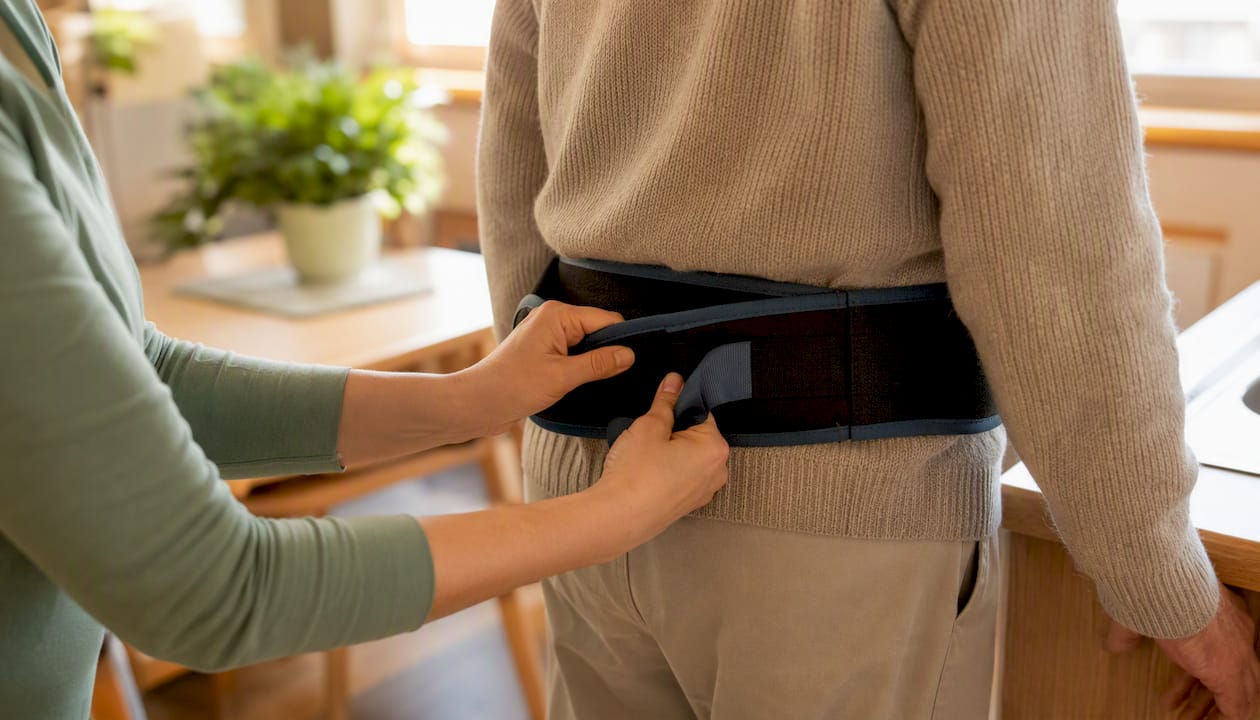
Pro Tip: Have a physical therapist watch an actual transfer before buying a device. A transfer belt used wrong can be more dangerous than no belt at all.
Bathing and showering
Shower chairs, handheld shower heads, and non-slip mats turn one of the highest-risk rooms in the house into a manageable space. Grab bars belong here too, though they double as a home safety fix well beyond bath time.
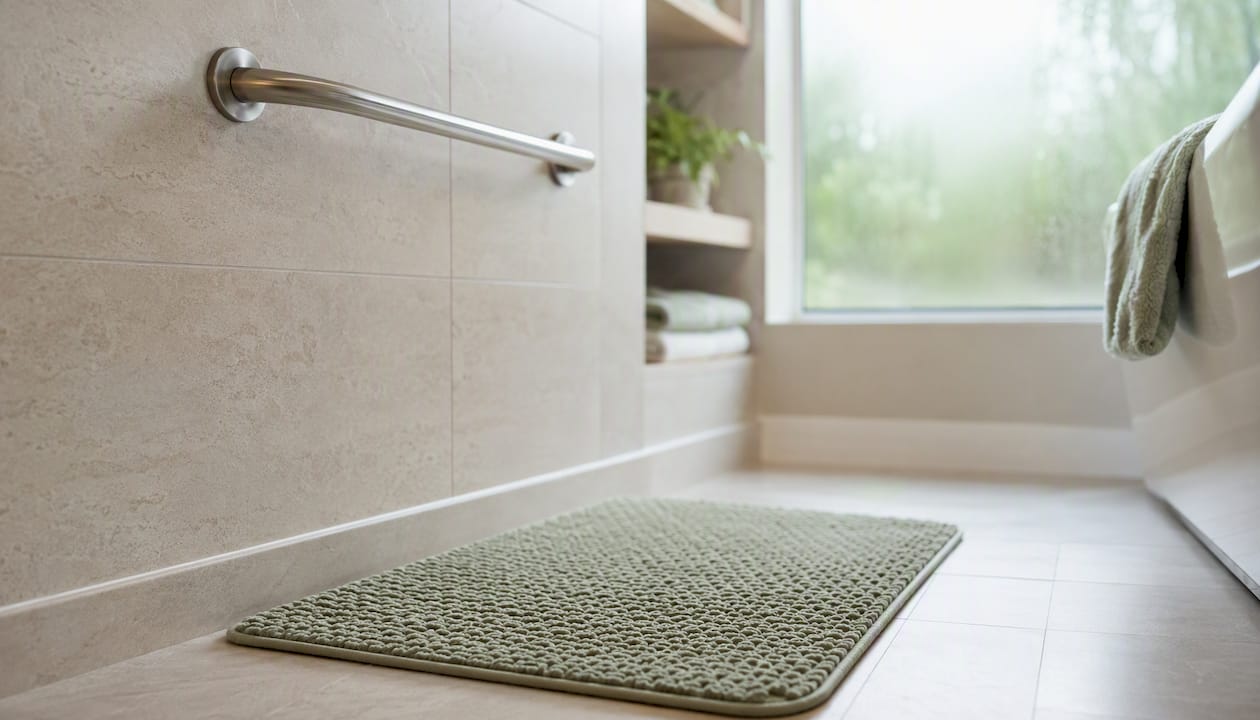
Pro Tip: Grab bars need to be anchored into wall studs, not just drywall. A poorly installed bar can pull loose exactly when someone leans on it.
Toileting and continence
Raised toilet seats, bedside commodes, and toilet safety frames address one of the tasks older adults are most reluctant to ask for help with.
Pro Tip: Introduce a raised toilet seat before it's urgently needed. Trying a new device for the first time during a crisis rarely goes well.
Dressing and grooming
Button hooks, zipper pulls, long-handled shoehorns, and sock aids solve for reduced hand strength or limited range of motion.
Pro Tip: Test dressing aids with clothing your parent actually wears. A sock aid that works for thin cotton socks may not work for compression stockings.
Eating and kitchen tools
Weighted or built-up utensils, non-slip plates, and one-handed cutting boards help with tremors, grip weakness, or limited use of one hand.
Pro Tip: Buy one utensil to test before committing to a full set. Grip preferences vary a surprising amount from person to person.
Home safety and fall prevention
Non-slip rugs, improved lighting, and handrails on stairs reduce fall risk throughout the house, not just in the bathroom.
Communication and cognition supports
Large-button phones, medication reminder devices, and simple visual schedules support memory and reduce the number of small daily decisions that can overwhelm someone.
| Category | Example Aids | Typical Source |
|---|---|---|
| Mobility & transfers | Transfer belt, sit-to-stand aid, walker | Medical equipment supplier, pharmacy |
| Bathing | Shower chair, grab bars, non-slip mat | Big-box retailer, DME supplier |
| Toileting | Raised toilet seat, bedside commode | Pharmacy, online retailer |
| Dressing & grooming | Button hook, sock aid, long-handled shoehorn | Online retailer, occupational therapy clinic |
| Eating | Weighted utensils, non-slip plate | Online retailer, big-box store |
| Communication & cognition | Large-button phone, pill reminder | Pharmacy, online retailer |
The World Health Organization frames assistive products broadly, as tools that enable participation and independence rather than simple workarounds for chores. That framing matters, because it's easy to think of a shower chair as an admission of decline. It's closer to a seatbelt: a small piece of equipment that lets someone keep doing what they've always done, just more safely.
How Do Daily Living Aids Actually Help?
The benefits break into four buckets: safety, independence, dignity, and caregiver time. Each has research behind it, though the strength of that research varies.
Fall prevention is the most direct. Bathrooms and stairways are where most home falls happen, and grab bars, non-slip surfaces, and better lighting address the physical conditions that cause them.
Independence is harder to quantify but easy to observe. A longitudinal study through the National Health and Aging Trends Study found that when an assistive device fully accommodated a person's needs, their reported well-being came close to matching pre-disability levels. The accommodation has to be a genuine fit, not just a device sitting in the corner of the bathroom.
That same study offers a useful benchmark for what "genuine fit" looks like in practice:
Among older adults tracked in the study, bathing and toileting were the two activities most often successfully accommodated by assistive technology, at rates of 28.7% and 37.9% respectively at baseline.
Those numbers aren't a ceiling. They're a reminder that accommodation isn't automatic just because a device is present, and other activities tend to be accommodated less reliably. Fit, training, and follow-up all affect whether a device actually closes the gap it was bought to close.
Dignity is the benefit families talk about least and feel the most. Being able to use the toilet without assistance, or to bathe with only minimal help, changes how a parent experiences the day. It's not a footnote to independence. It's often the reason independence matters at all.
Caregiver time is the benefit with the most mixed evidence. A systematic review published in BMC Geriatrics found that assistive device use was linked to reduced informal caregiving hours in some of the included studies, but the overall evidence base was small and of uneven quality. Treat this as a real possibility, not a guarantee. Some families see hours of relief. Others see a modest reduction. The device still tends to help even when the time savings are hard to measure.
- Fall risk drops when home hazards are addressed alongside mobility aids.
- Well-being improves most when a device fully closes the gap between task demands and ability.
- Caregiving hours may decrease, though the research supporting this is limited.
- Not every device works for every person; poor fit is the most common reason aids fail.
How Do You Choose the Right Daily Living Aid?
Start with the specific task, not the aisle at the store. A parent struggling to get out of the bathtub needs a different solution than one struggling to grip a fork, even though both might get labeled "getting frailer."
- Name the exact problem. Is it balance, grip strength, vision, memory, or something else? Vague concerns lead to the wrong purchase.
- Try the lowest-impact aid first. A grab bar is less disruptive than a full bathroom remodel. Start small and add support as needed.
- Trial before you buy when possible. Sizing and hand strength vary enough that what works for a neighbor may not work for your parent.
- Get an OT or PT involved for anything load-bearing. Transfer aids, mobility devices, and anything your parent's full weight will rest on deserve a professional's eye.
- Monitor for the first few weeks. A device that seemed fine on day one sometimes reveals problems once it's part of a daily routine.
Ask these questions before committing to any purchase:
- Can this be sized or adjusted to my parent's specific body and home?
- What's the return or trial policy if it doesn't work?
- Does it come with any instructions or training, or will I need to figure it out alone?
- Is there a warranty, and what does it actually cover?
Watch for red flags: a device that requires more strength or balance than your parent currently has, one that's confusing enough to cause hesitation at exactly the wrong moment, or one that makes your parent feel more like a patient than a person. Any of those can increase risk instead of reducing it.
Pro Tip: If your parent resists a device outright, the issue is sometimes dignity, not function. A commode that looks medical will get more resistance than one designed to look like regular bathroom furniture.
Where Can You Find or Borrow Daily Living Aids?
You have more options than the pharmacy aisle. Medical equipment suppliers, known as DME providers, carry a wider selection and often offer guidance on sizing. Big-box retailers and online stores are convenient for smaller items like reachers or button hooks. Community loan closets and university-affiliated lending programs, such as regional LEND programs, let you try equipment before buying it outright, which matters given how often the first device isn't the right fit.
Medicare covers durable medical equipment under specific conditions, but coverage comes with real limits. Some items require a doctor's order. Others are only partially covered, leaving the rest as an out-of-pocket cost. Check eligibility before assuming Medicare will handle a larger purchase like a hospital bed or power wheelchair.
Borrowing before buying isn't a budget shortcut so much as a fit test. The device that looked perfect online sometimes turns out to be the wrong height, the wrong grip, or simply the wrong fit for your parent's bathroom.
Pro Tip: Call a local loan closet before ordering anything larger than a reacher or a dressing aid. Many communities have programs run through hospitals, area agencies on aging, or veteran services that most families never hear about until they ask.
If you want a broader look at technology options beyond the basics covered here, Helping-mom's guide to assistive devices for elderly parents goes deeper into product-specific choices.
What Should Be on Your Caregiver Checklist This Week?
Getting a device into the house is step one. Getting it actually used, safely and consistently, takes a few more steps.
- Assess the task. Watch your parent attempt the specific activity and note exactly where it breaks down.
- Source or trial the aid. Borrow if you can, buy if you can't, and confirm return policies either way.
- Fit and train together. Sit through the first few uses. A device introduced and abandoned helps no one.
- Set a routine. Attach the new habit to an existing one, like using a shower chair every time bath night happens.
- Maintain it. Check fastenings, batteries, and non-slip surfaces every few weeks. A loose grab bar is worse than no grab bar.
- Review and adjust. Revisit after a month. Needs change, and so should the equipment.
Introduce new devices gently. Framing matters more than most families expect. "Let's try this so bath time is easier for both of us" tends to land better than "You need this now." Small habit changes, like keeping a reacher by the recliner instead of in a closet, make the difference between a device that gets used and one that gathers dust.
Call in an occupational therapist, a physical therapist, or a Helping-mom consultation when a device involves weight-bearing, when your parent has had a recent fall, or when you're simply unsure if what you're seeing is normal aging or something that needs more attention.
If a device isn't working, troubleshoot before giving up on it entirely: check sizing, check placement, and ask whether the resistance is really about the device or about something else, like fatigue or frustration that day. If problems persist for more than a couple of weeks, that's the signal to escalate to a professional assessment rather than trying yet another product.
A Caregiver's Honest Look at Living With These Devices
The first time a shower chair shows up in your parent's bathroom, it rarely feels like a win. It feels like an admission that something has changed, and that feeling doesn't go away just because the chair is objectively useful. What actually shifts things is watching your parent use it without needing you to hover in the doorway. That's the moment the device stops being a symbol of decline and starts being a small, unremarkable part of the routine, which is exactly what it should be.
The learning curve is real, and it's usually shorter than families expect. Most of the friction happens in the first week, not the first month. If you're at that stage right now, the checklist above is the next right step. Trial it, fit it, give it a routine, and check back in a few weeks.
Helping-mom exists because these moments, small as they seem, are where most caregiving actually happens. Not in the big decisions, but in the shower chairs and the grab bars and the quiet relief of watching a parent manage on their own again.
How Can Helping-mom Support You With This?
Choosing the right aid is only part of the picture. Making a home genuinely safer, room by room, is the bigger project most families are actually facing, and it's easy to get stuck figuring out where to start. Helping-mom offers digital guides and checklists you can use today, paid Zoom consultations if you want a real conversation about your specific situation, and in-person home safety assessments for families in Central Florida who want someone to walk through the house with them.
If you're not sure where the highest-risk spots in your parent's home actually are, the practical guide to making a home safer for seniors is a good place to start. It walks through the same kind of room-by-room thinking used in this guide, but applied to the whole house rather than a single device. From there, booking a consultation gives you a second set of eyes and a plan you don't have to build alone.
Where Can You Learn More?
- Activities of Daily Living (StatPearls / NCBI Bookshelf): a clinical overview of ADL assessment and why it matters for care planning.
- Assistive Technology Fact Sheet, World Health Organization: a broad framing of assistive products as enablers of independence.
- NHATS Study on Assistive Technology and Well-Being: the source behind the bathing and toileting accommodation figures.
- Systematic Review on Assistive Devices and Informal Caregiving: evidence on caregiver time savings, with honest caveats about study quality.
- Medicare Durable Medical Equipment Coverage: coverage rules and limits for larger equipment purchases.
- NICHD Overview of Assistive Device Types: device categories across mobility, hearing, vision, and communication.
- Activities of Daily Living, Cleveland Clinic: plain-language definitions of ADLs and why decline predicts care needs.
If you take one thing from these sources, let it be this: an occupational therapist can assess your specific situation far more precisely than any general guide, including this one.
This article offers general, non-medical information and isn't a substitute for a professional assessment. Always confirm coverage rules and clinical recommendations with a qualified provider before making decisions about your parent's care.
This article is general information, not a substitute for advice from a qualified doctor. Consult a qualified healthcare professional about your own circumstances before acting on anything here.
Sources
- Activities of Daily Living (StatPearls / NCBI Bookshelf)
- The Impact of Disability and Assistive Technology Use on Well-Being in Later Life: Findings From the National Health and Aging Trends Study - PMC
- Assistive technology - World Health Organization
- Medicare
FAQ
What is the main role of daily living aids?
Their role is to let someone perform essential self-care tasks, like bathing, dressing, or transferring, safely and with more independence, while reducing physical risk for both the person and their caregiver.
What's the difference between ADLs and IADLs?
ADLs are basic self-care tasks like eating, bathing, and toileting, while IADLs are more complex tasks like managing medications, cooking, and handling finances.
Do daily living aids really reduce caregiver hours?
Some studies suggest they can, but the evidence is limited. A systematic review found reduced informal caregiving hours in some studies, though the overall research base was small.
When should I involve an occupational therapist?
Involve one for anything weight-bearing, like transfer aids or mobility devices, or whenever you're unsure if a struggle with a task reflects a bigger issue.
Where can I try equipment before buying it?
Community loan closets, university-affiliated lending programs, and some medical equipment suppliers let you trial devices before committing to a purchase, which helps avoid a poor fit.
Does Medicare cover daily living aids?
Medicare covers some durable medical equipment under specific conditions, but coverage has limits, and some items require a doctor's order or come with out-of-pocket costs.
Recommended
- Daily Living Support: A Caregiver's Guide for Families
- The Role of Caregivers: Practical Support for Adult Children Caring for Aging Parents | Helping Mom LLC
- What Assisted Living Really Means for Your Aging Parent | Helping Mom LLC
- Assistive Devices for Elderly Parents: A 2026 Guide | Helping Mom LLC