
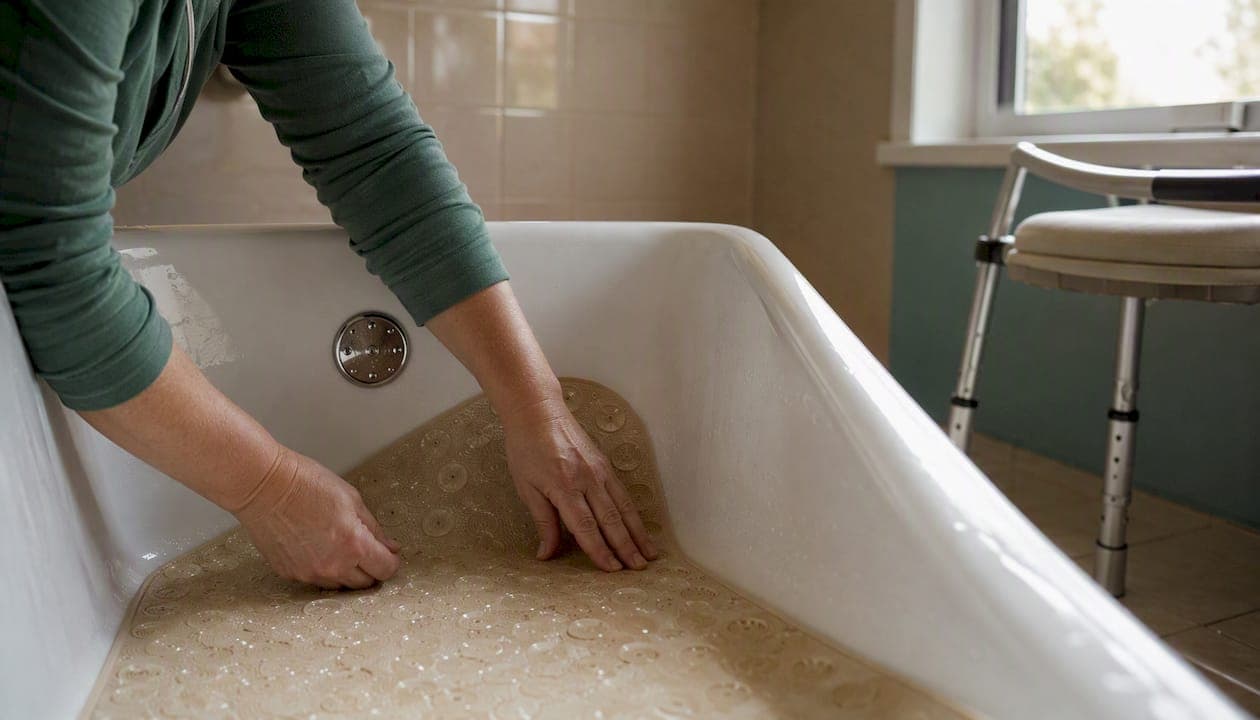
The six types of home safety devices that matter most for aging parents are bathroom safety devices, mobility and access aids, personal emergency response systems (PERS), daily-living and kitchen tools, lighting and fall-prevention fixes, and medication management devices. Before buying anything, schedule a formal home-safety assessment with an occupational therapist (OT) or certified specialist. That one step shapes every decision that follows. Read through the list below to understand what each category includes and how to prioritize.
Key device categories at a glance:
- Bathroom: grab bars, shower chairs, raised toilet seats, non-slip flooring
- Mobility and access: handrails, stair lifts, ramps, walkers, rollators
- Emergency and monitoring: medical alert systems, wearables, wall buttons
- Daily living and kitchen: lever handles, reachers, pull-out shelves
- Lighting and fall prevention: motion night-lights, step-edge tape, sensor switches
- Medication management: pill organizers, automated dispensers, reminder systems
Pro Tip: Before spending a dollar on devices, do a free walkthrough: clear clutter from hallways, secure or remove throw rugs, and check that stairways have at least one sturdy handrail. These zero-cost steps reduce risk immediately.
Key Takeaways
A formal home-safety assessment by an OT or specialist, followed by targeted low-cost fixes like grab bars and motion night-lights, is the most practical starting point for keeping an aging parent safe at home.
| Point | Details |
|---|---|
| Start with an assessment | An OT-led room-by-room review identifies risks and prioritizes devices before you spend money. |
| Bathroom is highest priority | Grab bars, non-slip flooring, and a shower chair address the single highest-risk room first. |
| Medical alert systems matter | Choose a PERS with fall detection, two-way voice, and reliable battery life for parents at risk. |
| Reorganize before you buy | Moving daily-use items to waist-to-shoulder height reduces falls at zero cost. |
| Helping-mom guides the process | Zoom consults and in-person assessments (Central Florida) turn device lists into a clear action plan. |
Table of Contents
- Why a home-safety assessment comes first
- Bathroom safety devices: the highest-priority room
- Mobility and access devices that preserve independence
- Emergency and monitoring devices: what to pick and why
- Daily-living and kitchen devices that reduce strain
- Lighting upgrades that make a real difference at night
- Medication management devices that prevent missed doses
- How to choose devices, who installs them, and what to watch out for
- Start small, involve your parent, and pace the changes
- Helping-mom makes it easier to know where to start
- Sources
- FAQ
Why a home-safety assessment comes first
A formal, room-by-room home-safety assessment by an OT or trained specialist is the highest-impact first step you can take. An OT does not just hand you a product list. They observe how your parent moves through their own home, note where they grip walls for balance, and connect those observations to specific device placements and task adjustments.
What a thorough assessment typically covers:
- Mobility patterns and gait through each room
- Vision and lighting adequacy
- Bathroom and kitchen hazards
- Furniture arrangement and trip-hazard inventory
- Daily routines that create repetitive risk (reaching overhead, bending to low cabinets)
The deliverable is a prioritized list of structural changes, assistive devices, and layout adjustments, not a generic checklist. Some assessments also include caregiver coaching on safe transfers.
Cost and coverage: Medicare may cover OT services when ordered by a physician and medically necessary. Private home-safety assessments from certified specialists typically run $199–$399 when not covered. A CAPS (Certified Aging-in-Place Specialist) from the NAHB CAPS program can also perform remodeling-focused assessments.
Pro Tip: Do a free walkthrough before the OT arrives: remove clutter, tape down rug edges, and note where your parent hesitates or grabs for support. You'll get more from the paid assessment.
Bathroom safety devices: the highest-priority room
The bathroom is the single highest-risk room for falls in the home. Fixing it first makes sense. NIA and AARP guidance consistently list grab bars, non-slip surfaces, shower seating, and raised toilet seats as the top bathroom priorities, and systematic reviews of home-modification studies confirm these measures appear in nearly all fall-prevention interventions.
Core bathroom devices to consider:
- Grab bars: Bolted into wall studs or blocking, not suction-cup versions for primary support. Place one inside the shower, one near the toilet.
- Shower chair or fold-down bench: Reduces fatigue and the risk of losing balance while standing.
- Handheld adjustable showerhead: Lets your parent bathe seated without straining.
- Raised toilet seat or comfort-height toilet: Reduces the effort of sitting and standing; comfort-height models (17–19 inches) are the most durable long-term option.
- Non-slip bath mat and floor decals: Low cost, immediate impact.
- Transfer bench: Useful when stepping over a tub edge is difficult.
- Anti-scald thermostatic valve: Prevents burns if your parent has reduced sensation.
- Curbless or low-threshold shower: A larger project, but the most accessible long-term option.
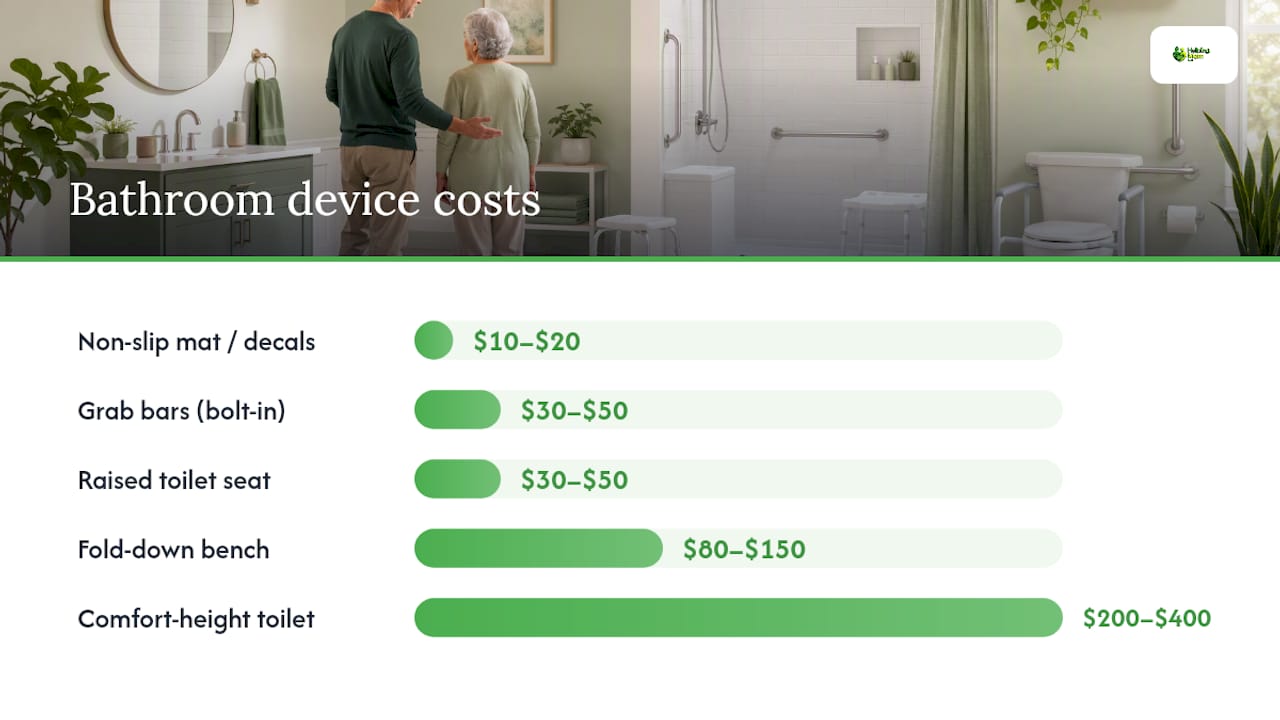
| Device | Approximate cost | Installation complexity |
|---|---|---|
| Non-slip bath mat / decals | $10–$20 | DIY, same day |
| Grab bars (bolt-in) | $30–$50 per bar + labor | Pro recommended for tile walls |
| Raised toilet seat | $30–$50 | DIY |
| Comfort-height toilet | $200–$400 + plumbing | Licensed plumber |
| Fold-down shower bench | $80–$150 | DIY or handyperson |
| Curbless shower conversion | several thousand dollars | Licensed contractor |
For a deeper look at placement and installation, see Helping-mom's bathroom safety guide.
Pro Tip: Grab bars must be bolted into studs or blocking, not just drywall. If the wall is tile, hire a handyperson or contractor who knows how to drill tile without cracking it.
Mobility and access devices that preserve independence
Safe movement through the home, and in and out of it, is the next priority. Small fixes here often have an outsized effect on confidence and daily independence.
Start with the simplest solutions:
- Interior and exterior handrails: Add rails on both sides of every stairway. AARP HomeFit guidance specifically recommends two handrails on stairways as a low-cost, high-impact fix.
- Threshold ramps: Rubber or aluminum ramps over door thresholds eliminate small trip edges for walkers and wheelchairs.
- Portable or modular ramps: For front steps, these can be rented or purchased and installed without permanent construction.
- Walkers and rollators: A rollator (wheeled walker with a seat) suits people who tire easily; a standard walker provides more stability. Fit matters, so have an OT assess gait before purchasing.
- Canes: Appropriate for mild balance issues; the handle height should align with the wrist crease when the arm hangs naturally.
- Stair lift: When stairs become genuinely unsafe, a stair lift is a practical alternative to moving. Costs typically run several thousand dollars depending on stairway configuration, and installation takes one to two days by a certified technician.
- Bed rails and transfer aids: Assist with getting in and out of bed safely.
A practical decision flow: start with handrails and threshold removal, then consult an OT for a gait assessment before adding a walker or rollator, and escalate to a stair lift or ramp only after simpler fixes have been tried. For more on mobility aids and safe transfers, Helping-mom's senior mobility safety guide covers the specifics.
Emergency and monitoring devices: what to pick and why
A medical alert system or wearable with fall detection is worth prioritizing for any parent who lives alone or has a fall history. These personal emergency response systems (PERS) are among the most practical home monitoring devices available.
Device types to know:
- In-home base station with wearable button: Connects via landline or cellular; your parent presses the button and speaks to a monitoring center.
- Mobile GPS-enabled pendant or watch: Works outside the home; adds location tracking for parents who drive or walk independently.
- Smartwatch-style alert devices: More discreet; some integrate with family caregiver apps.
- Wall-mounted help buttons: Placed in bathrooms and hallways as a backup to wearables.
When choosing, NCOA recommends prioritizing ease of use, automatic fall detection (if needed), GPS for mobile devices, clear two-way communication, and reliable battery life. Monthly monitoring fees vary widely, so compare contract terms carefully and avoid long lock-in periods without a trial.
Pro Tip: Place a wall-mounted help button near the tub and at the bottom of the stairs. Wearables get removed for bathing, and falls happen most at those two spots.
Daily-living and kitchen devices that reduce strain
Small kitchen and daily-living aids prevent the fatigue and risky movements that often lead to falls. Consumer Reports recommends front-control cooktops, comfort-height toilets, and seat-assist devices to reduce bending and strain across daily tasks.
Practical devices and fixes:
- Lever-style door and faucet handles: Replace round knobs; much easier with arthritic hands.
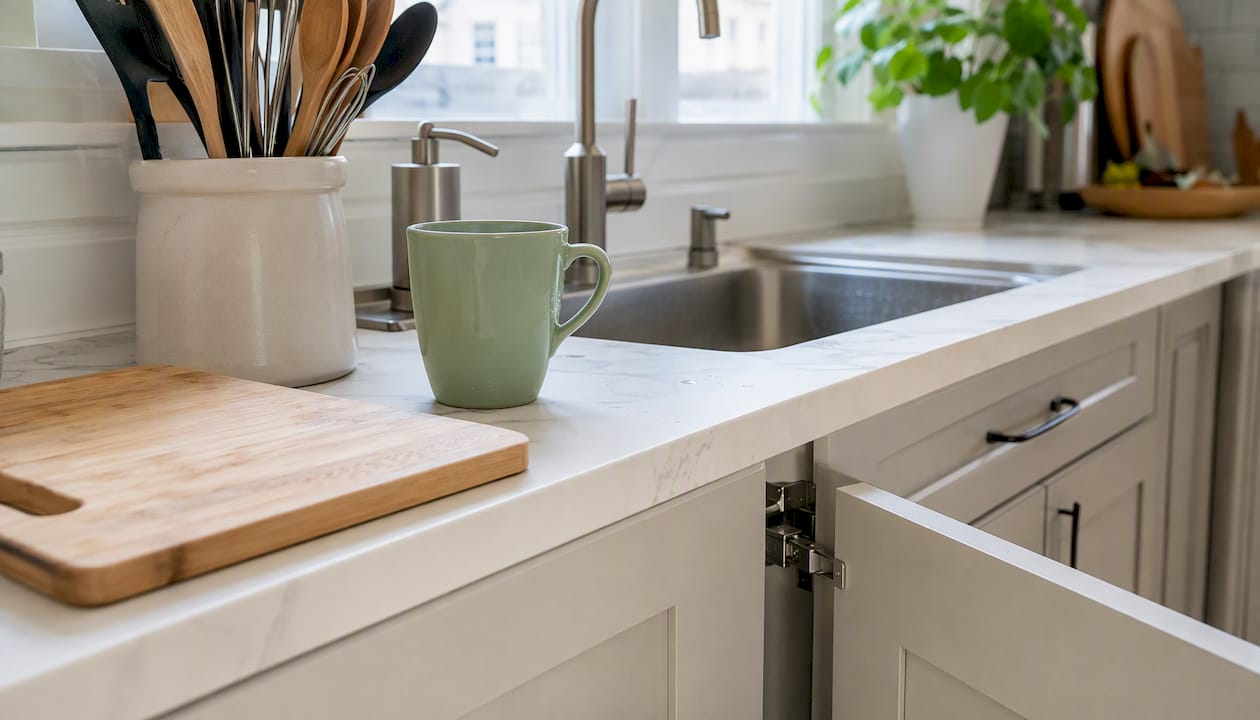
- Pull-out cabinet shelves: Bring items forward without deep reaching.
- Reachers and grabbers: For items on high shelves or the floor.
- Anti-slip placemats and jar openers: Small but genuinely useful.
- Front-control or induction cooktop: Eliminates reaching over hot burners.
- Lightweight cookware: Reduces wrist and shoulder strain.
- Stable step stool with a handle: For the rare high-shelf need, a handle-equipped stool is far safer than a standard step stool.
- Voice assistant or cordless phone: Hands-free calls reduce the urge to rush across the room.
The NCOA "storing for success" principle is straightforward: keep frequently used items at waist-to-shoulder height. Move heavy pots to a low, accessible shelf. Label cabinet contents clearly. This single reorganization reduces bending and reaching, two of the most common triggers for falls and fatigue. For more kitchen-specific guidance, see Helping-mom's kitchen safety tips for caregivers.
Pro Tip: Spend 30 minutes reorganizing your parent's kitchen before buying any gadgets. Moving the most-used items to the easiest-to-reach spots costs nothing and reduces daily risk immediately.
Lighting upgrades that make a real difference at night
Targeted lighting is one of the lowest-cost, highest-impact fall-prevention measures available. Most nighttime falls happen on the path to the bathroom or at the top or bottom of stairs.
Devices and fixes that work:
- Motion-sensor night-lights: Place on the path from the bedroom to the bathroom and at stair landings.
- Dusk-to-dawn exterior lights: Automatic, no switches to remember.
- Sensor-activated hallway lights: Eliminate the need to find a switch in the dark.
- High-contrast step-edge tape: Bright tape on stair nosings makes edges visible, especially for older eyes.
- LED bulbs of at least 800 lumens in key areas: older eyes need significantly more light than younger ones.
- Illuminated or lighted rocker switches: Easy to find at night near beds and at stair tops.
- Non-slip rugs with rug anchors: Or remove rugs entirely from high-traffic paths.
Pro Tip: Use motion-activated lights for every nighttime route rather than relying on your parent remembering to flip switches. It removes one more decision at 2 AM.
Understanding how vision changes affect safety can help you choose the right brightness and placement for your parent's specific needs.
Medication management devices that prevent missed doses
A simple pill organizer or an automated dispenser can prevent missed or duplicate doses. The right choice depends on how complex the regimen is and how comfortable your parent is with technology.
Device options:
- Weekly pill organizer: Works well for simple, stable regimens and parents who are self-managing reliably.
- Timed pill box with alarm: Adds a reminder for parents who forget but can self-administer.
- Automated pill dispenser: Locks doses until the scheduled time, dispenses the correct amount, and can send caregiver alerts when a dose is skipped. Best for complex regimens or early cognitive changes.
- Smartphone or voice-assistant reminders: Low-cost option for tech-comfortable parents.
- Pharmacy blister packaging: Many pharmacies pre-sort doses by day and time, removing the need for a separate organizer.
Pair any dispenser with a caregiver alert feature when missed doses are a real concern. Medication errors are one of the most common and preventable safety issues for older adults living alone, and catching a skipped dose early matters.
How to choose devices, who installs them, and what to watch out for
Choose devices that match the assessed need, fit your parent's daily routines, and represent the simplest solution they will actually use consistently.
Questions to ask before buying or hiring:
- Does an OT or specialist recommend this specific device for this parent's needs?
- Is installation DIY-safe, or does it require a licensed trade (plumber, electrician, contractor)?
- Are load-bearing walls or permits involved?
- What is the installation timeline, and who does the follow-up?
- Is there a warranty, and what does it cover?
- Will someone train your parent and you on how to use it?
- What is the return policy if the device doesn't work for your parent?
Cost and timeline at a glance:
- Quick fixes (grab bars, night-lights, non-slip mats): same day, low cost
- Moderate installs (toilet replacement, rail reinforcement): days to a few weeks
- Major work (curbless shower, stair lift): weeks to months, higher budget
Red flags to avoid:
- High-pressure sales tactics or urgency framing
- Installers who cannot show licensing or insurance
- Monitoring contracts with no trial period or difficult cancellation
- Devices with no clear return policy
Pro Tip: Ask any installer for references from similar aging-in-place projects specifically. A general handyperson and a CAPS-certified remodeler are not the same thing.
Start small, involve your parent, and pace the changes
The most common mistake adult children make is buying a cart full of devices before talking to their parent. Safety changes land better when your parent understands why each one is there and feels like a participant, not a subject.
Start with quick wins: clear trip hazards, add night-lights, and install grab bars. These changes are visible, low-cost, and easy to explain. Then, after an OT assessment and a calm family conversation, tackle the moderate and larger projects.
Present each change as a practical experiment, not a permanent verdict on your parent's abilities. "Let's try this shower bench for a few weeks and see if it helps" is a very different conversation than "You need this now." Scheduling a check-in a few weeks after installation, to ask how the device is working, keeps your parent in the loop and gives you useful feedback.
Walking alongside your parent through these changes, rather than managing them from a distance, makes the process feel collaborative. That matters as much as the devices themselves. For a broader look at helping parents age in place, Helping-mom has practical guidance on pacing these conversations and projects.
Helping-mom makes it easier to know where to start
Knowing which devices your parent needs is one thing. Turning that knowledge into a clear, prioritized plan is where most caregivers get stuck. Helping-mom offers a practical path forward: a downloadable home safety checklist, an AI-assisted safety assessment tool, paid 1:1 Zoom consultations with a home-safety specialist, and local in-person assessments for families in Central Florida.
A Zoom consultation gives you a structured, personalized conversation about your parent's specific home and routines, with a prioritized action list you can actually use. No guesswork, no generic product recommendations. Start with the practical guide to making home safer for seniors to see which service fits where you are right now.
Sources
- Aging in Place: Growing Older at Home | National Institute on Aging
- Home modifications for older adults: systematic review | PMC
- How to age-proof your home | Consumer Reports
- Best medical alert systems | NCOA
FAQ
What types of home safety devices should I buy first?
Start with the bathroom: grab bars, a non-slip mat, and a raised toilet seat are low-cost and address the highest-risk room. Add motion night-lights on the path to the bathroom as a same-day fix.
Does Medicare cover home safety devices or modifications?
Medicare generally does not cover home modifications like grab bars or ramps, but it may cover OT services when ordered by a physician and deemed medically necessary. Check with your parent's doctor for a referral.
How do I choose a medical alert system for my parent?
Prioritize ease of use, automatic fall detection if your parent has a fall history, two-way voice communication, and reliable battery life. Mobile units add GPS for parents who leave home regularly.
What is a CAPS specialist and do I need one?
A Certified Aging-in-Place Specialist (CAPS) is a contractor or remodeler trained in aging-in-place modifications. They are most useful for larger projects like curbless showers, ramps, or stair lifts, where licensed trades and permits are involved.
How do I get my parent to accept home safety changes?
Present each change as a practical experiment rather than a permanent decision. Involve your parent in choosing devices, explain the specific benefit, and schedule a follow-up to ask how it's working.