
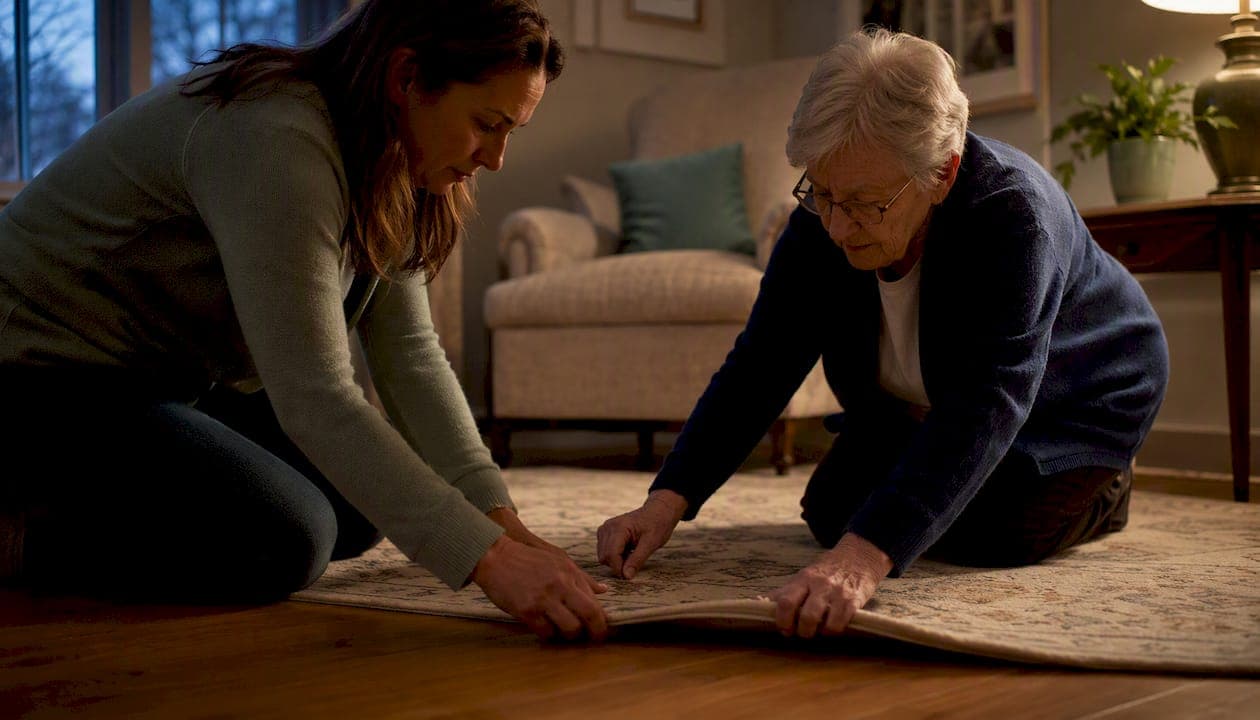
Seniors fall primarily because several vulnerabilities stack on top of each other at once: age-related muscle loss, chronic health conditions, medications that affect balance or blood pressure, and everyday home hazards. No single cause explains most falls. According to the CDC, more than one in four adults 65 and older falls each year, making falls the leading cause of injury-related emergency visits and hospitalizations among older adults. The good news is that most of the highest-impact risk factors are modifiable, and you can start addressing them this week.
If a fall just happened, your first steps are:
- Check for visible injuries before moving your parent.
- Stay calm and keep them still if they report pain, dizziness, or cannot get up.
- Call 911 for any red flags: head injury, inability to move a limb, severe pain, or loss of consciousness.
- Once they are safe, write down what happened: time, activity, location, and any symptoms they mentioned.
- Schedule a medication review and do a quick home-hazard check within the next few days.
Helping-mom's elderly home safety checklist is a practical starting point for that home-hazard check.
Key Takeaways
Falls in older adults are almost always multifactorial, and the most effective prevention combines medication review, strength and balance exercise, and targeted home-hazard fixes rather than addressing any single cause alone.
| Point | Details |
|---|---|
| Falls are common and preventable | More than one in four adults 65+ falls each year; most high-impact risks are modifiable. |
| Medication review is the fastest win | Polypharmacy (4+ medications) and psychoactive drugs are strongly linked to fall risk; ask a clinician or pharmacist to review the full list. |
| Exercise is the top evidence-based intervention | The USPSTF recommends structured balance and strength programs; tai chi and chair exercises are practical starting points. |
| Home hazards are easy to fix | Poor lighting, throw rugs, and missing grab bars account for a large share of falls and can be corrected quickly. |
| Helping-mom supports your next step | The free elderly home safety checklist, paid Zoom consultations, and in-person assessments (Central Florida) help caregivers act on what they have learned. |
This article is general information, not a substitute for advice from a qualified doctor. Consult a qualified healthcare professional about your own circumstances before acting on anything here.
Table of Contents
- Why do seniors fall? The main causes and risk factors
- How a fall actually happens: the chain of events
- Which risk factors give you the biggest prevention win?
- A simple month-one prevention plan for caregivers
- What to do right after a fall
- When should you see a doctor after a fall?
- Trusted resources caregivers can use right now
- A note from Helping-mom
- Helping-mom can walk you through the next steps
- Sources
- FAQ
Why do seniors fall? The main causes and risk factors
Falls rarely have a single explanation. Clinicians group the causes into four overlapping categories, and understanding which ones apply to your parent helps you focus on the right fixes.
Intrinsic (body-based) causes
- Sarcopenia: The National Institute on Aging identifies age-related muscle loss, called sarcopenia, as one of the strongest predictors of falls. When leg and core muscles weaken, the body loses the ability to catch itself after a stumble.
- Chronic conditions: Parkinson's disease, arthritis, diabetes-related neuropathy, and heart conditions that cause dizziness all raise fall risk directly.
- Orthostatic hypotension: Blood pressure that drops when standing can cause a brief blackout, especially first thing in the morning or after sitting for a long time.
- Vestibular disorders: Inner-ear problems disrupt the sense of balance and are common in older adults.
Medication-related causes
Polypharmacy, commonly defined as taking multiple medications, is strongly associated with increased fall risk. Sedatives, benzodiazepines, antidepressants, and even common over-the-counter sleep aids and antihistamines can cause dizziness, slowed reaction time, or low blood pressure. The more medications your parent takes, the higher the combined risk.
Sensory and cognitive causes
- Vision changes: Reduced contrast sensitivity and poor depth perception make it harder to judge steps and uneven surfaces.
- Hearing loss: Less studied but increasingly linked to balance problems, since the auditory system contributes to spatial awareness.
- Cognitive impairment: Dementia and mild cognitive impairment reduce attention and the ability to navigate safely, particularly in unfamiliar spaces.
- Fear of falling: The CDC notes that fear of falling often leads older adults to reduce activity, which accelerates muscle weakness and, over time, actually raises fall risk.
Environmental (extrinsic) causes
Environmental hazards account for a substantial share of falls and are among the easiest to fix. Common culprits include:
- Poor or uneven lighting, especially on stairs and in hallways at night.
- Throw rugs and loose carpet edges.
- Bathrooms without grab bars near the toilet and shower.
- Clutter on floors and in walkways.
- Slippery or worn footwear.
Modifiable vs. non-modifiable risks. Age itself, a history of falls, and certain diagnoses cannot be changed. But medications, home hazards, muscle strength, vision correction, and footwear all can be. Focusing your energy on modifiable risks is where caregivers get the most traction.
How a fall actually happens: the chain of events
Balance depends on four systems working together: vision, the vestibular system in the inner ear, proprioception (the body's sense of its own position), and muscle strength and reaction time. Age quietly degrades all four. A healthy 35-year-old who trips on a rug catches themselves without thinking. An older adult with weakened legs, slower reflexes, and slightly blurred vision may not.
The fall itself usually follows a predictable chain. A situational trigger, such as rushing to the bathroom at night, moving through a dim hallway, or turning quickly in an unfamiliar space, collides with one or more intrinsic vulnerabilities. The body tries to recover, but the recovery system is not fast or strong enough.
Common failure patterns include:
- Trip → failed recovery: A foot catches a rug edge; weak quadriceps and slow reaction time mean the stumble becomes a fall.
- Orthostatic hypotension → blackout: Standing up too quickly drops blood pressure; the person loses consciousness briefly before they can grab support.
- Medication side effect → dizziness: A sedative or blood pressure medication peaks in the bloodstream, causing unsteadiness during a routine walk to the kitchen.
- Distraction → misjudged step: Carrying something, talking on the phone, or looking away while stepping down a curb divides attention at exactly the wrong moment.
Fear of falling adds a quieter layer to this picture. When your parent starts avoiding stairs, walks less, or stops going to the grocery store alone, that reduced activity leads to faster muscle loss, which makes the next fall more likely, not less.
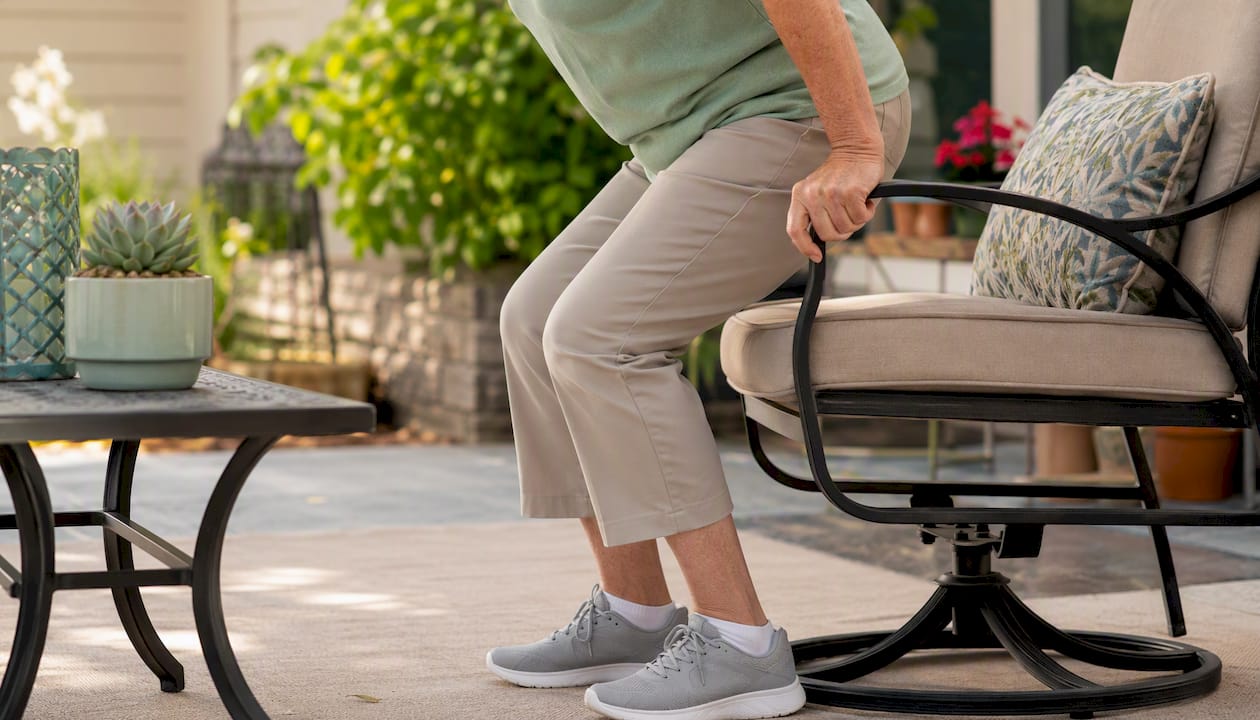
Pro Tip: Watch how your parent rises from a chair. If they push off with both hands, pause at the top, or take a moment to steady themselves before walking, those are early signs of leg weakness and balance decline worth noting. You do not need a clinical test to spot this.
Which risk factors give you the biggest prevention win?
Not every risk is equally worth your time. These five areas offer the highest return for the effort you put in.
1. Medication review
This is the single most impactful step many caregivers overlook. Ask your parent's primary care physician or a clinical pharmacist to review the full medication list, including over-the-counter products. The goal is to identify drugs that increase dizziness, sedation, or blood pressure changes and to ask whether any can be reduced, switched, or stopped.
Pro Tip: Before the appointment, write every medication on one sheet of paper: name, dose, and how often it is taken. Include vitamins, supplements, and anything bought at the pharmacy without a prescription. Bring that sheet and ask directly: "Are any of these raising the risk of a fall?"
2. Strength and balance exercise
The U.S. Preventive Services Task Force recommends structured exercise programs that address gait and balance as the primary evidence-based intervention for fall prevention in community-dwelling older adults at increased risk. Tai chi is particularly well-studied. Chair stands, heel-to-toe walking, and single-leg balance holds are gentle starting points at home. A physical therapy referral gives your parent a personalized program and professional guidance on safe progression.
3. Home-hazard fixes
The highest-impact, lowest-cost changes:
- Add nightlights in the hallway, bathroom, and bedroom.
- Remove throw rugs or secure them with non-slip backing.
- Install grab bars in the shower and next to the toilet.
- Clear clutter from all walking paths.
- Move frequently used items to shelves between hip and shoulder height.
A room-by-room walkthrough using a structured checklist catches hazards you might otherwise miss. Helping-mom's guide on making home safer for an elderly parent walks through this step by step.
4. Vision and footwear
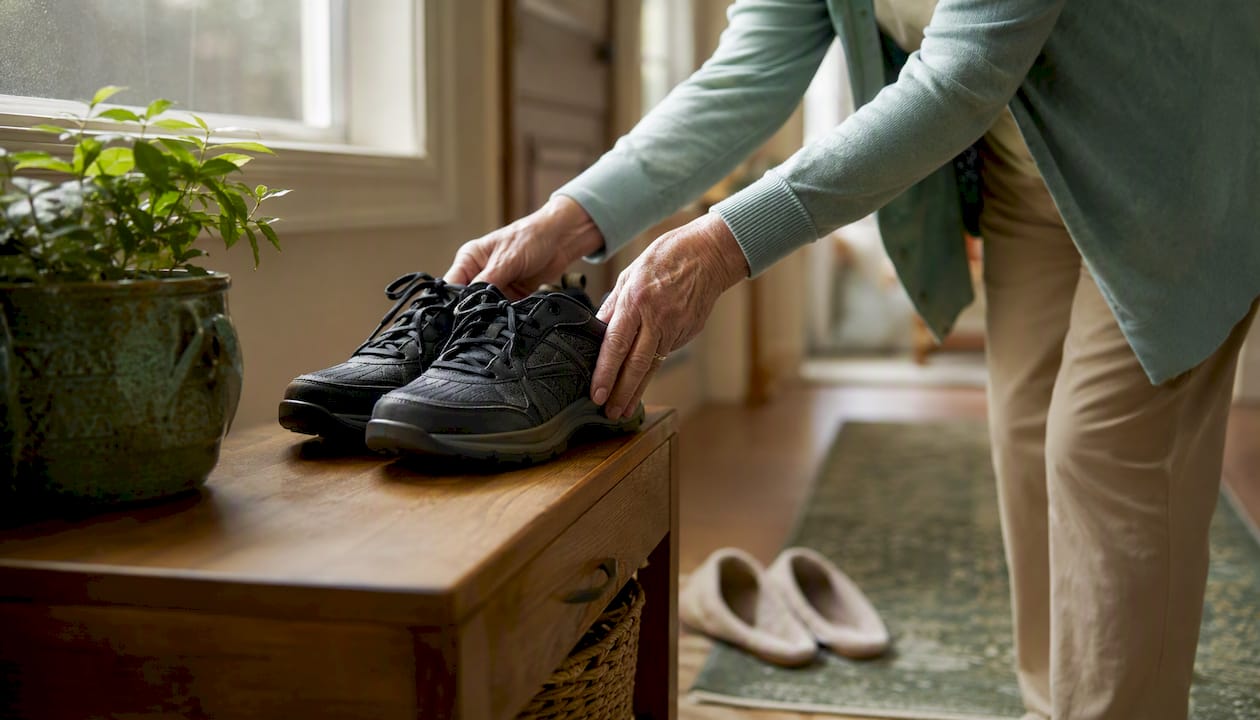
Schedule an eye exam if your parent has not had one in the past year. Outdated glasses are a surprisingly common contributor to falls. For footwear, look for thin, firm soles with a low heel and a non-slip grip. Thick-soled athletic shoes and slippers without heel support are frequent culprits.
5. Nutrition and hydration
Dehydration causes dizziness and low blood pressure, both of which raise fall risk. Low vitamin D is associated with muscle weakness. These are easy to raise with a clinician's guidance and do not require major lifestyle changes.
A simple month-one prevention plan for caregivers
You do not need to do everything at once. This four-week plan focuses on the highest-impact steps first.
- Week 1: Home-safety walkthrough. Walk through every room with your parent using a checklist. Note lighting gaps, loose rugs, bathroom grab-bar needs, and clutter. Fix the easiest items immediately (nightlights, rug removal). Order grab bars if needed.
- Week 2: Medication review. Compile the full medication list and schedule an appointment with the primary care physician or pharmacist. Use the conversation prompt: "We want to understand if any of these medications could be contributing to dizziness or fall risk."
- Week 3: Vision and hearing checks. Schedule an eye exam if overdue. Ask the physician about a hearing check. If your parent already wears glasses, confirm the prescription is current.
- Week 4: Start gentle movement. Look for a local tai chi class at a senior center or YMCA, or start with simple chair exercises at home. Helping-mom's guide to bed exercises for elderly parents is a gentle entry point for those with limited mobility.
A few conversation prompts that tend to land well:
- "I've been reading about how common falls are, and I just want to make sure we're doing everything we can. Can we walk through the house together?"
- "Have you noticed any dizziness when you stand up? I'd like to mention it to your doctor."
- "Would you be open to trying a balance class? A lot of people find them enjoyable, not just useful."
Multicomponent approaches that combine home fixes, medication review, and exercise consistently show better outcomes than any single intervention on its own, which is why this plan addresses all three in the first month.
What to do right after a fall
Staying calm is the most useful thing you can do in the first few minutes. Here is a clear sequence:
- Do not rush to lift your parent. Ask if they are in pain and where. Moving someone with a hip fracture or spinal injury can make it worse.
- Check for injuries. Look for visible swelling, deformity, or bleeding. Ask about pain in the head, neck, back, or hips.
- Call 911 immediately if you see any of these red flags:
- Head injury or loss of consciousness, even briefly.
- Inability to move an arm or leg.
- Severe pain, especially in the hip or spine.
- Confusion that is new or worsening.
- Chest pain or difficulty breathing.
- If no red flags are present, help your parent to a comfortable position and keep them warm while you assess further.
- Document the event before the details fade.
What to write down:
- Time of day and what your parent was doing when they fell.
- Location and any environmental factors (wet floor, dim light, no grab bar nearby).
- Symptoms before the fall: dizziness, lightheadedness, chest pain, or confusion.
- Any recent medication changes or missed doses.
- What they hit and how they landed.
Pro Tip: Keep a single-page "fall incident note" in a folder or on your phone. Date, time, activity, location, symptoms, and what you observed. Clinicians find this far more useful than a verbal summary, and it takes less than five minutes to fill out.
When should you see a doctor after a fall?
The short answer: after any fall, even one that seems minor. A prior fall is the strongest single predictor of future falls, and a clinician who knows about it can look for treatable causes before the next one happens.
Reasons to schedule a follow-up promptly:
- Your parent has fallen before, even if they did not mention it at the time.
- They report new dizziness, unsteadiness, or difficulty walking since the fall.
- There was any head contact, even without obvious injury.
- They seem more fearful of moving around than before.
What clinicians typically check
Common clinical assessments for fall risk include:
- Medication review: Identifying drugs that affect balance, blood pressure, or alertness.
- Orthostatic blood pressure: Measuring blood pressure lying down and then standing to detect orthostatic hypotension.
- Gait and balance tests: Simple timed walking tests that reveal instability a caregiver might not have noticed.
- Vision and hearing evaluation: Checking whether sensory deficits are contributing.
- Cognitive screening: Brief tests that identify attention or judgment problems affecting safe movement.
- Bone density assessment: When fracture risk is a concern, a DEXA scan helps guide treatment decisions.
The STEADI toolkit (Stopping Elderly Accidents, Deaths, and Injuries), developed by the CDC, is a structured set of screening tools clinicians can use to assess fall risk systematically. You can mention it by name at the appointment and ask whether it has been completed. Bringing your fall incident note and the full medication list makes the visit more productive.
Trusted resources caregivers can use right now
These sources are reliable, free, and worth bookmarking:
- CDC Falls Prevention: National statistics, the STEADI toolkit, and practical prevention guidance for older adults and caregivers.
- National Institute on Aging: Plain-language explanations of fall causes, exercise recommendations, and bone health.
- U.S. Preventive Services Task Force: Evidence-based recommendations on exercise programs for fall prevention.
- Mayo Clinic Fall Prevention: Accessible caregiver-facing tips on home fixes, footwear, and simple exercises.
Your next three steps:
- Download a home-safety checklist and walk through the house this week.
- Schedule a medication review with your parent's physician or pharmacist.
- Book a vision check if it has been more than a year.
Bringing a printed copy of the CDC or NIA page to a clinician appointment can help frame the conversation and signal that you are engaged in prevention, not just reacting to a crisis.
A note from Helping-mom
Worrying about a parent falling is one of the most common things caregivers carry quietly. You notice the slower step, the hand reaching for the wall, the hesitation at the top of the stairs, and you wonder what to do with that observation. The answer is not to panic or to take over. It is to start with one small, concrete step: a home walkthrough, a conversation with the doctor, or a gentle suggestion about a balance class.
Falls are largely preventable when you address the right combination of factors. You do not need to solve everything at once. You just need to start.
Helping-mom can walk you through the next steps
If you are ready to move from reading to doing, Helping-mom offers practical tools built specifically for adult children in your position. The free elderly home safety checklist gives you a room-by-room guide you can use this week. For families who want a more thorough review, Helping-mom offers paid one-on-one Zoom consultations and in-person home-safety assessments for families in Central Florida. Each session focuses on the specific hazards and risks in your parent's actual home, not a generic list.
The home safety guide for seniors is a good place to start if you want a structured, step-by-step walkthrough you can work through at your own pace. Book a consultation or download the checklist at Helping-mom.
Sources
- Facts About Falls | Older Adult Fall Prevention
- Falls and Fractures in Older Adults: Causes and Prevention
- Falls in Older Adults - Geriatrics - MSD Manual Professional Edition
- U.S. Preventive Services Task Force — Falls prevention recommendation
- Falls in Older Adults — NCBI Bookshelf / Clinical guidance
FAQ
What are the main causes of falls in elderly adults?
Falls in older adults typically result from a combination of factors: age-related muscle weakness (sarcopenia), medications that cause dizziness or low blood pressure, sensory changes like reduced vision, and environmental hazards such as poor lighting or loose rugs. Rarely does a single cause explain a fall on its own.
At what age do seniors start falling more often?
Fall risk rises noticeably after age 65, with the CDC reporting that more than one in four adults in that age group falls each year. The risk increases further with age, particularly as muscle strength, balance, and reaction time continue to decline.
What should you do when an older adult falls?
Stay calm, check for injuries, and do not move them if they report pain in the head, neck, back, or hip. Call 911 for any red flags such as head injury, inability to move a limb, or loss of consciousness. Once safe, document what happened and schedule a clinician follow-up, even if no injury is visible.
Does a fall shorten life expectancy in older adults?
A fall itself does not determine life expectancy, but serious fall-related injuries such as hip fractures and traumatic brain injuries carry significant health risks for older adults. The more important point is that a prior fall is the strongest predictor of future falls, which is why any fall, even a minor one, should prompt a full assessment and prevention plan.
How can caregivers prevent falls at home?
The most effective approach combines three things: a medication review with a clinician or pharmacist, regular strength and balance exercise (tai chi and chair exercises are good starting points), and targeted home-hazard fixes such as adding grab bars, improving lighting, and removing throw rugs. Helping-mom's home safety checklist is a practical tool for the home-hazard piece.