

Compassion fatigue is the emotional and physical exhaustion that builds up when you spend months or years caring deeply for someone who is suffering, and it looks different from ordinary tiredness because it dulls your empathy instead of just draining your energy. If you're an adult child caring for an aging parent, this is not a personal failing. Below, you'll find the signs to watch for, the reasons it happens, and concrete steps, including where programs like the National Family Caregiver Support Program and NAMI fit in.
TL;DR:
- Compassion fatigue often develops gradually, with symptoms like emotional numbness, irritability, and difficulty concentrating persisting for weeks before becoming severe.
- Prolonged exposure to a parent's ongoing suffering, combined with lack of consistent respite and emotional attachment, accelerates the risk of developing compassion fatigue.
- Structured support measures such as scheduled breaks, clear boundaries, and peer support significantly reduce the chances of burnout and help restore emotional resilience.
- Local programs like the National Family Caregiver Support Program and Area Agencies on Aging offer vital respite, counseling, and training, often with minimal or no cost.
- Immediate help is crucial if caregivers experience thoughts of self-harm, aggressive outbursts, neglect of care duties, or feelings of disconnection that threaten safety.
Table of Contents
- What Is Compassion Fatigue in Caregivers, and How Is It Different From Burnout?
- What Are the Signs of Compassion Fatigue in Caregivers?
- Why Do Family Caregivers Develop Compassion Fatigue?
- How Can Caregivers Manage or Prevent Compassion Fatigue?
- Where Can Caregivers Find Real Help and Support Programs?
- When Does Compassion Fatigue Become a Safety Concern?
- Real Tips From Caregivers Who've Been There
- A Small Win That Changed Everything
- How Helping-mom Can Support You Through This
- Sources
- FAQ
What Is Compassion Fatigue in Caregivers, and How Is It Different From Burnout?
Compassion fatigue happens when caring deeply for someone in pain, over a long stretch of time, starts to wear down your own capacity to feel that empathy. Researchers describe it as a kind of secondary trauma. You absorb your parent's fear, confusion, or physical pain so often that your nervous system starts protecting itself by going numb. The concept was first developed for nurses and first responders, but it applies just as strongly, maybe more so, to family caregivers dealing with dementia or chronic illness, where the emotional stakes are personal rather than professional.
Burnout and compassion fatigue often get used interchangeably, but they're not the same thing.
- Burnout builds slowly from workload and stress. You feel depleted, cynical about the situation, and physically worn down.
- Compassion fatigue builds from repeated emotional exposure to someone else's suffering. You feel numb, detached, or oddly unmoved by things that used to upset you.
- Burnout can improve with rest. Compassion fatigue often needs a shift in emotional distance, not just a nap or a weekend off.
Cleveland Clinic draws this same line: burnout is exhaustion, compassion fatigue is empathy loss. Knowing which one you're dealing with changes what actually helps.
What Are the Signs of Compassion Fatigue in Caregivers?
Compassion fatigue rarely announces itself all at once. It creeps in through small shifts that are easy to dismiss as "just a rough week." Watch for these patterns over several weeks, not single bad days.
- Emotional numbness. You notice your mom crying and feel strangely little, or you catch yourself thinking "here we go again" instead of feeling concern.
- Irritability that surprises you. Snapping at your dad over something small, then feeling ashamed afterward.
- Persistent guilt. A running sense that whatever you do isn't enough, paired with resentment you don't want to admit to.
- Withdrawal. Skipping calls from siblings, avoiding visits you used to look forward to, or missing your parent's medical appointments.
- Increased reliance on alcohol, food, or screens to numb out at the end of the day.
- Physical symptoms. Trouble sleeping, tension headaches, or a tight chest that shows up around caregiving tasks specifically.
- Trouble concentrating, even on things unrelated to caregiving, like work emails or a simple grocery list.
WebMD's clinical summary lists numbness, reduced empathy, and disrupted sleep as some of the most common markers caregivers report.
Statistic Callout: The National Family Caregiver Support Program delivered nearly 6 million hours of respite care to more than 604,000 caregivers in a single fiscal year, a scale that reflects just how widespread this kind of exhaustion is among family caregivers nationwide.
If three or more of these signs feel familiar, that's worth taking seriously, not brushing off.
Why Do Family Caregivers Develop Compassion Fatigue?
Compassion fatigue doesn't come from one bad day. It builds from a specific mix of conditions that adult children, in particular, tend to hit all at once.
- Prolonged exposure to ongoing suffering. Watching a parent decline with dementia or a chronic illness means the stress never fully resolves. There's no finish line to work toward, just a slow, shifting situation.
- Emotional attachment makes it heavier. A hired aide can leave at the end of a shift and go home. You can't unplug from being someone's child, and that closeness is exactly what makes the fatigue cut deeper.
- Competing life demands. Many adult children are managing careers, raising kids, and caregiving at the same time, with little built-in time to recover.
- Lack of real respite. Occasional help from a sibling who visits twice a year isn't the same as a scheduled, predictable break.
- Trying to fix what can't be fixed. If a parent has dementia, no amount of effort reverses it. Caregivers who keep pushing to "solve" an unsolvable situation burn out faster than those who shift toward supporting comfort instead.
Research on informal caregivers of people with dementia found consistent links between this kind of prolonged empathic strain and higher rates of depression, apathy, and earlier institutionalization for the person receiving care. In other words, when the caregiver runs out of emotional reserves, the quality of care tends to slip too.
How Can Caregivers Manage or Prevent Compassion Fatigue?
The good news: compassion fatigue responds well to structure. Vague intentions like "I'll try to rest more" rarely stick. Specific, scheduled changes do.
- Set boundaries with real scripts, not vague hints. Instead of hoping someone offers to help, try: "I can handle Mom's doctor visits, but I need someone else to cover grocery runs on Tuesdays." Naming the exact task and the exact day removes the guesswork for family members who genuinely want to help but don't know how.
- Schedule respite like an appointment, not a favor. Formal, planned breaks work better than open-ended offers like "let me know if you need anything." Ask a sibling to cover Sunday afternoons every other week, hire a few hours of paid help through an adult day program or respite service, and put it on the calendar the same way you'd book a dentist appointment.
- Build small daily resets into your existing schedule. A ten-minute walk after your parent's morning meds, five minutes of quiet before you check email, or a short phone call with a friend who isn't part of the caregiving picture. These aren't indulgences. They're what keeps your empathy from running on empty.
- Reach out to peer support before you hit a crisis point. A short call to a caregiver support line, or joining an online caregiver support group, can normalize what you're feeling faster than trying to explain it to friends who haven't been through it.
- Consider talking to a therapist who understands caregiving stress specifically. Many community mental health centers offer sliding-scale rates, and some Area Agencies on Aging can point you toward counselors who specialize in this exact situation.
Research on building compassion resilience supports this approach directly: identifying fatigue early and formalizing structured breaks measurably reduces long-term negative outcomes for both caregivers and the people they're caring for.
Pro Tip: Write down two caregiving tasks you will always personally handle and three you will hand off to someone else, whether that's a sibling, a paid aide, or a friend. Having it in writing stops the "I should just do it all" instinct before it takes over your week.
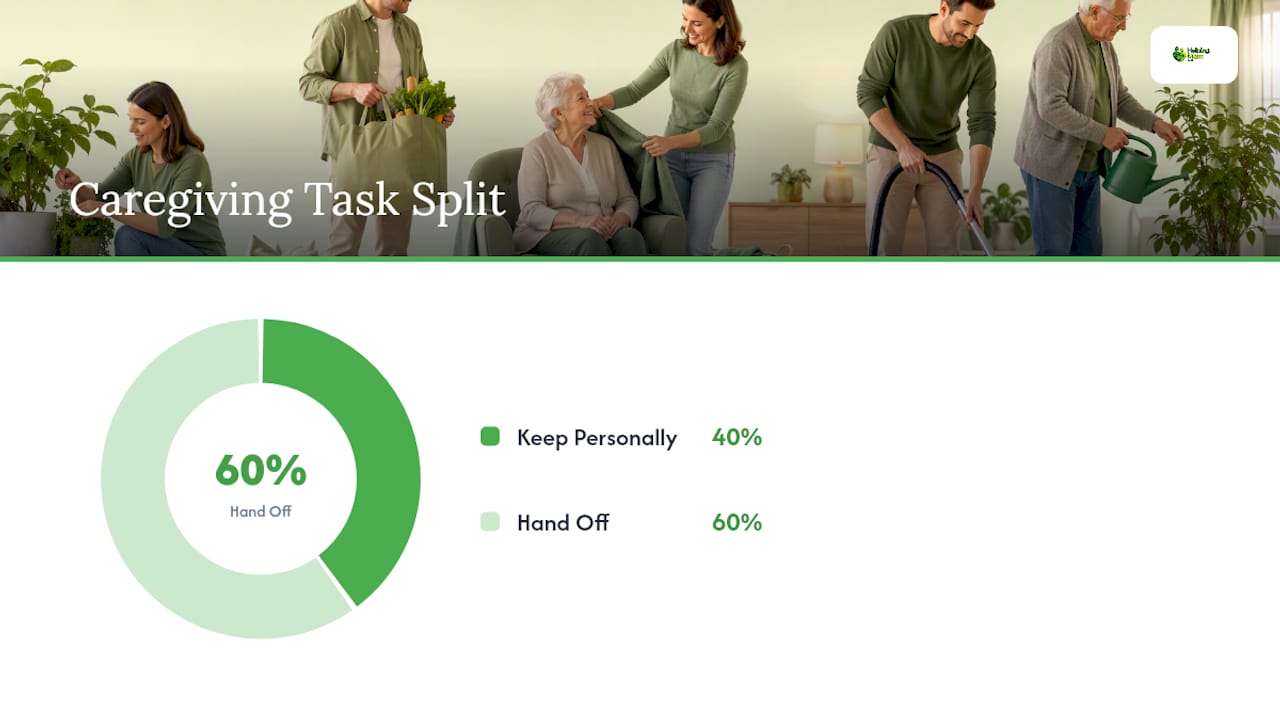
For a deeper look at drawing these lines with a parent directly, Helping-mom's guide to caregiver boundaries walks through language that tends to land without triggering guilt on either side.
Where Can Caregivers Find Real Help and Support Programs?
You don't have to build a support system from scratch. Several established programs exist specifically for people in your position, and most are free or low cost.
- The National Family Caregiver Support Program (NFCSP) offers counseling, caregiver training, and respite care coordination through your local Area Agency on Aging. In one recent fiscal year, it supplied more than 1.3 million access-assistance contacts to help caregivers find exactly this kind of support.
- NAMI's Family Caregiver HelpLine is a free, peer-led service for caregivers whose loved one has a mental illness component to their condition. It connects you to people who've navigated similar situations, not just a script-reading operator.
- The National Institute on Aging publishes plain-language caregiving resources that link out to local programs by state.
- Your local Area Agency on Aging is the best first call. Ask specifically: "What respite options do you have, and what's the wait time?" Eligibility is usually based on the care recipient's age and needs, not your income, so don't assume you'll be turned away.
Statistic Callout: That nearly 6 million hours of respite care delivered through NFCSP in a single year came from a program many caregivers have simply never heard of. A single phone call to your Area Agency on Aging can open the door to it.
When Does Compassion Fatigue Become a Safety Concern?
Most compassion fatigue can be managed with the steps above. But a few signs mean it's time to get help immediately, not next week.
- Thoughts of harming yourself or your parent, even fleeting ones.
- Aggressive outbursts you can't control, or a pattern of raising your voice that scares you.
- Neglecting your parent's basic needs, medication, food, hygiene, because you simply cannot bring yourself to do it anymore.
- Feeling completely disconnected from your own life for weeks at a time.
Chronic exhaustion raises the odds of missed medications, forgotten follow up calls, and small safety oversights around the house. If any of the above feels true right now, call 988 (the Suicide and Crisis Lifeline), contact your parent's primary care provider, or reach out to emergency services. These situations deserve immediate attention, not a plan for "someday soon."
Real Tips From Caregivers Who've Been There
Theory only goes so far. Here's what tends to actually work when you're the one juggling a parent's care alongside your own life.
- Ask for help with a specific ask, not an open one. "Can you take Dad to his 2pm appointment on Thursday?" gets a yes far more often than "Can someone help out sometime?"
- Try a rotating respite plan. One weekend a month with a sibling covering, one paid sitter for a few hours weekly, and an adult day program for two afternoons. Spreading it out makes it easier for everyone to say yes to a piece of it.
- Stay connected without trying to fix everything. Sitting with your mom and just listening, without trying to solve her loneliness or her diagnosis, often means more to her than another solution you've researched.
- A tool like MatePoints can help turn family task sharing into something a little more collaborative, especially when siblings or a spouse need a nudge to pitch in consistently.
Pro Tip: Before you ask a sibling for help, decide exactly what "help" means: a task, a time, and a duration. "Can you handle Tuesday grocery runs, ongoing?" works far better than "Can you help more?"
A Small Win That Changed Everything
One caregiver we spoke with described the moment she recognized her own numbness: her mother fell, and instead of panic, she felt almost nothing. That blankness scared her more than any crisis had. She called her brother that week and asked him to take over Wednesday visits, no exceptions. Within a month, she said she started feeling like herself again, not because the caregiving got easier, but because she finally had two days a week that were hers.
If you're noticing that same numbness, the first practical step is usually the smallest one: pick one day, one task, and hand it to someone else. If you want more structure around what that looks like at home, the resources below can help you build it out.
— Mike C.
How Helping-mom Can Support You Through This
Recognizing compassion fatigue is one thing. Building a routine that actually protects your energy while your parent stays safe at home is another, and that's where Helping-mom's practical, non-clinical guidance fills the gap that generic advice leaves open. Offering downloadable guides on setting boundaries and scheduling respite, along with paid 1:1 Zoom consultations for caregivers who want a real conversation instead of another checklist, and in-person home safety assessments for some local families.
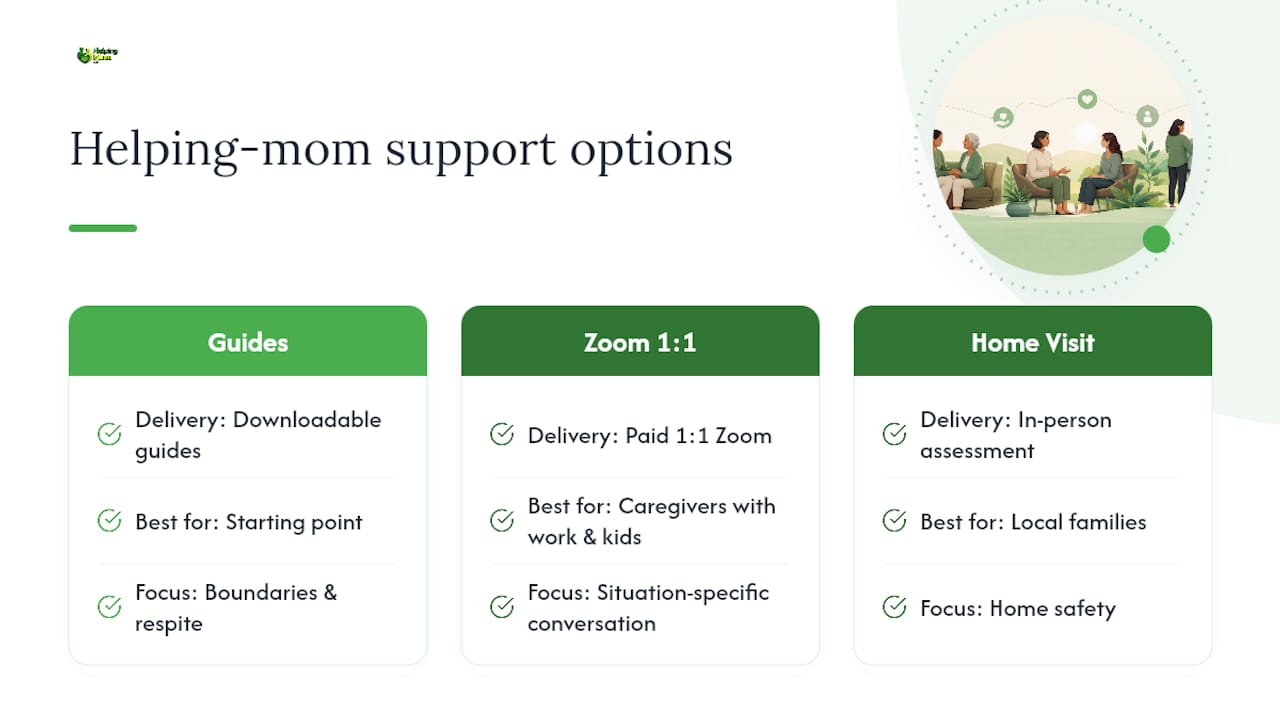
If you're feeling stretched thin and want a starting point that fits into a real week, not a fantasy one, the caregiver well-being resource hub is built for exactly that. Many adult children juggling work, kids, and a parent's care tend to find relief from consultations focused on their specific situation, while those still figuring out where to begin often start with the guides. Book a session or browse the resources to see which fits where you are right now.
Sources
- National Family Caregiver Support Program — ACL
- Compassion Fatigue: An Application of the Concept to Informal Caregivers — PMC
- What Does Compassion Fatigue Look Like? — WebMD
- Caregiver burnout: What it is, symptoms & prevention — Cleveland Clinic
FAQ
Is compassion fatigue a real, recognized condition?
Yes. It's a well-documented response to prolonged empathic strain, first identified in healthcare workers and now widely applied to family caregivers, especially those caring for someone with dementia or a chronic illness.
What is caregiver burnout, and how is it different from compassion fatigue?
Burnout is general physical and emotional exhaustion from sustained caregiving demands, while compassion fatigue specifically involves losing empathy and feeling emotionally numb toward the person you're caring for, according to Cleveland Clinic.
What causes caregiver fatigue and resentment?
It usually comes from a combination of prolonged exposure to a loved one's suffering, competing life demands, lack of real respite, and the emotional weight of caring for a parent rather than a client. Resentment often builds when caregivers feel they can't ask for help without guilt.
Can compassion fatigue affect your physical health long term?
Left unaddressed, it can contribute to chronic sleep problems, headaches, and a heightened risk of depression, and it's linked to poorer outcomes for the person receiving care as well, since exhausted caregivers make more caregiving mistakes over time.
When should a caregiver seek professional help right away?
Seek help immediately if you notice thoughts of harming yourself or your parent, an inability to control aggressive outbursts, or neglect of your parent's basic needs. Call 988 or contact emergency services without delay in those situations.