
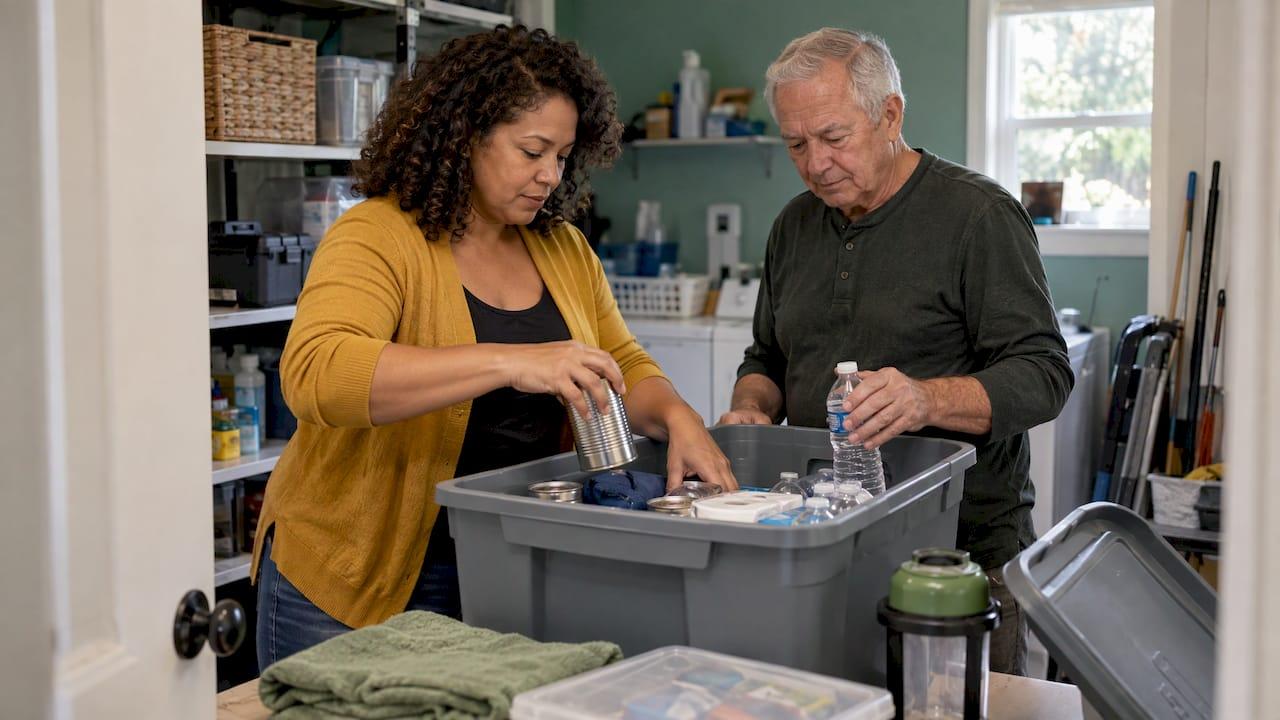
The best hurricane plan for an older adult is one you build together, well before a storm is named. It covers four things: a kit that lasts several days, a medication and document stash, a check-in system with more than one person in it, and a clear decision about whether your parent stays or goes. This guide walks through each one in plain steps, with Central Florida examples, so you can finish most of it in a weekend.
If you live an hour away, or a plane ride away, this can feel like a lot to hold. It doesn't have to be done in one sitting. Small, steady steps are enough.
TL;DR
- Build a kit that covers three to seven days, whether your parent stays home or leaves. Include medications, glasses, hearing aid batteries and paper copies of key numbers.
- Set up a check-in circle of several people, including one contact in another state, instead of relying on one caregiver.
- Decide on staying or leaving early, based on mobility and help needs, and line up a ride and a destination.
- In Orange County, ask about the special needs registry well ahead of the season. Shelters of that kind are a last resort, and a caregiver must come along.
- Take the after-storm days seriously: heat, cleanup and fatigue cause problems too.
Table of Contents
- Start with a conversation, not a checklist
- Build the kit: how much is enough
- Set up a check-in circle
- Prepare the home
- Decide early: stay or go
- Orlando and Orange County: special needs registry
- What to do during the storm
- After the storm: the quieter risks
- Our perspective
- Get a second set of eyes
- FAQ
- Sources
Start with a conversation, not a checklist
Before you buy a single flashlight, sit down with your parent. USAging's guidance on staying in touch during disasters says planning works best when the older adult gives input rather than having a plan imposed on them. Your parent has weathered many hard things. They may already have strong opinions about storms, and those opinions are useful.
A few gentle questions can open it up:
- "What did you do during the last big storm, and what would you do differently?"
- "Who would you call first if the power went out for days?"
- "Would you want to leave early if we asked, or would you rather wait and see?"
If these talks tend to stall, our guide on talking with aging parents about care offers ways to start without it sounding like a takeover. The goal is walking alongside your parent, not taking control.
Build the kit: how much is enough
The National Institute on Aging says an emergency kit for an older adult should hold what they need for three to seven days, whether they stay home or evacuate. Many families aim for the longer end, because after a hurricane roads, stores and power can be out for a while.
The basics
- Water and food. Non-perishable food your parent will actually eat, plus drinking water for each person. A manual can opener matters more than people expect.
- Light and news. Flashlights, extra batteries and a battery-powered or hand-crank weather radio.
- First-aid supplies and any over-the-counter items your parent uses daily.
- Warmth and comfort. Blankets, a change of clothes and sturdy shoes that are easy to slip on.
The personal items that get forgotten
- Extra glasses and a spare pair of hearing aid batteries
- Dentures and cleaning supplies
- Incontinence supplies, if used
- Chargers and a portable battery pack for phones
- A small comfort item, such as a favorite book, puzzle book or photo
Medications
The American Red Cross hurricane checklist recommends keeping a one-month supply of medication in a child-proof container. Talk to your parent's pharmacist or doctor about how to build that supply and rotate it, since refill rules vary by plan and prescription. Keep a current written list of every medication, dose and prescriber with the kit. Our guide to medication safety at home can help you set up a simple system.
If your parent uses refrigerated medication, such as insulin, ask the prescriber or pharmacist now what the plan should be during a power outage. That answer should come from them, not from a blog.

Documents in one waterproof place
Put copies of these in a sealed waterproof bag or container:
- Photo ID and insurance cards, including Medicare and any supplemental plan
- Home and flood insurance information
- Power of attorney and health care proxy paperwork
- Doctor names, pharmacy number and a list of diagnoses and allergies
- A short list of emergency contacts
If you want a broader framework beyond hurricanes, our step-by-step emergency plan for aging parents pairs well with this one.
Set up a check-in circle
One child calling one parent is a thin thread. During a storm, cell towers can be overloaded and you may be out of reach yourself. A PBS NewsHour interview with an expert on caring for aging parents recommends a multiperson check-in system with neighbors, faith communities or local services, rather than depending on a single person.
Here is a simple way to build it:
- Pick two or three local people. A neighbor, a friend from church or a nearby relative. Ask them directly and share your number.
- Pick one out-of-state contact. USAging suggests naming a third contact in a different state for a major disaster, because long-distance calls sometimes go through when local ones don't. Everyone involved should have the plan.
- Agree on when and how. For example: a text before the storm arrives, another once the worst has passed, and a call the next morning.
- Put numbers on paper. The same PBS interview notes that many older adults rely on preprogrammed numbers and may not know how to reach people if the phone is lost or the battery dies. A laminated card in the kit and another by the front door solves that.
If your parent lives alone, this circle is the most valuable piece of the plan. Make sure each person knows whether your parent plans to stay or leave, and where they would go.
Prepare the home
You don't need to rebuild anything. Focus on the things that make the house easier to live in for a few dark, warm days and easier to leave quickly.
- Clear the paths. Move cords, throw rugs and clutter. Our home safety checklist for caregivers is a good room-by-room guide, and a clear walking route matters even more in low light.
- Light the way. Place battery-powered lights in the hall, bathroom and kitchen so nobody is reaching for a phone flashlight while holding a walker.
- Store supplies at waist height. Water cases and kits should not require a step stool or a heavy lift.
- Think through equipment. If your parent uses oxygen, a powered mattress, a lift chair or a scooter, ask the equipment supplier and the prescriber what the backup plan should be during an outage, and keep chargers and battery packs in the kit.
- Know the generator rule. If a neighbor or relative uses a portable generator, it should only run outdoors, well away from windows, doors and vents. Confirm the exact distance and other safety guidance with the manufacturer's manual and your local fire department.
A broader look at making the house safer is in our guide to helping parents age in place.
Decide early: stay or go
The NIA advises older adults to weigh mobility and help needs when deciding whether to shelter in place or leave, to arrange in advance for a friend, neighbor or family member to pick them up if they no longer drive, and to know how to reach local emergency shelters.

That last point means doing the homework before a warning is issued. Roads fill up and gas stations run dry quickly once an evacuation is announced.
Questions to settle ahead of time
| Question | Why it matters |
|---|---|
| Is your parent's home in an evacuation zone? | Your county emergency management office can tell you. Orders usually go by zone. |
| Who drives, and who is the backup? | A parent who no longer drives needs a named person, not a hope. |
| Where will they stay? | A relative's home outside the zone is often the calmest choice. |
| Can they manage stairs, a long car ride or a night away from their routine? | Honest answers help you decide how early to leave. |
| What goes with them? | The kit, the medication list and the document bag should be ready to grab. |
Leaving earlier than you think you need to is usually easier on everyone. A parent with memory changes may find an unfamiliar place unsettling, so bring familiar items and plan for someone to stay with them.
Orlando and Orange County: special needs registry
If your parent lives in Orange County and could not leave without transportation help, or relies on a medical condition that needs skilled attention in a shelter, the county runs a People with Special Needs program. Registration can be done through the state's FLGetAPlan site, the county website, or by phone, and registrants must update their information every year or they become inactive. Ask a home health agency, equipment supplier or senior services agency whether they can help with the form.
It helps to know what these shelters are. Orange County's program manager has described special needs shelters as a safety net and last resort that keep people safe without providing clinical care, and caregivers must accompany the resident. So the best use of the registry is as a backup to your own plan, with a caregiver identified and ready to go.
The Florida VOAD page on medical and access needs is a useful companion for families planning around health conditions in Florida. Sign up early in the year, and check the county site for current details.
What to do during the storm
Once the storm arrives, the plan is simple:
- Stay in the safest interior room your parent can reach easily, away from windows.
- Keep the radio on for updates and the phone charged, but use texts rather than calls to save battery.
- Send the first check-in message as agreed, so your circle knows your parent is settled.
- Keep the kit within arm's reach, including medications and glasses.
If you are the long-distance child, try to resist calling every ten minutes. Trust the circle you built. A short text at the agreed time is kinder to your parent's phone battery and to your own nerves.
After the storm: the quieter risks
The storm passing is not the end of the risk. NOAA notes that nearly half of hurricane deaths happen after the storm, which is why cleanup and recovery deserve the same care as the preparation.
Heat without power
Florida VOAD warns that heat after a hurricane is dangerous without power, especially for older adults and people with heart or lung conditions. Find a cooling center through your county or 211 if the home is getting too hot. Don't wait until your parent feels unwell, and call a doctor or emergency services if you notice confusion, dizziness or other worrying changes.
Cleanup and fatigue
Older adults shouldn't be hauling debris or climbing ladders. A hurricane preparedness guide on the first days after a storm points out that fatigue leads to falls, cuts and poor judgment, and suggests regular breaks. That applies to you as well. Let your parent rest, and arrange for a neighbor, relative or volunteer group to handle the heavy work.
Settling back into routine
- Check food in the refrigerator before eating it, and when in doubt, ask a pharmacist or health department.
- Re-check the paths in the house for debris, wet floors and loose cords.
- Restock the kit, rotate medications and note what you'd change next time.
- Make a gentle call or visit. A stressful week can leave an older adult more tired or more confused than usual.
Our perspective
Over the years, the families we talk with have said almost the same thing: "I didn't know where to start, and by the time I did, a storm was on the map." That is why we suggest treating hurricane planning as part of aging in place, not as a one-time emergency task.
A home that is already clear of trip hazards, well lit and set up with the right supports is easier to ride out a storm in, and easier to leave in a hurry. We built our approach around calm observation: look at how your parent actually moves through the house, who actually shows up when help is needed, and what actually gets in the way. Then fix those things, one at a time.
We also believe the plan should protect your parent's dignity. A plan they helped write is a plan they will follow. If you would like a second set of eyes, our Age Safe® America certified home safety assessments and virtual consultations are designed to help families spot the small things that become big ones in an emergency.
Mike C.
Get a second set of eyes
If your parent lives in Central Florida, our in-home age-safe home safety assessments walk through the house with you and your parent. If you live farther away, our virtual home safety consultations let you do the same by video. And if you simply need help sorting out where to begin with the whole plan, the Caregiving Clarity Session is a one-time $97 conversation about your situation. You can also start with our free elder care checklist.
FAQ
How much food and water should a senior keep for a hurricane?
The National Institute on Aging says a kit should cover three to seven days, whether your parent stays or evacuates. Many families plan for the longer end of that range. Choose foods your parent already likes and can open easily.
What if my parent lives alone and refuses to leave?
Start with a calm conversation about what worries them, and bring them into the plan. If they stay, make sure several people are checking in and that the kit, lights and medications are ready. Ask their doctor or your local emergency management office about options if they have health or mobility needs.
Can my parent register for a special needs shelter in Orlando?
Orange County residents who meet the criteria can register through the county's People with Special Needs program, and registrants must update annually. Because these shelters are a last resort and require a caregiver to come along, they work best as a backup to your own plan. Check the county's website for current requirements.
How long should I keep checking in after the storm?
Keep going until power, water and normal routines are back. Heat, fatigue and cleanup risks can show up days later, so your check-in circle should stay active through that period.
Sources
- Disaster Preparedness and Recovery for Older Adults, National Institute on Aging
- Hurricane Preparedness Checklist, American Red Cross
- Stay in Touch, USAging
- Key steps for hurricane preparation with aging parents, PBS NewsHour
- People with Special Needs Program FAQ, Orange County
- Early Hurricane Prep Key for Residents with Special Needs, Orange County
- Medical and access needs, Florida VOAD
- Use Caution After Storms, NOAA
- The first 72 hours after a hurricane