

Your parent qualifies for Medicare home health if a doctor certifies they're homebound and need part-time or intermittent skilled nursing or therapy, and the care comes through a Medicare-certified agency. If your mom or dad has had a hard time getting around lately, the next right step is simple: ask their doctor for a face-to-face evaluation and written documentation. When eligibility is confirmed, covered visits typically cost $0 under Original Medicare.
TL;DR:
- Medicare home health eligibility requires both being confined to the home due to difficulty leaving and needing part-time skilled nursing or therapy, typically less than 30 hours weekly.
- Covered services include skilled nursing, therapy, and medical social services, but do not extend to 24-hour custodial care or general housekeeping tasks.
- Certification depends on a face-to-face doctor evaluation within a specific timeframe, with detailed documentation of functional limits and medical necessity.
- Most families should prepare for the eventual end of skilled visits once recovery goals are met, and consider private or community resources for ongoing daily support.
- Medicare covers the medical aspect, but families may need additional tools like home safety assessments and safety improvements to support aging in place.
Table of Contents
- Who is eligible: what "homebound" and "intermittent skilled care" actually mean
- What Medicare covers, and where the gaps show up
- How eligibility gets certified and documented
- How to start the process, step by step
- When home health ends and what to plan for next
- A note from a caregiver who's sat in that waiting room
- How Helping-mom fits into the picture
- Where to double-check the rules yourself
- Sources
- FAQ
Who is eligible: what "homebound" and "intermittent skilled care" actually mean
Two legal tests decide everything here, and both have to be true at the same time. The first is homebound status. Medicare's own language is "confined to the home," but in practice it means your parent needs help or equipment (a walker, a wheelchair, someone's arm to hold) to leave the house, or that leaving takes real effort and is medically inadvisable. A person recovering from hip surgery who can only get to the car with a walker and a lot of coaxing fits this picture. So does someone with heart failure whose doctor has said car rides and stairs are risky right now.
The second test is need for intermittent skilled nursing or therapy. According to the Medicare Benefit Policy Manual, "intermittent" generally means skilled care fewer than seven days a week and less than eight hours a day, usually for up to 21 days, with combined nursing and aide hours capped around 28 a week (occasionally 35 in specific situations). That's a meaningful detail: Medicare home health was never built for round-the-clock supervision.
A few things do not break homebound status:
- Trips to the doctor, dialysis, or outpatient therapy
- Occasional trips to a family gathering, religious service, or haircut
- Adult day programs, in some circumstances
Here's the number that trips families up: intermittent care caps out well under 30 hours a week in most cases, not the daily hands-on help many parents actually need. That gap is exactly why documenting functional limits (how your parent transfers from bed to chair, whether they can manage stairs alone) matters more than the diagnosis on paper.
What Medicare covers, and where the gaps show up
When your parent qualifies, Medicare's home health coverage includes a specific, limited set of services, not open-ended caregiving. Covered services typically include:
- Skilled nursing care (wound care, injections, monitoring a new condition)
- Physical, occupational, and speech therapy
- Home health aide help, but only alongside skilled care, not on its own
- Medical social services
- Certain medical supplies used during covered visits
Durable medical equipment, like a hospital bed or walker, gets billed separately under Part B, and your parent generally owes 20% coinsurance after meeting the Part B deductible, according to the Medicare home health booklet.
Here's what trips up a lot of families: Medicare does not pay for 24-hour care, custodial care (help with bathing or dressing alone, with no skilled service attached), or general homemaker services like cooking and cleaning outside the formal plan of care. If your parent is enrolled in a Medicare Advantage plan rather than Original Medicare, double-check the specifics. Advantage plans follow the same basic eligibility rules but can layer on their own referral or network requirements.
How eligibility gets certified and documented
Medicare eligibility isn't just a judgment call your parent's doctor makes over coffee. It runs through a specific paper trail, and knowing the steps helps you catch problems before they cause a denial.
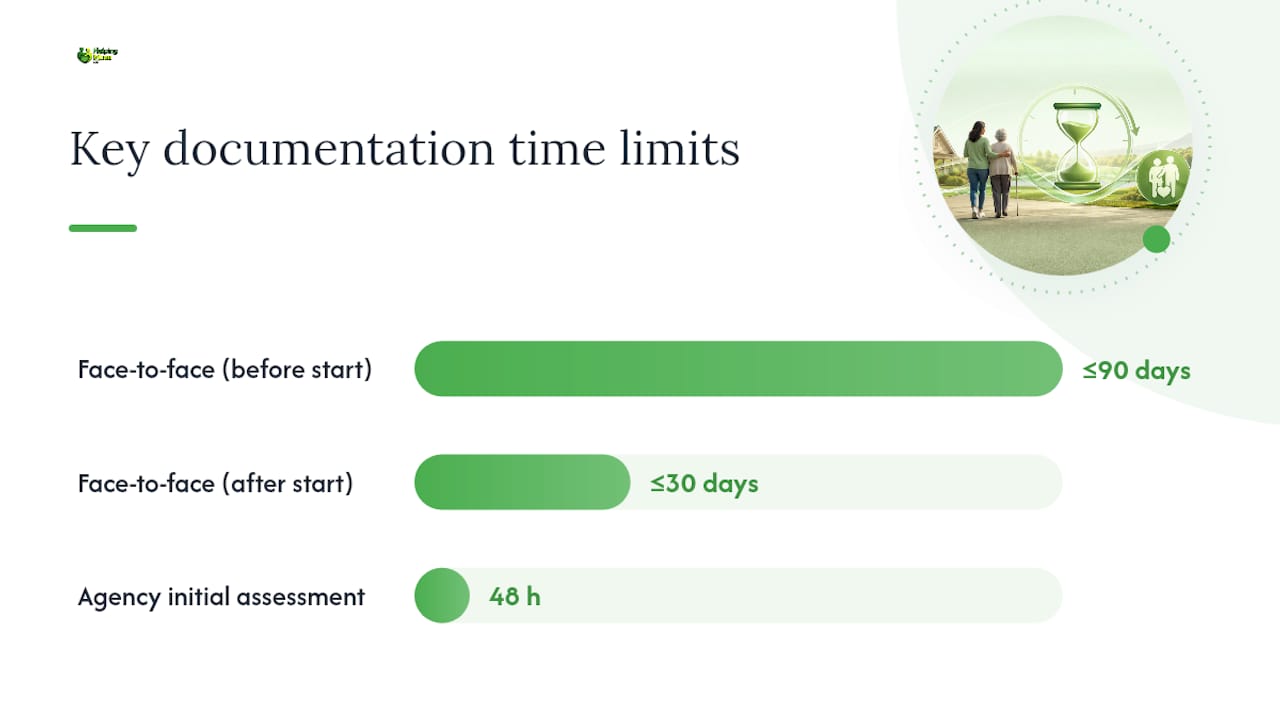
- The face-to-face encounter. A physician or allowed practitioner must see your parent, in person or by telehealth, no more than 90 days before home health starts or within 30 days after, per Medicare's own guidance.
- Physician certification. The doctor certifies (and later recertifies) that your parent is homebound and needs skilled care, and federal regulation requires this documentation to live in the medical record, not just verbally.
- Agency assessment. A Medicare-certified home health agency performs an initial assessment within 48 hours of referral, then a fuller comprehensive assessment to build the plan of care.
The homebound standard is clinical, and thorough notes from your parent's doctor (course of illness, prognosis, specific functional limits) tend to move certification faster and reduce the odds of denial, according to the same Benefit Policy Manual.
Pro Tip: Before the appointment, write down three specific moments from the past week when your parent struggled: getting out of a chair, climbing stairs, walking to the mailbox. Concrete examples like these carry more weight with Medicare than a general "she's been slowing down."
How to start the process, step by step
Getting home health started usually takes a phone call and a little patience, not a formal application. Here's the sequence that works:
- Ask your parent's doctor to evaluate whether they meet homebound and skilled care criteria, and schedule the face-to-face encounter if it hasn't happened yet.
- Request a home health referral directly from that visit. Agencies almost always need this from a physician or allowed practitioner.
- Once referred, expect the agency to complete its initial visit within about 48 hours.
- Search Medicare Care Compare to confirm an agency is Medicare-certified before signing anything.
When you talk to an agency, ask how often a nurse or therapist will actually visit, who supervises the aide if one is assigned, and how they'll document your parent's functional limits for Medicare's records.
Pro Tip: If a request gets denied, ask specifically what documentation was missing. Denials often trace back to vague notes, not an actual lack of need, and you have the right to appeal.
When home health ends and what to plan for next
Medicare home health is meant to be restorative, not permanent. Coverage generally ends once the skilled need resolves, whether that's a wound that's healed or a therapy goal that's been met. That's by design, and it catches a lot of families off guard.
Start thinking ahead before that day arrives:
- Ask the care team honestly how much longer skilled services are likely to continue.
- Look into private-pay non-medical home care for help with daily tasks Medicare never covered.
- Check whether your state's Medicaid Home and Community-Based Services program is an option if income qualifies.
- Consider adult day programs or long-term care insurance options to fill the gap.
- Talk with siblings now about who handles what, rather than scrambling later.
A note from a caregiver who's sat in that waiting room
When my own mother's home health nurse said the visits would be ending soon, I wished I'd asked more questions three months earlier instead of assuming the calls would just continue. If you're heading into a doctor's appointment soon, bring a short written list of what your parent struggles with physically. It makes the conversation faster and calmer for everyone.
You'll find more guides like this one at Helping-mom's resource hub.
— Mike C.
How Helping-mom fits into the picture
Medicare home health covers the medical piece, but it was never designed to cover the home itself, and that's where a lot of families quietly struggle. Helping-mom offers additional support and resources complementary to the services provided by your parent's home health agency. Think of it as a resource focused on supporting families with home safety, documenting day-to-day challenges, and planning for care needs beyond skilled medical visits.
If you're heading into a face-to-face evaluation soon, our aging in place checklist helps you capture the functional details doctors actually look for. And if you're already thinking past Medicare, toward fall risks, bathroom hazards, or general home safety, the Practical Guide: How to Make Home Safer for Seniors walks you through concrete fixes room by room. Start there, and bring what you learn into your next conversation with your parent's care team.
Where to double-check the rules yourself
- Medicare: the plain-language federal source on eligibility basics.
- The CMS Benefit Policy Manual: defines homebound status and intermittent care in regulatory detail.
- 42 CFR §409.42: the certification requirements agencies and doctors must follow.
- 1-800-MEDICARE: fastest way to get a quick eligibility question answered by a real person.
Sources
- Home Health Services Coverage
- Medicare Benefit Policy Manual (A3-3116 and §30 conditions)
- Medicare & home health care (booklet)
- 42 CFR §409.42 — Conditions for payment and certification
FAQ
Who qualifies for Medicare home health care?
Someone qualifies if a doctor certifies they're homebound and need part-time or intermittent skilled nursing or therapy, with care delivered through a Medicare-certified home health agency.
Does Medicare pay 100% for home health care?
Covered home health visits are typically $0 out-of-pocket under Original Medicare when eligibility criteria are met, though durable medical equipment carries a 20% Part B coinsurance after the deductible.
Will Medicare pay a family member to be a caregiver?
No. Medicare home health pays licensed agencies for skilled nursing, therapy, and conditional aide services; it does not pay family members directly for caregiving.
How many hours a day will Medicare pay for home health care?
Medicare defines intermittent skilled care as generally less than 8 hours a day and fewer than 7 days a week, with combined nursing and aide hours usually capped around 28 a week.