
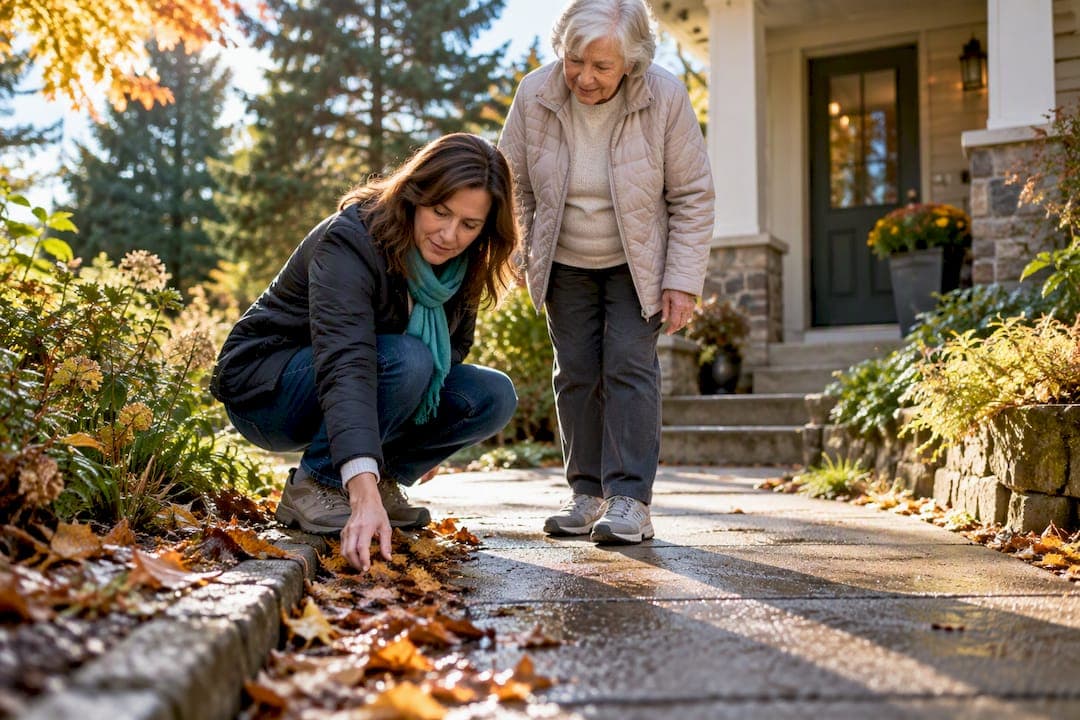
The most reliable outdoor fall prevention seniors can practice combines three things: fixing visible hazards before a walk, wearing stable footwear built for the terrain, and keeping vision and medications checked regularly. Start today with three small moves: walk the planned route once yourself to spot cracks or clutter, swap slippery shoes for a pair with a wide, nonskid sole, and put a vision and medication review on the calendar this month.
TL;DR:
- Use a pre-walk hazard checklist to identify common outdoor risks like uneven sidewalks, loose gravel, or poor lighting before senior outings.
- Regularly review vision, medications, and physical strength to address risk factors such as poor eyesight, dizziness, or weakened balance and gait.
- Ensure footwear has nonskid soles, and practice properly fitting traction devices outdoors on familiar surfaces before icy conditions occur.
- Incorporate balance and strength exercises like sit-to-stands, heel raises, and single-leg stands to improve stability and reduce fall risk over time.
- Make small outdoor space modifications, like installing handrails or clearing debris, and seek professional safety assessments to prevent environmental hazards.
Table of Contents
- Common Outdoor Hazards and a Quick Pre-Walk Checklist
- Personal Risk Factors Worth a Second Look
- Footwear, Traction Devices, and Getting Assistive Devices Right
- Exercise and Balance Programs That Actually Lower Fall Risk
- Weather and Season Change the Rules
- Fixing Outdoor Spaces and Finding Community Help
- What the Research Says, and What We Check First
- A Caregiver's Perspective: Independence and Safety Aren't Opposites
- How Helping-mom Can Help You Build an Outdoor Safety Plan
- Sources
- FAQ
Common Outdoor Hazards and a Quick Pre-Walk Checklist
Most outdoor falls don't happen on some dramatic obstacle. They happen on the ordinary stuff: a sidewalk slab that's lifted an inch, a curb cut with no ramp, loose gravel by the mailbox, a wet welcome mat, a garden hose left across the path, stairs with no rail, or a porch light that burned out three weeks ago.
You don't need to memorize every hazard. You need a habit. Before your parent heads out, run through a quick check together:
- Check the weather. Rain, frost, or high heat changes the plan.
- Walk the route in your head (or in person) for known trouble spots.
- Confirm footwear is secure and appropriate for the surface.
- Bring a phone and ID, and keep hands free for balance, not bags.
- Build in a rest stop if the walk is longer than a few minutes.
A daughter I've heard about from caregivers doing exactly this simply walked her mom's usual grocery-store route once on her own, noted a broken curb ramp, and rerouted her mom two blocks over. That five-minute preview probably did more than any single product could.
Personal Risk Factors Worth a Second Look
Outdoor risk isn't only about the sidewalk. It's also about how well your parent sees it, feels it, and reacts to it. A few checks make a real difference:
- Vision and hearing. Even a mild prescription change can make curbs and steps harder to judge. If your parent wears bifocals or progressive lenses, a single-distance walking pair or a clip-on lens can help them judge steps and curbs more accurately, according to the National Institute on Aging.
- Medications. Dizziness, drowsiness, or a blood-pressure drop when standing up can all raise fall risk. The fix is often simple, a dosage adjustment or a timing change, but it starts with telling the doctor about every near-miss, not just the falls that actually happened.
- Strength and balance. If your parent's gait has changed, shuffling, holding onto furniture indoors, hesitating at steps, that's worth a physical or occupational therapy referral. Many clinicians now use the CDC's STEADI screening approach to catch these changes early.
Footwear, Traction Devices, and Getting Assistive Devices Right
The right shoe does more outdoor fall prevention work than almost anything else on this list. Look for a nonskid rubber sole, a low and wide heel, a snug fit that won't slip at the heel, and enough depth for orthotics if your parent uses them. Our guide on safe footwear features walks through fitting details if you want to go deeper.
Traction devices, the slip-on cleats that grip ice, genuinely work, but only when used correctly. Studies on traction devices and winter falls found far fewer slips when people wore them properly and only outdoors on ice or packed snow. Wearing them indoors on tile or wood actually raises slip risk, so practice putting them on and taking them off before the first icy morning arrives.
If your parent uses a cane, walker, or rollator, outdoor terrain calls for a slightly different approach than indoor use, wider tires handle grass and gravel better, and a seat on a rollator gives a built-in rest stop.

Pro Tip: Test any new shoe or traction device on a short, flat, familiar stretch, like the driveway, before trusting it on an unfamiliar sidewalk or icy patch.

Exercise and Balance Programs That Actually Lower Fall Risk
Staying active is one of the most effective, and most underused, tools in outdoor fall prevention. The CDC's STEADI compendium points to tailored balance and strength programs, including Otago-style routines, that have reduced fall rates in clinical trials, and group programs like tai chi show similar benefits.
You don't need a gym membership to start. Three moves build a real foundation:
- Sit-to-stands. Rising from a firm chair without using hands, five to ten times, builds the leg strength that catches a stumble.
- Heel raises. Standing near a counter and rising onto the toes strengthens ankles, which matter more on uneven ground than most people realize.
- Single-leg stands. Holding onto a counter and lifting one foot for a few seconds trains the balance reflexes a curb or pothole will test.
Pro Tip: Stand behind your parent, not beside them, during single-leg stands. You'll catch a backward wobble faster that way.
Local senior centers and Area Agencies on Aging often run Otago or tai chi classes at low or no cost. If gait or confidence has changed noticeably, ask their doctor about a physical therapy referral rather than waiting for things to get worse.
Weather and Season Change the Rules
Ice and snow are the obvious culprits. Untreated sidewalks are a leading cause of winter slips, and research on environmental barriers and seasonal risk shows a clear seasonal spike in outdoor falls tied to winter weather. A few adjustments cut that risk sharply:
- Use traction devices on icy or snow-packed paths, and skip walks on untreated sidewalks entirely.
- Schedule outdoor trips for midday, when ice has had time to melt and sun is highest.
- Keep both hands free, no umbrellas or bag-juggling, on slick days.
- In rain, watch store entryways and public bathroom floors closely, and pause to dry shoe soles before stepping onto smooth indoor flooring.
- In heat, hydrate beforehand, slow the pace, and choose shaded routes or an air-conditioned indoor track instead.
Fixing Outdoor Spaces and Finding Community Help
Some of the best outdoor fall prevention happens before anyone even steps outside. Small, low-cost fixes make a real dent in risk, and the National Institute on Aging specifically recommends several of these:
- Install a handrail at the front entry, placed where your parent naturally reaches when unlocking the door.
- Add non-slip treads to porch or entry stairs.
- Fix or replace burned-out porch and walkway lighting.
- Clear leaves, hoses, toys, or debris from walkways regularly.
- Treat icy patches with ice melt before your parent's first trip out each morning.
For sidewalk damage on public property, most cities have a request line or online portal for repairs, check your municipality's public works page. Your local Area Agency on Aging or the Eldercare Locator can point you toward volunteer handyman programs or winter sidewalk-clearing services. If you're hiring a contractor for a handrail or steps, ask specifically about grab-bar load ratings and slip-resistant materials, not just general contracting experience.
What the Research Says, and What We Check First
The numbers are worth sitting with for a moment. More than one in four adults 65 and older report a fall each year, and falls contributed to over 38,000 deaths among that age group in 2021, according to the CDC. The same research shows that exercise programs and targeted clinical checks, the STEADI approach among them, measurably reduce that risk.
We've distilled this into a short set of checks to guide families through:
- Run the pre-walk checklist before any outdoor outing.
- Test new footwear on flat, familiar ground first.
- Practice a traction device indoors before trusting it outdoors on ice.
- Get a vision and medication review on the calendar, not just "someday."
One more habit worth building: write down any near-miss, a stumble on the porch step, a wobble getting off the curb, even if nothing happened. That note becomes useful evidence the next time your parent sees their doctor.
A Caregiver's Perspective: Independence and Safety Aren't Opposites
You don't have to choose between letting your parent walk to the mailbox and keeping them safe. Try something gentle, like, "I noticed the front step gets slick when it rains, want to try this handrail together?" Frame new shoes or traction devices as a trial, not a rule. Walk to the mailbox together first. Let a shared errand become the test run.
— Mike C.
How Helping-mom Can Help You Build an Outdoor Safety Plan
Reading a checklist is one thing. Walking your parent's actual porch steps, driveway, and sidewalk with a trained eye is another, and that's the gap Helping-mom fills. A Virtual Home Safety Consultation offers a video call to review your parent's entryway and walkway with you, providing a written checklist and prioritized fix list to act on promptly.
For those nearby, an In-Home Age-Safe Home Safety Assessment offers an expert review of your parent's porch, steps, and walkway. If you need help thinking through the bigger picture, timing, priorities, or difficult conversations, a Caregiving Clarity Session is available as a one-time session. Book a session or request a consultation to walk away with a plan instead of a worry list.
Sources
- NIA: Tips to avoid falls and injuries
- CDC STEADI compendium (2023)
- PubMed: Study on environmental barriers and seasonal outdoor fall risk
FAQ
What Is the Best Fall Prevention Device for Seniors?
There's no single best device, it depends on the terrain and the person. A cane or rollator helps with everyday balance, while ice cleats or traction devices matter most on snow and ice, and trials show they cut slips substantially when worn correctly and only outdoors.
Does Medicare Cover Fall Prevention?
Medicare typically covers fall-risk screenings during annual wellness visits and physical therapy referrals when a doctor documents a gait or balance concern. Coverage details vary by plan, so check with your parent's specific Medicare plan or provider for what applies to their situation.
What Are the 5 P's of Falls Prevention?
Definitions vary across health systems, so there's no single official version. Most versions focus on similar themes: personal risk factors, physical environment, program (exercise), pharmacy (medications), and prevention planning, and this article covers each of those areas in detail above.
Where Can I Find Good Fall Prevention Handouts for Seniors?
The NIA's tips sheet and the CDC STEADI compendium both offer printable, evidence-based guidance. Helping-mom's elderly home safety checklist also adapts easily into a printable outdoor version for daily use.