
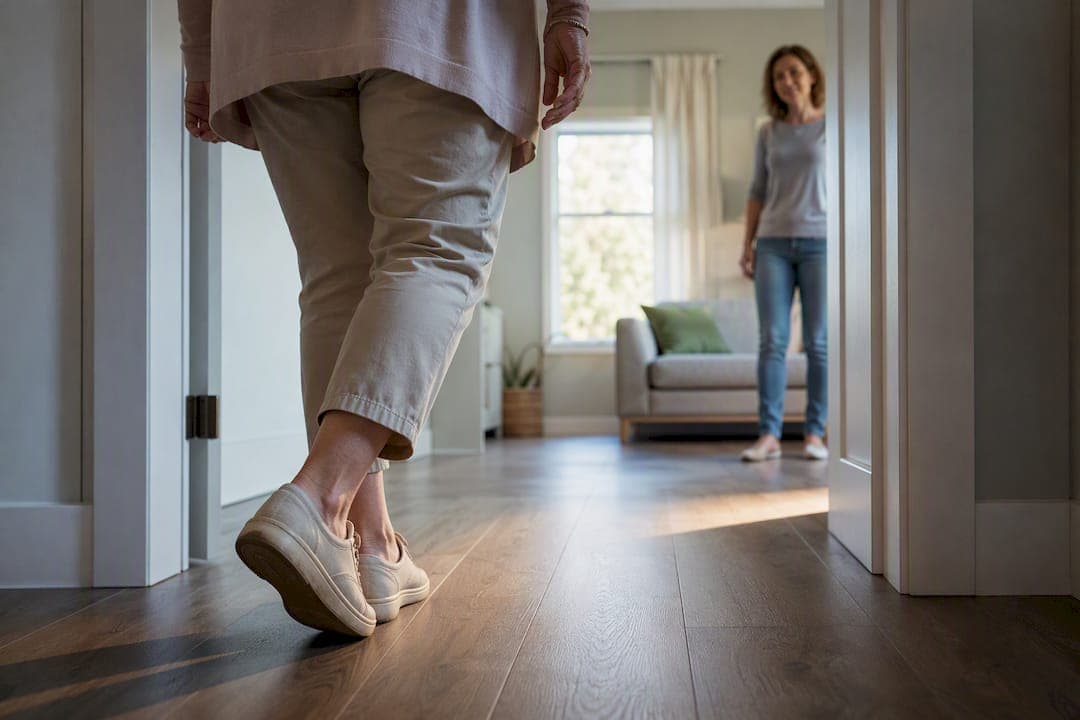
The safest shoes for an aging parent share five features: a secure fit, a low wide heel or flat sole, a non-slip outsole, a firm heel counter, and a roomy toe box with easy fastenings. If your mom or dad has a favorite pair of shoes already, the fastest next step is a simple test: have them try the shoes on in the afternoon, wearing their usual socks and any orthotics, then walk across a hard floor and a carpet.
TL;DR:
- Shoes should have a low, wide heel or flat sole to maintain balance and prevent shifting of the body's center of gravity.
- Outsoles must be slip-resistant and textured to provide adequate traction on various indoor surfaces, especially as soles wear down over time.
- A firm heel counter and moderate midsole stiffness are essential to support stability and prevent the foot from rolling during walking.
- Shoes need to feature a roomy toe box and easy fastenings, such as Velcro, to accommodate age-related foot changes and limited hand strength.
- Avoid backless slippers, high heels, worn soles, loose slip-ons, and oversized shoes, as these significantly increase the risk of falls indoors.
Table of Contents
- Safe Footwear for Seniors: Key Features That Actually Prevent Falls
- Shoes and Slippers to Avoid and Why They're Risky
- Footwear Guidance for Common Foot and Health Conditions
- A Step-by-Step Checklist for Choosing and Fitting Shoes
- Helping Mom's Practical Checklist and Conversation Tips
- Balancing Safety, Comfort, and Independence
- Continue Building a Safer Home for Your Parent
- Sources
- FAQ
Safe Footwear for Seniors: Key Features That Actually Prevent Falls
About 1 in 4 older adults falls each year, and footwear is one of the few fall-prevention tools a family can fix in a single afternoon. Not every feature matters equally, though, and knowing which ones do the real work will save you from over-thinking a shoe purchase.
A low, wide heel or flat sole. Anything higher than an inch shifts the body's center of gravity forward and makes balance harder to recover once it starts to slip. A wider heel base gives more surface contact with the ground, which steadies each step.
A slip-resistant, multi-directional outsole. Rubber soles with a textured tread grip tile, hardwood, and linoleum better than smooth leather or worn-down rubber. Clinical reviews consistently point to slip-resistant outsoles as one of the highest-impact features you can check in a store.
Moderate midsole stiffness and torsional rigidity. A shoe that's too soft lets the foot roll inward or outward with every step, which is exactly the kind of small wobble that turns into a fall on a rug edge. You can test this yourself: hold the shoe at both ends and twist. If it twists easily like a dish towel, it won't offer the structural support an unsteady walker needs.
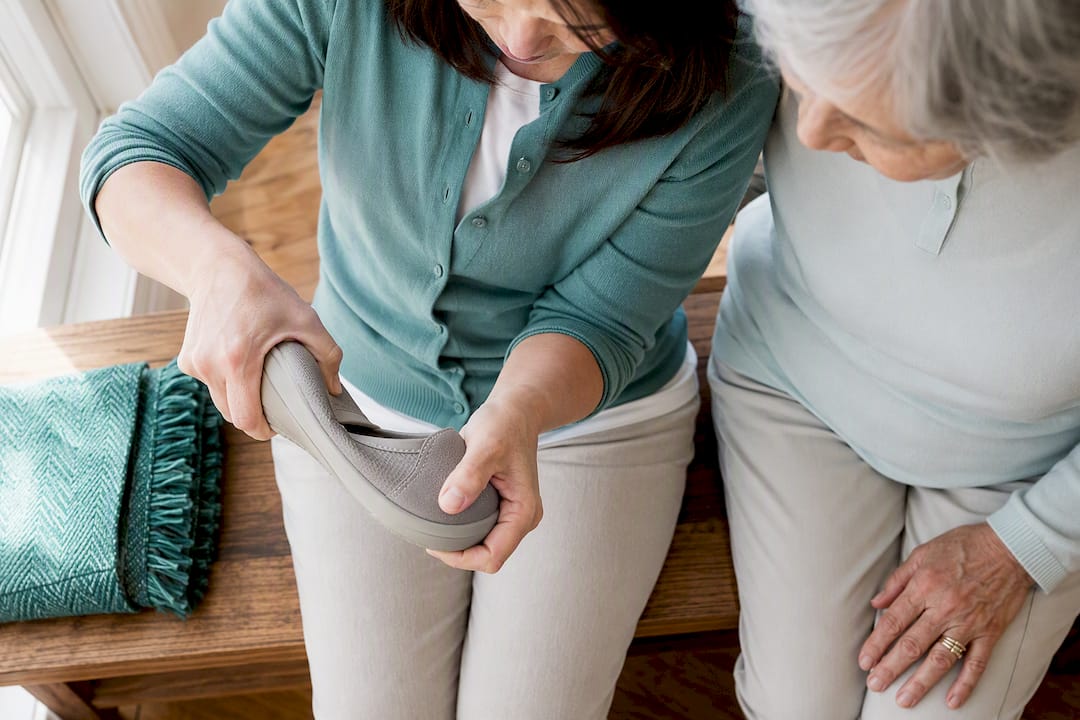
A firm heel counter. This is the stiff cup around the back of the shoe that holds the heel in place. Press your thumb into the back of the shoe. If it collapses easily, the heel will slide during walking, and that lateral instability is a common trigger for trips.
A roomy toe box. Feet widen and lengthen with age, often unevenly on each foot, so a shoe that fit five years ago may now pinch or push toes into a curled position that throws off gait.
Easy fastenings. Velcro, elastic laces, and side zippers matter more than they seem, especially for a parent with arthritis or limited hand strength who might otherwise wear shoes too loose because tying is hard.
A few checks make the difference between guessing and knowing:
- The thumb's width rule: there should be about a thumb's width of space between the longest toe and the front of the shoe.
- The heel-slip test: walk a few steps and watch the heel. More than a small amount of movement up and down means the fit is wrong.
- The short walk test: always walk the aisle, not just stand, before deciding.
Pro Tip: Bring your parent's orthotics and their usual socks to the store, and shop in the afternoon. Feet swell throughout the day, so a shoe that fits at 9 a.m. can feel tight and uncomfortable by 4 p.m.
Shoes and Slippers to Avoid and Why They're Risky
Some of the most dangerous footwear in an older adult's closet looks perfectly harmless, and that's exactly the problem. Here's what to phase out, and the actual mechanism behind each hazard.
- Backless slippers and floppy house shoes. Without a back, the foot has nothing holding the heel in place, so every step includes a small slide that can turn into a full trip on a threshold or rug edge.
- High or narrow heels. Even a moderate heel changes the angle of the ankle and shifts weight onto the toes, which makes recovering from a stumble much harder.
- Flip-flops and loose slip-ons. Nothing anchors the foot to the sole, so the shoe can twist or fall off mid-step, particularly on stairs.
- Worn, smooth-bottomed soles. Tread wears down gradually, so a shoe that felt safe a year ago may now offer almost no traction. Research on postural stability links smooth, worn soles directly to reduced balance and higher fall risk.
- Oversized or loose shoes. A shoe that's a size too big, often kept because it's "comfortable" or easier to slide on, creates extra material for a toe or cane tip to catch.
Rehab and senior-care organizations consistently warn against open-back and smooth-soled shoes for indoor wear, which matters because most falls happen at home, not out in public. If your parent has a beloved pair of backless slippers by the bed, that's often the single easiest swap to make first.
Footwear Guidance for Common Foot and Health Conditions
A shoe that's perfect for one parent can be the wrong choice for another, depending on what their feet actually deal with day to day.
- Bunions or hammertoes: Look for an extra-wide toe box and a soft, stretchable upper, ideally in leather or knit, that won't press against the bony prominence. Leave room for custom orthotics if your parent uses them.
- Edema (swelling): Adjustable closures like Velcro straps accommodate feet that change size throughout the day, and extra depth with removable insoles allows room to swell without pinching.
- Arthritis: Cushioned midsoles absorb shock that stiff, painful joints can't, and easy on/off fastenings matter enormously when finger dexterity is limited. A rocker-bottom sole can help some walkers, but only when a podiatrist or physical therapist has recommended it for that specific gait.
- Diabetes or neuropathy: Smooth interiors without rough seams prevent unnoticed rubbing, since reduced sensation means a small irritation can go unnoticed until it becomes a wound. Extra depth avoids pressure points, and any numbness or tingling in the feet is worth mentioning to a clinician before buying new shoes.
- General balance impairment: Lateral stability matters most here. A firm heel counter and a non-slip sole do more to prevent side-to-side falls than cushioning alone.
Adaptive features like extra depth, adjustable closures, and removable insoles exist specifically because aging feet change shape, sometimes unevenly between the left and right. If your parent's feet have changed noticeably in the last year, that's worth a conversation with a podiatrist before the next shoe purchase.
A Step-by-Step Checklist for Choosing and Fitting Shoes
Buying shoes for someone else, especially a parent who's used to picking their own, works better with a routine than with guesswork.
- Before you shop, measure both feet in the afternoon, note whether orthotics will be worn, and write down any specific mobility concerns (a cane, a walker, recent unsteadiness on stairs).
- In the store, have your parent try on both shoes with their usual socks and orthotics. Run the thumb's width and heel-slip checks, then walk on both hard flooring and carpet if the store has both.
- If possible, test a step up and down, since that motion reveals heel counter and sole flexibility issues that flat-floor walking won't show.
- Shopping online, check the return policy before ordering, and consider ordering two sizes if your parent's measurements fall between standard sizes.
- When shoes arrive, test them immediately at home on hard floors, carpet, and stairs rather than waiting for a special occasion to wear them for the first time.
- Watch for replacement cues: compressed or flattened cushioning, visibly worn tread, a heel counter that no longer holds firm, or a parent who's tripping more than usual in shoes that used to feel fine.
Pro Tip: If your parent mentions their shoes feel "different" even though nothing looks obviously worn, trust that. Cushioning breaks down internally before it shows on the outside, often around the six-to-nine-month mark for daily-wear shoes.
If foot shape has changed, pain has developed, or falls have already happened, a podiatrist or physical therapist can assess gait and recommend specific features, sometimes including custom orthotics, that a shoe store clerk simply won't catch. Pairing new shoes with basic balance exercises can also reinforce the stability that better footwear provides.
Helping Mom's Practical Checklist and Conversation Tips
Footwear changes go smoother when they're framed around comfort, not fear. Try opening with something like, "These have better arch support, want to try them around the house first?" rather than leading with fall statistics that can feel like an accusation.
A one-page checklist helps here more than a long conversation does. Walk through it together:
- Do the shoes have a low, wide heel or flat sole?
- Does the outsole grip when you press it against a hard floor?
- Is there a thumb's width of room at the toe?
- Does the heel counter feel firm when pressed?
- Can your parent fasten the shoes without help?
Pro Tip: Keep one "approved" pair by the bed and one by the door. Many falls happen during quick trips to the bathroom or mailbox, when someone reaches for whatever's closest instead of what's safest.
Footwear is one piece of a bigger picture. Pairing it with a broader look at home safety and fall prevention rounds out the changes that actually reduce risk.
Balancing Safety, Comfort, and Independence
The resistance to new shoes is rarely about the shoes. It's about a parent feeling managed instead of supported. The conversations that work best treat footwear as a comfort upgrade, not a safety intervention, and let your parent keep some say in color or style within the features that matter.
One family found success by letting Dad pick between three podiatrist-approved options instead of handing him one pair. He wore them. The alternative, insisting on "the safe ones," often backfires and gets the shoes pushed to the back of the closet.
— Mike C.
Continue Building a Safer Home for Your Parent
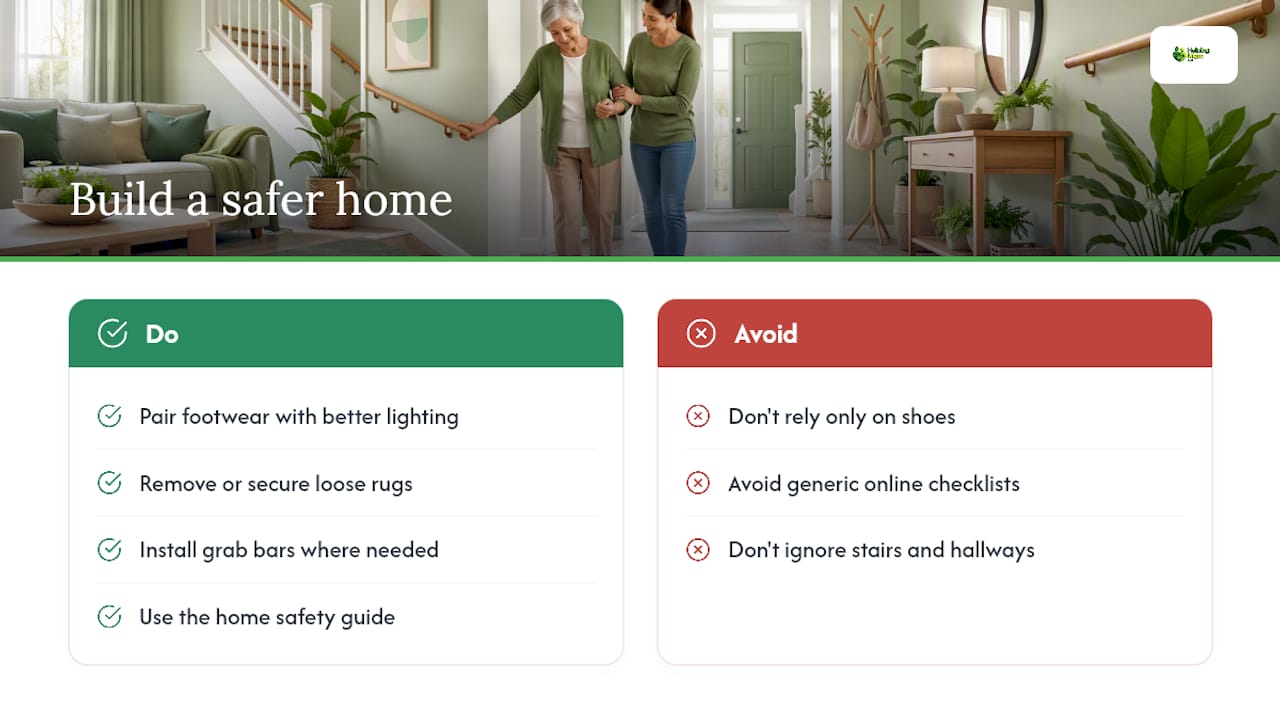
Footwear is the fastest fix, but it's only one piece of what actually keeps a parent steady at home. Unlike generic checklists you'll find scattered across the internet, Helping-mom's practical guide to making a home safer for seniors walks through the fixes that pair naturally with better shoes, from lighting to loose rugs to grab bars, so you're not solving one risk while three others stay unaddressed.
If you'd rather have someone walk through your parent's specific home and daily routine with you, a consultation or in-person home safety assessment (available locally in Central Florida) goes a level deeper than any checklist can, looking at the exact stairs, hallways, and bathroom layout your parent navigates every day. Start with the home safety guide for aging parents to see where to focus first.
Sources
The CDC's fall statistics and STEADI footwear guide offer practical, checklist-style guidance. Peer-reviewed research on footwear and fall prevention and balance outcomes backs the specific features covered above.
This article is general information, not a substitute for advice from a qualified doctor. Consult a qualified healthcare professional about your own circumstances before acting on anything here.
- CDC — Important facts about falls
- Evidence-Based Footwear Recommendations for Older Adults: Enhancing Mobility, Comfort, and Fall Prevention
- Shoes, balance, and postural stability in older adults — Clinical studies summary
FAQ
What Shoes Do Podiatrists Recommend for Seniors?
Podiatrists generally recommend shoes with a low, wide heel, a firm heel counter, a slip-resistant outsole, and enough room in the toe box to avoid pressure on bunions or swollen feet.
What Kind of Footwear Is Best for Older Adults?
The best footwear for older adults combines a secure, adjustable fit with a non-slip sole and moderate midsole stiffness, features that together support balance rather than just comfort alone.
What Are Good Shoes for Elderly People With Foot Problems?
For bunions, edema, or arthritis, look for extra-depth shoes with a soft upper, removable insoles, and adjustable closures like Velcro that accommodate swelling and shape changes without needing to be untied and retied.
What Are the Most Comfortable Shoes for Senior Citizens?
Comfort and safety usually overlap: cushioned midsoles, roomy toe boxes, and easy on/off fastenings tend to feel best while also reducing fall risk, which is why the two goals rarely conflict once the right features are in place.
How Often Should Seniors Replace Their Shoes?
Watch for compressed cushioning, visibly worn tread, or a heel counter that no longer feels firm, since daily-wear shoes often need replacing around every six to twelve months depending on use.