
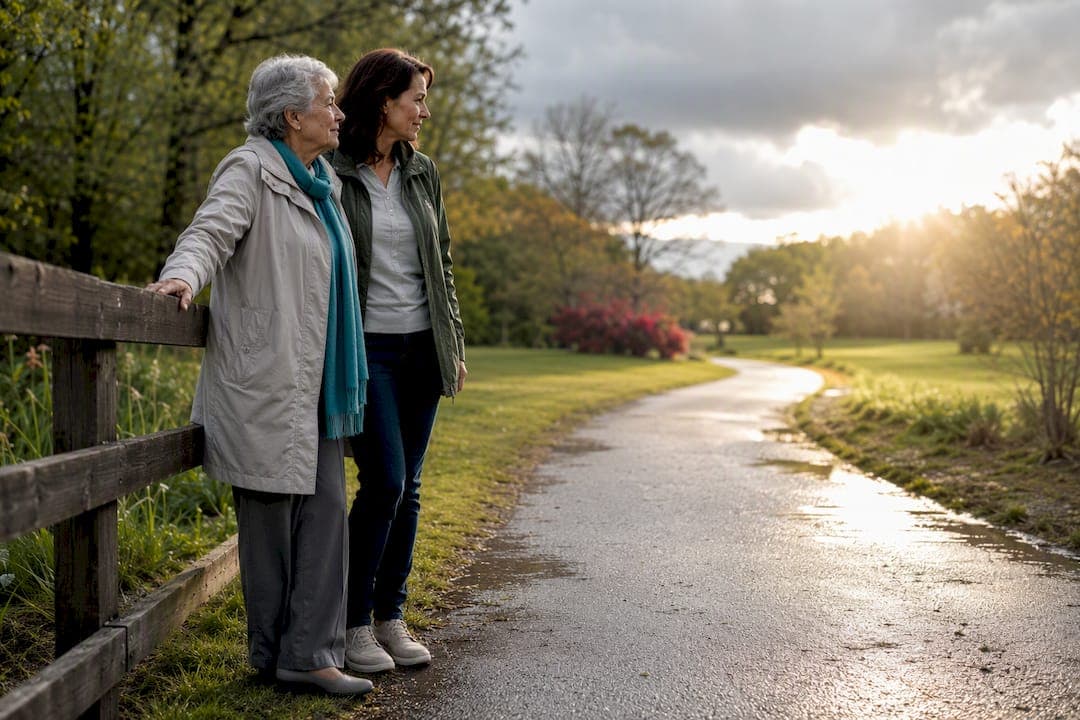
Yes, your aging parent can enjoy the outdoors safely, and the single most important step is planning the outing around current conditions, mobility, and support. Before you head out, check the weather and heat risk, and confirm footwear and any mobility aid are ready. This guide draws on guidance from the National Weather Service, the National Institute on Aging, the CDC, and Helping Mom's own caregiving experience.
TL;DR:
- Most outdoor falls and setbacks can be prevented with small adjustments, such as choosing even surfaces, shaded routes, and carrying a few essential safety items.
- Temperature and air quality significantly influence outdoor safety, with heat adding up to 15°F more in direct sunlight, and outdoor activity should be limited during high heat or poor air quality days.
- Proper footwear with deep-tread, nonslip soles and support greatly reduces the risk of slips and falls, especially when combined with practicing new aids like canes or walkers beforehand.
- Ongoing strength and balance exercises, such as sit-to-stands or tai chi, help maintain confidence and independence during outdoor activities over time.
- Planning ahead with a clear route, check-in times, and a packed safety kit ensures quick response and reduces risks when outdoor outings do not go as planned.
Table of Contents
- Which outdoor activities fit your parent's ability right now
- A pre-outing checklist you can use every time
- What the weather actually means for outdoor risk
- Footwear, traction, and small gear that prevent falls
- Building strength and confidence for the long run
- Planning the outing and knowing what to do if something goes wrong
- What years of caregiving conversations have taught us
- How Helping Mom can help you plan safer outings
- Sources
- FAQ
Which outdoor activities fit your parent's ability right now
The right activity depends on stamina, balance, and how the body feels that day, not on what your parent used to do five years ago. Matching the outing to today's ability keeps outdoor time enjoyable instead of stressful.
- Short paved walks work well for mild mobility changes, especially in a park with smooth, level pathways.
- Bird-watching or porch gardening suit lower stamina days and still offer fresh air and a sense of purpose.
- Gentle hiking on flat, groomed trails can work for parents with good balance and no recent falls.
- Fishing from a dock or shoreline bench offers a calm, low-exertion outing with a built-in place to sit.
Watch for red flags: uneven gravel or dirt paths, long distances without seating, and crowded festivals or fairs where a bump or quick turn could cause a stumble. If the forecast or your parent's energy says no, a sunroom, an enclosed mall walk, or a visit to a botanical conservatory can scratch the same itch indoors.
A pre-outing checklist you can use every time
A few minutes of preparation prevents most of the outdoor problems caregivers worry about. Run through this list before any outing, long or short.
- Check the local weather, heat index, and air quality using NWS heat tools before deciding on timing.
- Choose a route with even pavement, shade, and benches, and pick parking close to the entrance.
- Pack water, any needed medications, a phone, photo ID, and a small first-aid kit.
- Bring a charged phone or wearable alert device in case you need to call for help.
- Confirm whether any current medications affect balance or the body's ability to regulate temperature, and plan the outing for cooler hours if they do.
Pro Tip: Keep a small "go bag" by the door with water, sunscreen, and a folding seat already packed, so getting out the door takes minutes, not a search through the house.
What the weather actually means for outdoor risk

Heat index numbers assume shade and light wind, so real risk on a sunny sidewalk can be higher than the forecast suggests.
Full sun exposure can add up to about 15°F to the apparent temperature, which matters more for older adults whose bodies regulate heat less efficiently. Plan outings for early morning or early evening on hot days, stick to shaded routes, and carry water even for short walks.
- Watch for heat-illness signs: heavy sweating, dizziness, nausea, or confusion, and move to shade or air conditioning right away if they appear.
- In cold weather, dress in layers, limit time outside, and use traction devices only on icy ground, never indoors.
- Recognize hypothermia warning signs: shivering, slurred speech, and unusual clumsiness.
- Check air quality before strenuous outdoor plans and reschedule if the day is rated unhealthy for sensitive groups.
Footwear, traction, and small gear that prevent falls
Good shoes do more for outdoor safety than almost anything else on this list. Look for deep-tread, nonslip soles and a snug, supportive fit, since worn tread or loose shoes are common contributors to outdoor slips, according to Harvard Health. Our footwear guide covers specific features worth checking before a purchase.
- Use ice traction devices only outdoors on snow or ice, and remove them immediately once back inside, since CDC's STEADI compendium notes they reduce slips only when fitted and used correctly.
- Choose a rollator, cane, or walker based on your parent's actual balance needs, and practice turns, brakes, and seat use in the driveway first.
- Add a wide-brim sun hat, sunscreen, an easy-grip water bottle, and a lightweight folding seat to make longer outings more comfortable.
Pro Tip: Practice using a new cane or rollator on your parent's own driveway before the first real outing. A flat, familiar surface builds confidence fast.
Building strength and confidence for the long run
Outdoor independence holds up best when it is supported by ongoing strength, balance, and vision care, not just gear for a single outing. Tailored strength and balance programs, including Otago-style exercises, are linked to meaningfully lower fall rates in CDC STEADI research.
- Encourage simple, safe exercises like sit-to-stands, gentle tai chi, or short daily walks, building gradually over weeks.
- Schedule an annual vision check, and consider distance-only glasses for walking since bifocals can distort depth perception on curbs and steps.
- Ask a clinician or pharmacist to review medications for effects on balance or temperature regulation, a step the National Institute on Aging lists among the most reliable long-term prevention steps.
Fear of falling can quietly shrink a parent's world, leading to less activity and weaker balance over time. Short, regular outdoor time with the right supports helps protect both strength and confidence, which is worth remembering when a parent hesitates to go out.
Planning the outing and knowing what to do if something goes wrong
A good outing plan takes the guesswork out of the day and gives everyone a clear script if something happens.
- Pick a route in advance, checking for even surfaces, shade, and rest spots.
- Set a check-in time if your parent is going out with a friend instead of you.
- Decide whether a companion is needed based on the terrain and your parent's recent balance.
- Pack the checklist items from earlier: water, meds, phone, ID, first-aid basics.
If a fall happens, stay calm, check for pain or inability to move before helping your parent up, and call 911 if there is a head injury, a visible deformity, or your parent cannot bear weight. Seek emergency care right away for heat stroke signs (confusion, hot dry skin, very high body temperature) or hypothermia signs (severe shivering, confusion, slurred speech), both of which the National Weather Service and CDC treat as urgent.
What years of caregiving conversations have taught us
Most outdoor setbacks trace back to something small and fixable, not a dramatic decline. One family swapped a Saturday farmers' market for an early Tuesday morning visit and suddenly Dad was back to his weekly outing. Another added a folding cane seat, and a mother who had stopped bird-watching started going again. Small, predictable fixes tend to matter more than any single piece of advice.
— Mike C.
How Helping Mom can help you plan safer outings
You do not have to figure this out alone, and you do not need a medical degree to keep your parent's outdoor time safe. Helping Mom offers a few ways to get hands-on, personalized guidance depending on what fits your situation.
- The Caregiving Clarity Session is a focused, one-time conversation for caregivers who want a clear next step. Pricing details are available on the Helping Mom website.
- A Virtual Home Safety Consultation walks through your parent's home and outdoor routes over video, useful if you live at a distance.
- An In-Home Age-Safe Home Safety Assessment brings an onsite review directly to your parent's home for families who want eyes on the ground.
If you are ready for a plain, personalized plan instead of another list to sort through, book a Caregiving Clarity Session and get specific guidance for your family's situation.
This article is general information, not a substitute for advice from a qualified doctor. Consult a qualified healthcare professional about your own circumstances before acting on anything here.
Sources
- National Weather Service — Heat tools
- CDC — STEADI Compendium (2023)
- National Institute on Aging — Falls and fall prevention
- Harvard Health — Protect yourself from falls outside the home
FAQ
How many miles a day should a 65 year old walk?
There is no single mile target that fits every older adult, since it depends on current fitness, joint health, and any balance concerns. A short daily walk on flat, even ground, built up gradually, is generally safer than aiming for a specific distance.
What should a 70 year old do every day?
A helpful daily routine includes some light movement, like a short walk or gentle stretching, along with hydration and, where possible, some time outdoors in good weather. Building in a consistent, low-impact routine supports the strength and balance habits described in NIA's falls prevention guidance.
What are some safety tips for older adults heading outside?
Check the weather and heat index before heading out, wear supportive nonslip shoes, and choose routes with even surfaces and places to rest. Carrying a phone and telling someone your route are simple habits that add a real layer of protection.
What are some good outdoor activities for elderly people?
Low-impact options like short paved walks, bird-watching, gentle gardening, and fishing from a dock tend to work well for a range of ability levels. The best choice matches your parent's current stamina and balance rather than what felt easy in the past.
When should an older adult skip outdoor activity altogether?
Skip or postpone outdoor plans when the heat index is high, ice covers the ground, or air quality is rated unhealthy, and choose an indoor alternative instead. A mall walk, a conservatory visit, or a sunroom can offer similar benefits without the added risk.