
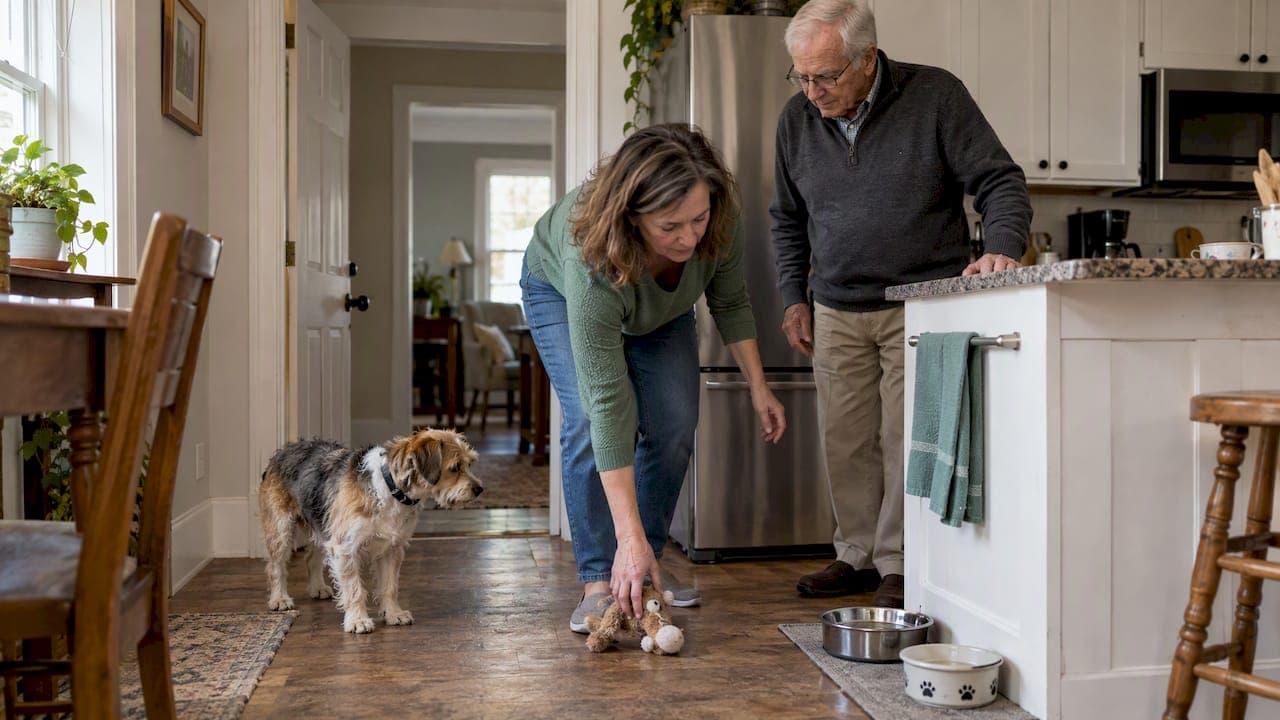
Most seniors can safely keep living with their pets, and the benefits of that companionship usually outweigh the risks once a few practical changes are in place. The single best next step is a quick home safety sweep focused on trip hazards, paired with a simple backup plan for who cares for the pet if your parent needs urgent help. Small adjustments protect both of them without asking anyone to give up the comfort a pet provides.
TL;DR:
- Regular walks with a dog can improve seniors' balance and reduce fall risk, especially when using a fixed-length leash and well-fitted harness.
- Common fall hazards include trip-worthy clutter, loose rugs, and retractable leashes, all of which can be addressed with simple home adjustments.
- Pets are involved in roughly half of pet-related falls, mainly caused by tripping or being pulled, but safety measures can significantly reduce these incidents.
- A biannual veterinary check helps detect age-related health issues in senior pets that could lead to accidents at home.
- Having a pet emergency plan with backup caregivers and vital information prepared prevents chaos during hospital visits or emergencies.
- ✓Home safety guidance
- ✓Aging in place support
- ✓Caregiver wellness guidance
- ✓Planning ahead resources
Table of Contents
- Quick safety checklist caregivers can implement today
- What the research shows about pet-related falls and walking benefits
- Modify the home and daily routines to fit senior and pet together
- Walking safety: leash choices and smarter tactics
- Senior pet health and household toxins worth securing
- Managing behavior, bites, and multi-pet households
- Emergency planning: build a pet contingency card
- Our perspective on keeping seniors and pets together safely
- How we can help you put these changes in place
- FAQ
- Sources
Quick safety checklist caregivers can implement today
You do not need a full renovation to make a home safer this week. A short walk through the house with fresh eyes often reveals the fixes that matter most.
- Clear toys, bowls, and leashes out of hallways and walking paths.
- Secure loose rugs with non-slip backing and tuck away loose cords.
- Switch to raised feeders and add a non-slip mat near the food area to cut down on bending and slipping.
- Replace retractable leashes with a fixed-length leash, looped through the wrist or held firmly under the palm.
- Post emergency numbers, including the vet and a poison helpline, somewhere visible like the fridge.
These changes take an afternoon, not a weekend, and they address the exact situations that tend to cause falls.
What the research shows about pet-related falls and walking benefits
Pets and people get hurt the same ways, over and over, which makes the risks easier to plan around. A significant number of fall injuries happen each year in the United States from incidents involving dogs and cats, according to CDC research on pet-related falls. The most common causes were tripping over a pet and being pulled or pushed by a dog, and dogs were involved in the large majority of these incidents.
That same data points to where caregivers can focus their attention:
- Tripping over the pet is a common cause of these injuries.
- Being pulled or pushed by a dog is another frequent cause.
The encouraging part is that walking a dog regularly appears to help, not hurt, older adults' balance. A 2025 study on dog walking and fall risk found that adults 60 and older who walked their dog four or more days a week had lower odds of unexplained falls and completed balance tests faster than non-walkers. The takeaway for families is straightforward: the goal is not to separate seniors from their pets, but to make the walking and daily routines around them safer.
Modify the home and daily routines to fit senior and pet together
A home that works for a senior and a pet together usually just needs its traffic patterns rethought. Walk through each room with your parent and ask where the pet tends to settle, eat, or wait by the door.
- Create a clear path by relocating bowls, beds, and leash hooks away from hallways and doorways.
- Add a ramp or pet steps near furniture or the car so the pet does not need to be lifted suddenly.
- Use a long-handled scoop or grooming tool so your parent can care for the pet without bending or crouching.
- Install a motion-activated night light along the route to the litter box or water bowl.
Our guide to making a home safer for an elderly parent walks through more of these adjustments room by room.
Pro Tip: Try moving one item at a time and watch how the pet adjusts over a few days, rather than rearranging the whole room at once.

Walking safety: leash choices and smarter tactics
A dog's daily walk is one of the better reasons to keep a pet in a senior's life, but the leash itself can turn into the biggest risk. Retractable leashes give dogs too much room to build speed before a sudden pull, so a fixed-length leash paired with a well-fitted harness gives your parent far more control.
- Hold the leash with both hands when possible, keeping the dog close rather than letting the line run long.
- Stay near the curb side of the sidewalk, away from traffic, and walk with a companion when the terrain is uneven.
- When strength or balance makes walking tricky, a local dog walker, a volunteer pet-care program, or short supervised yard sessions can keep the dog active without the fall risk.
Our practical guide to making homes safer for seniors covers lighting and surface tips that pair well with safer walking routes, and a local balance program like balance training for fall prevention can help your parent build the stability that makes these walks safer too.
Senior pet health and household toxins worth securing

Pets age too, and their behavior changes often trace back to something medical rather than something behavioral. Scheduling a wellness check every six months gives a vet the chance to catch arthritis, vision loss, or cognitive decline early, according to ASPCA guidance on caring for senior pets. Catching these conditions early often reduces the restlessness or confusion that leads to accidents at home.
Household items that seem harmless to people can be dangerous for pets, so a quick safety sweep matters here too, per AVMA and ASPCA guidance on household hazards:
- Secure medications like acetaminophen, ibuprofen, and naproxen out of reach.
- Keep grapes, raisins, onions, garlic, and xylitol-containing products away from counters and floors.
- Save the ASPCA Animal Poison Control Center and Pet Poison Helpline numbers in your phone, noting that a consultation fee may apply.
Managing behavior, bites, and multi-pet households
Even a gentle pet can react unpredictably when startled, especially around someone who moves more slowly or unexpectedly. A few habits go a long way toward preventing that.
- Avoid disturbing pets while they are eating or sleeping, since this is when most defensive reactions happen.
- Watch for stress signals like growling, stiff posture, or hiding, and give the pet space when you see them.
- Walk visiting grandchildren or caregivers through safe ways to approach and pet the animal.
- Supervise closely in homes with more than one dog, since bite risk rises with multiple pets in the house.
- If a bite does happen, clean the wound and seek medical attention for anything deep or showing signs of infection; a recurring pattern of aggression is worth discussing with a vet or trainer.
Emergency planning: build a pet contingency card
A short, visible plan removes the panic from an already stressful moment, whether that is a hospital stay or a sudden fall.
- Write up a single sheet with the pet's vet, microchip number, medication schedule, feeding routine, and any allergies.
- List three backup caregivers who could step in on short notice.
- Include local resources: the regular vet clinic, the ASPCA Animal Poison Control Center at 1-888-426-4435, and the Pet Poison Helpline at 1-855-764-7661.
- Decide now who transports the pet and where it stays if your parent is hospitalized, so no one has to figure it out in the moment.
Our elderly home safety checklist gives you a template to build this alongside your parent's broader safety plan.
Our perspective on keeping seniors and pets together safely
When we walk through a home, we are not looking for reasons to recommend giving up a pet. We are looking for the three or four small changes that make the biggest difference: a raised bowl, a fixed leash swapped in for a retractable one, a clear path from the bedroom to the back door. Families are often surprised how much safer a home feels after changes that took less than an hour. The goal is always the same: fewer risks, without asking anyone to give up the comfort a pet brings.
— Mike C.
How we can help you put these changes in place
If walking through your parent's home and spotting every hazard feels like more than you have time for, our team can do that walkthrough with you. A Virtual Home Safety Consultation gives you a guided plan over video call, built around your parent's actual home and pet, while the In-Home Age-Safe Home Safety Assessments bring that same review in person for local families. For a focused, one-time conversation about a specific concern, like a recent near-fall or a new puppy in the house, our Caregiving Clarity Session ($97, one-off) gives you dedicated time to work through it together.
- Each option ends with a prioritized list of fixes, so you know what to tackle first.
- We follow up with a simple plan you and your parent can act on at your own pace.
Book a Virtual Home Safety Consultation or look into our In-Home Age-Safe Home Safety Assessments to get started.
FAQ
What is the biggest pet-related fall risk for seniors?
Tripping over the pet and being pulled or pushed by a dog are the two most common causes, together accounting for roughly half of pet-related fall injuries according to CDC data. Clearing walkways and using a fixed-length leash address both of these directly.
Should a senior give up their dog after a fall?
Not necessarily. A fall is usually a sign that a specific habit or hazard needs adjusting, such as a retractable leash or a cluttered hallway, rather than proof the pet needs to go. A home safety review can usually identify the fix without separating the two of them.
How often should a senior's pet see a vet?
A wellness check roughly every six months is a reasonable rhythm for senior pets, since it helps catch arthritis or cognitive changes early, per ASPCA guidance. Catching these issues early often prevents the restlessness that leads to accidents.
What if my parent needs hospital care and no one can watch the pet right away?
Having a pet contingency card ready, with vet contacts, medication notes, and three backup caregivers listed, removes the scramble in a crisis. Decide in advance who will transport the pet and where it will stay so the plan is already in motion when you need it.
Are retractable leashes unsafe for older adults?
Retractable leashes give a dog room to gain speed before a sudden stop, which can pull an unsteady handler off balance. A fixed-length leash paired with a well-fitted harness gives a senior far more control on walks.
Sources
- Nonfatal Fall-Related Injuries Associated with Dogs and Cats — United States, 2001–2006
- 2025 study on dog walking and fall risk in older adults
- Pet care: senior pets and household hazards — AVMA / ASPCA resources