

A short, predictable evening routine, paired with daytime light and activity, usually reduces sundowning episodes and helps you keep evenings safer and calmer. Sundowning is late-day confusion and restlessness linked to a disrupted internal clock, low light, and unmet needs like hunger or fatigue. Building a consistent rhythm around light, meals, and calm transitions tends to ease both frequency and intensity. If a change in behavior is sudden, severe, or paired with fever or a fall, call your parent's doctor before assuming it's just sundowning.
TL;DR:
- Adjust the evening routine to start a few hours before bedtime, incorporating gradual lighting, calming activities, and simple personal care.
- Maximize daytime light exposure through morning walks and early errands, avoiding long naps and caffeine after early afternoon to support the sleep-wake cycle.
- Use familiar, low-pressure tasks combined with soft music or sensory objects in the evening to soothe agitation, monitoring for worsening signs or triggers.
- Improve home safety by layering lights, reducing shadows, and maintaining consistent furniture and pathways to prevent disorientation and falls.
- Rule out medical issues such as dehydration, pain, or infections before attributing behavior solely to sundowning, and seek professional help if behaviors change suddenly or worsen.
Table of Contents
- Building Your Sundowning Routine: An evening plan lasting a few hours
- What Daytime Habits Actually Prevent Evening Agitation?
- Which Calming Activities Work Best in the Evening?
- How Should You Adjust Lighting and Layout for Safety?
- Could a Medical Issue Be Causing the Behavior?
- What Can You Do in the Moment to Calm an Episode?
- How Helping Mom Supports Your Routine
- One Small Change, One Real Difference
- Get a Personalized Sundowning Routine for Your Parent
- Sources
- FAQ
Building Your Sundowning Routine: An evening plan lasting a few hours
A sundowning routine works best when it starts before the agitation does, not after. Begin the wind-down a few hours before your parent's usual bedtime, while she's still calm enough to cooperate with gentle structure.
Here's a timeline you can copy tonight and adjust as you learn what fits your parent:
- Hour 1 (start of wind-down): Turn on extra lamps as daylight fades, and start a simple, familiar activity like folding towels or looking through a photo album.
- 45 minutes later: Serve dinner or a light snack. Keep the table calm. Skip the news or anything loud on TV.
- Next 20–30 minutes: Handle personal care like brushing teeth or changing clothes, one step at a time, with plenty of pauses.
- Final 30–45 minutes: Move to a calming activity such as soft music or a warm drink, then dim the lights and prepare the bedroom.
A few notes for customizing this:
- If your parent has mobility limits, add extra time to the personal care block instead of rushing it.
- If your family eats dinner later, shift the whole timeline back rather than cutting a step.
- For a parent who naturally stays up later, keep the same order of events, just start it closer to her actual bedtime.
What Daytime Habits Actually Prevent Evening Agitation?
The evening isn't where sundowning starts. It's usually set up hours earlier by how the day went.
Natural light is the biggest lever you have. Sunlight helps reset the body's internal clock, and the National Institute on Aging points to daytime light exposure as one of the most reliable ways to ease late-day confusion. A morning walk, breakfast near a sunny window, or ten minutes on the porch can do more than any evening fix.
Timing matters just as much as content. Try this:
- Schedule walks, errands, and doctor visits for the morning or early afternoon, when your parent has the most patience and energy.
- Save quiet, low-demand tasks for later in the day.
- Keep naps short and early, ideally before 2 p.m., since a long afternoon nap often pushes bedtime later and worsens evening restlessness.
- Cut off caffeine and alcohol by early afternoon.
Pro Tip: If your parent naps in front of the TV without meaning to, try moving her chair away from the screen after lunch. A change of scenery alone often prevents the accidental late nap that throws off the whole evening.
Which Calming Activities Work Best in the Evening?
Once the agitation starts creeping in, the goal isn't distraction. It's giving your parent's hands and mind something familiar and low-pressure to do.
Simple, repetitive tasks tend to work better than conversation or games that demand memory. Folding wash cloths, sorting a deck of cards, or paging through an old photo album taps into motor memory that stays intact longer than short-term recall. The Alzheimer Research & Advice group recommends pairing these tasks with soft, familiar music or nature sounds, and reducing background noise from TV or a busy kitchen.
A few things worth trying tonight:
- Offer a warm, small snack, since low blood sugar can look a lot like agitation.
- Play a favorite song from decades ago rather than generic "relaxing" music.
- Hand over a soft blanket, stress ball, or familiar object to hold.
Give any activity 15 to 30 minutes before deciding whether it's helping. You'll usually see less pacing and a softer face within the first ten minutes if it's working. If agitation gets worse, or the music or scent seems to upset rather than soothe, stop and try something else instead of pushing through it.
How Should You Adjust Lighting and Layout for Safety?
Shadows confuse a mind that's already struggling to make sense of the room. As afternoon light fades, deep shadows near doorways or hallways can look like holes or figures to someone with dementia, which is often what triggers fear or pacing.

Turn on lamps before the sun sets rather than after, and layer the light instead of relying on one overhead fixture. A night light along the path to the bathroom prevents both confusion and falls in the middle of the night. Dementia UK notes that clear walking paths and visible cues cut down on both wandering risk and disorientation.
Small environmental anchors help too:
- Keep a large-faced clock showing the time of day in the main living space.
- Leave familiar photos and furniture in the same spots. Rearranging a room, even to "improve" it, can be disorienting.
- Clear rugs, cords, and clutter from walking paths.
- Keep frequently used items like glasses or slippers in the same visible place every evening.
Pro Tip: A simple door chime or motion sensor near an exterior door can give you a few extra seconds of warning if your parent tends to wander at night. It's a small step that buys real peace of mind. For a broader look at lighting and layout changes, our guide on vision changes in older adults covers adjustments that help beyond sundowning too. If you're doing a fuller safety sweep of the house, this aging-in-place safety checklist is a useful place to start.
Could a Medical Issue Be Causing the Behavior?
Not every evening struggle is sundowning. Before assuming it is, rule out the basics: hunger, thirst, pain, or a full bladder. These common, fixable triggers get missed constantly because they look identical to sundowning from the outside.
Watch for reversible causes like a urinary tract infection, dehydration, constipation, or a new medication side effect. The Cleveland Clinic lists these alongside disrupted sleep as common, treatable contributors to evening confusion.
Call the doctor promptly if you notice:
- A sudden change in behavior rather than a gradual pattern
- Fever, new aggression, or hallucinations
- A new fall or injury
A simple log helps enormously at appointments: note the time, what happened, what came right before it, medications taken, and how much your parent slept and drank that day.
What Can You Do in the Moment to Calm an Episode?
When agitation is already happening, your calm matters more than your words. Lower your voice, slow your movements, and avoid correcting or arguing with what your parent says, even if it doesn't make sense.
- Redirect gently toward something simple, like a snack or a familiar task.
- Offer a short, calming gesture, a hand on the shoulder or a familiar phrase you both know.
- If the moment isn't shifting, step back and give a few minutes of space rather than pushing.
- If things feel unsafe, move other family members away and call for help using a plan you've already agreed on ahead of time.
Pro Tip: Decide your safety plan before you need it. A quick conversation now about who to call and where to go during a tough episode saves precious seconds later.
Your own regulation matters here too. A few slow breaths before you respond, and a short scheduled break each day, even fifteen minutes, help you show up calmer for the next episode. Our dementia communication toolkit has more scripts for these harder moments.
How Helping Mom Supports Your Routine
Building a sundowning routine from scratch is a lot to hold on top of everything else caregiving asks of you. That's exactly why we built practical tools around it.
- Download and adapt our printable caregiver schedule to match the evening timeline above to your parent's habits.
- Book a Virtual Home Safety Consultation to walk through your specific evening triggers with someone who's done this before.
- Explore our full caregiving resource library for more guides on routines, safety, and family communication.
These guides are written with Mike C., a contributing caregiver expert who brings real-world caregiving experience to every Helping-mom resource.
One Small Change, One Real Difference
A daughter once told us she'd stopped fighting her mother's resistance to evening baths and moved the whole routine to right after breakfast instead. The evening agitation didn't disappear, but it softened enough that dinner stopped feeling like a battle. Try moving just one stubborn piece of your routine this week, then watch what shifts.
— Mike C.
Get a Personalized Sundowning Routine for Your Parent
Reading about a routine and actually building one that fits your parent's habits, home, and schedule are two different things. This service offers practical support compared to managing care with scattered articles and forum posts. Where a generic checklist stops, a real conversation about your specific evenings begins.
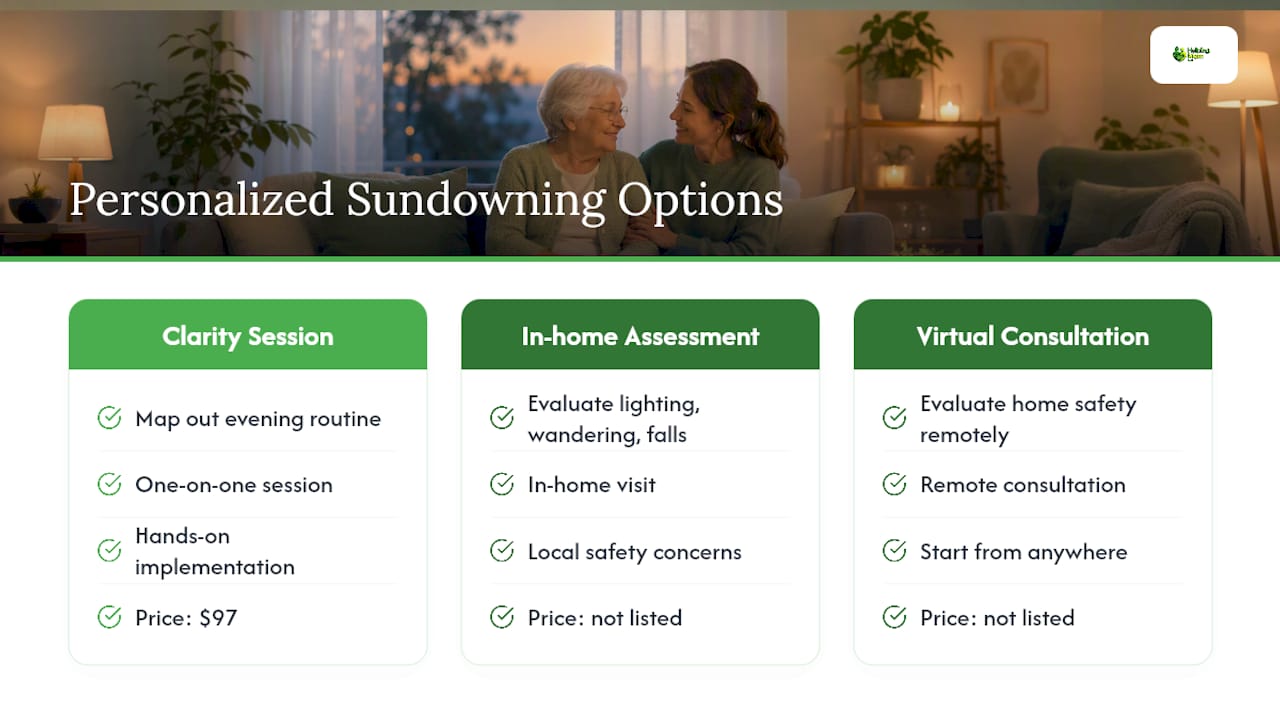
If you want hands-on, nonmedical help implementing what you've read here, a Caregiving Clarity Session gives you focused, one-on-one time to map out your parent's evening routine for $97. If lighting, wandering risk, or fall hazards are your bigger concern, our in-home safety assessment brings that evaluation directly into your parent's home if you're local, or you can start with a virtual home safety consultation from wherever you are. Book the option that fits your evening tonight.
This article is general information, not a substitute for advice from a qualified doctor. Consult a qualified healthcare professional about your own circumstances before acting on anything here.
Sources
- Coping With Agitation, Aggression, and Sundowning in Alzheimer's Disease | National Institute on Aging
- Alzra
- Sundown Syndrome: Causes, Treatment & Symptoms | Cleveland Clinic
FAQ
What is the best way to stop sundowning?
There's no single fix, but a consistent daily routine built around morning light, scheduled activity, and a calm, predictable evening wind-down is the most reliable way to reduce sundowning episodes.
What stage of dementia does sundowning start?
Sundowning most commonly appears during the middle to later stages of dementia, though timing varies widely from person to person.
How long does sundowning usually last?
Episodes typically last a few hours in the late afternoon and evening, though the exact length varies and tends to ease once the person is asleep for the night.
What is end-of-life sundowning?
Increased confusion and restlessness in the evening can also occur in the final stages of a terminal illness, though this is a separate pattern from the sundowning seen earlier in dementia, and it's worth discussing directly with hospice or medical staff if it comes up.