
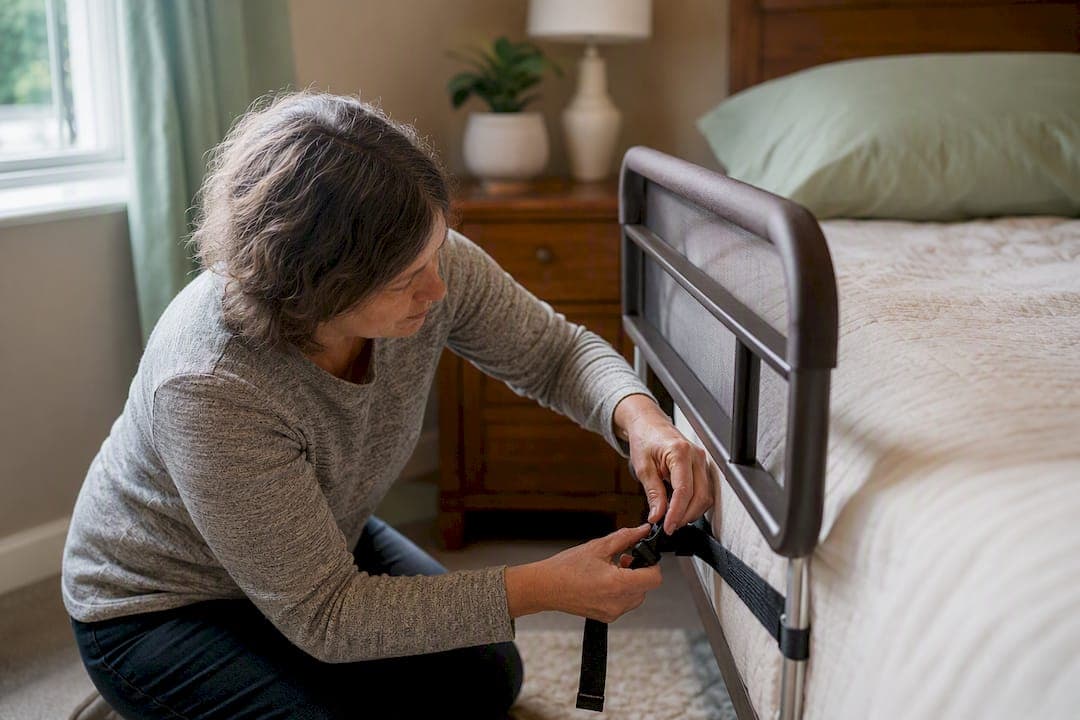
Bed rails can help some older adults with transfers and rolling in bed, but they also carry real entrapment and fall risks that catch many families off guard. Before you add or keep a rail on your parent's bed, check it against CPSC recall listings and ASTM safety standards, and pause use for anyone confused, agitated, or prone to climbing until an occupational therapist weighs in.
TL;DR:
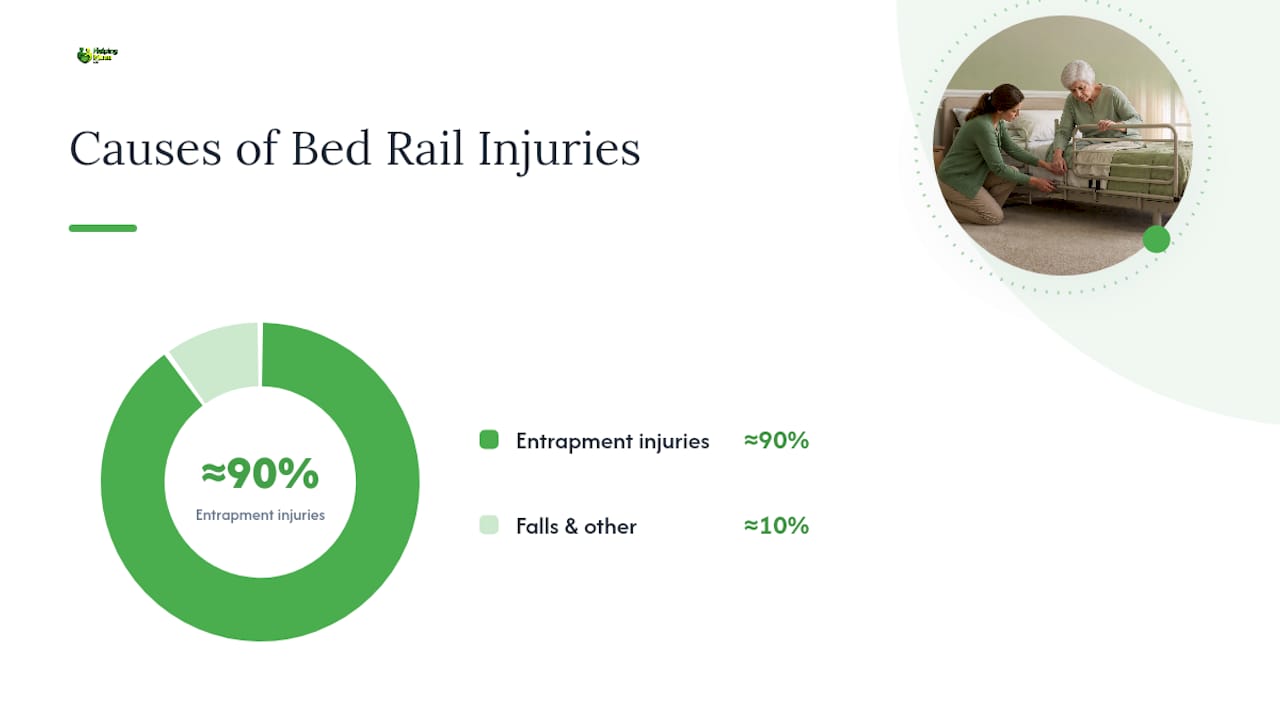
- Most injuries from bed rails involve head, neck, or chest entrapment, with about 90% caused by entrapment rather than falls, especially in cognitively impaired individuals.
- Safety standards for adult bed rails changed after August 21, 2023, requiring proper labeling, compatibility, and testing; older or recalled models may still be in use.
- Ensuring the correct fit involves measuring mattress thickness, checking for gaps, and following manufacturer instructions to minimize entrapment risks.
- A personalized assessment of your parent's mobility, cognition, and sleep habits is essential before choosing between a full rail, transfer handle, or alternative safety measures.
- Regularly inspect and reassess bed rail setup, especially if your parent's condition or bed components change, and consult an occupational therapist for guidance.
Table of Contents
- Bed Rail Safety Checklist: What to Do Right Now
- Why Entrapment Is the Real Danger With Bed Rails
- How to Confirm a Bed Rail Meets Current Safety Standards
- Is a Bed Rail Right for Your Parent? A Simple Assessment
- Getting Bed Rail Installation and Fit Right
- Safer Alternatives to Traditional Bed Rails
- Warning Signs to Watch For Once a Rail Is in Place
- A Calmer Way to Think About Bed Rail Safety
- How Helping-mom Supports Your Bed Rail Decisions
- Sources
- FAQ
Bed Rail Safety Checklist: What to Do Right Now
If your parent already has a bed rail, or you're thinking about adding one, work through this list before another night passes. It takes about twenty minutes and gives you a clear picture of where things stand.
- Stop use immediately if your parent shows confusion, agitation, or has tried climbing over the rail.
- Search the model number on the CPSC recall database to confirm it hasn't been pulled from the market.
- Measure the mattress thickness and compare it to the manufacturer's compatibility chart.
- Check for gaps between the rail, the mattress, and the headboard or footboard.
- Look for compliance labeling referencing ASTM F3186 or a manufacture date after August 2023.
- Clear the area of nightstands, chairs, or anything your parent could use to climb around the rail.
- Have a backup plan ready, like a bedside mat or a lower bed setup, in case you decide to remove the rail.
- Write down what you find so you can share it with an occupational therapist or your parent's doctor.
This isn't about getting it perfect on the first try. It's about knowing what you're working with before you make a decision either way.
Why Entrapment Is the Real Danger With Bed Rails
Most people picture falls when they think about bed rail risk. The bigger danger is entrapment, where a person's head, neck, or chest gets caught in a gap and they can't free themselves.
The Consumer Product Safety Commission reports that about 90% of injuries tied to adult portable bed rails come from head, chest, or neck entrapment, not from falls off the bed itself. That's the opposite of what most caregivers expect when they picture "rail safety."
The FDA's guidance on bed rails identifies seven distinct entrapment zones on a typical hospital-style bed setup, spaces most families never think to inspect. Between 1985 and January 2009, the agency logged 803 reports of bed rail entrapment incidents, many of them fatal, and that data helped shape the safety standards in place today.
Entrapment tends to happen in a handful of predictable spots:
- The gap between the rail and the mattress, especially if the mattress has shifted or thinned over time.
- The space where the rail meets the headboard or footboard, often wider than it looks.
- The top of the rail itself, when someone tries to climb over rather than around.
- Under the rail, if the mattress compresses under body weight and creates a pocket.
People with dementia or other cognitive impairment face a higher risk across every one of these scenarios. Someone who wakes up disoriented may see the rail as an obstacle to push past rather than a boundary to respect, and that instinct is exactly what turns a safety device into a hazard.
By the numbers: Roughly 9 out of 10 bed rail injuries involve entrapment of the head, neck, or chest, according to CPSC data, far more than injuries from falling.
How to Confirm a Bed Rail Meets Current Safety Standards
Not every bed rail on the market, or already in your parent's room, meets current safety requirements. The rules changed recently, and a lot of older stock is still floating around secondhand sales and hand-me-down closets.
The CPSC's mandatory safety standard for adult portable bed rails applies to rails manufactured after August 21, 2023. That rule incorporates ASTM F3186–17, a technical standard that sets specific performance and testing requirements meant to reduce entrapment risk. If a rail predates that manufacture date, it may never have been tested against these requirements at all.
Here's what to look for before you buy, reuse, or hand down a rail:
- A manufacture date or model number you can cross-reference on the CPSC website.
- Labeling or instructions that reference ASTM F3186 compliance.
- Clear compatibility guidance for mattress size and thickness.
- No open recall notices tied to the brand or model.
By the numbers: More than 3 million adult portable bed rail units have been recalled since 2021, a scale that should give any caregiver pause before assuming a rail already in the house is safe simply because it's there.
Consumer Reports' investigation into bed rail safety found ongoing gaps in product testing and labeling, which is a good reminder that "sold in stores" doesn't automatically mean "tested and safe." If you can't find clear evidence a rail meets the current standard, or it shows up on a recall list, stop using it and look at alternatives instead.
Is a Bed Rail Right for Your Parent? A Simple Assessment
The right answer depends less on the product and more on your parent's specific situation. A rail that helps one person transfer safely out of bed each morning could be exactly what puts another person at risk overnight.
Start by walking through a few honest questions with your parent, or observing them closely if they can't answer directly:
- Can they get in and out of bed independently, or do they need something to push against?
- Do they roll frequently in their sleep, or stay mostly still?
- Have they fallen out of bed before, and if so, how did it happen?
- Are they oriented and clear-headed at night, or do they sometimes wake up confused?
- Do they need to get up multiple times a night to use the bathroom?
The answers point you toward different solutions. Someone who's cognitively sharp but needs help pushing up to standing may do better with a short transfer handle rather than a full-length guard rail; occupational therapists often draw exactly that distinction, since a transfer handle supports sit-to-stand movement while a full rail is meant to prevent rolling during sleep. Someone with dementia who gets up frequently and disoriented at night is often safer without any rail at all, paired with a lower bed and a bedside mat instead.
Pro Tip: Bring your observations to an occupational therapist rather than guessing alone. A single session can save you from months of trial and error, and OTs often catch risks, like a mattress that's too soft for the rail's design, that aren't obvious from a product label.
Plan to reassess anytime something changes. A new mattress, a change in your parent's weight, or a new diagnosis affecting balance or cognition all mean it's time to look at the setup again, not just assume yesterday's solution still fits today.
Getting Bed Rail Installation and Fit Right
A bed rail that's the wrong size for the bed is arguably more dangerous than no rail at all, because it creates hazards while looking like a solution. Fit matters as much as the rail itself.
Follow these steps every time you install or reinstall a rail:
- Measure your parent's mattress thickness and check it against the manufacturer's stated compatible range.
- Check headboard and footboard clearances, since entrapment often happens at the ends of the rail, not just along the side.
- Attach straps and fasteners exactly as instructed, using every strap the manufacturer provides rather than skipping ones that seem redundant.
- Test for gaps by running your hand along the space between the rail and mattress; if you can fit more than a couple of fingers through, that's a hazard.
- Never modify the rail with extra padding, zip ties, or homemade extensions to make it fit a mattress it wasn't designed for.
- Re-check the fit any time the mattress, frame, or bedding changes.
Gaps near the head and foot of the bed deserve particular attention, since the CPSC specifically warns against spacing that allows entrapment in those zones. If you're setting up a hospital-style or adjustable bed for recovery after surgery, guidance on choosing a compatible hospital bed can help you understand how frame and mattress choices affect rail fit from the start.
Pro Tip: Set a recurring reminder every few months to re-inspect straps and fasteners for wear. A strap that's stretched or frayed can fail exactly when your parent leans on it hardest.
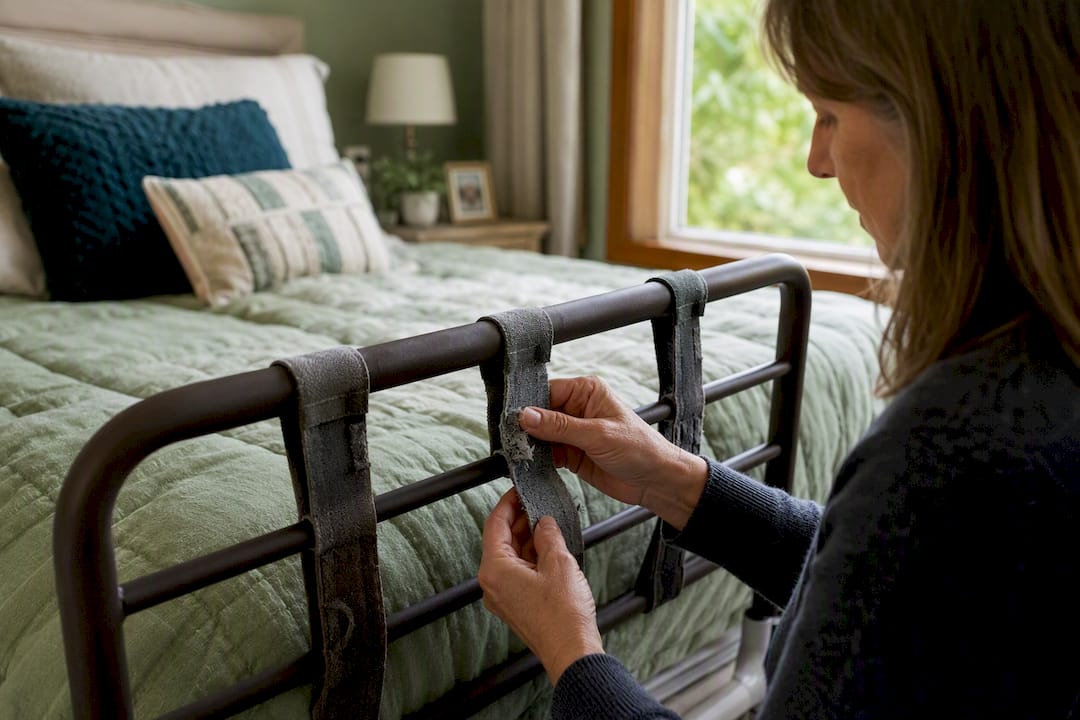
If you find a gap, a torn strap, or any part that doesn't match what the instructions describe, stop using the rail and reach out to the manufacturer or an occupational therapist before putting it back into use.
Safer Alternatives to Traditional Bed Rails
Rails aren't the only tool for reducing nighttime falls, and for some parents, they're not the right tool at all. A handful of alternatives, often used in combination, can lower risk without introducing entrapment hazards.
- Low beds that sit closer to the floor reduce the distance and impact of any fall, which matters most for someone who rolls but doesn't need help standing.
- Bedside floor mats cushion a fall without creating anything to climb over or get stuck in.
- Short transfer handles give a stable grip for sitting up or standing, without running the full length of the bed.
- Bed alarms alert you or a caregiver the moment your parent starts to get up, which is often more useful than any physical barrier for someone at high fall risk.
- A consistent toileting schedule paired with a night-light can cut down on the disoriented, half-asleep trips that lead to falls in the first place.
Specialty beds and full enclosure systems exist for higher-need situations, but those require professional guidance rather than a do-it-yourself setup. If you're building out a broader safety plan, our guide on making a home safer for an elderly parent walks through how these pieces fit together beyond just the bedroom.
Warning Signs to Watch For Once a Rail Is in Place
Installing a rail correctly is only the beginning. Bed rail safety is something you check on, not something you set and forget, and a handful of warning signs mean it's time to act.
- Your parent tries to climb over or around the rail instead of using it as intended.
- New agitation or confusion appears, especially at night.
- You notice new bruises, scrapes, or complaints of pain near the rail area.
- The mattress, frame, or your parent's weight has changed since the rail was last checked.
- Any part of the setup shows signs of being caught, stuck, or wedged.
| Watch for | What to do |
|---|---|
| Attempts to climb over the rail | Remove the rail and reassess with an OT |
| New confusion or agitation at night | Call your parent's care team |
| Bruising or pain near the rail | Stop use, inspect for damage |
| Mattress or weight change | Recheck fit and gaps immediately |
Check the setup weekly if your parent's health is changing, and monthly once things feel stable. Jot down what you observe. That simple record becomes useful the moment you're on the phone with an occupational therapist or your parent's doctor trying to explain what's changed.
A Calmer Way to Think About Bed Rail Safety
Bed rail safety isn't a decision you make once and file away. It's more like checking the smoke detector batteries: something you revisit as your parent's needs shift, not a box you check the day you install the rail.
If you take one thing from this guide, let it be this: check for recalls, measure the fit, and loop in an occupational therapist before you assume a rail is helping rather than hurting. Small, steady steps like these are exactly what aging in place is built on, not one big fix, but a series of good decisions made calmly over time.
— Mike C.
How Helping-mom Supports Your Bed Rail Decisions
Working through recalls, measurements, and fit checks alone can feel like a lot when you're already stretched thin. Helping-mom's Practical Guide to making a home safer for seniors walks you through exactly this kind of assessment, room by room, so you're not starting from a blank page.
If your parent's situation feels more complicated, a paid Zoom consultation lets you talk through their specific mobility, cognition, and bed setup with someone who can help you sort out whether a rail, an alternative, or a combination makes sense. Caregivers in Central Florida can also book an in-person home safety assessment, where we walk through the bedroom setup with you directly. Whichever route fits your week better, start with the home safety resources page to see what's available and pick your next step.
Sources
Keep these pages handy whenever you're evaluating a bed rail. The CPSC's Adult Portable Bed Rails page covers recalls and the mandatory standard. The FDA's bed rail guidance explains entrapment zones in detail, and Consumer Reports' bed rail investigation tracks ongoing product issues. Print or bookmark all three before your next purchase.
- Cpsc
- A Guide to Bed Safety Bed Rails in Hospitals, Nursing Homes and Home Health Care: The Facts | FDA
- PART 1270—SAFETY STANDARD FOR ADULT PORTABLE BED RAILS
- Unsafe Bed Rails Have Led to Deaths and Injuries | Consumer Reports
FAQ
What Are the Two Main Risks of Using Bed Rails?
The two primary risks are entrapment, where the head, neck, or chest gets caught in a gap, and falls, which happen when someone climbs over the rail or the rail fails to hold. CPSC data show entrapment accounts for roughly 90% of related injuries.
What Usually Causes Death From Bed Rails?
Most fatal incidents involve entrapment of the head, neck, or chest in a gap between the rail, mattress, or headboard, a pattern the FDA's bed safety guidance has tracked for decades.
How Safe Are Bed Rails for Elderly Users?
Bed rails can be safe when they meet current CPSC and ASTM F3186 standards, fit the specific mattress correctly, and match the user's needs, but they carry real entrapment risk when gaps exist or when used for someone who is confused or prone to climbing.
What Is the Safest Bed Rail for an Elderly Parent?
The safest choice is a rail manufactured after August 21, 2023, that carries clear ASTM F3186 compliance labeling, fits your parent's exact mattress thickness, and has no open CPSC recalls. For many parents, a short transfer handle paired with a bedside mat is a lower-risk option than a full-length rail.
How Do I Check if a Bed Rail Has Been Recalled?
Search the model number and brand directly on the CPSC's Adult Portable Bed Rails page, which lists current recalls and safety notices for adult portable bed rails.