

Many caregivers can get job-protected unpaid leave through FMLA, and in some states, partial wage replacement through a state paid-leave program. You may qualify for one or both. Start today by checking your FMLA eligibility with your employer's HR office, finding your state's paid-leave portal, and asking your parent's doctor whether they're willing to complete a medical certification form.
TL;DR:
- Most states equalize wage replacement benefits for family caregivers, but amounts and durations vary widely, so check your state's specific program details.
- Eligibility depends on working a minimum number of hours or wages in the past 12 to 18 months, and relationships covered typically include immediate relatives and some extended family.
- The application process requires advance employer notification, gathering specific documents, and obtaining a signed medical certification before submitting your claim.
- Incomplete or late medical certification and missed deadlines are the most common reasons claims are denied or delayed, so diligent record-keeping is essential.
- Combining paid leave with community supports like respite care and counseling improves caregiver well-being beyond just financial benefits.
Table of Contents
- How Federal FMLA and State Paid Family Leave Programs Differ
- Who Qualifies, and Who Counts as Family?
- How to Apply: Step by Step
- How Much You Get Paid, and How Long It Lasts
- Common Pitfalls That Delay or Deny Claims
- Where to Get Help Beyond Paid Leave
- A Word From Someone Who's Watched This Play Out
- How Helping-mom Makes the Paperwork Part Easier
- Quick Links to Start Your Claim
- Sources
- FAQ
How Federal FMLA and State Paid Family Leave Programs Differ
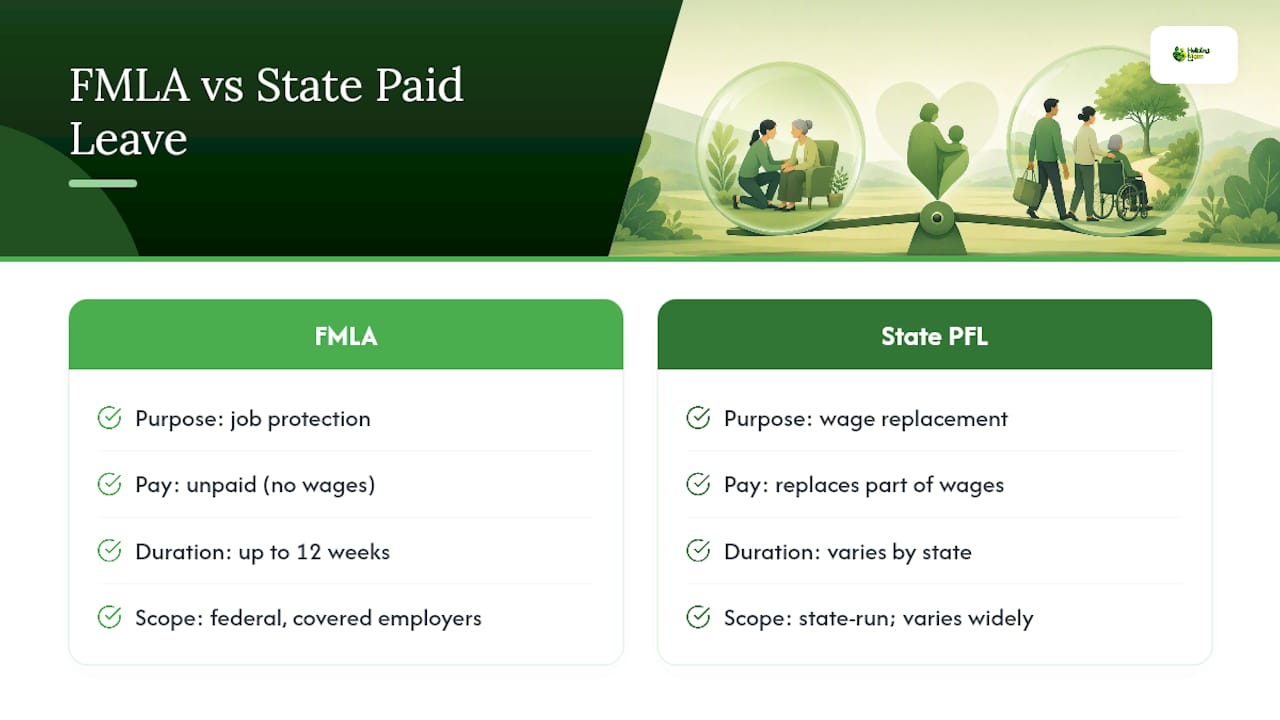
These two programs solve different problems, and mixing them up is where most confusion starts. The Family and Medical Leave Act guarantees up to 12 weeks of unpaid, job-protected leave a year if you work for a covered employer and meet the hours requirement. It protects your job. It does not pay you a dime.
Paid family leave for caregivers is a separate, state-run benefit that replaces part of your wages while you're out. Not every state has one, and the ones that do vary widely on how much they pay and for how long. Some states run their paid program right alongside FMLA, so you're job-protected AND getting a paycheck. Others offer paid leave with no federal job protection attached, especially if your employer is small.
Figuring out which applies to you comes down to three things: how long you've worked for your current employer, how many employees your employer has, and whether your state runs a program at all. Check both boxes if you can. They stack.
Who Qualifies, and Who Counts as Family?
Before you fill out anything, run through this quick checklist to see where you stand.
- You've worked a minimum number of hours or earned a minimum wage amount in a recent "base period," usually the past 12 to 18 months.
- Your employer participates in the state's program, either automatically or because your state requires it.
- The person you're caring for has a serious health condition, which usually means more than a routine cold or minor injury.
- You're related to that person in a way the state recognizes.
Most state programs cover parents, spouses, children, siblings, grandparents, and domestic partners. Several states go further and include "in loco parentis" relationships (someone who raised you like a parent) or extended family living in your household. If you're not sure your relationship qualifies, your state portal will spell it out.
Two things surprise a lot of caregivers. First, self-employed people often can opt into state programs voluntarily, even though they're not automatically covered. Second, citizenship or immigration status typically does not affect eligibility for state paid leave benefits in states like California. If you've assumed you're locked out because of your status, it's worth double-checking directly with your state program instead of assuming the worst.
How to Apply: Step by Step
Getting a paid family leave claim approved is mostly about sequencing. Do things in the wrong order, and you'll spend weeks chasing paperwork you could have started on day one.
- Tell your employer first. Most states require advance notice, and your HR department needs to know before you file.
- Gather your documents. You'll typically need pay stubs, your employer's EIN, your Social Security number or ITIN, and bank routing information for direct deposit.
- Create an account on your state's paid-leave portal (or your employer's portal, if they use a private plan) and start your claim.
- Get the medical certification signed. This form must come from a licensed provider treating your family member and describe the condition, expected duration, and why care is needed.
- Submit before the deadline. Many states set strict windows, sometimes as short as a few weeks after leave begins, so late submission can mean lost benefits.
- Track your claim number and follow up if you haven't heard back within the state's stated processing time.
Pro Tip: Call your parent's doctor's office before you start the online application, not after. Ask specifically who handles medical certification paperwork and how long it usually takes them to turn it around. A five-minute phone call can save you two weeks of waiting.
How Much You Get Paid, and How Long It Lasts
Paid family leave for caregivers replaces part of your regular wages, not all of it. Exact amounts and caps vary by state and depend on your own earnings, so a claim adjuster calculates your specific weekly benefit once you apply. There is no flat national number.
What's more flexible than most caregivers realize is the scheduling. You don't have to take leave in one continuous block. Options generally include:
- Continuous leave for a hospital stay or a defined recovery period.
- Reduced schedule leave if you need to cut your hours rather than stop working entirely.
- Intermittent leave for recurring needs, like driving a parent to chemotherapy every other Tuesday.
Intermittent and reduced schedules let you keep working while managing ongoing treatment, but states count benefit weeks differently, so confirm with your program how partial days get tallied against your total. If your employer offers short-term disability or paid time off, ask how it coordinates with state benefits. Some states reduce your payment if you're drawing from both at once.
Common Pitfalls That Delay or Deny Claims
Most denied or delayed claims trace back to the same handful of avoidable mistakes.
- The medical certification is incomplete or late. This single form causes more claim failures than anything else, so confirm your parent's provider is willing and available before you file.
- You missed a submission deadline because you didn't realize the clock started the day leave began, not the day you applied.
- Your employer notification was informal and there's no written record of it.
- Pay history or ID documents were incomplete, which is an easy fix if you gather everything up front.
Pro Tip: Keep a simple folder, physical or digital, with every date, form, and confirmation number tied to your claim. If something gets delayed and you need to appeal, that paper trail is what gets it resolved faster.
If your claim is denied, every state has an appeals process, usually a written request within a set number of days of the denial notice. Read that notice carefully. It tells you exactly what was missing.
Where to Get Help Beyond Paid Leave
Paid leave covers wages. It doesn't cover the exhaustion of doing this alone. That's where community support fills the gap.
- The National Family Caregiver Support Program funds respite care, counseling, and training grants through your local Area Agency on Aging.
- The Eldercare Locator connects you to local services by zip code, often the fastest way to find help near your parent.
- The Caregiver Action Network offers a free help desk and practical toolkits built specifically for family caregivers.
Combining a paid-leave claim with respite care and counseling tends to be what actually keeps someone living safely at home longer, rather than leave alone. If you're new to the idea of stepping back for help, our guide to respite care options for family caregivers walks through what that can look like in practice, and our caregiving resource library has more planning tools if you want to look further ahead.
A Word From Someone Who's Watched This Play Out
Taking leave to care for a parent is never just a paperwork problem. It's a financial trade-off, a scheduling puzzle, and often a quiet grief you're managing while filling out forms. That's real, and you don't have to pretend otherwise.
What helps is starting the paperwork before you feel ready, not after. Ask for help delegating what you can. Lean on the community supports above instead of trying to carry this solo. Small steps, done early, save you weeks of stress later.
— Mike C.
How Helping-mom Makes the Paperwork Part Easier
Filing for paid family leave for caregivers is only half the job. The other half is figuring out what your parent's home actually needs while you're managing that leave, and most families never get a straight answer on where to start. There are practical, non-medical caregiving resources that provide adult children with guidance, without the jargon or the overwhelm of a clinical checklist.
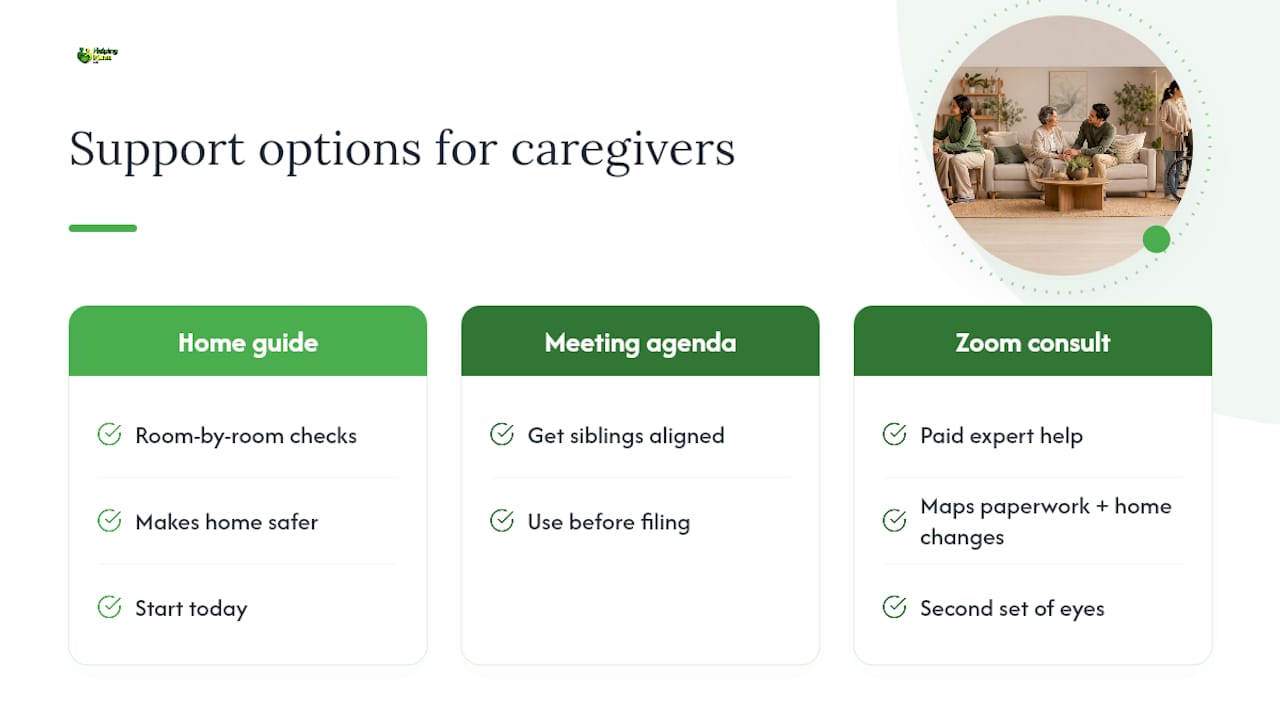
Our practical guide to making a home safer for seniors walks you through exactly what to check room by room, so the time you take off actually goes toward fixes that matter. Pair that with our family meeting agenda template to get siblings on the same page before you file anything. If you want a second set of eyes, you can book a paid Zoom consultation with caregiving experts who can help you map out both the paperwork and the home changes at once. Start with the home safety guide today.
Quick Links to Start Your Claim
Bookmark the FMLA overview, your state's paid-leave portal, and the NFCSP program page. Save every confirmation number.
Sources
- Information on the Family and Medical Leave Act
- Paid Family Leave for Family Care
- National Family Caregiver Support Program | Administration for Community Living
FAQ
Can I Get Paid to Be a Family Caregiver in the US?
Yes, in states with a paid family leave program you can receive partial wage replacement while caring for a family member with a serious health condition, though FMLA itself only guarantees unpaid, job-protected leave.
What Is Caregiver Fatigue Syndrome?
It's the ongoing physical and emotional exhaustion that builds up from sustained caregiving without enough rest or support, and it's a major reason experts recommend pairing paid leave with respite care through programs like the NFCSP.
What Is Caregiver Anger?
Caregiver anger is the frustration and resentment that can surface from the stress, isolation, and competing demands of caregiving. It's a common response, not a personal failing, and connecting with support groups or a counselor through your local Area Agency on Aging can help.
Which States Will Have Paid Family Leave in 2026?
The list of states running paid family leave programs continues to grow, and coverage details differ by state, so the most reliable step is checking your own state's labor department website directly rather than relying on a general list.
How Do I Apply for Caregiver Leave If My Claim Gets Denied?
Every state paid-leave program includes a written appeals process with a deadline listed on your denial notice, and gathering your dated forms and confirmation numbers ahead of time makes that appeal move faster.