
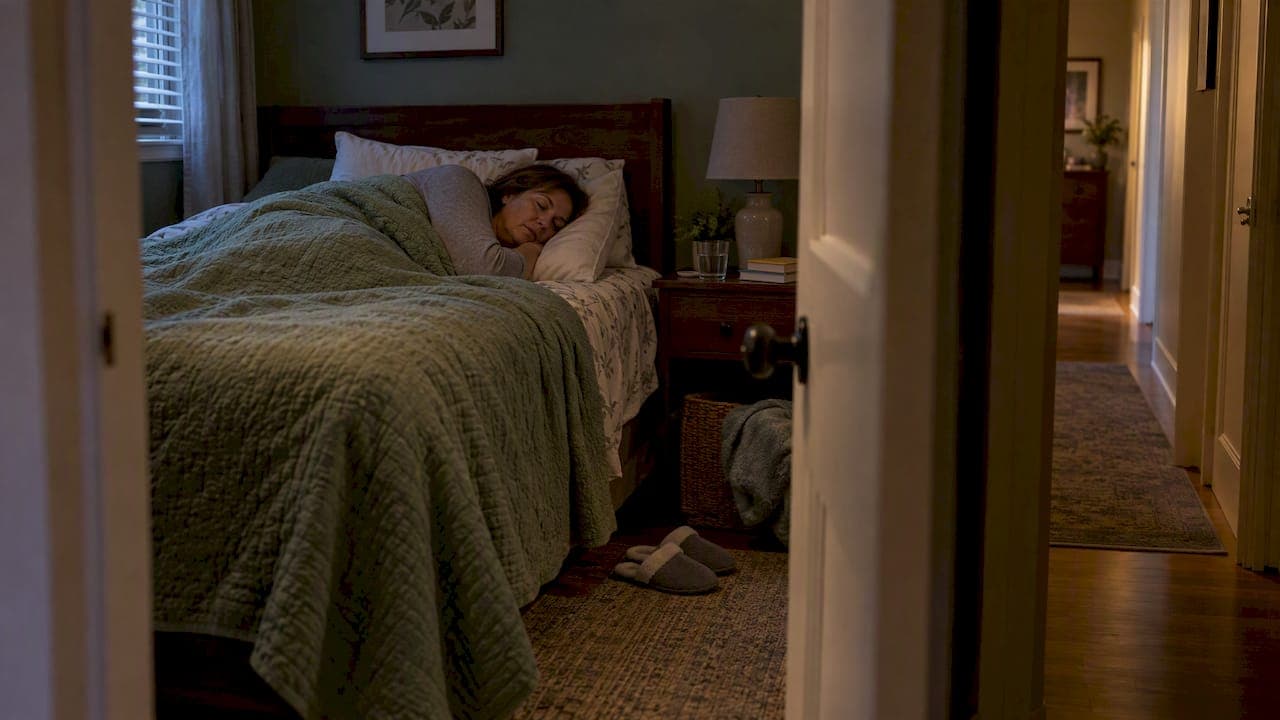
The single best thing you can do tonight is secure one uninterrupted stretch of sleep, even five or six hours, through a short respite swap, a baby monitor instead of a bedroom check, or a simple pre-sleep routine you repeat every night. This matters because caregivers report short sleep (under 7 hours) at a higher rate than non-caregivers, 39.5% versus 34.2%. Our printable caregiver schedule can help you build that routine starting tonight.
TL;DR:
- Caregivers providing 20 to 39 hours of care weekly and those caring for five or more years experience the highest rates of short sleep, often under seven hours.
- A consistent, brief pre-sleep routine, including dimming lights and calming activities, can improve sleep even on bad nights, lasting five to twenty minutes.
- Small environmental changes, like a cooler room and a white noise machine, can reduce night awakenings caused by household sounds or movement.
- Behavioral techniques such as cognitive behavioral therapy for insomnia and relaxation training have been shown to improve sleep quality without medication.
- Building support through respite care, daytime habits, and accepting help early can prevent sleep deprivation from worsening into burnout or health issues.
Table of Contents
- Why caregiving disrupts sleep so often
- A caregiver-friendly bedtime routine you can actually keep
- Adjust your sleep space and reduce night-checking
- Non-drug approaches with real evidence behind them
- Getting real help: respite and community programs
- Daytime habits that set up a better night
- When it's time to call a healthcare provider
- One evening, one routine: what actually helped
- What the research actually tells us to prioritize
- Practical next steps if you want personalized support
- FAQ
- Sources
Why caregiving disrupts sleep so often
Caregiving asks your body to stay alert even while you are trying to rest, and that constant low-level vigilance is exhausting in a way that's hard to explain to anyone who hasn't lived it. The CDC's analysis found that caregivers providing 20 to 39 hours of care a week, and those caring for five years or more, face the highest rates of short sleep. A few patterns show up again and again:
- Nighttime checks for falls, wandering, or medication timing fragment sleep before it can deepen.
- Sundowning and dementia-related awakenings pull you out of bed at unpredictable hours.
- Stress and hypervigilance keep your mind running even after the house goes quiet.
Persistent short sleep doesn't just leave you tired. It dulls judgment, slows reaction time, and makes the next day's caregiving decisions harder than they need to be.
A caregiver-friendly bedtime routine you can actually keep
A routine only works if it survives a bad night, so keep it short enough to repeat even when you're running on fumes. Aim for five to twenty minutes, not an hour of candles and stretching you'll skip by week two.
- Dim the lights 30 minutes before you plan to sleep, even if that's 9:00 PM or midnight.
- Do one calming motion, like slow breathing or light stretching, for two to three minutes.
- Swap screens for something low-stimulation, such as a few pages of a book or quiet music.
- Set a consistent "lights out" cue, like a specific phrase you say or a lamp you switch off.
- If a night interruption happens, use a two-minute micro-version of the same routine to signal your body it's time to return to sleep.
Try to keep a regular sleep window when you can, even if it shifts earlier or later depending on the day. A short nap (20 to 30 minutes) in the early afternoon can help you recover from a rough night, but anything later than mid-afternoon tends to steal from nighttime sleep instead of adding to it.
Pro Tip: Keep your wind-down routine identical every night, in the same order, so your body learns the cue faster than if you change it up.

Adjust your sleep space and reduce night-checking
Small changes to the room itself can cut down how often you wake to check on your parent. A cool room (around 65 degrees), blackout curtains, and a white noise machine address most of the basics:
- Use earplugs or a white noise app to soften household sounds without blocking alarms.
- Try a motion sensor or fall-detection device instead of listening for every creak or cough.
- Consider a non-intrusive camera with a dim screen so you can check without fully waking.
- If you share a room with your parent, use a curtain divider or separate mattress to create some distance while staying close.
Always talk with your parent about any monitoring device before installing it, even a simple one, so it feels like support rather than surveillance.
Non-drug approaches with real evidence behind them
Behavioral approaches, not medication, are the first line of treatment for the kind of insomnia caregiving tends to cause. Cognitive behavioral therapy for insomnia (CBT-I) retrains the thoughts and habits that keep you wired at bedtime, and it's available through internet-delivered programs that fit a caregiver's unreliable schedule better than weekly in-person sessions.
A systematic review of behavioral sleep interventions found that multicomponent programs, combining education, relaxation training, and CBT-I techniques, produced a 1.27-point average improvement on a standard sleep quality scale. The same review noted benefits from:
- Thirty minutes of calming music before bed in some caregiver groups.
- Daily exercise, even light walking, linked to better sleep quality over time.
- Consistent sleep hygiene habits practiced for several weeks rather than a few nights.
Give any new approach two to four weeks before judging whether it's helping. Sleep habits built over months of disrupted nights don't reset in a day.
Getting real help: respite and community programs
Asking for help is its own skill, and it gets easier with a plan instead of a vague hope that someone will offer. Respite comes in several forms, from a few hours of in-home help to adult day programs to a short overnight stay at a care facility; understanding the importance of these breaks can be key to caregiver health via respite care and caregiver wellbeing.
- Call the Eldercare Locator to find respite services in your area.
- Ask about National Family Caregiver Support Program (NFCSP) grants, which have funded nearly 6 million hours of temporary relief for caregivers in a recent reporting period.
- Use a specific script when asking family: "Could you cover Tuesday night so I can sleep through once this week?"
- Start small, one night or one meal, rather than asking for an open-ended commitment that feels harder to grant.
Our guide to respite care options walks through how to match the type of coverage to what your week actually looks like.
Daytime habits that set up a better night
What you eat and do during the day shapes how well you sleep once the house is quiet. Keep a few grab-and-go proteins on hand (hard-boiled eggs, Greek yogurt, nut butter) and try to finish heavier meals two to three hours before bed, since a 2026 piece on caregiver sleep and nutrition ties irregular eating directly to the exhaustion cycle many caregivers describe.
- Cut caffeine after mid-afternoon, even if it feels like the only thing getting you through 3:00 PM.
- Skip alcohol close to bedtime. It may help you fall asleep faster but fragments sleep later in the night.
- Get ten minutes of daylight exposure and some movement each day to anchor your body's internal clock.
When it's time to call a healthcare provider
If insomnia has lasted more than three weeks, if daytime sleepiness is making driving or caregiving tasks feel unsafe, or if you or your parent shows signs of sleep apnea (loud snoring, gasping, long pauses in breathing), it's worth bringing it up with a primary care provider. Expect questions about your sleep history, possibly a screening questionnaire, and a referral to CBT-I or a sleep study if needed. Behavioral treatment is usually the starting point, not medication, and a conversation with your doctor is a reasonable first step rather than something to put off.

One evening, one routine: what actually helped
One caregiver evening that sticks with me: a daughter moved her mother's favorite calming activities earlier, then used a four-step wind-down before bed instead of waiting until things got tense. Our sundowning routine guide walks through that same sequence. A few places to start tonight:
- Printable caregiver schedule for planning coverage and routines.
- Sundowning routine for dementia-related evening challenges.
- Caregiver wellbeing resources for the emotional side of exhaustion.
What the research actually tells us to prioritize
Most sleep advice aimed at caregivers reads like it was written for someone with a predictable schedule and a quiet house, and that's exactly what caregiving rarely offers. The conventional wisdom leans hard on things like "go to bed at the same time every night," which is good advice for almost nobody managing nighttime checks or sundowning behaviors.
What the evidence actually supports is smaller and more achievable: one uninterrupted night through respite, a short routine you can do in under ten minutes, and daytime habits that don't require a schedule overhaul. The behavioral interventions with the strongest backing, CBT-I and multicomponent programs, work because they're built around realistic habits, not willpower.
If you take one thing from this, let it be this: stop trying to fix every night at once. Fix one night this week. Then build from there. The caregivers who improve their sleep aren't the ones with the most discipline. They're the ones who accepted help early instead of waiting until exhaustion forced the issue.
— Mike C.
Practical next steps if you want personalized support
If reading this made you realize your household needs more than a routine tweak, we built our services around exactly this kind of planning. A Caregiving Clarity Session helps you map out coverage, routines, and safety concerns in a single focused conversation. For families who want ongoing support, our Virtual Home Safety Consultations can include planning for safer nighttime setups and monitoring tools without a home visit. If you're in Central Florida, our In-Home Age-Safe Home Safety Assessments add an in-person look at your specific space.
- New to planning: start with the printable caregiver schedule, free to download.
- Want a guided conversation: book a Caregiving Clarity Session.
- Need a deeper walkthrough: explore Virtual Home Safety Consultations.
FAQ
What is caregiver burnout?
Caregiver burnout is a state of physical and emotional exhaustion that builds up from the ongoing demands of caregiving, often including poor sleep, reduced self-care, and feelings of being stretched too thin. It can develop gradually, which is why routine sleep tracking and regular breaks matter as early prevention.
How to be a better caregiver?
Being a steady, effective caregiver starts with protecting your own basic health, especially sleep, since exhaustion affects judgment and patience. Small, repeatable habits like a consistent wind-down routine and accepting help when it's offered tend to matter more than any single big change.
What are some online support groups for caregivers of elderly parents?
Several national organizations and local Area Agencies on Aging host virtual caregiver support groups, and the Eldercare Locator can point you toward ones serving your area. Many hospital systems and community health centers also run free virtual groups specifically for caregivers.
When does caregiving become too much?
Caregiving has become too much when sleep loss, stress, or physical strain starts affecting your own health or safety, such as persistent insomnia lasting more than three weeks or daytime sleepiness that makes driving risky. That's a reasonable point to bring in respite care or talk with a healthcare provider about what's sustainable going forward.
Sources
- CDC analysis on caregiving and short sleep duration
- Systematic review of behavioral sleep interventions for caregivers
- Administration for Community Living: NFCSP overview
- Sleep and nutrition for caregivers: Breaking the exhaustion cycle (2026)